
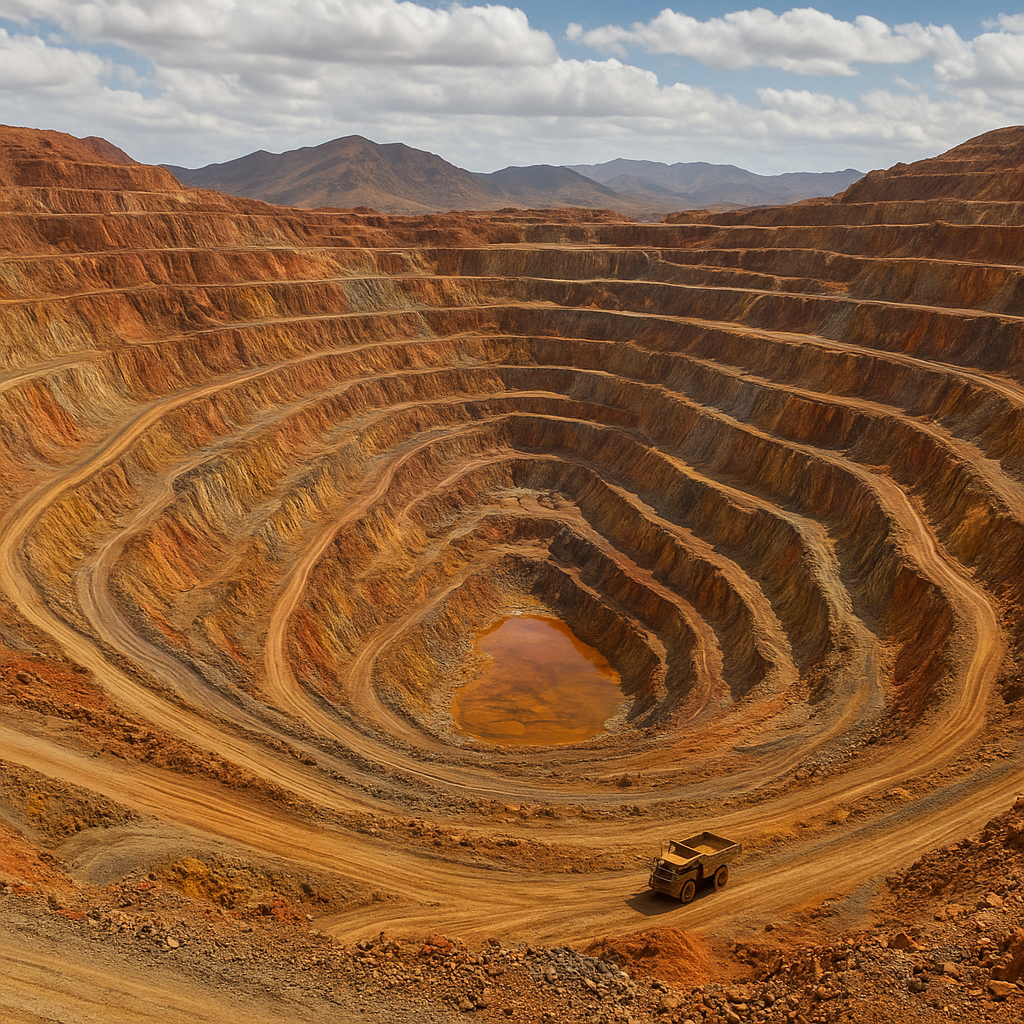
The site known as Tizert is a part of Morocco’s long and varied mineral landscape. This article explores the mine commonly referred to as the Tizert Mine, focusing on its location, the minerals it yields—primarily copper—its broader economic significance, and several aspects that make it particularly interesting from geological, social and environmental perspectives. The text summarizes commonly available information and interpretations about the deposit and situates the mine within Morocco’s expanding role as a resource producer in North Africa and the Mediterranean region.
Location and geological setting
The Tizert mine is located within Morocco, a country with a rich mining heritage that spans phosphate, base metals and industrial minerals. The deposit lies in a region characterized by complex mountain ranges and folded terranes that record multiple tectono-magmatic events over geological time. While exact coordinates and administrative details vary in public sources, the mine is typically cited in literature related to Morocco’s western and central mineral belts, where mineralized veins and stratabound occurrences are common.
Geologically, the setting that hosts the Tizert mineralization reflects a combination of regional metamorphism, magmatism and hydrothermal activity. The rocks in this part of Morocco commonly include metamorphosed sedimentary sequences, intrusions of igneous rocks and fault systems that provide conduits for metal-bearing hydrothermal fluids. These processes concentrate metals such as copper into economically viable bodies through precipitation of sulphide minerals and associated alteration of host rocks.
Types of mineralization
The Tizert deposit is often described in broad terms as a copper-bearing system. Copper at Tizert commonly occurs as sulphide minerals—varieties such as chalcopyrite, bornite and other copper-bearing sulphides are typical in many Moroccan copper occurrences. In addition, many copper deposits in the region are polymetallic in nature, meaning they may also host appreciable amounts of silver, lead, zinc or even traces of gold and cobalt. The presence of multiple metals can enhance project economics but also complicates processing.
Regional context
Morocco’s mineral provinces, including the Atlas and Anti-Atlas chains, host a variety of deposit types—sedex, volcanogenic massive sulfide (VMS), skarn, and hydrothermal vein systems among them. The Tizert area should be seen within this mosaic: a location where structural controls (faults and shear zones) have concentrated hydrothermal fluids, producing veins and lenses of sulphide mineralization. This regional context helps explain both the distribution of the ore and the challenges of extraction, as ore bodies may be discontinuous and structurally complex.
What is extracted at Tizert
The principal commodity produced or targeted at Tizert is copper. Copper is essential for modern industry—used in electrical wiring, power generation and distribution, electronics, building construction, and increasingly in electric vehicles and renewable-energy systems. At many copper deposits in Morocco, copper occurs with secondary metals; depending on the deposit’s chemistry and host rocks, recovery schemes can be designed to extract multiple metals.
- Copper: Primary focus of extraction, typically recovered from copper sulphides after crushing, grinding and flotation concentration or via laterite processing in oxidized zones.
- Associated metals: These may include silver, occasional gold, and base metals like lead and zinc. When present, they add value and can improve project returns through by-product credits.
- Industrial minerals: Some operations also report gangue minerals—minerals of no economic value that must be separated from ore. Managing these influences processing complexity and waste handling.
The extraction method depends on the ore type. Sulfide ores are typically treated by comminution and flotation to produce a copper concentrate that is then smelted and refined elsewhere. Lateritic or oxide copper ores, if present, might be processed by heap leaching and solvent extraction-electrowinning (SX-EW) to directly produce copper cathode.
Mining operations and production characteristics
Operations at sites like Tizert combine modern and traditional approaches. Mining methods may include underground workings where veins and lenses are mined selectively, or open-pit methods if mineralization is near surface and horizontally extensive. The scale of the operation can vary—some deposits support large-scale industrial mining while others are smaller and exploited by local companies or artisanal miners.
Workforce and local industry
A mining operation at Tizert supports direct employment in extraction, processing and maintenance and indirect employment in logistics, security, and local services. The presence of a mine often encourages development of local infrastructure—roads, power supply and sometimes housing—and can stimulate small-scale business growth in nearby communities. Employment quality and training programs are key to ensuring longer-term benefits for local residents.
Processing and logistics
Where concentrator facilities are present, ore is crushed, milled and floated to concentrate copper minerals. Concentrate is then transported to smelters or refineries—either within Morocco or abroad—depending on national processing capacity. The logistics chain (road, rail, ports) is crucial: effective transport links lower costs and connect the mine to international markets, increasing its competitiveness.
Economic significance
The role of the Tizert mine in the wider Moroccan economy depends on scale, grade and longevity of the deposit. Even moderate-sized copper operations contribute in several tangible ways:
- Export revenue: Copper concentrates and refined copper are internationally traded commodities. Revenues from copper sales help diversify Morocco’s export base beyond its dominant phosphate industry.
- Value chain development: Mining stimulates growth along the supply chain—equipment suppliers, engineering services, transport and smelting. Local beneficiation can capture additional value if smelting or refining capacity is available domestically.
- Employment and skills: Mines provide jobs that can raise local incomes and foster skills transfer in technical fields such as geology, metallurgy and mechanical maintenance.
- Regional development: Infrastructure improvements driven by mining—roads, electrification, water management—can have lasting benefits for adjacent towns and agricultural areas.
Governments typically collect royalties, taxes and duties from mining companies. In addition, modern mining agreements may include community development funds, local procurement clauses and commitments to environmental rehabilitation. These mechanisms channel a portion of mineral wealth into public coffers and local community projects.
Environmental and social considerations
Mining, including at copper sites such as Tizert, has environmental impacts that need active management. Modern operations are regulated and typically required to prepare environmental impact assessments, implement monitoring programs and plan for closure and rehabilitation.
Common environmental issues
- Water use and contamination: Processing ores and dust suppression require water. Runoff and tailings can carry dissolved metals if not properly managed.
- Tailing storage: Sulphide-rich tailings can oxidize and produce acid drainage if exposed to water and oxygen, requiring careful containment and long-term management.
- Landscape disturbance: Open pits, waste rock dumps and support facilities alter the natural landscape and require reclamation after closure.
- Dust and emissions: Crushing and haulage generate dust; smelting and concentrate transport produce emissions that must be controlled.
Social aspects
Mining projects can bring social change. Positive impacts include local employment, improved services and community investment programs. Risks involve displacement, pressures on local resources (water, grazing land), and potential conflicts over land use or benefit sharing. Effective engagement with local communities, transparent benefit-sharing mechanisms and investment in local capacity are crucial to sustainable outcomes.
Interesting aspects and research opportunities
Several facets of Tizert and similar Moroccan copper sites make them noteworthy to geologists, economists and policy makers:
- Geological complexity: The interplay of tectonics and hydrothermal activity in Morocco produces structurally-controlled copper deposits that are excellent natural laboratories for studying ore-forming processes.
- Polymetallic potential: Tizert-type occurrences often contain multiple metals. The co-existence of copper with silver or other base metals offers opportunities for integrated extraction and value maximization.
- Heritage and artisanal mining: In several Moroccan mineral districts, artisanal miners operate alongside industrial companies. This mix presents opportunities to improve safety, formalize operations and integrate small-scale miners into legal supply chains.
- Technology adoption: Advances in mineral processing (e.g., improved flotation reagents, fine grinding and cleaner tailings management) and mine automation can be piloted at deposits like Tizert, demonstrating how smaller projects can benefit from modern techniques.
- Environmental remediation research: The region is suited for studying tailings remediation, water treatment solutions and revegetation techniques in semi-arid landscapes.
Scientific interest
Academic researchers are interested in deposits such as Tizert for insights into metallogenesis: the timing of mineralizing events, the source of metal-bearing fluids and the role of structural traps. Detailed mapping, geochemical sampling and modern isotopic techniques can constrain the origins of mineralization and help guide exploration in similar terranes.
Challenges and future prospects
The future of the Tizert mine, like many mining projects, hangs on several factors: commodity prices, ore grade and continuity, availability of investment, regulatory and permitting frameworks, and social license to operate. Copper demand is forecast to grow as the global energy transition accelerates, increasing the strategic importance of existing and potential copper sources.
- Exploration potential: Continued exploration in the surrounding region may discover satellite deposits that extend the mine life or justify expansion.
- Upgrading local processing: Domestic smelting or refining could capture more value within Morocco, but requires significant capital investment and environmental safeguards.
- Sustainability initiatives: Incorporating renewable energy, water recycling, and improved tailings management can lower operational costs and environmental footprint while improving community acceptance.
- Policy and investment climate: Clear permitting processes, transparent fiscal terms and investment in infrastructure will determine whether resources such as Tizert attract long-term capital.
Practical information for stakeholders
For investors, engineers and community leaders engaged with the Tizert area, several practical considerations are relevant:
- Obtain reliable geological and metallurgical data early: Detailed drilling, sampling and metallurgical testing reduce uncertainty around recoveries and processing flowsheets.
- Engage communities proactively: Early dialogue on land use, employment, and community benefits builds trust and reduces conflict risk.
- Plan for closure from the start: Financial provisioning for rehabilitation and clear closure strategies avoid legacy liabilities.
- Work with regulators and local authorities: Aligning project timelines with permitting and environmental requirements prevents costly delays.
Tizert, as a representative copper-bearing site in Morocco, exemplifies the intersection of geology, economics and community development. It highlights both the promise of mineral wealth for national development and the complex responsibilities that come with extracting and processing non-renewable resources. For those interested in the specifics of production figures, ownership or exploration status, company reports and government mineral databases remain the authoritative and up-to-date sources.

