
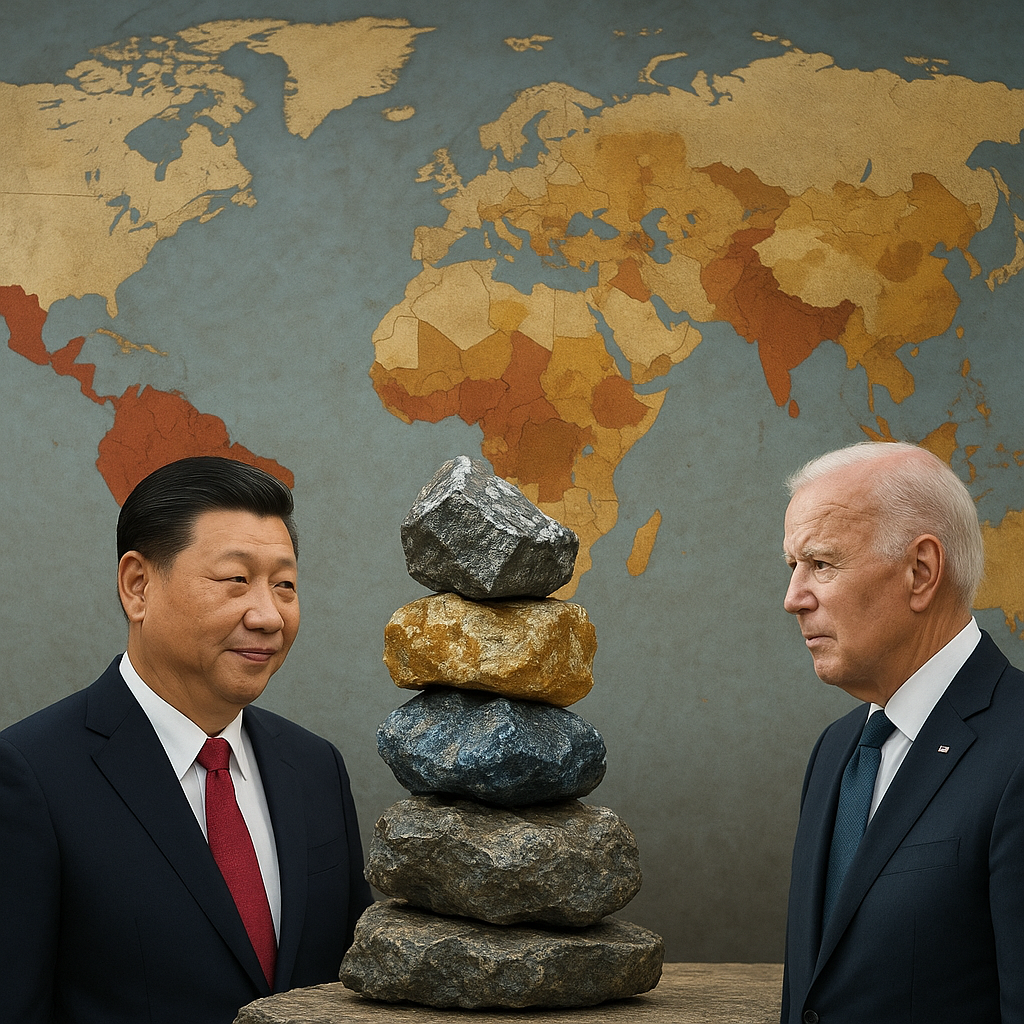
The global map of strategic power is being redrawn not only by military strength and economic size but increasingly by the presence and control of critical natural resources. As nations race to secure access to raw materials essential for modern technologies, new partnerships and tensions are forming. This article explores how mineral-rich regions are reshaping diplomatic, economic and security alignments and what that means for the future of international relations.
Resource geography and strategic value
Natural endowments have always influenced state behavior, but the contemporary fusion of technology, decarbonization goals and digitalization has elevated the importance of specific minerals. Elements once considered obscure have become linchpins of national strategy. Among them, rare earths are crucial for wind turbines, electric vehicles and advanced electronics; lithium underpins the battery revolution; cobalt and nickel feed energy storage industries; and copper remains fundamental to electrification and grid upgrades.
Which minerals matter most
- Rare earths — magnets, electronics and defense systems.
- Lithium — batteries for electric vehicles and grid storage.
- Cobalt and nickel — high-energy battery chemistries.
- Copper — electrification, transmission lines and electric motors.
- Graphite and silicon — anodes, semiconductors and PV cells.
Geography intersects with geology: a handful of countries host disproportionately large shares of critical supplies. The Democratic Republic of Congo (DRC) dominates cobalt production, Australia and Chile lead in lithium and copper production, China controls large portions of processing capacity for multiple commodities, and nations such as Russia and Brazil remain pivotal for select metals and industrial minerals. In many cases the raw material is concentrated in remote or politically fragile areas, creating both opportunity and risk for outside actors seeking access.
Shifts in alliances and diplomatic strategies
As mineral value and scarcity rise, states are recalibrating alliances to secure long-term access and to reduce strategic vulnerability. This reorientation takes several forms, from bilateral investment agreements and infrastructure financing to security guarantees and trade policies. National strategies increasingly combine economic diplomacy with geostrategic tools to build durable supply relationships.
From mercantile deals to strategic partnerships
Traditional buyer-seller relationships are evolving into broader partnerships that include local development promises, military cooperation and industrial planning. For instance, large consuming states may finance mining and processing plants in producer countries, creating dependencies but also presenting an argument for stable governance and investment protection. The Chinese Belt and Road Initiative (BRI) has often combined resource access with infrastructure development, while Western democracies are now deploying alternative financing and partnership models that emphasize transparency and environmental standards.
New multilateral configurations are emerging around strategic minerals. Informal groupings and task forces among consuming nations work to diversify imports and coordinate investments. At the same time, regional dynamics shift: mineral-rich states gain leverage, enabling them to negotiate better terms, secure technology transfers, and attract geopolitical patrons. In some cases, inflated expectations of resource rents can destabilize politics, increasing the appeal of external backers who promise security or quick revenue streams.
Economic strategies, governance and local impact
Control over mineral wealth does not automatically translate into broad-based development. The concept of the resource curse remains relevant: poorly managed extractive booms can produce environmental damage, corruption, and social conflict. The way producers manage extraction, allocate revenue and regulate foreign firms shapes whether mineral wealth becomes a catalyst for development or a source of instability.
Domestic policy choices and international consequences
Producer states are experimenting with various approaches to maximize value: imposing higher royalties, requiring local processing, negotiating equity stakes, or nationalizing specific assets. These policies affect foreign firms’ willingness to invest and can provoke shifts in diplomatic posture. For consuming powers, such policy shifts necessitate building deeper partnerships, offering capacity-building programs, or seeking alternative suppliers.
Local communities are often on the frontline of these transitions. Mining can bring employment and infrastructure but also environmental degradation and displacement. International actors that engage in mining diplomacy increasingly emphasize standards for human rights, labor practices and environmental protection. However, such standards can be perceived as conditionalities, pushing some producing states toward partners who offer fewer strings attached.
Supply chains, technology and security implications
The modern economy relies not only on mines but on the entire value chain: refining, processing, component manufacturing and recycling. Countries that control processing and manufacturing stages often wield outsized influence. For example, the ability to move from ore to finished electric motors or semiconductors creates economic rents and strategic leverage. Consequently, industrial policy has become a front in the contest for mineral value addition.
Diversification and resilience strategies
Many consuming countries are pursuing diversification strategies to reduce single-source dependencies. These include:
- Stockpiling critical materials.
- Expanding domestic mining and processing through incentives.
- Forming strategic partnerships with multiple supplier states.
- Investing in recycling and substitution research.
At the same time, technological change can alter geopolitics. Advances in battery chemistry that reduce reliance on specific elements, improved recycling technologies, and breakthroughs in material science could decrease some supply pressures. Yet such progress is incremental and uneven; for now, winning the race for secure, integrated supply chains remains a strategic priority for many states.
Regional case studies and emerging fault lines
Regional dynamics illustrate how mineral wealth reshapes alliances in practice. In Africa, investment from China, Europe and the U.S. competes for access to copper, cobalt, and rare earths. In Latin America, lithium-rich Argentina, Bolivia and Chile are courted by firms and states seeking to dominate the EV supply chain. The Arctic has seen renewed interest because of both hydrocarbons and mineral prospects, driving closer cooperation among coastal states while raising tensions around navigation and indigenous rights. Central Asia’s resources have attracted offers of infrastructure investment and security ties from multiple powers.
Examples of shifting influence
- Africa: Infrastructure-for-minerals deals create networks of dependence and influence, sometimes accompanied by military cooperation or security guarantees from external partners.
- Latin America: Nationalization threats and high global demand for lithium have led to new alliance patterns between states and multinational consortia, balancing sovereignty claims and foreign capital.
- Asia-Pacific: Nations with offshore critical mineral deposits draw increased interest from regional powers, prompting new security dialogues and industrial cooperation agreements.
These interactions feed back into global politics. Producer states may use resource leverage to extract geopolitical concessions or to rebalance relationships among competing powers. Conversely, consumers may offer development aid, technology transfers and defense ties to secure long-term access. The result is a complex web of interdependence that transcends simple North-South binaries.
Environmental, social and ethical dimensions
Mining-led realignment cannot be separated from environmental and ethical considerations. Extraction often threatens biodiversity, water resources and livelihoods. Civil society actors and indigenous groups increasingly influence international deals, demanding greater transparency and benefit-sharing. This pressure shapes which partnerships are politically viable and can push consuming nations to favor suppliers with stronger governance records.
Corporate responsibility and standards
Firms operating in mineral-rich regions increasingly adopt compliance frameworks addressing supply chains, traceability and human rights. Consumer-facing companies also face reputational risks that inform their sourcing strategies, thereby influencing global flows. Governments adopt import restrictions, labeling laws or procurement rules that privilege ethically sourced materials, which in turn reshapes how alliances and investments are structured.
At times, ethical considerations contribute to the formation of geopolitical blocs: countries and companies that adhere to stringent environmental and labor standards may cluster together to create alternative supply networks, countering partnerships that prioritize speed and scale over social safeguards.
Implications for future international order
As mineral geopolitics intensifies, several broad trends are likely to persist. First, the strategic importance of integrated value chains will grow: access to raw ore is necessary but not sufficient without processing and manufacturing capabilities. Second, resource-rich states will enjoy enhanced bargaining power, but outcomes depend on governance choices and how they manage external relations. Third, competition for minerals will fuel both cooperation and conflict—cooperation through diversified sourcing, shared standards and joint investments; conflict where unilateral controls, export restrictions or coercive diplomacy are used.
The interplay of these dynamics will influence statecraft for decades. Countries that invest in resilient, transparent and diversified supply strategies while supporting sustainable development in producer regions will be better positioned to navigate the era of mineral geopolitics. Meanwhile, resource-rich regions will find their geopolitical roles expanding, with new opportunities to shape global norms, attract investment, and influence alliances.
Governance, infrastructure and investment decisions made today will determine whether mineral wealth becomes a stable foundation for prosperity or a source of rivalry that complicates global cooperation.
