
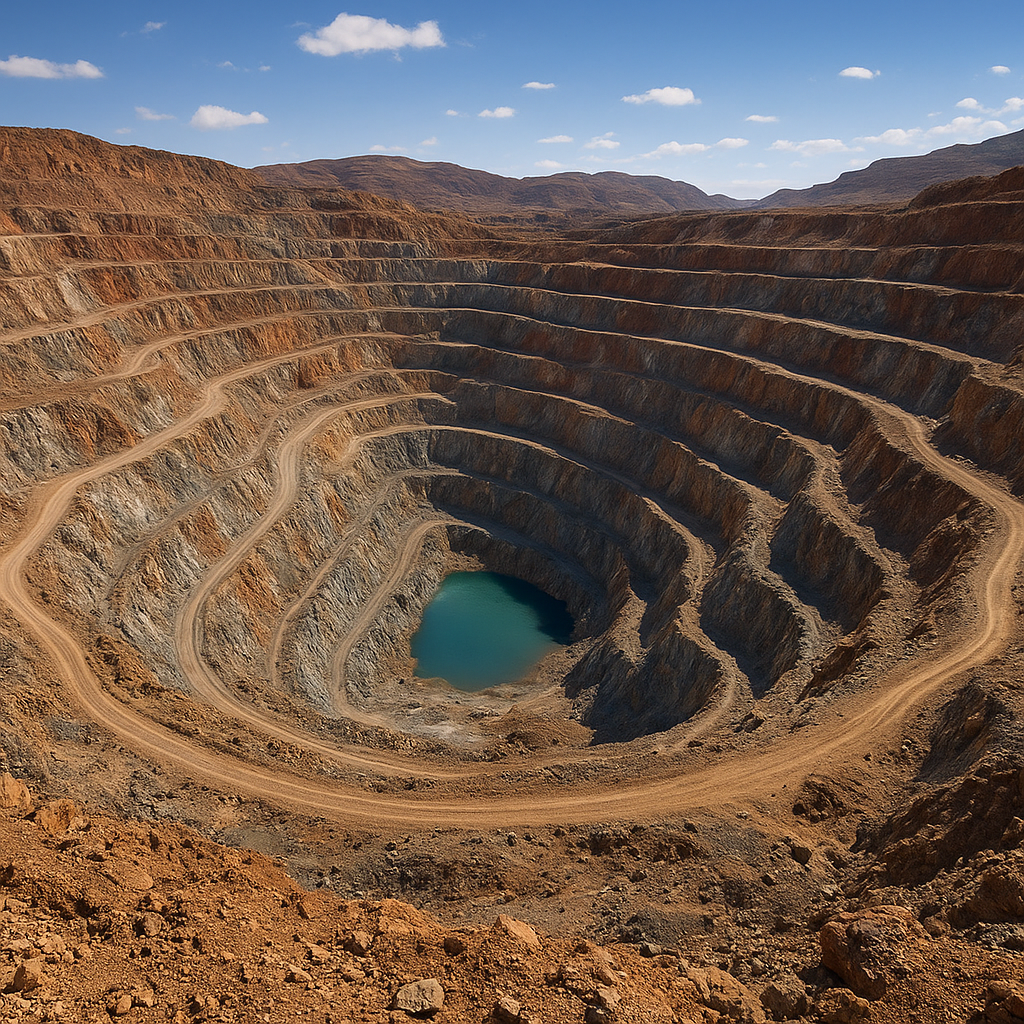
The Mibladen area, a well-known mineral district in central Morocco, has attracted geologists, miners and collectors for over a century. Located in a rugged landscape of the Middle Atlas Mountains near the town of Midelt, the deposit has been primarily valued for high-grade lead mineralization, often enriched in silver. Beyond ore and specimens, Mibladen’s story connects geology, local livelihoods and wider national economy. This article examines where the mine sits, what has been and is being extracted, the mine’s economic role and several intriguing aspects that make Mibladen notable to specialists and the general public alike.
Location and geological setting
The Mibladen mining district lies to the south of the town of Midelt, in central Morocco, where the highlands of the Middle Atlas give way to plateaus and valleys. The district is composed of a cluster of vein-style occurrences and small ore bodies distributed across carbonate and clastic host rocks. Its accessibility from regional centers made the area practical for both early artisanal operations and later industrial-scale development.
Geology at a glance
Geologically, Mibladen is classically described as a system of hydrothermal veins and replacement bodies. The principal ore mineral is galena (lead sulfide), which typically carries significant amounts of silver as a byproduct. Sphalerite (zinc sulfide) and barite are commonly present, and oxidation near the surface has produced secondary minerals such as anglesite and cerussite that are prized by mineral collectors.
The ore-bearing structures are often controlled by brittle faulting and fracture networks, where metal-rich fluids circulated and precipitated sulfides in open spaces and permeable horizons. Host rocks include limestones and other carbonate sequences, and the alteration halos around veins can show silicification and local replacement textures. This structural and lithological setting is typical of many vein-hosted base-metal deposits around the world.
Local geography and infrastructure
- Proximity to Midelt: The nearby town acts as a logistical hub, providing roads, services and a workforce.
- Transport links: Regional roads connect the district to larger Moroccan transport networks, facilitating ore shipment when operations are active.
- Topography: Rugged terrain shapes how mines were developed, with adits and shafts dug into hillsides and valleys to follow veins.
Mineralization, production and what is extracted
The hallmark product of Mibladen has been lead, primarily in the form of galena, often accompanied by recoverable quantities of silver. Depending on the horizon and the vein, miners also recover zinc (from sphalerite) and barite, and oxidized zones yield attractive specimens of secondary minerals.
Primary commodities
- Lead: The main metal exploited commercially; galena is the primary ore mineral.
- Silver: Often present in significant concentrations within galena, adding economic value.
- Zinc: A common associate; in some pockets it is economically recoverable.
- Barite and other gangue minerals: Occasionally mined or stockpiled depending on market demand.
Historically, the richest episodes of production came when easily accessible, high-grade veins were being exploited. The interplay between vein width, grade and ease of access determined the viability of individual workings. In many Mibladen operations the high silver content of galena meant the ore commanded a premium, making relatively small tonnages profitable compared with similar-grade lead ores elsewhere.
Mining methods and scale
Mibladen’s mining history includes phases of small-scale artisanship, colonial-era concession development and periods of more organized industrial extraction. Methods ranged from shallow open cuts and adits to deeper underground workings where vertical shafts and horizontal galleries followed mineralized veins. Ore was typically hand-sorted on-site and sent to nearby processing facilities or local smelters in earlier periods. Modern exploration techniques and mechanized mining could increase scale, but the district’s geology generally favors modestly sized, discontinuous orebodies rather than massive continuous deposits.
Economic significance and regional impact
While Morocco is globally best known for its vast phosphate industry, deposits like Mibladen play an important complementary role in the national mineral economy. The local economic footprint of mining at Mibladen spans wages, services and small-business activity associated with extraction and transport.
Direct and indirect economic benefits
- Employment: Mining activity—formal or informal—creates jobs in extraction, processing, transport and support services. Even small-scale operations can be an important source of income in rural mountain areas.
- Local procurement: Mines buy fuel, food, equipment and services, circulating money through nearby towns such as Midelt.
- Fiscal contributions: Royalties, taxes and concession fees (when applicable) contribute to regional and national revenues.
- Export earnings: Metals and concentrates from lead-silver ores can be exported or sold domestically to smelters, supporting foreign exchange inflows.
For nearby communities, even intermittent mining activity can provide seasonal income and sustain ancillary trades. That said, the nature of vein-type deposits means that mines can have episodic production cycles—periods of intensive recovery interspersed with dormancy when grade or market conditions are unfavorable.
Strategic and industrial roles
Lead recovered from Mibladen historically fed into national supply chains for battery manufacturing, construction materials and metal alloys. The silver content added to the strategic value, since silver has industrial, photographic (historically) and jewelry uses, as well as being a monetary metal in certain contexts. In a broader sense, Mibladen-type deposits contributed to Morocco’s reputation as a diversified mineral producer, complementing large-scale phosphate and potash operations with base-metal outputs.
Social, environmental and regulatory aspects
Mining inevitably brings social and environmental challenges as well as benefits. In the Mibladen district, issues range from legacy tailings and rock dumps to water quality concerns and the health of miners engaged in informal work. Addressing these requires regulatory oversight, community engagement and modern environmental management practices.
Environmental considerations
- Tailings and waste rock: Old dumps can generate acid drainage in some circumstances, mobilizing metals into local watercourses.
- Dust and particulate contamination: Crushing, hauling and sorting can create airborne particulates affecting nearby settlements.
- Water use: Mining and processing require freshwater resources in a semi-arid region, potentially stressing local supplies.
- Rehabilitation: Abandoned workings may require stabilization, re-vegetation and monitoring to reduce long-term hazards.
Modern projects place greater emphasis on environmental impact assessments, tailings management, and progressive reclamation. For historical sites like Mibladen, remediation of legacy impacts is an ongoing priority that can involve government programs, industry funding and community participation.
Social dynamics
Mining shapes local societies through employment, migration and changing land use. Historically, Mibladen attracted itinerant workers and small-scale operators. Today, efforts to formalize artisanal activity, improve workplace safety and ensure fair benefit-sharing are important for stability and long-term community welfare. Education, health services and infrastructure improvements tied to mining revenues can create durable advantages for host regions if managed transparently.
Historical background and interesting facts
Mibladen’s history is a tapestry of ancient local extraction, colonial concessions and modern mineral collecting. The area has been mined intermittently for many decades, with a notable surge in activity during the first half of the 20th century when European mining companies operated in Morocco. That period left behind engineered adits, shafts and a legacy of mineral specimens that later became sought after by collectors worldwide.
Mineralogical attractions
Collectors prize Mibladen specimens for their remarkable crystallography and luster. Large, well-formed crystals of galena with visible silver inclusions, lustrous barite plates, and brilliant secondary minerals such as anglesite and cerussite have appeared from the district. Museums and private collections around the world often cite Mibladen as a classic locality for fine lead and silver mineral specimens.
Unique or lesser-known tidbits
- Collector fame: The locality is frequently referenced in mineralogical literature and collector catalogs because of specimen quality and variety.
- Architectural heritage: Old mining structures and smelting remnants can still be seen, offering a tangible link to past industrial practices.
- Archaeological overlap: In many Moroccan mining districts, traces of pre-modern extraction exist; while Mibladen’s recorded modern history is clearer, local oral histories sometimes recall earlier metal-working activities.
- Small-scale revival potential: Periodic rises in metal prices spur renewed exploration and reworking of old workings, a common theme in many vein-hosted districts.
Future outlook and opportunities
Looking ahead, the future of mining activity at Mibladen depends on a mix of geology, economics and policy. Commodity prices, the discovery of new extensions to known veins, improvements in mining technology and stronger environmental governance all influence whether and how mining proceeds.
Exploration and innovation
Modern exploration methods—geophysical surveys, geochemical sampling and 3D geological modeling—can identify targets that were missed by earlier operators. Where new zones of high-grade lead–silver mineralization are identified, responsible development could bring renewed economic activity while applying improved environmental and safety standards.
Value beyond ore
Mibladen’s story is not only about extracted metals. It is also a resource for education (geology and mining engineering), tourism for mineral collectors, and cultural heritage linked to the history of Moroccan mining. Initiatives that combine conservation of mineralogical heritage with community development and environmental remediation can produce multi-faceted benefits.
Conclusion
The Mibladen mine area in central Morocco stands as an example of a district where concentrated but discontinuous vein mineralization produced economically significant lead and silver, shaped local employment and contributed to regional economy. Its geological setting in the Middle Atlas, the aesthetic mineral specimens it yields, and the social-environmental challenges it poses combine to make Mibladen a compelling case study of small-to-medium-scale mineral districts worldwide. Whether viewed through the lens of geology, industry, or cultural interest, Mibladen retains an enduring place in the mineralogical and mining history of Morocco.

