
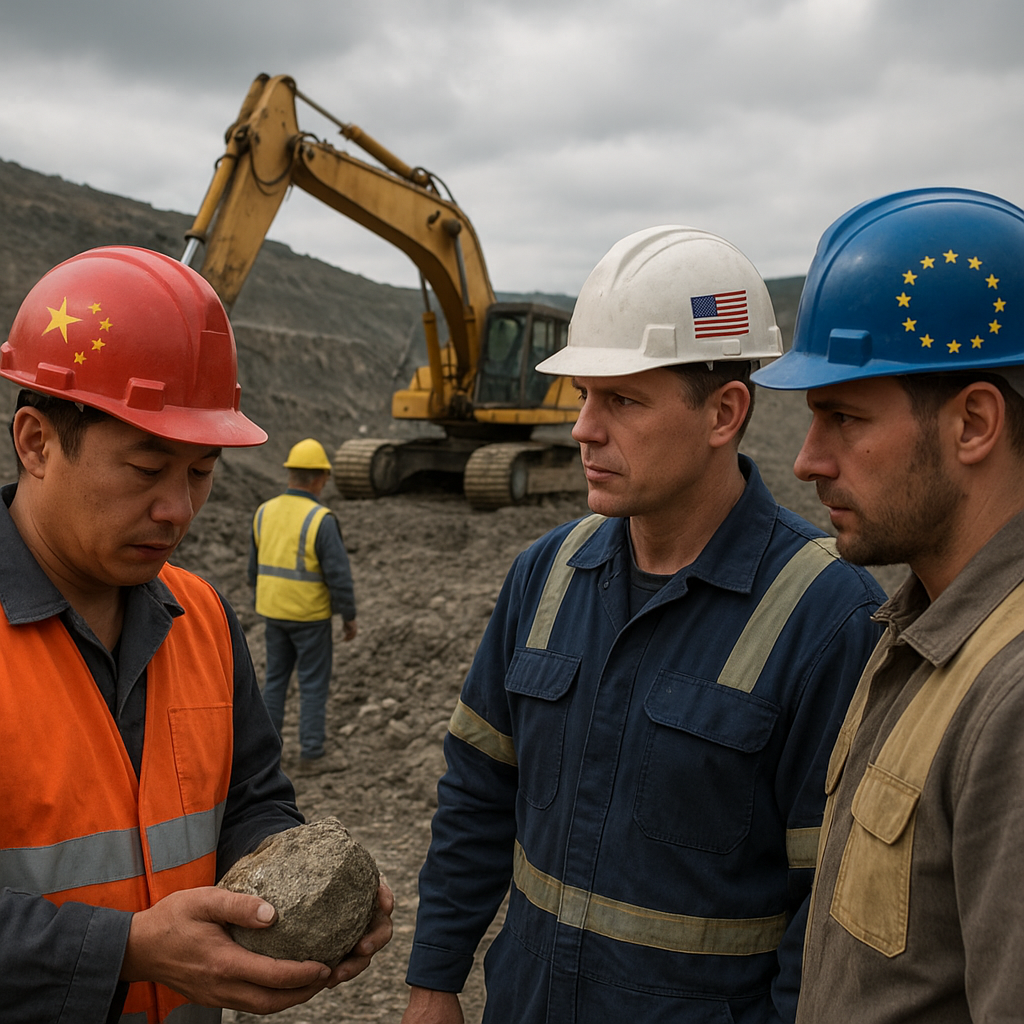
The scramble for rare earth mining rights has become one of the most consequential battlegrounds in the intersection of geopolitics, technology and environmental policy. Nations and corporations are racing to secure access to the elements that power modern electronics, electric vehicles, wind turbines and military systems. This competition is driven not only by the presence of mineral deposits, but by the ability to extract, process and integrate these metals into secure supply chains. The stakes include national security, economic resilience and long-term technological dominance.
Drivers of the global competition
The current global contest over mining rights is propelled by a convergence of technological trends and policy choices. The rapid adoption of renewable energy and electrified transport has created an unprecedented demand for neodymium, dysprosium, praseodymium and other rare earth elements (REEs). At the same time, advances in consumer electronics, medical imaging and defense systems have made these elements strategically indispensable.
Two structural factors amplify the urgency. First, the concentration of processing capacity and refining infrastructure in a handful of countries—most notably China—creates a chokepoint that other states perceive as a vulnerability. Second, the time lag between exploration, permitting, and the construction of operational facilities means that securing mining rights today is a long-term investment in industrial capability. As a result, governments are using diplomatic tools, state-backed financing, and regulatory levers to accelerate access to reserves abroad.
Major players and their strategies
A handful of countries and corporate actors shape the market dynamics. China currently dominates the downstream processing and refining of REEs, while significant deposits are found in places such as Australia, the United States, Brazil, Africa (notably Malawi and South Africa), and parts of Southeast Asia.
China
China’s strategy combines resource development at home and abroad with aggressive investment in processing technologies and global market share. State support for domestic firms, coupled with preferential export policies in the past, allowed Chinese companies to undercut competitors and build extensive refining capacity. China’s approach is also diplomatic: investments and infrastructure financing under initiatives like the Belt and Road facilitate access to upstream resources.
United States and allies
In response, the United States, the European Union, Japan and other allies have pursued a mix of policies aimed at diversifying supply chains. These include subsidies and tax incentives for domestic mining and processing, strategic stockpiling, trade partnerships with resource-rich countries, and support for junior miners with exploration potential. The US Department of Defense and equivalent agencies in allied countries have prioritized REE projects deemed critical for defense applications.
Resource-rich states and private capital
Countries that host deposits face their own choices. Some use licensing regimes to attract foreign direct investment, while others leverage resource nationalism to secure higher fiscal returns or local beneficiation. Private capital—from large mining houses to private equity—has been mobilized to develop projects, but investors must navigate volatile prices, regulatory uncertainty and environmental opposition.
Environmental, social and governance (ESG) challenges
The development of rare earth projects raises significant environmental and social issues. Many REE deposits are associated with radioactive byproducts or require substantial chemical processing, which can generate hazardous waste and contaminate water supplies. Tailings management, air quality and landscape disruption are recurrent concerns for communities near proposed mines.
Securing mining rights today means confronting elevated expectations for sustainability and community consent. Social license to operate is no longer optional; protests, litigation and boycotts can delay or derail projects. Host governments and operators must therefore integrate rigorous environmental impact assessments, robust waste treatment solutions, and equitable benefit-sharing mechanisms into project planning.
Technological and market responses
To reduce dependence on concentrated supplies and to address environmental consequences, industry and researchers are pursuing multiple technical pathways:
- Recycling: Recovering REEs from end-of-life products (motors, magnets, electronics) to create secondary supply streams.
- Substitution: Developing alternative materials or designs that reduce REE content in certain applications.
- Processing innovation: New hydrometallurgical and ion-exchange methods that minimize hazardous byproducts and improve recovery rates.
- Exploration technologies: Improved geophysical and geochemical tools to identify deposits with lower environmental footprints.
Each of these strategies contributes to greater resilience in the supply chain. Recycling, in particular, offers a way to recapture value from already-extracted materials, but scaling it requires standardized collection systems, economic incentives and industrial processing capacity.
Legal, diplomatic and economic instruments
Securing mining rights is not purely a commercial transaction. It involves a complex interplay of legal frameworks, diplomatic engagements and domestic political calculations. Governments use several instruments to shape access:
- Licensing and tendering processes that award exploration and extraction permits under specified environmental and fiscal terms.
- State-backed financing and export credits to underwrite risky projects in frontier jurisdictions.
- Trade policy tools such as tariffs, export controls and quotas to influence downstream dynamics.
- Bilateral and multilateral agreements that include resource clauses, investment protections, and technology transfer provisions.
Investor-state disputes and domestic reforms can influence the risk perception associated with projects. Resource nationalism—the tendency of states to assert greater control over natural resources—can abruptly change contract terms or tax regimes, adding political risk for foreign operators. Consequently, firms often seek political risk insurance or structuring deals with multilateral institutions to mitigate exposure.
Case studies and illustrative projects
Several emblematic projects highlight the spectrum of approaches. In Australia, miners have moved quickly from exploration to partnership with downstream processors in the West to capture a greater share of value. The United States has revived interest in historical sites in California and Mountain West states, coupling private investment with federal incentives. In Africa, projects face a mix of opportunity and controversy: while mineral rents can fund development, weak governance and environmental concerns create friction.
Private-public partnerships have emerged as a model that combines capital, technical expertise and political backing. These arrangements can accelerate timelines and shore up investment confidence, but they also require clear governance to ensure transparency and fair distribution of benefits.
Future trajectories and strategic considerations
Looking ahead, several trends will shape the competition for mining rights. First, technological breakthroughs in processing or magnet design could shift demand patterns and redefine which deposits are economically viable. Second, the development of robust recycling ecosystems will reduce reliance on newly mined material over the long term. Third, geopolitical alignments and trade policies will continue to influence where investment flows and which partners receive preferential access.
Policymakers and corporate leaders must make deliberate choices about balancing speed with responsibility: accelerating access to critical materials while ensuring that extraction follows high environmental and ethical standards. Transparent contracts, community engagement, independent monitoring and capacity-building in host countries will be central to producing outcomes that are sustainable and politically defensible.
Practical policy levers and recommendations
For states and companies seeking to navigate the competition effectively, several practical levers can be deployed:
- Design incentive packages that reward value-added processing and domestic manufacturing rather than raw export.
- Invest in research to lower the environmental footprint of extraction and refining.
- Promote regional cooperation for shared processing facilities to achieve economies of scale.
- Implement clear licensing frameworks and anti-corruption safeguards to attract reputable investors.
- Support circular economy measures—collection, refurbishment and recycling—to build resilient secondary supply.
Engaging civil society and indigenous communities early in project design builds legitimacy and reduces the risk of social conflict. Equally, transparent revenue-sharing and capacity-building measures can transform mineral wealth into sustainable development rather than a source of division.
Economic and strategic implications for businesses
Companies operating in this space must manage a mosaic of risks and opportunities. Firms that vertically integrate—from mining to magnet production to finished products—can capture more value but require large capital commitments. Those that specialize in niche services, such as advanced processing or recycling technologies, can become indispensable partners across multiple supply chains. Strategic collaboration with governments, research institutions and downstream manufacturers often yields the most resilient outcomes.
The market is likely to remain dynamic and contested. Price volatility for rare earth elements can be sharp, responding to policy decisions, technological shifts and speculative behavior. Companies and states that build diversified portfolios—combining mined supply, recycled content and alternative materials—will be best positioned to weather the uncertainties and to secure long-term competitive advantage.
