
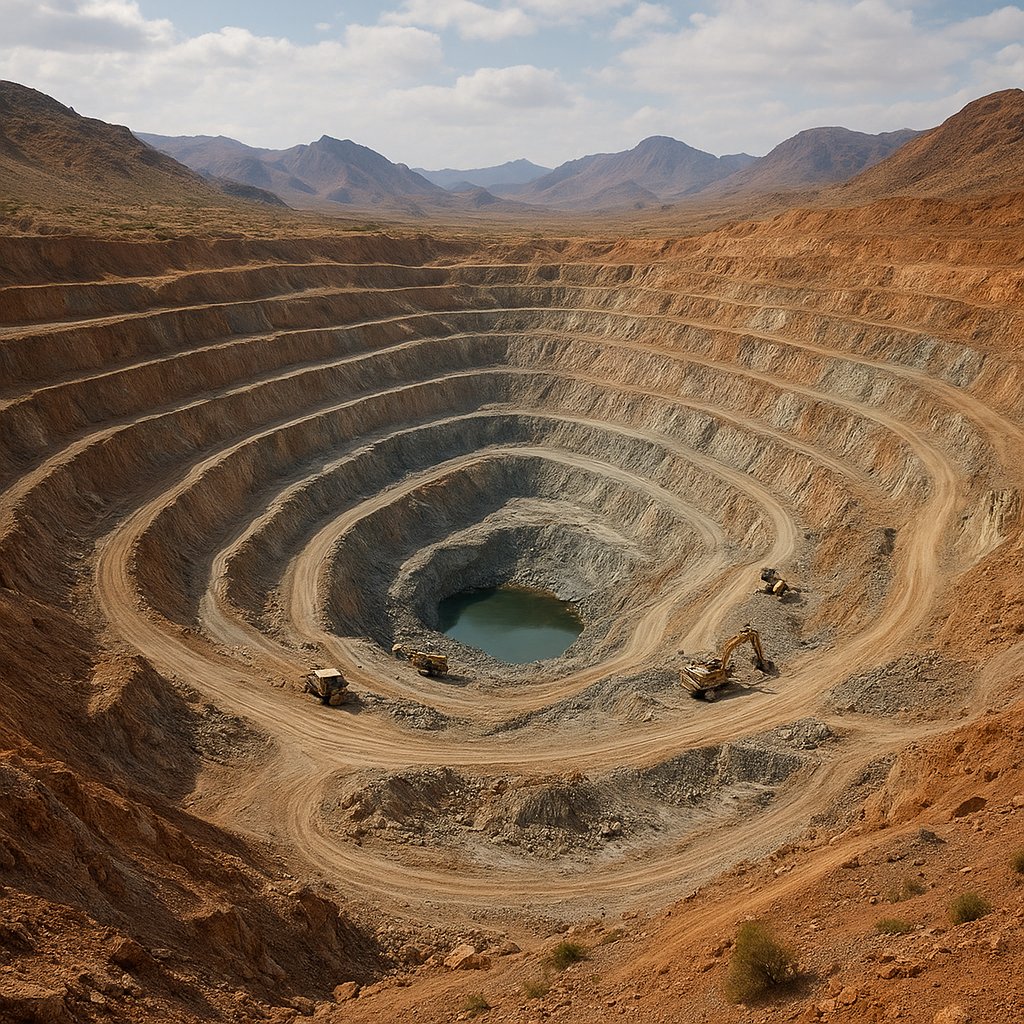
The Ouarzazate region in central-southern Morocco has recently attracted attention not only for its famous film studios and the vast Noor solar complex but also for mineral prospects in its surrounding hinterland. The name Ouarzazate Mine is used informally to describe several mining operations and exploration projects in the area that target primarily silver and associated polymetallic minerals. This article examines where these operations are located, what is extracted, their broader economic significance, and a selection of interesting geological, cultural and technological aspects that make mining around Ouarzazate noteworthy.
Where is the Ouarzazate mining area located?
The zone commonly referred to as the Ouarzazate mining district lies in the Drâa-Tafilalet administrative region of south-central Morocco, anchored by the city of Ouarzazate. Ouarzazate sits at the northern edge of the Sahara and the southern edge of the High Atlas mountains, serving as a geographic crossroads between the mountainous interior and the desert plateaus. The mining prospects and small-scale operations are typically found within a radius of tens to a few hundred kilometres around the city, in the transitional terrains where Precambrian and Paleozoic rocks meet Mesozoic sedimentary sequences.
Geographically, the area benefits from existing transport and energy infrastructure. The N10 and N9 highways and local roads link the district to Marrakech and the Atlantic corridor, while the nearby Noor solar complex supplies a significant local energy resource, which modern mining and processing operations increasingly value. Although Ouarzazate is not in the classic phosphate- or copper-rich basins of Morocco, its geology hosts a variety of mineral systems that can carry silver as either a primary commodity or a valuable by-product of polymetallic deposits.
Geological setting and types of mineralization
The geological framework around Ouarzazate is complex. The High Atlas and Anti-Atlas regions of Morocco are renowned for a diversity of mineral deposit types formed through multiple tectonic and magmatic events. In the Ouarzazate area, mineralization trends are frequently associated with:
- Vein-hosted epithermal systems where hydrothermal fluids deposited silver together with gold and base metals in brittle fractures and veins;
- Polymetallic sulfide occurrences in metamorphic or carbonate host rocks, where silver appears alongside lead and zinc as galena and sphalerite assemblages;
- Skarn and carbonate-replacement deposits developed at contacts between igneous intrusions and carbonate rocks, creating complex mineral chemistry; and
- Supergene enrichment caps where near-surface weathering and oxidation processes concentrated silver in secondary minerals.
Exploration in the district often targets vein systems and structural corridors that can concentrate metals. The presence of historic artisanal workings in many places is evidence that local populations recognized and exploited mineralized veins long before modern exploration. Modern geological mapping, geochemical soil sampling and geophysical surveys are the primary tools used today to delineate targets for drilling.
What is mined and how is it processed?
Minerals extracted
At operations described as the Ouarzazate Mine or neighbouring projects, the principal commodity of interest is silver, but it seldom occurs alone. Typical assemblages include:
- Silver associated with lead (galena) and zinc (sphalerite);
- Minor occurrences of copper minerals in some veins or skarn zones;
- Gold as a frequently co-produced precious metal in epithermal vein systems;
- Accessory minerals such as barite, fluorite and various sulfide and oxide phases.
When silver is present as a by-product of base metal mining, the economics of the operation often improve significantly because the silver credits offset production costs for the primary commodity.
Mining and processing methods
The nature of the deposits around Ouarzazate usually dictates a mix of mining methods. Narrow, high-grade veins are commonly mined by underground techniques including cut-and-fill or bench-and-fill, while more extensive near-surface mineralization may be attacked by small open pits. Artisanal and small-scale mining (ASM) remains common in many parts of Morocco and contributes to local silver production; ASM methods are simple but can pose environmental and safety challenges.
Processing routes for silver-bearing ores typically include:
- Comminution (crushing and grinding) to liberate the sulfide and oxide minerals;
- Flotation to concentrate sulfide minerals and produce a concentrate rich in silver, lead and zinc;
- Smelting or hydrometallurgical processing to extract silver and other metals from concentrates — cyanidation is used for free-milling silver and gold, while smelting or pressure oxidation is required for refractory sulfide concentrates;
- Refining to produce saleable bars or concentrates with acceptable metal grades for the market.
Smaller operations sometimes sell concentrates to regional smelters rather than running full refining circuits on-site. The presence of modern energy sources, including solar power, opens possibilities to decarbonize certain parts of the processing chain.
Economic significance for the region and Morocco
Mining remains an important sector within Morocco’s broader economy, and silver-bearing projects in the Ouarzazate area contribute in several ways. Even when silver is not the headline commodity, its presence as a by-product can materially improve project economics. The key impacts include:
- Employment: Direct mining jobs range from exploration geologists and drill crews to miners, plant operators and administrative staff; ASM provides livelihood for local families. Indirect employment expands into transport, equipment supply, catering and local services.
- Local economic multipliers: Wages spent in local markets, procurement of services and the development of infrastructure (roads, power lines, water pipelines) amplify the economic benefits into surrounding communities.
- Government revenues and royalties: Taxes, royalties and concession fees provide public income that can fund regional development projects, though equitable distribution is always a policy challenge.
- Exports and balance of trade: Silver and polymetallic concentrates that are exported generate foreign exchange; even small-scale exports contribute to a diversified mining export base beyond Morocco’s dominant phosphate industry.
On a strategic level, development of mining around Ouarzazate fits Morocco’s policy to broaden its mineral base and attract responsible investment. Provincial governments and national agencies such as the National Office of Hydrocarbons and Mines (ONHYM) and private operators aim to translate exploration success into sustainable operations. For communities, properly managed mines can provide long-term benefits in employment, schools, clinics and improved infrastructure.
Environmental, social and technical challenges
Mining in arid and semi-arid regions like the Ouarzazate district faces particular environmental and social pressures. Ensuring that silver mining delivers net benefits requires careful attention to:
- Water scarcity: Mining and processing can be water-intensive. Operators must invest in efficient water management, including recycling, use of low-water processing technologies, and protection of local groundwater resources used by communities and agriculture.
- Tailings and waste rock management: Proper containment of tailings, management of acid rock drainage risk and progressive rehabilitation of waste dumps are essential to prevent long-term contamination.
- Air quality and dust control: Crushing, haulage and dry tailings can generate dust; mitigation measures include dust suppression, paved roads, and vegetative cover where feasible.
- ASM regulation and safety: Informal mining offers livelihoods but can be hazardous. Formalization programs, cooperative models and technical training can improve safety and reduce environmental damage.
- Social licence to operate: Community engagement, benefit-sharing agreements and transparent communication build trust and reduce conflict. Cultural heritage, grazing land and tourism interests (notably film production and desert tourism near Ouarzazate) must be respected in mine planning.
Technically, improving ore recovery and reducing energy intensity are priorities. Advances in ore-sorting, selective mining, and renewable energy integration (notably leveraging local Noor solar capacity) can lower operating costs and environmental footprints. There is growing interest in implementing higher environmental standards so that mining complements, rather than conflicts with, tourism and renewable energy ambitions in the region.
Interesting facts and regional context
The Ouarzazate region offers an unusual combination of cultural, technological and geological features that enrich any discussion of mining:
- Film and minerals: Ouarzazate is known as Morocco’s film capital — many international movies and series are shot here. Mining sites and desert landscapes around the city sometimes double as film locations, linking the extractive and creative industries in surprising ways.
- Solar power synergy: The nearby Noor solar complex is one of the world’s largest concentrated solar power installations. Mining projects can potentially benefit from local renewable energy for low-carbon processing, reducing diesel dependency.
- Ancient mining tradition: Morocco has a long history of mining dating back to Phoenician and Roman times. Old mine workings and historical artefacts are found across the Atlas and Anti-Atlas; the presence of artisan workings near Ouarzazate is a living continuation of that tradition.
- Hidden high-grade veins: Narrow but exceptionally rich silver veins are sometimes encountered and historically motivated small, targeted works. Such high-grade pockets can transform local economies despite modest overall ore volumes.
- Geo-diversity: The transitional geology around Ouarzazate makes it a natural laboratory for studying different deposit styles, from epithermal to skarn and carbonate-hosted mineralization.
Future prospects and strategic opportunities
Looking forward, the potential for further silver-related development near Ouarzazate depends on a mix of exploration success, responsible investment, and collaborative community relations. Key opportunities include:
- Exploration upside: Modern geophysical and geochemical techniques can identify blind or deeply seated systems not apparent from surface outcrops. Continued exploration may reveal additional sweet spots or extensions of known veins.
- Value addition: Developing local beneficiation capacity to produce higher-value concentrates or semi-refined products can increase the economic return to the region and reduce transport and logistics costs.
- Green mining initiatives: Integrating solar energy, water recycling, and low-emission processing aligns mining activity with Morocco’s climate and renewable energy goals, potentially attracting ESG-focused capital.
- Formalizing ASM: Training, licensing and integration of artisanal miners into formal supply chains can improve safety, increase productivity and secure social benefits for communities dependent on mining incomes.
- Research and training: Partnerships with Moroccan universities and technical institutes to develop local mining expertise strengthen the human capital needed for sustainable, long-term sector development.
Market context
Global demand for silver reflects its dual roles in industrial applications (electronics, photovoltaics, medical technologies) and as a store of value. Trends in electronics and renewable technologies may increase industrial demand for silver, while price volatility affects the economics of smaller deposits. For Ouarzazate-area projects, being flexible in processing streams — being able to recover silver, lead, zinc and gold credits — improves resilience to commodity cycles.
Concluding observations
The mining activities referred to under the Ouarzazate Mine banner illustrate how mineral development in Morocco increasingly intersects with renewable energy, tourism and long-standing cultural landscapes. While silver is an important and attractive commodity for the district, the true value of mining in the Ouarzazate area lies in careful integration of technical excellence, environmental stewardship and meaningful socioeconomic benefits for local populations. With modern exploration methods, a focus on sustainability and partnerships between government, companies and communities, the silver prospects around Ouarzazate can contribute to diversified regional development while respecting the unique natural and cultural environment that makes the district so special.

