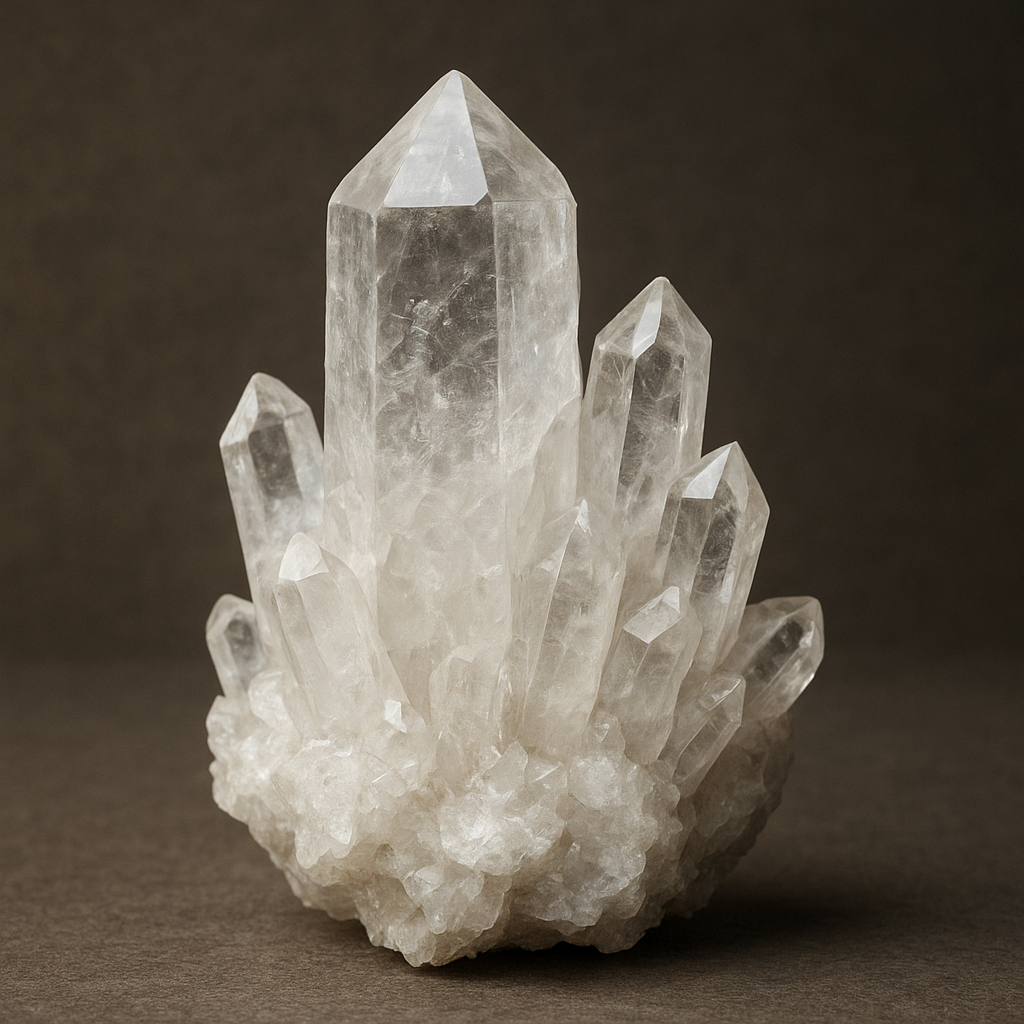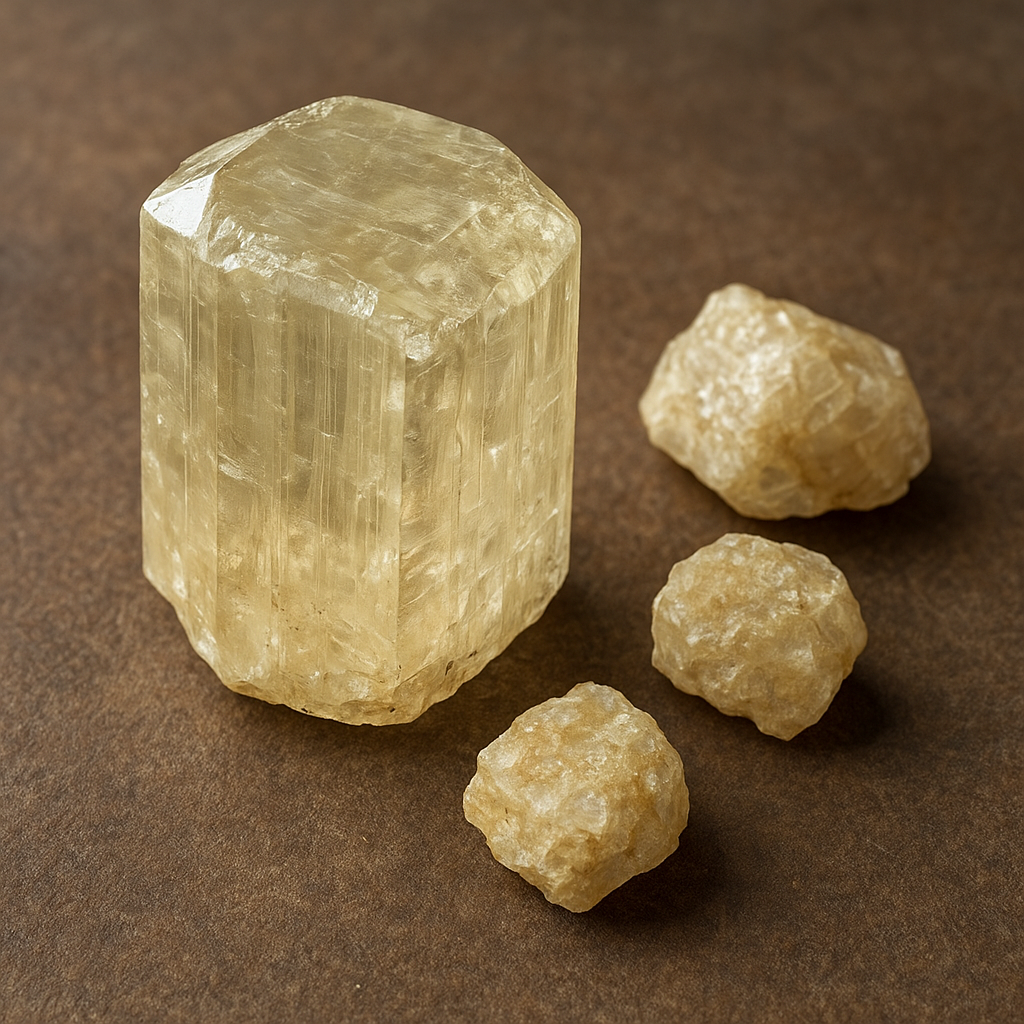
Scapolite is a mineral group that quietly links the disciplines of gemology, petrology and economic geology. Known both as a collector’s specimen and as a modest gemstone, scapolite opens a window into the chemical exchanges that occur during rock alteration and metamorphism. This article surveys its nature, where it forms, how it is used, and other intriguing aspects that make scapolite a mineral worth more attention than it often receives.
What scapolite is: chemistry, structure and varieties
At its core, scapolite is not a single mineral but a solid-solution series between two end-member compositions. The sodium-rich member is known as marialite and the calcium-rich member as meionite. Natural scapolites contain variable amounts of chlorine, carbonate and hydroxyl groups, which control many aspects of their appearance and chemistry. The group crystallizes in the tetragonal system, often forming prismatic crystals or granular masses with good cleavage and a vitreous to resinous luster.
The ability of the scapolite structure to accommodate different ions makes it a useful recorder of fluid compositions in rocks. Because chloride and carbonate may substitute into the lattice in varying proportions, scapolite compositions can reflect the presence of saline fluids, CO2-rich fluids, or metasomatic agents during rock evolution. This compositional variability is one reason geologists study scapolite to reconstruct metamorphic and hydrothermal histories.
Where scapolite occurs: geological settings and notable localities
Scapolite commonly forms in settings where original rocks have been altered by metasomatic fluids or where high-grade metamorphism has reworked original silicate assemblages. Typical environments include:
- Contact and regional metamorphism of aluminous rocks, where scapolite can grow at the expense of feldspar or other aluminous phases.
- Skarns and other skarn-type deposits, where interaction between magmatic fluids and carbonate-rich host rocks produces a diverse suite of calc-silicate minerals including scapolite.
- Albitized granites and pegmatites, where sodium-rich fluids promote scapolite in place of original feldspar.
- Marble and calc-silicate metamorphic rocks, often associated with CO2-bearing fluids.
Gem-quality scapolite and attractive crystals have been recovered from several countries. While the mineral is worldwide in occurrence, notable sources include Canada, Myanmar (Burma), Pakistan, Tanzania and Madagascar. Each locality may produce characteristic colors: for example, some Tanzanian and Madagascan specimens are prized for warm yellow to orange hues, while certain Pakistani and Burmese occurrences yield more violet or pink tones. The supply of gem-quality material is limited compared to mainstream gemstones, which contributes to scapolite’s appeal among collectors and specialist lapidaries.
Physical and optical properties
Understanding scapolite’s physical and optical properties is essential for gemmologists and petrologists alike. Key properties include:
- Mohs hardness usually around 5 to 6, making scapolite tougher than many carbonates but softer than quartz. This informs cutting and everyday wear considerations for jewelry.
- Cleavage is typically good in two directions, which influences how crystals break and how gems must be oriented for cutting.
- Optical characteristics often show noticeable birefringence and sometimes distinct pleochroism, where color changes slightly as the crystal is viewed from different directions. Some scapolites are weakly to moderately pleochroic, which can add visual depth to faceted stones.
- Color ranges are broad: colorless, white, yellow, orange, pink, violet, brown and deep reddish-brown can all occur depending on chemistry and trace elements. A small subset of scapolites display a striking color-change effect—shifting appearance between lighting types—making them particularly prized among collectors.
Scapolite as a gemstone: cutting, care and market considerations
Although not as famous as sapphire or emerald, scapolite enjoys a modest market among connoisseurs who value unusual gemstones. When used in jewelry, considerations include:
- Cutting: lapidaries often opt for faceted cuts to maximize brilliance, though cabochons can highlight color zoning or chatoyancy when present. Because of cleavage and variable hardness, careful orientation and gentle handling during cutting are necessary.
- Stability and care: because scapolite is moderately hard but can have cleavage planes, it is more vulnerable to sharp blows and harsh chemicals than many jewelry stones. Routine care involves avoiding ultrasonic cleaners and strong acids, and guarding against knocks that could chip the stone.
- Treatments: heating and irradiation have been applied experimentally and commercially to improve or alter scapolite colors. Heat treatment can intensify yellow or orange tones and sometimes reduce brownish overtones. Buyers should seek disclosure of any treatments.
- Value: price depends on color saturation, clarity, cut quality and rarity. Deep, saturated colors and larger faceted stones command the highest prices, but even modest pieces are attractive to niche collectors because of the mineral’s relative scarcity in gem-quality form.
Role in geology and petrology
Beyond gemology, scapolite is a mineral of interest to geoscientists. It provides clues about fluid-rock interaction, pressure-temperature conditions and the chemistry of metamorphic environments. Some important aspects include:
- Geothermobarometry: compositions of scapolite, particularly the relative proportions of sodium, calcium, chloride and carbonate, can be used to estimate the composition of metamorphic fluids and, under some circumstances, constrain temperature and pressure conditions during formation.
- Indicator of metasomatism: the presence of scapolite in rocks such as alumino-silicates or marbles often signals the action of migrating fluids, including magmatic brines or metamorphic fluids, which may have implications for mineralization and ore formation.
- Textural relationships: scapolite commonly replaces feldspar or forms symplectites with other calc-silicates, yielding textural evidence for stages of alteration. Petrographic study can reveal sequential events in a rock’s history.
Mineralogical curiosities and scientific research
Scapolite’s structural flexibility and ability to host volatile components has made it a subject of research in several specialized areas.
Fluid inclusion and stable isotope studies
Fluid inclusions trapped in scapolite crystals can preserve microscopic pockets of the fluids present during growth. By analyzing these inclusions, researchers recover direct evidence about temperature, salinity and gas composition. Stable isotope studies (oxygen, carbon) on scapolite can further reveal whether CO2 or marine-derived fluids were involved in metasomatic processes.
Experimental petrology
Laboratory experiments have explored stability ranges of scapolite and the reactions that produce it from feldspars and other aluminous phases. Such experiments help define conditions under which scapolite forms, including the roles of CO2, chloride activity and calcium-sodium exchange. These findings feed back into interpretations of natural scapolite occurrences in skarns and high-temperature metamorphic terrains.
Associated minerals and typical assemblages
Scapolite rarely occurs alone. It is commonly associated with a set of calc-silicate and aluminous minerals that reflect its formation environment:
- In skarns: garnet, pyroxene, wollastonite, vesuvianite and diopside.
- In marbles and metamorphosed impure limestones: calcite, dolomite, tremolite and other amphiboles.
- In albitized granites: albite, epidote, chlorite and sometimes zeolites.
Because these associations depend on protolith composition and fluid chemistry, they provide context for reconstructing geological processes at work in a given deposit.
Notable uses beyond gemstones
While scapolite’s primary economic value lies in its role as a gemstone and collector’s material, it has a few other niche applications and implications:
- Exploration indicator: in some terrains scapolite occurrence can indicate the presence of fluid pathways or metasomatic zones that may be associated with other mineralization, such as skarn-hosted base-metal or tungsten deposits.
- Scientific material: high-quality crystals are used in research on crystal chemistry, ion exchange and fluid-rock interaction. Their ability to incorporate volatiles makes them useful for experiments simulating metamorphic conditions.
- Educational specimens: scapolite’s clear textural relationships with host rocks make it a favorite in teaching petrology and mineralogy.
Care, ethics and sustainability of sourcing
Responsible acquisition is increasingly important for any gemstone. Scapolite mines vary in scale from small artisanal operations to larger quarries. Buyers and collectors should inquire about the origin of specimens and the conditions under which they were mined. Practical care advice for scapolite jewelry and specimens includes gentle cleaning, storage away from harder gemstones, and protection from acids and sharp impacts.
Interesting anecdotes and cultural notes
Scapolite has occasionally been confused with other yellow-to-orange gems in the trade, which has led to interesting stories of misidentification in both historical and modern contexts. Its relative scarcity among mainstream jewelry stones has helped foster a small but passionate community of aficionados who specialize in rare and unusual gems.
In metaphysical and crystal-healing circles, scapolite is sometimes credited with properties that promote insight, problem-solving and transformation—ideas that draw on the mineral’s geological role as an agent of change in rocks. While such beliefs are outside the scope of mineral science, they do contribute to scapolite’s contemporary cultural footprint and market demand in certain niches.
Final thoughts on an understated mineral
Scapolite sits at the intersection of solid-solution chemistry, fluid-rock interaction and aesthetic appeal. As both a collector’s specimen and a gemstone, it offers tactile and visual rewards. As a petrologic indicator, it provides valuable evidence of the fluids and reactions that shape Earth’s crust. Whether appreciated for its subtle colors, studied for its record of geological processes, or admired for its crystal forms, scapolite deserves recognition as a mineral that quietly records and reflects change.