
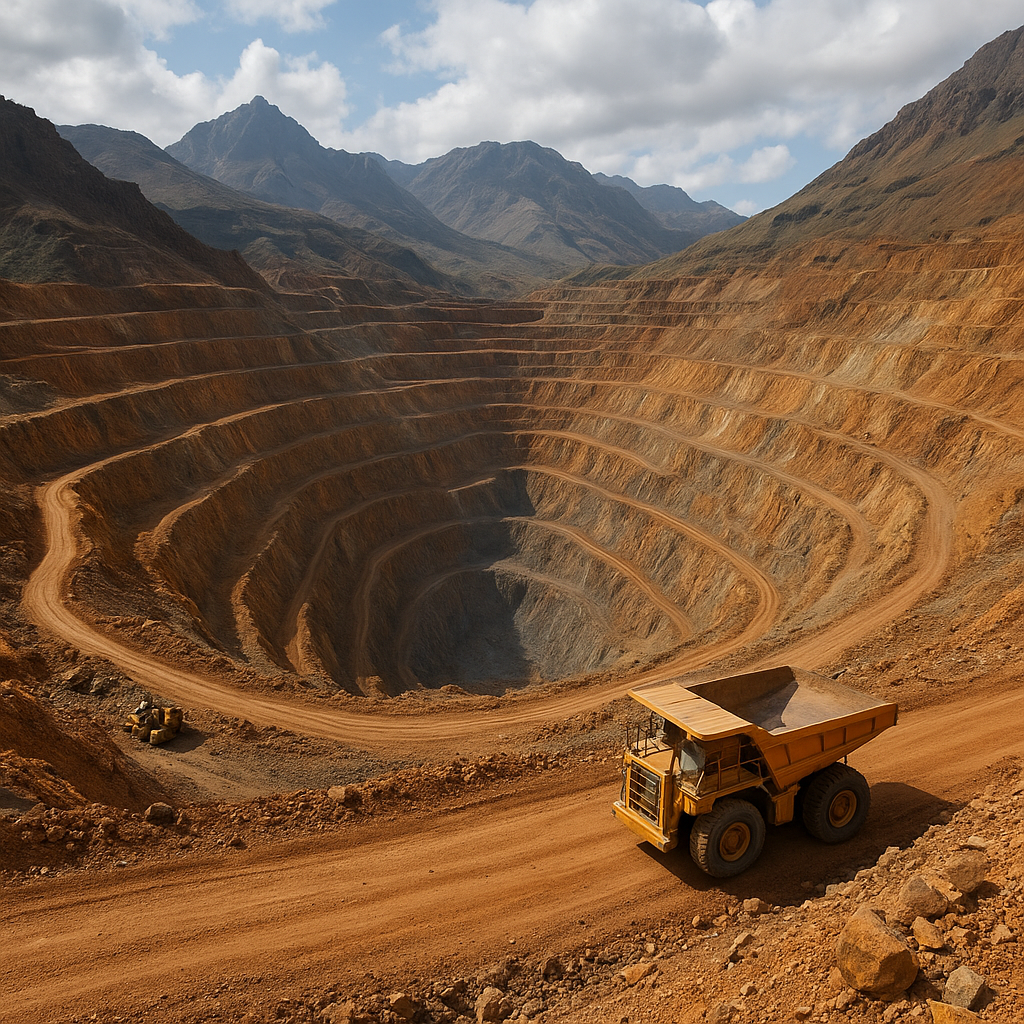
The Santa Barbara mine, situated in the highlands of the Peruvian Andes, is a notable source of tin and related mineralization. Its presence illustrates the long history of metal extraction in Peru, where geological forces concentrated valuable ores that support both local livelihoods and national exports. This article explores where the mine is located in a geological context, what is extracted there, how operations are conducted, the mine’s economic importance, and a selection of compelling facts that reveal why tin mining matters beyond the rock face.
Location and geological setting
The Santa Barbara mine is located in the Andean highlands of southern to central Peru, an area characterized by rugged topography and high plateaus. Its altitude and setting place it within the broader mineral-rich belt of the Andes, where hydrothermal systems and magmatic events over millions of years created concentrated deposits of metals. In this environment, tin commonly occurs as the oxide mineral cassiterite, often associated with quartz veins, greisen zones, and in some districts with polymetallic vein systems that can include copper, silver and tungsten.
The regional geology typically consists of a complex stack of volcanic and intrusive rocks, with episodes of felsic magmatism that are critical to tin mineralization. Hydrothermal fluids derived from these magmatic sources move through fractures and faults, precipitating tin-rich minerals when conditions—temperature, pressure, and chemistry—change. The Santa Barbara deposit is best understood as part of this volcanic-intrusive-hydrothermal continuum. Structural controls such as faults and shear zones host the highest-grade veins, while broader greisenized plutonic margins produce disseminated tin that can be amenable to bulk-mining methods.
What is extracted: ore types and mineralogy
The primary commodity of the Santa Barbara mine is tin, found mainly in the form of cassiterite (SnO2). Cassiterite is dense, chemically stable, and has a distinctive luster, which makes it workable by a range of concentration methods, including gravity separation. In many Andean tin districts, cassiterite is accompanied by other metallic minerals—such as chalcopyrite (copper), sphalerite (zinc), galena (lead), and various silver-bearing sulfides—and by gangue minerals like quartz and feldspar.
At Santa Barbara, mining operations target both high-grade veins and lower-grade disseminated mineralization depending on economics and available technology. Vein-hosted cassiterite often yields higher-grade ore that can be processed by relatively simple crushing and gravity circuits, while lower-grade material may require grinding and flotation to produce a marketable concentrate. Occasionally, small amounts of tantalum or tungsten can be present in similar geological settings, though tin remains the primary economic driver.
Mining methods and processing
Mining methods at Santa Barbara vary with orebody geometry and depth. Where veins are shallow and well-defined, underground workings using cut-and-fill or shrinkage stoping may be used. In more disseminated zones or where the overburden is manageable, selective open pit methods are sometimes deployed. The choice between open pit and underground mining is driven by factors such as ore grade, width of mineralization, rock mechanics, and environmental constraints.
Processing typically begins with comminution: crushing and milling to liberate cassiterite from the host rock. Because cassiterite is dense, gravity concentration techniques—spiral concentrators, shaking tables, jigs—are commonly used to separate tin-rich fractions. In many modern operations, gravity is combined with flotation circuits that can recover fine cassiterite particles and remove sulfide contaminants. The resulting tin concentrate is shipped to smelters or refineries where it is smelted and refined into metallic tin for industrial use.
Operational safety and worker training are important components of modern mining practice. Mechanization, ventilation standards in underground workings, and controlled blasting are examples of practices that improve productivity and reduce health risks. In areas where artisanal mining coexists with industrial operations, there are ongoing programs to formalize small-scale miners, introduce safer methods, and integrate their production into legal supply chains.
Economic significance
The Santa Barbara mine contributes to economic activity on several levels. At the local level, the mine provides direct employment opportunities for mine workers, engineers, and administrative staff, and indirect jobs in transport, maintenance, and services. These jobs support families in surrounding communities, often in highland towns with limited alternatives for stable income.
- Exports: Tin concentrates from operations such as Santa Barbara feed into national export figures. The metal’s demand in global markets—especially for use in solder for electronics—translates into foreign exchange revenue for Peru.
- Value chain: Beyond raw concentrate sales, value is added through smelting, alloy production, and the manufacturing of components that use tin. While much of the refining takes place abroad, Peru’s involvement in upstream production supports industries that participate in the global metals market.
- Local investment: Mining companies frequently invest in infrastructure—roads, power, water systems—that can benefit broader community development. Royalties and taxes paid by the mine become part of municipal and regional budgets, theoretically funding education, health care, and public works.
However, the economic benefits depend on stable tin prices, efficient operations, and responsible community relations. Tin’s price volatility on international markets can make planning difficult for mine operators and local workers who depend on steady employment. Sustainable planning and diversification of the local economy help reduce dependence on a single commodity.
Environmental and social aspects
Mines in Andean settings face environmental challenges related to water management, tailings disposal, landscape alteration, and biodiversity impacts. The high-altitude ecosystems surrounding Santa Barbara are often fragile, with limited soil development and slow recovery rates after disturbance. Managing the environmental footprint requires careful planning: tailings storage facilities must be engineered to prevent dam failure, water must be treated to avoid contamination from metals and sediment, and progressive rehabilitation of disturbed land should be part of operational plans.
Socially, mines must build trust with nearby communities, which may include Indigenous and peasant populations with long-standing land uses such as grazing and agriculture. Meaningful consultation, benefit-sharing agreements, local hiring priorities, and programs to support education and health are standard practices that help maintain the social license to operate. In many cases, companies partner with local organizations to implement agricultural improvement projects, potable water systems, and vocational training.
Responsible sourcing is increasingly important for metals like tin. International frameworks and industry initiatives aim to ensure that tin is not derived from conflict financing or environmentally destructive practices. Certification schemes and traceability measures can help connect mine production to consumers who demand ethically produced materials.
Interesting facts and historical notes
Tin has a deep human history. Long before modern mining, Andean communities knew and used tin-bearing materials. In pre-Columbian times, local metallurgists combined tin with copper to produce early bronzes, alloys that were important for tools and ornamentation. Archaeological evidence across the Andes shows sophisticated metalworking traditions that predate European contact.
Some points of interest related to Santa Barbara and similar tin mines:
- High-altitude mining: Mines like Santa Barbara operate at significant altitudes where weather, oxygen levels, and logistics make work uniquely challenging. Transporting equipment and concentrate often requires coordinated use of roads and, in remote areas, air transport.
- Gravity separation: Because cassiterite is relatively dense compared to most gangue minerals, simple gravity-based processing can be very effective. This property historically made tin a practical commodity for smaller-scale operations as well as for larger mines.
- Strategic metal: Tin is a strategic industrial metal. Its role in soldering for electronics links small Andean mines to global supply chains that power everything from household appliances to data centers.
- Artisanal mining: In many tin districts, artisanal and small-scale miners contribute a meaningful share of production. Programs that formalize artisanal production can improve working conditions and environmental performance while increasing traceability.
- Geological detectives: Geologists use multiple clues—alteration patterns, vein styles, geochemical signatures—to map potential extensions of tin mineralization. Discoveries often follow careful fieldwork combined with modern geophysics and geochemistry.
Market connections and future outlook
The global tin market is influenced by demand from electronics, automotive (for solder and alloys), and specialty applications (including certain chemical uses). Mines such as Santa Barbara connect local geology to these global markets. The mine’s future prospects depend on several factors: continued demand for solder and tin alloys, exploration success that extends the mine’s reserves, cost control in a challenging high-altitude environment, and the ability to operate sustainably and in harmony with local communities.
Technological advances in mineral processing, automation in underground operations, and improved water- and tailings-management techniques have the potential to increase recovery rates and reduce environmental impact. Exploration for satellite deposits or deeper extensions of existing orebodies can extend mine life. At the same time, market diversification—developing downstream refining capacity within the country or regional partnerships—could capture greater value locally.
Finally, the evolving landscape of responsible sourcing and corporate social responsibility means that mines must be proactive in transparency, community engagement, and environmental stewardship. For Santa Barbara, success will likely be measured not just in tonnes extracted, but in the resilience of the communities it touches and the long-term health of the surrounding environment.

