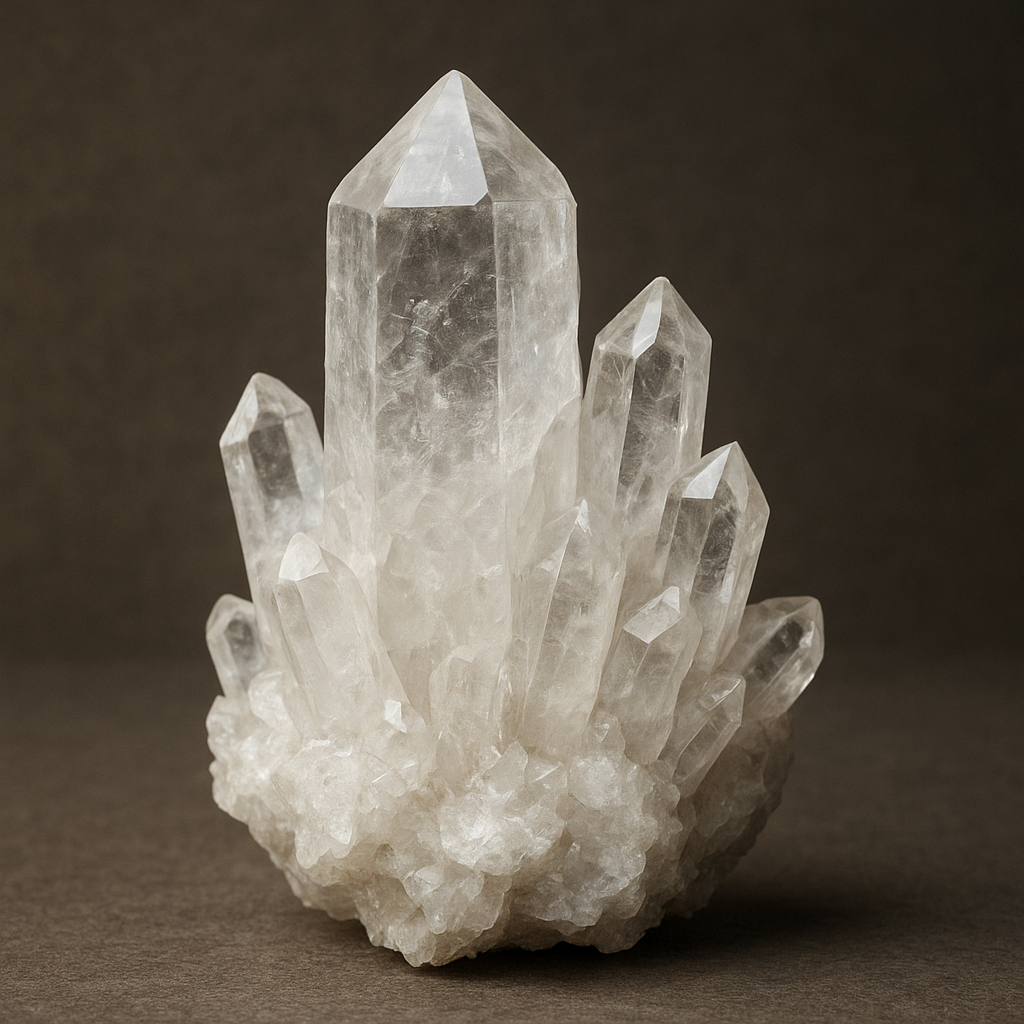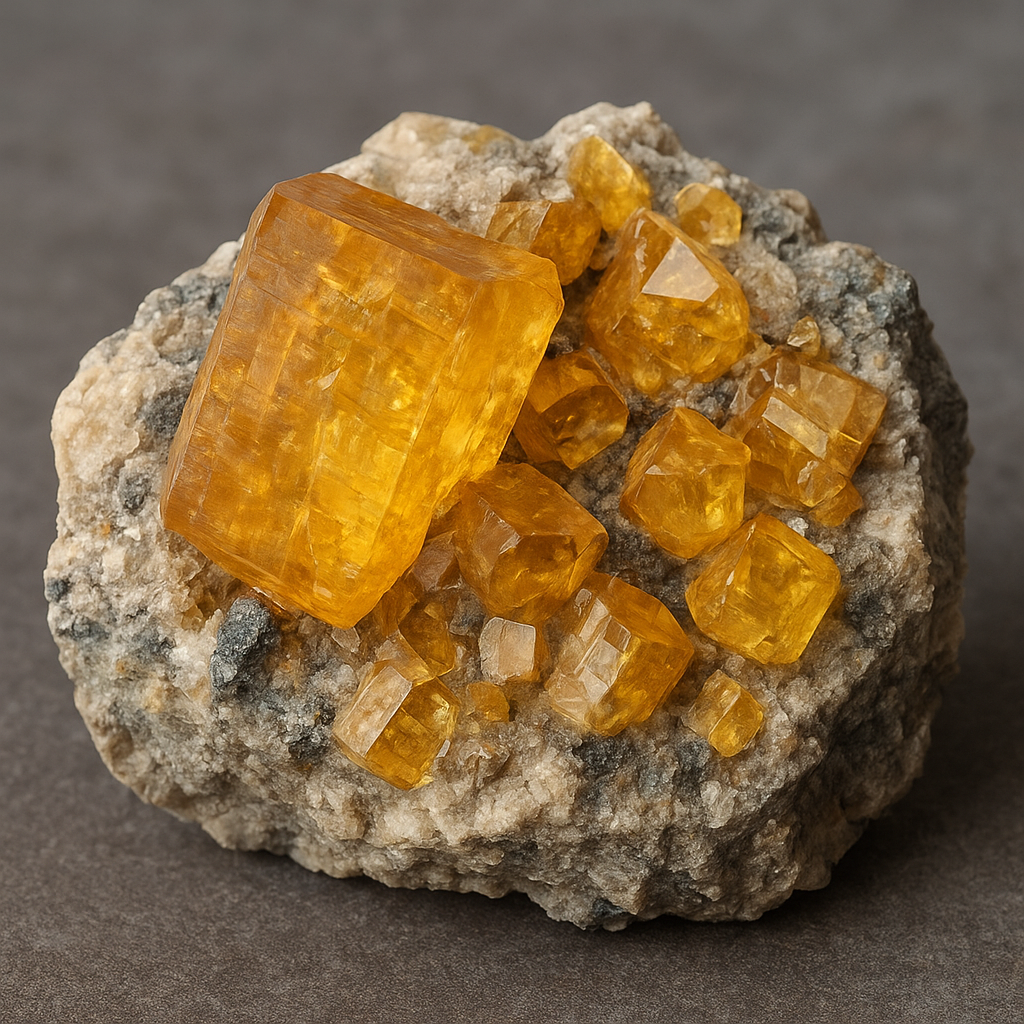
Scheelite is a striking and scientifically important mineral whose presence has shaped mining districts, industrial supply chains and even the methods geologists use to search for ore. This article explores the mineral’s chemistry, its geological settings, the ways it is mined and processed, and the many applications of the metal it yields. Along the way, attention is given to identification techniques, notable localities and some surprising cultural and technological connections associated with this relatively modest yet crucial mineral.
Composition, Structure and Diagnostic Properties
The mineral scheelite carries the chemical formula CaWO4, placing it among the family of tungstates. Its crystalline structure belongs to the tetragonal system and is reflected in often well-formed dipyramidal crystals, though massive, granular and vein-hosted habits are common in ore bodies. Several physical properties make scheelite recognizable to both field geologists and collectors.
Key physical and optical characteristics
- Color: Typically colorless to pale yellow, brownish or gray; can be honey-colored or even display blue tones when included.
- Luster: Adamantine to greasy.
- Hardness: Around 4.5–5 on the Mohs scale, making it softer than quartz but harder than many gangue minerals.
- Specific gravity: High for a non-metallic mineral — approximately 5.9–6.1 — due to the heavy tungsten atom in its structure. This high density is a key identification feature.
- Under ultraviolet light, many scheelite specimens show a pronounced fluorescence, typically bright blue under short-wave UV; this characteristic is used extensively in exploration and mining.
Because scheelite contains tungsten in the form of the tungstate ion, it is economically significant. The combination of noticeable heft, adamantine luster, and UV fluorescence often allows simple field identification where the mineral occurs in ore-bearing environments.
Geological Settings and Global Occurrence
Scheelite forms in a range of geological settings, nearly always associated with felsic igneous activity or contact metamorphism. It is a common tungsten ore worldwide and typically occurs in veins, skarns and greisen zones where tungsten has been mobilized by hydrothermal fluids.
Typical settings where scheelite forms
- Skarns: Perhaps the most famous hosts of scheelite are calc-silicate skarns formed at the contact between intrusive granitic bodies and carbonate-rich sedimentary rocks. Metasomatic reactions concentrate tungsten into discrete zones that may host economic ore.
- Hydrothermal veins: Scheelite is found in quartz veins and replacement deposits developed from hydrothermal fluids carrying tungstate complexes. These veins often contain associated minerals such as fluorite, molybdenite and quartz.
- Greisens and altered granites: Zones of intense alteration (greisenization) around granitic intrusions can concentrate tungsten along with tin and other elements.
- Placer concentrations are possible due to scheelite’s high density, making it recoverable by gravity methods where erosion has liberated grains.
Associated minerals and mineralogic environment
Common associates include quartz, fluorite, calcite, mica, cassiterite (tin oxide), molybdenite and other tungsten minerals such as wolframite. The assemblage often reflects a magmatic-hydrothermal origin and the composition of the host rocks. Because scheelite can precipitate where fluid temperature, pH and ligand chemistry change (for example, encountering carbonate host rocks), its distribution can be patchy and controlled by structural conduits and reactive lithologies.
Notable occurrences
- Major historical and modern scheelite deposits include those in Sweden, China, Canada (notably in British Columbia and Yukon), the United States (California, Colorado), Bolivia and Portugal.
- Some of the world’s largest tungsten producers rely on scheelite-dominant deposits or mixed wolframite–scheelite orebodies.
Mining, Concentration and Processing
The extraction and beneficiation of scheelite is driven by the need to produce tungsten concentrates for smelting and chemical processing. The mineral’s physical and surface properties inform the most effective processing routes.
Exploration and mining methods
- Exploration often targets skarn belts and greisenized granites near known intrusions, combining geological mapping, geochemistry and geophysics.
- Scheelite-bearing ore is mined by both open-pit and underground methods depending on depth, geometry and economics.
Beneficiation techniques
The high specific gravity of scheelite makes gravity concentration a very effective initial processing step. Typical flowsheets include:
- Crushing and grinding to liberate scheelite grains.
- Gravity separation (jigs, spirals, shaking tables) to produce a heavy-mineral fraction enriched in scheelite.
- Flotation, using collectors such as fatty acids (e.g., sodium oleate) or more modern reagents tailored to scheelite’s surface chemistry, to further upgrade the concentrate.
- Fine grinding and regrinding stages for liberation when scheelite is locked in gangue minerals.
Because scheelite is not magnetic, magnetic separation is not generally effective unless associated iron-bearing minerals are present. Chemical leaching methods are less common for primary scheelite ores but can be used for low-grade materials or specific recovery routes in hydrometallurgical processing.
Smelting and refining
Concentrates are typically roasted and then processed to extract tungsten in the form of ammonium paratungstate (APT) or as tungsten oxides. APT serves as the precursor to pure tungsten metal and tungsten carbide, the two most commercially significant tungsten products. The route from ore to final metal involves a series of thermal and chemical steps designed to remove gangue elements and produce a high-purity tungstate feed.
Industrial Uses and the Importance of Tungsten
Scheelite’s significance lies not in the mineral itself but in the element it supplies. Tungsten is unique among industrial metals due to its extremely high melting point, high density and mechanical strength. The metal and its compounds are integral to modern manufacturing and technology.
Main industrial applications
- Tungsten carbide: Combined with carbon, tungsten forms one of the hardest materials known. Tungsten carbide is the backbone of cutting, drilling and wear-resistant tooling used across mining, machining and construction industries.
- High-temperature applications: Tungsten’s high melting point makes it vital for filaments, heating elements and aerospace applications where thermal endurance is critical.
- Alloys: Tungsten strengthens steels and alloys used in automotive, military and industrial sectors. Heavy alloys containing tungsten are also used in radiation shielding and counterweights because of the metal’s density.
- Electronics and chemical catalysts: Tungsten compounds serve as catalysts and are used in electronics for contacts and other specialized components.
Strategic and economic dimension
Tungsten is regarded as a critical metal in many countries because of its role in defense, industry and high-tech manufacturing. Control of tungsten supply chains and the ability to process scheelite concentrates into usable metal remains strategically important. Countries with sizable scheelite resources can influence the market for specific high-performance alloys and tooling products.
Gemological and Aesthetic Uses
Although not a mainstream gemstone, scheelite occasionally appears in collections and jewelry. When clear and well-formed, cut scheelite can display remarkable brilliance due to its high refractive index and dispersion. However, its modest hardness limits daily wear applications.
Gem-cutting and collecting
- Collectors prize well-formed scheelite crystals for their crystal form and distinctive fluorescence.
- Faceted scheelite gems are sometimes made for display; they are admired for their adamantine luster and fire but require care because of relative softness.
- Because many specimens fluoresce vividly, cabochons and faceted stones can appear to glow under UV light, offering an unusual aesthetic.
Exploration Techniques and Practical Field Identification
Geologists use a combination of techniques to find scheelite-enriched zones. The mineral’s fluorescence and high density make straightforward tools—UV lamps and simple gravity tests—useful for reconnaissance.
Field tools and methods
- Portable UV lamps: Short-wave UV lights often make scheelite glow a bright blue. This simple test is particularly effective at night or in darkened trenches and mine workings.
- Heft and density tests: The dense nature of scheelite is noticeable by hand when compared with typical gangue minerals of similar size.
- Geochemical assays: Soil and rock sampling can detect elevated tungsten concentrations and guide more detailed investigation.
- Geophysical approaches: Because scheelite is not especially conductive or magnetic, exploration focuses more on structural mapping and identifying favorable host rocks rather than direct geophysical targeting.
Environmental, Social and Technical Challenges
Mining and processing scheelite-bearing ores raise environmental and social considerations common to many metal extraction industries. Responsible development requires attention to tailings management, water quality and community relations.
Environmental aspects
- Tailings and waste rock: Like other hard-rock mines, scheelite operations produce significant volumes of waste that must be contained to prevent erosion and leaching.
- Chemical reagents: Flotation and processing use various chemicals; careful management prevents contamination of local waterways.
- Tungsten mobility: Tungsten compounds are generally less mobile and bioaccumulative than some heavy metals, but local environmental risk assessments are still necessary to evaluate long-term impacts.
Socioeconomic factors
Societies hosting scheelite mines may gain substantial employment and infrastructure benefits, but sustainable practices and community engagement are essential. Additionally, because tungsten is strategically important, supply security and ethical sourcing (including traceability of concentrates) have become concerns for manufacturers and governments.
Historical Notes and Cultural Connections
The mineral’s name honours the Swedish chemist Carl Wilhelm Scheele, who made significant early contributions to the chemistry of tungsten-bearing minerals. Scheele’s work in the late 18th century paved the way for later researchers to isolate tungsten and recognize its industrial potential. Through the 19th and 20th centuries, tungsten’s demanding physical properties made it central to the development of incandescent lighting, steel hardening technologies and modern cutting tools.
Another curious historical angle is scheelite’s role in prospecting folklore: miners often used rudimentary UV techniques or night-time inspections of cuts and outcrops to locate „glowing” scheelite — an activity that blends practical mineralogy with the romantic image of the prospector’s lamp flicking over a vein face.
Notable Localities and Collector Highlights
Collectors and museums prize specimens from localities where scheelite forms large, lustrous crystals or occurs with attractive associations. Examples include:
- Sweden: Classic occurrences with well-crystallized scheelite and significant historical mining.
- China: Major modern production and some spectacular specimens.
- North America: Notable mines in Canada and the western United States have produced both ore and fine mineral samples.
- Bolivia and Portugal: Important producers with notable skarn-type occurrences.
Emerging Topics and Research Directions
Research on scheelite and tungsten-bearing systems continues to evolve. Areas of active interest include:
- Improved reagents and processing flowsheets to maximize recovery while minimizing environmental impact.
- Isotopic and fluid-inclusion studies to better understand the sources and evolution of tungsten-bearing hydrothermal systems.
- Recycling and secondary sources: as global demand for tungsten grows, recycling of tungsten-containing products becomes an increasingly important complement to primary mining.
- Use of remote sensing and machine learning in exploration to better target skarn and greisen systems where scheelite may be concentrated.
Scheelite is more than a mineralogical curiosity; it is a keystone in the supply chain that supports high-performance manufacturing and critical technologies. From the field geologist’s UV lamp to the high-speed cutting tools in modern factories, scheelite’s presence ties a mineralogical signature to broad technological and economic outcomes. For mineral collectors, economic geologists and industrial users alike, scheelite remains a mineral worth watching — both for its inherent attributes and for the strategic metal it provides.