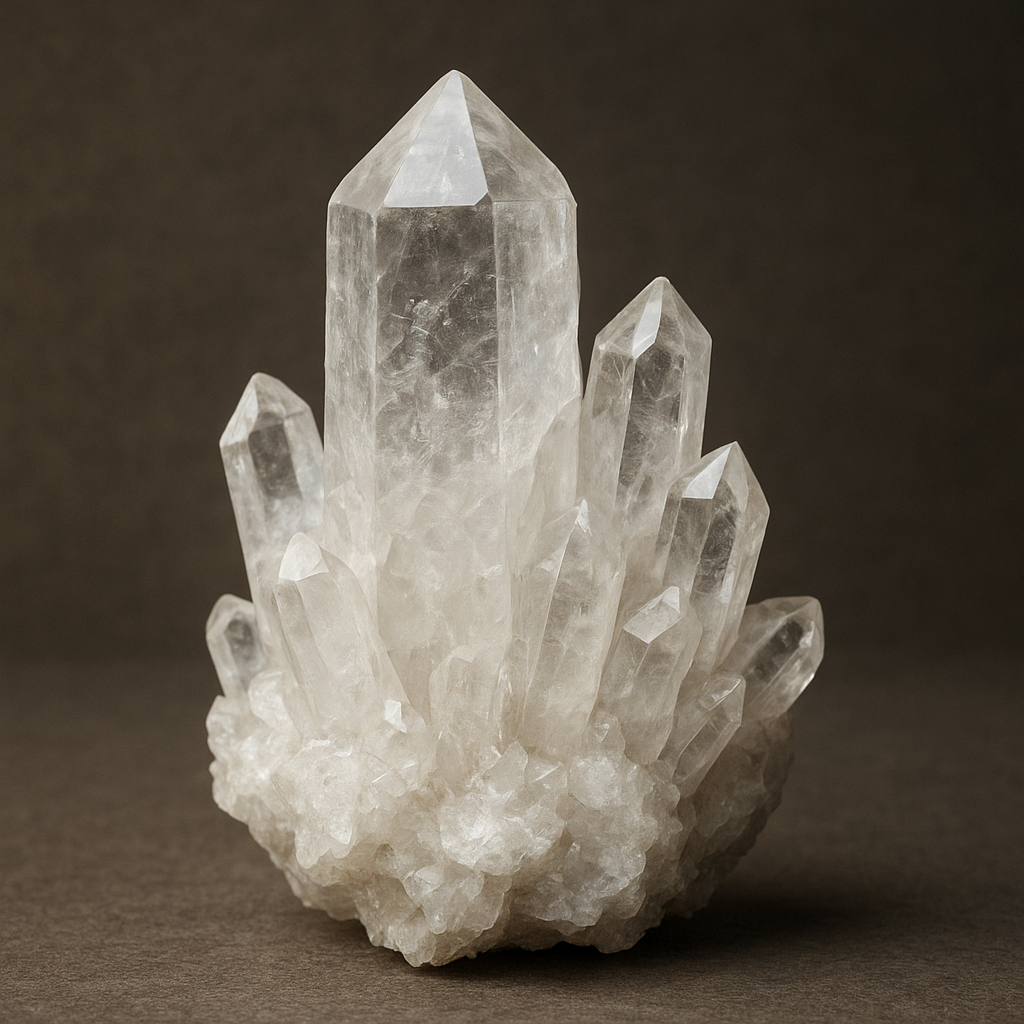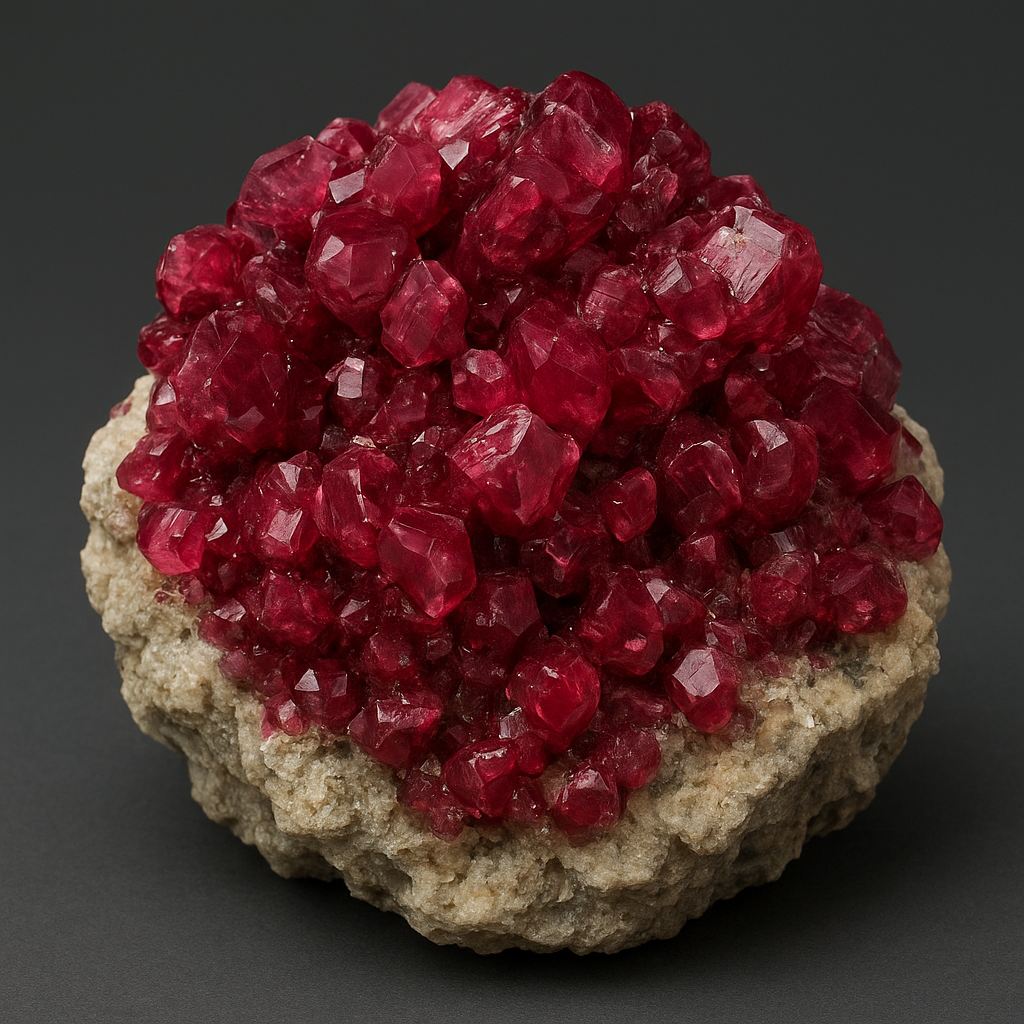
Roselite is a captivating and relatively rare mineral that draws attention for its delicate pink to rose-red hues and its role as an indicator of cobalt- and arsenic-bearing geological environments. Although it rarely appears in quantities useful for extraction, roselite fascinates mineralogists, collectors, and environmental scientists alike. In the following sections you will find a detailed exploration of its appearance, geological context, applications, and some intriguing scientific and cultural connections surrounding this mineral.
Mineralogy and appearance
Roselite is best known for its typically soft, often translucent to transparent crystals and its distinctive pink to rose-red color. The mineral forms in the oxidized zones of arsenic- and cobalt-rich deposits, where primary sulfides and arsenides break down and release cations and anions that recombine to form secondary minerals. Habitually, roselite appears as prismatic or bladed aggregates, crusts, or as small well-formed crystals that are prized by collectors for their fine color and crystal shape.
Key diagnostic features used in the laboratory and in the field include luster (commonly vitreous to slightly pearly on cleavage faces), cleavage tendencies, and optical properties under a polarizing microscope. Modern investigation of roselite typically employs techniques such as X-ray diffraction (XRD), electron microprobe analysis, and spectroscopy (Raman, infrared) to determine precise chemical composition and structural details. Because roselite commonly contains cobalt and arsenic, its identification must be handled with care and corroborated with laboratory methods rather than color alone.
Appearance and physical traits
- Typical eye-catching pink to rose-red tones, sometimes pale or nearly colorless in manganese- or iron-rich variants.
- Vitreous to subadamantine luster; crystals often show good transparency in thin fragments.
- Crystals can be prismatic, tabular, or form radial aggregates and crusts on host rock.
- Often occurs intimately intergrown with other secondary arsenates and oxides, which can complicate hand-sample identification.
Where roselite occurs and notable localities
Roselite is a secondary mineral of oxidized arsenic- and cobalt-bearing deposits, so its presence is tied to specific geochemical environments where cobalt and arsenic-bearing primary minerals undergo weathering. It is not a ubiquitous mineral; instead, it appears in a relatively limited set of classic mineral localities around the world that have the right combination of elements and oxidation conditions.
Some well-known places where roselite or roselite-group minerals have been reported include:
- Morocco — The Bou Azzer and Anti-Atlas districts are famous for cobalt- and arsenic-rich veins and produce a wide variety of rare secondary cobalt arsenates and arsenides that can host roselite or closely related species.
- Tsumeb, Namibia — A world-class type locality for many secondary arsenates; fine specimens from Tsumeb often become staples in major collections.
- Cobalt, Ontario, Canada — The historic Cobalt mining district produced numerous arsenide and arsenate minerals; roselite-like species have been documented in oxidized pockets and vein selvages.
- Sweden and other parts of Europe — Localities with polymetallic deposits, such as Långban and various German mining districts, have produced rare arsenate minerals, sometimes including roselite occurrences.
- Mexico and the southwestern United States — Several mines in these regions, particularly those known for cobalt-, nickel- and arsenic-bearing ores, have yielded roselite or similar secondary arsenates in small amounts.
Specimens from classic localities are often sought not for industrial use but for their aesthetic and scientific value. Museums and private collections prize well-crystallized roselite specimens for display, and the largest or best-formed crystals can become objects of research and exhibition.
Formation, geochemistry and associated minerals
Roselite forms in the oxidized and weathering zones of arsenide- and sulfide-rich deposits. As oxygenated waters percolate through ore bodies, oxidation of primary minerals (for instance, cobalt arsenides or arsenopyrite) liberates arsenic and cobalt ions. These ions migrate short distances in groundwater and, under favorable pH and redox conditions, precipitate as secondary arsenates, including roselite and its relatives.
The exact chemical composition of roselite can vary, reflecting substitution between transition metals (Co, Fe, Mn, Ni) and other cations in its crystal lattice. This compositional variability means that the mineral can record local geochemical conditions at the time of formation, making it useful to geoscientists studying the paragenesis (formation sequence) of a deposit.
Commonly associated minerals—those that coexist with or form in sequence with roselite—include:
- Other secondary arsenates such as erythrite (a cobalt arsenate), annabergite (a nickel arsenate), and various scorodite and pharmacosiderite species.
- Oxide minerals like goethite, limonite, and manganese oxides that arise from weathering of sulfides.
- Silicates and carbonates (quartz, calcite, dolomite) that act as host rock or appear as gangue minerals.
This mineral assemblage is diagnostic of low-temperature, near-surface alteration processes and is often zoned—meaning certain arsenates will form closer to the oxidized surface while others remain in deeper or more restricted microenvironments.
Applications, collecting and scientific relevance
Roselite has limited or no industrial use because it rarely forms in mineable quantities and because of the presence of arsenic, which complicates economical extraction. Nevertheless, it has several niche applications and areas of importance:
- Collector and museum pieces: Aesthetic specimens with good color and crystal form are valuable for private and institutional collections. The rarity and attractive coloration make roselite specimens highly desirable among specialized collectors.
- Exploration indicator: In mineral exploration, the occurrence of cobalt- and arsenic-bearing secondary minerals can indicate the presence of primary cobalt-, nickel- or arsenic-rich ores at depth. Finding roselite or related minerals can prompt targeted geochemical sampling and drilling programs.
- Environmental and geochemical research: Because roselite forms as a product of weathering and secondary mineralization, it can be used to study arsenic mobility, sequestration mechanisms, and the long-term stability of arsenic in mine-impacted environments. Understanding how roselite locks up arsenic under certain conditions can inform remediation strategies where arsenic contamination is a concern.
- Scientific study of crystal chemistry and substitution: The roselite group, with its variable metal content, is of interest to mineralogists investigating how transition-metal substitution affects crystal structure, color, and stability.
Despite its scarcity, roselite’s presence can tell geologists much about the geochemical history of a deposit. Academically, specimens are often the subjects of detailed structural and compositional studies that help refine mineral classification and formation models.
Handling, preservation and safety considerations
Because roselite is an arsenate-bearing mineral, handling and preservation require care. Arsenic-bearing specimens can pose health risks if dust is inhaled or if acidic conditions cause arsenic to leach out. Collectors and curators follow basic safety protocols:
- Minimize handling of specimens; when handling is necessary, use gloves and avoid touching face.
- Do not attempt to grind, saw, or polish specimens without appropriate ventilation and dust control measures.
- Avoid exposure to strong acids or prolonged moisture that could promote leaching of arsenic; specimens are best stored dry and in stable conditions.
- Label and document specimens accurately, and inform downstream handlers (for example, museums or universities) about arsenic content so that appropriate precautions are maintained.
When preparing specimens for display, curators may isolate roselite behind glass, use sealed mounts, or apply inert consolidants to reduce friability and dust generation. These measures protect both the specimen and the public.
Analytical techniques and research directions
Advanced analytical techniques have deepened insight into roselite’s structure and formation. Some commonly used methods include:
- X-ray diffraction (XRD) to determine crystal structure and verify mineral identity.
- Electron microprobe or LA-ICP-MS to quantify elemental composition and map elemental zoning at micron scales.
- Raman and infrared spectroscopy to fingerprint molecular vibrations and identify hydration states and associated anions.
- Scanning electron microscopy (SEM) for high-resolution imaging of habit, microtextures, and association with other phases.
Active research topics include the thermodynamic stability of roselite under varying pH and redox conditions, its role in natural attenuation of arsenic, and the limits of cobalt substitution in its structure. With growing interest in critical metals like cobalt for battery technologies, the mineralogical context of cobalt in deposits—including secondary minerals such as roselite—becomes relevant to resource science and sustainable mining practices.
Interesting historical and cultural notes
The evocative pink color of roselite makes it a mineral that attracts descriptive names and poetic attention. While it has not reached the same cultural prominence as some gemstones, its aesthetic appeal and rarity have earned it a niche status among collectors. Historically, many arsenate minerals received names reflecting their color or locality; roselite’s name likely references the rose-like tones that distinguish it in mixed mineral assemblages.
Noteworthy specimens from famed localities often circulate among major museums and private collections, and occasionally appear in specialized mineral auctions. These specimens are often studied not only for display but as type material or reference material for research into arsenate mineralogy.
Identification tips for collectors
For non-specialists, distinguishing roselite from other pink arsenates can be challenging. The following tips can help:
- Use a hand lens to examine crystal habit and luster—rosemary-like aggregates and well-formed prismatic crystals are telling.
- Observe associated minerals; co-occurrence with cobalt arsenates or characteristic oxidation products increases the likelihood of roselite.
- Carry out field tests cautiously—do not perform destructive tests that might generate dust. Instead, photograph and document specimens and seek laboratory confirmation.
- Obtain laboratory analysis (XRD or microprobe) for definitive identification.
When in doubt, consult experienced mineralogists or reputable dealers, and consider submitting samples to a certified laboratory for analysis. Proper documentation of locality, matrix, and associated minerals greatly aids identification and scientific value.
Concluding remarks on roselite’s role in mineralogy
Roselite occupies a specialized but informative niche within mineralogy: a visually appealing, chemically informative secondary arsenate that links the processes of weathering and ore evolution to practical concerns in collecting, mining exploration, and environmental science. Though not economically important as an ore mineral in its own right, its presence can illuminate the history of a deposit and signal the presence of valuable or environmentally significant elements. In collections and laboratories alike, roselite continues to intrigue with its color, delicate crystal habits, and the geochemical stories locked within its structure.