
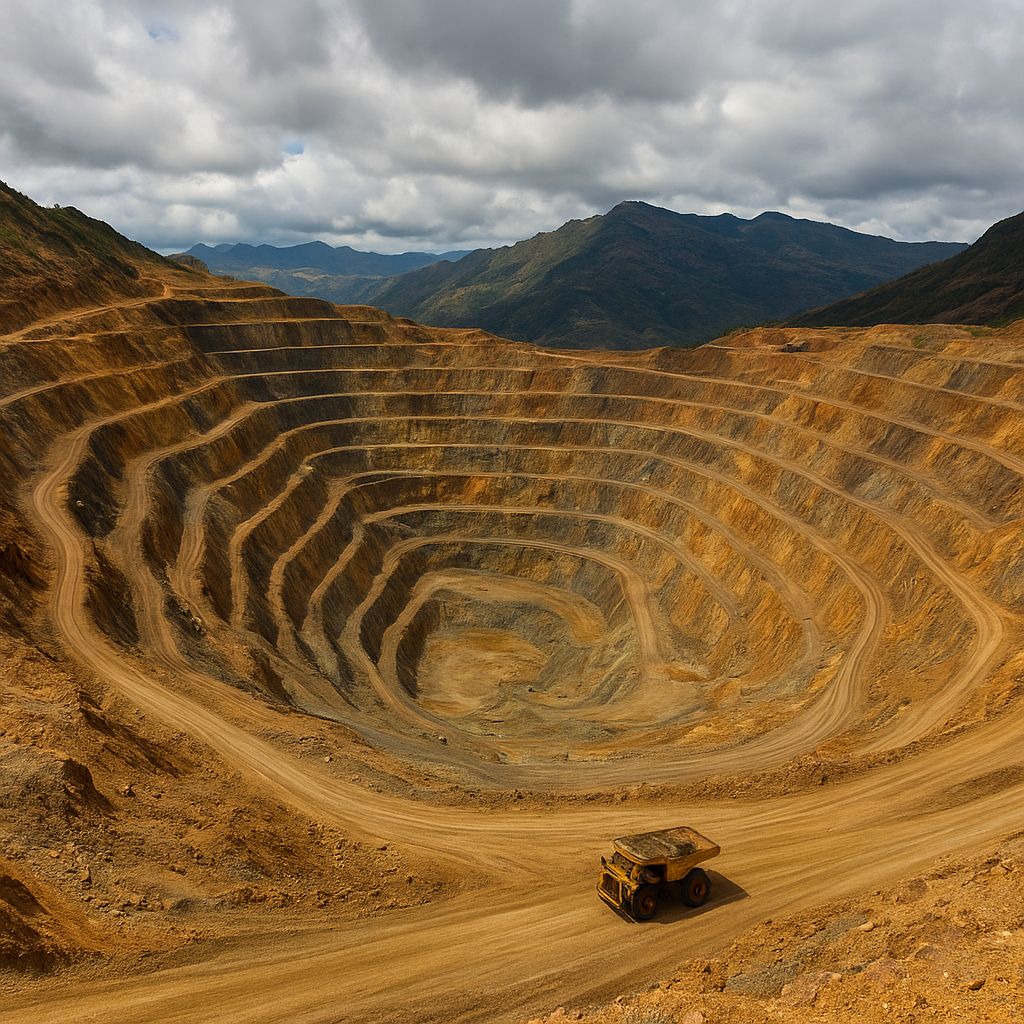
The Shahuindo mine is an important gold-producing property in Peru whose presence has influenced local economies, regional investment patterns, and the broader mining narrative in the Andean highlands. This article examines where the mine is located, what minerals it produces, how it operates and contributes economically, and several noteworthy aspects that make Shahuindo distinct in the context of modern mining in Latin America.
Location and geological setting
Shahuindo sits in the mountainous zones of northern-central Peru, within the highland terrain of the Andean range. The property occupies ground characterized by steep slopes, high elevations and typical Andean climatic conditions: a combination of strong seasonality, cool nights and a pronounced wet season. The mine lies within a geological province known for epithermal and orogenic gold mineralization, the same broad belt that hosts numerous other gold and polymetallic deposits across the country.
The local geology includes sequences of volcanic and sedimentary rocks that have been structurally modified by Andean tectonics. Hydrothermal fluids that moved through fault and fracture systems concentrated gold (and commonly silver and other pathfinder elements) in veins and breccias. These mineralized horizons are often most amenable to surface extraction where oxidation has enriched the upper parts of the deposit.
Accessibility to the site is typical for many Peruvian highland mines: reachable by a network of regional roads that connect to provincial towns and then by secondary roads and maintained access tracks to the mining infrastructure. The regional context provides both logistical challenges—weather-sensitive roads, seasonal transport constraints—and potential advantages, including proximity to labor pools and service centers in nearby towns and provincial capitals.
What is produced at Shahuindo and how
The primary commodity produced at Shahuindo is gold, with silver often occurring as an associated metal in the mineralization. Gold typically occurs in native form and in sulfide-bearing veins; in weathered zones it can be more easily recovered by surface metallurgical processes. In addition to precious metals, minor amounts of base metals or trace elements may be present, depending on the specific mineral assemblage encountered during exploration and development.
Mining methods used on deposits like Shahuindo tend to reflect the geology and orebody geometry. Open-pit extraction is common for near-surface, tabular or disseminated oxide zones, while deeper, higher-grade vein systems can be exploited via more selective underground or staged pit designs. Milling and metallurgical flowsheets are chosen to maximize gold recoveries: for near-surface oxides this often means crushing and heap-leach or carbon-in-pulp/carbon-in-leach (CIL) processing, whereas sulfide-rich ores may require sulphide flotation, autoclave or bio-oxidation pretreatment before cyanidation. The exact technical choices at Shahuindo are tailored to the ore characteristics but reflect the broader industry’s mix of open-pit mining and gravity/CIL recovery circuits.
Processing and recovery are complemented by ancillary facilities: tailings management areas, water treatment plants, reagent storage, and waste-rock dumps. Modern operations also include environmental monitoring systems and progressive reclamation plans to minimize the long-term footprint.
Economic significance at local, regional and national levels
Gold mines such as Shahuindo play several interrelated economic roles. At the most immediate level, they are sources of employment—from direct jobs in operations, maintenance, geology and administration to indirect employment through contractors, transport providers and local suppliers. The regular wages paid by a mine can provide a significant income stream in remote Andean communities where alternative formal-sector jobs are limited.
Royalty and tax streams generated by gold production feed municipal, regional and national budgets. Mines pay corporate taxes, production royalties, and sometimes community development agreements that channel funds into local infrastructure, education, health and sanitation. Payments into public coffers can enable road maintenance, school construction and other public goods that support long-term regional development. For many provincial municipalities in resource-rich regions, mining royalties are a major line item in the budget.
Beyond direct payments, the presence of a mine attracts investment in local services and can spur the development of regional supply chains. Companies providing catering, equipment maintenance, fuel logistics, and environmental services often set up bases in nearby towns, which multiplies economic activity. Additionally, successful mining operations can catalyze further exploration and investment by demonstrating the geological potential of a region.
- Direct employment and contract work
- Royalties and taxes supporting public services
- Local procurement and small-business stimulation
- Infrastructure upgrades (roads, power, communications)
- Skills transfer and technical training opportunities
At the national scale, gold contributes to export earnings and foreign exchange reserves. Peru is one of the world’s leading gold producers, and each mine contributes to that aggregate output. Stable gold production supports macroeconomic performance—helping balance trade, attract foreign investment and support the mining industry’s broader supply chains.
Social and environmental aspects
Mining invariably raises social and environmental questions, and Shahuindo is no exception. The company and regulators typically balance resource extraction with social responsibility and environmental protection through formal permits, environmental impact assessments (EIAs), and ongoing monitoring. In practice this can include:
- Community consultations and agreements to define benefit-sharing and grievance mechanisms.
- Water-management plans to ensure local agricultural and household water needs are protected.
- Progressive reclamation to restore disturbed landforms and revegetate tailings and waste-rock dumps.
- Air-quality and noise control measures to reduce operational nuisance in nearby settlements.
- Programs for conservation of biodiversity and protection of fragile Andean ecosystems.
Local employment and training programs can have lasting social benefits, but they must be managed alongside cultural sensitivity, equitable hiring and transparent communication. The success of community relations often hinges on predictable investment in local infrastructure, timely payments of royalties and visible improvements in quality of life.
On the environmental front, water stewardship is critical. Andes mining operations must manage both quantity and quality: ensuring that downstream users are not deprived of water during the dry season and that effluents meet standards for discharge. Tailings governance remains a high priority industry-wide; modern practices emphasize engineered, lined tailings storage facilities, rigorous monitoring, and closure plans that minimize long-term risks.
Interesting aspects and notable considerations
Several features make Shahuindo and similar Andean gold operations interesting beyond their immediate economic function:
1. Geological variety and exploration potential
The Andean geological setting that hosts Shahuindo often contains multiple styles of mineralization—oxide caps, sulphide veins and hydrothermal breccias—meaning exploration along strike and at depth can expand resources. Mines like Shahuindo frequently begin as single-pit projects and, through successful exploration, grow into multi-pit operations or see underground extensions developed.
2. Technology adoption
Modern gold operations incorporate increasing automation, remote sensing and process control to improve safety and efficiency. Autonomous haul fleets, real-time monitoring of processing circuits, and advanced metallurgical test work to optimize recoveries are becoming more common. The use of satellite imagery and drone surveys accelerates geology and environmental monitoring, while continuous improvement in metallurgical techniques can boost recoveries from previously marginal ore.
3. Regional development linkages
Mining often acts as a catalyst for improved infrastructure in otherwise remote parts of the Andes. Upgraded roads, electricity lines and communications networks benefit local residents and the regional economy, not just the mine. These investments can transform market access for local farmers and small businesses.
4. Cultural and historical dimensions
Gold in Peru carries deep cultural resonance, from pre-Columbian metallurgy to modern economic narratives. Mines operate in landscapes that contain archaeological sites, traditional agrarian systems and communities with languages and customs that predate colonial influence. Responsible mining practices therefore require cultural heritage management and genuine engagement with local stakeholders.
5. Commodity price sensitivity and resilience
Gold’s economic importance for a mine like Shahuindo is closely linked to global prices. High prices can accelerate exploration and development; low prices can lead to reduced activity and cost-cutting. Nonetheless, gold’s historic role as a hedge and store of value has given gold projects a measure of resilience compared to some base-metal operations.
Future outlook and challenges
The future for a mid-sized gold operation in Peru depends on several factors. Continued exploration success can expand the mine life and improve the project’s long-term economics. Ongoing investment in more efficient processing technologies can lower costs and increase recoveries. Sound community relations and effective environmental stewardship will remain essential to maintaining social license to operate.
Challenges include fluctuating commodity prices, evolving environmental regulations, and community expectations that grow over time. The industry is also under pressure to decarbonize and reduce greenhouse gas emissions; mines in the Andes are exploring renewable energy integration—especially solar and wind—to reduce diesel consumption and lower operating costs in remote locations. Adopting such technologies can be a competitive advantage while aligning with broader sustainability goals.
Overall, Shahuindo exemplifies the complex role of a modern gold mine in Peru: a source of bullion and export revenue, a generator of jobs and local development, and a focal point for contemporary environmental and social practice. Its continued evolution will reflect not only geology and metallurgy but also the ways in which investors, communities and regulators navigate the trade-offs inherent in resource development.

