
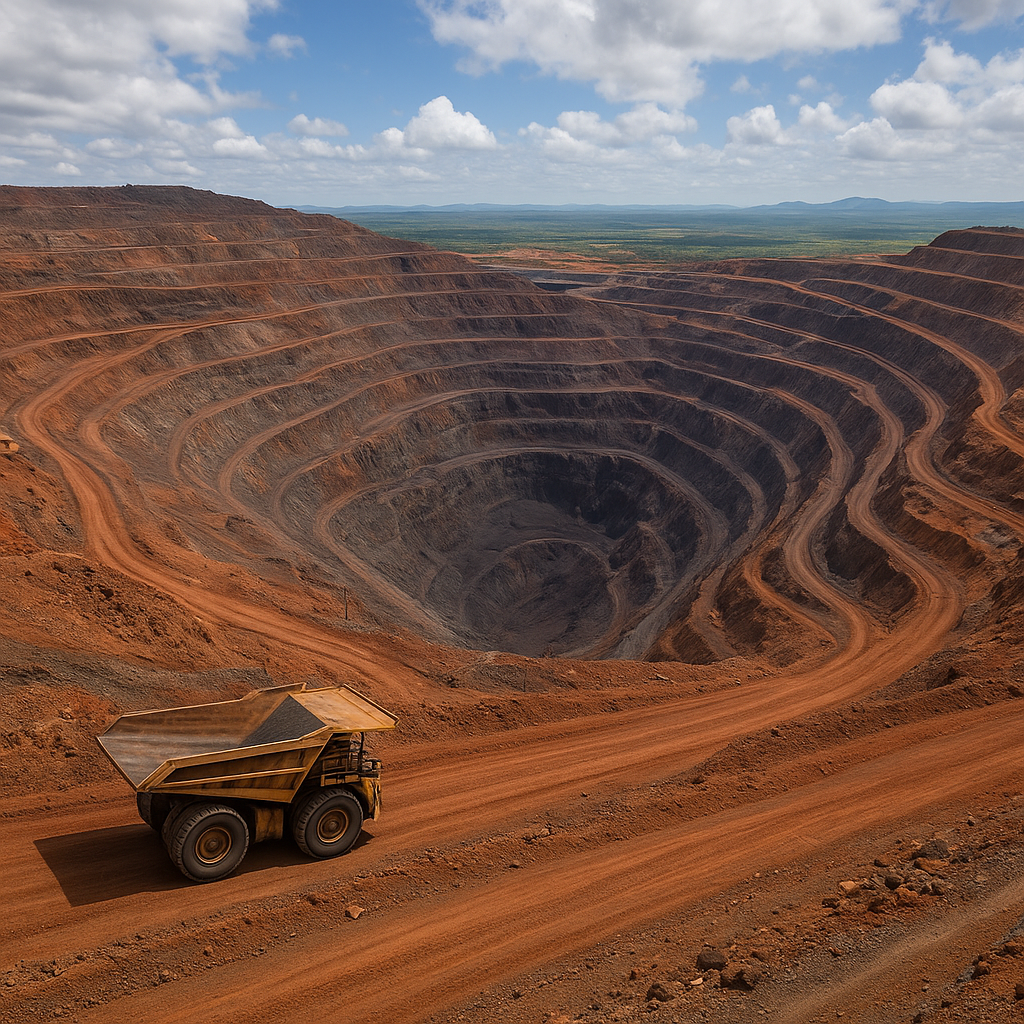
The vast mineral complex known as El Mutún sits at the center of conversations about Bolivia’s economic future. This article explores where the deposit is located, what is extracted there, its economic significance, and a number of intriguing technical, social and geopolitical aspects that make El Mutún noteworthy. Through geology, history, industry and local perspectives, the deposit emerges as more than a mine: it is a potential engine for change and a focal point for environmental and policy debates.
Location and geological setting
El Mutún is located in the lowland plains of eastern Bolivia, in a region of seasonally dry forests and savannas close to the border with Brazil. The deposit lies within the broader Gran Chaco–Pantanal transition zone in the department of Santa Cruz, an area characterized by flat terrain, extensive wetlands in places, and a climate that oscillates between heavy seasonal rains and pronounced dry spells. Its proximity to the Brazilian frontier has important logistical and political implications: road, river and cross-border rail links offer possible export routes and industrial connections to neighboring markets.
Geologically, El Mutún is an exceptionally large iron-bearing formation. The ores are commonly described as a mixture of iron minerals — primarily forms of iron oxide — and occur in broad, relatively shallow deposits well-suited to large-scale surface mining. While academic and company reports differ on the exact origin of the deposit, the consensus frames El Mutún as the product of ancient sedimentary and weathering processes that concentrated iron into a lateritic and sediment-hosted body. This geological context influences the ore’s composition, the choice of extraction and processing technologies, and the projected economics of any value-added industry built around the deposit.
What is extracted: mineralogy and processing
The primary commodity at El Mutún is iron ore, encompassing a mix of iron minerals that are typically processed to produce saleable concentrates, pellets or sinter feed for the steel industry. Two important iron minerals often associated with the project are magnetite and hematite. Magnetite is valued for its higher magnetic susceptibility, which allows magnetic separation methods to produce clean concentrates, while hematite can offer higher natural iron grades and simpler beneficiation in some settings.
Because raw ore from large deposits like El Mutún often contains a significant amount of non-iron material (silica, alumina, phosphorus and other gangue minerals), beneficiation and agglomeration processes are typically required to transform the raw rock into marketable products. Beneficiation may include crushing, grinding, magnetic separation (for magnetite), gravity separation and flotation, followed by pelletizing or sintering to make the ore suitable for blast furnaces or direct reduction plants. The selection of processing routes depends on ore characteristics, water and energy availability, and the intended downstream use (e.g., integrated steelmaking versus export of concentrates).
Beyond iron, reports and exploration work have indicated the presence of minor associated minerals and elements that can influence processing or provide additional value streams. These may include traces of manganese, titanium, and phosphorus. The presence of such elements can be both a technical challenge—requiring careful control of quality for steelmaking—and an opportunity if byproducts are recoverable in an economically attractive way.
Economic significance and industrial potential
El Mutún’s potential economic impact on Bolivia is multilayered. At a basic level, the deposit represents a large stock of a globally demanded commodity, which could generate export revenues and foreign exchange. More strategically, the deposit offers Bolivia an opportunity to move up the value chain: instead of exporting raw ore, the country could develop pellet plants, direct-reduction iron facilities, and even integrated steelmaking capacity. Building such downstream industries could create skilled employment, increase industrial wages, and foster linkages with construction, machinery and manufacturing sectors.
Because steelmaking is energy- and capital-intensive, the economics of turning El Mutún into a full steel complex depend on several variables: investment capital, availability of reliable and affordable energy (electricity, natural gas or coal), sufficient and clean water supplies, transport links to markets, and stable regulatory frameworks. Bolivia hosts significant natural gas reserves in its western basins, which has been cited as a possible feedstock or energy source for metallurgical processes, though practical integration requires infrastructure and economic calculus that are still the subject of planning and negotiation.
International interest in El Mutún has been persistent. During the 2000s and 2010s a number of foreign firms and consortia expressed interest in exploiting the deposit and building steelworks, and some preliminary agreements and memoranda of understanding were signed. These initiatives have faced a mix of legal, financial and political hurdles, often reflecting broader debates in Bolivia about national control of natural resources, foreign investment terms, and the balance between resource extraction and local concerns. The deposit’s cross-border logistics—near Brazilian rail and road networks—also make integrated projects that involve foreign partners and export-oriented strategies particularly feasible.
Infrastructure, logistics and markets
Turning a remote mineral deposit into a functioning industrial complex requires major infrastructure: roads, rail, power lines, water treatment and port access. El Mutún benefits from its relative closeness to transport corridors connecting Bolivia to Brazilian ports and markets. The Paraguay–Paraná fluvial system and cross-border road/rail links provide possible routes to Atlantic markets, while overland connections to regional industrial centers could serve neighboring countries.
Market dynamics for iron and steel are global and cyclical. Prices for iron ore have experienced strong fluctuations in recent decades, driven by demand from large consumers like China, changes in global steel capacity, and supply-side developments in major exporting countries. For Bolivia, feeding into this global market means aligning production costs and quality to compete with large producers. Establishing captive steelmaking capacity alongside raw material extraction can insulate some domestic benefits from pure commodity price swings, but it also requires long-term demand commitments and stable financing.
Social, environmental and governance considerations
Large-scale mining and industrial projects inevitably raise social and environmental issues. El Mutún’s location in the Gran Chaco transition zone places it near ecosystems that host a diversity of wildlife and traditional rural livelihoods, including indigenous and campesino communities. Potential impacts include land-use change, deforestation, effects on hydrology and groundwater, and pressures on local infrastructure and public services as populations and industrial activity increase.
There are also governance challenges: determining the distribution of royalties and tax revenues; ensuring job opportunities go to local populations through training and hiring policies; protecting the rights and territories of indigenous peoples; and establishing environmental safeguards and monitoring. Bolivia’s political economy—marked by strong national resource sovereignty narratives—means that public expectations for direct societal benefits from any project can be high, while disputes over contract terms and implementation have at times stalled progress. Effective development of El Mutún requires transparent agreements, inclusive consultation processes, and robust environmental management plans.
Technical and environmental challenges
From a technical standpoint, ore variability, contaminant elements (such as phosphorus or sulfur), water availability and the need for energy-intensive processing represent principal challenges. If the ore body includes large quantities of low-grade material, more intensive beneficiation will be required, increasing costs and environmental footprints. Managing tailings, water discharge, dust and air emissions from pelletizing or smelting must be integrated into project design to meet national and international standards.
Mitigation measures include adopting modern tailings management systems, water recycling and treatment plants, dust suppression, and the use of cleaner energy sources for reduction processes. Investments in local workforce training and in technology transfer can also reduce environmental risks by promoting best practices. Community benefit programs and local content requirements can help align project objectives with social expectations, but they must be designed and executed carefully to avoid unintended negative consequences.
Strategic comparisons and regional context
In the South American context, El Mutún is often discussed in the same breath as the continent’s major mineral and steel projects because of its sheer size and potential. While other countries in the region are well-established exporters of iron ore (notably Brazil), El Mutún offers Bolivia a comparative advantage in terms of domestic resource endowment that could underpin industrialization strategies. However, catching up with entrenched regional suppliers requires overcoming logistical bottlenecks and investing in competitive processing technologies.
Cross-border cooperation is a critical element. Joint infrastructure projects—such as shared rail or port facilities—could reduce up-front costs and enhance export competitiveness. Regional demand for steel in construction and manufacturing also provides a nearby market that Bolivian industry could serve if transport and production economics align. The proximity to Brazil, one of the world’s largest steel producers and iron ore exporters, presents both opportunities for cooperation and challenges in competing with established firms and supply chains.
Interesting and lesser-known aspects
- Scale and perception: El Mutún is frequently cited as one of the world’s largest undeveloped iron occurrences. While estimates of exact reserves vary widely across studies and reports, even conservative appraisals show a resource large enough to justify long-term industrial planning.
- Downstream ambition: Bolivian policymakers and some investors have repeatedly promoted the idea of building an integrated steel complex on site, which would link raw material extraction with smelting and rolling. Such a development would represent a move from commodity export toward higher value-added manufacturing.
- Cross-border economic geography: The deposit’s location has led to imaginative proposals for binational projects and for leveraging transport corridors through Brazil to reach Atlantic markets. These initiatives highlight how resource projects often require diplomatic as well as commercial negotiation.
- Environmental juxtaposition: The location in a biologically rich transition zone contrasts starkly with the heavy industry El Mutún could host, underscoring the trade-offs between conservation and development in biodiverse landscapes. The area’s biodiversity and traditional land uses are recurring themes in environmental assessments and local consultations.
- History of negotiations: Over the past two decades, multiple international firms have negotiated or proposed projects tied to El Mutún. Some agreements advanced to preliminary stages but ran into disputes over investment guarantees, environmental conditions, or contractual terms, illustrating the complexity of resource development in contexts of high public interest.
Outlook: challenges to realizing potential
To convert the resource base represented by El Mutún into durable economic gains, Bolivia faces a set of interrelated tasks: securing long-term investment and finance, establishing clear and stable rules for resource development, investing in infrastructure and energy, building local skills and supplier networks, and implementing environmental and social safeguards. Market timing matters: global iron and steel demand cycles influence project feasibility, and sustained policy consistency will be critical to attracting partners willing to commit to multi-year, capital-intensive projects.
Yet the potential rewards are substantial. If developed responsibly, El Mutún could spur local employment, foster regional industrial clusters, and provide a platform for diversification beyond hydrocarbon-dependent revenues. Achieving that outcome depends on aligning technical choices with environmental protection and social inclusion, ensuring that the benefits of development reach communities near the deposit and the Bolivian economy more broadly.
Technical pathways and strategic choices
Developers and planners consider several technical pathways for El Mutún, each with different implications:
- Exporting beneficiated concentrates or pellets directly, minimizing domestic industrialization but generating export revenues more quickly.
- Building midstream facilities for pelletizing and direct-reduced iron (DRI) to capture higher margins and produce semi-finished steelmaking feedstocks on site.
- Investing in a full integrated steel plant capable of producing finished steel products, which maximizes domestic value addition but requires the most capital, energy and human resources.
Strategic choices will hinge on financing availability, partner expertise, and national development priorities. For instance, choosing DRI technologies that are compatible with natural gas (available in Bolivia) could create synergies with existing domestic fuel resources. Conversely, electrified reduction routes could be attractive if Bolivia secures large-scale renewable or hydroelectric power at competitive prices.
Human capital and local economic development
Beyond the technical and financial dimensions, the development of El Mutún places a premium on human capital. Skilled operators, metallurgical engineers, environmental managers and logistics professionals will be necessary to run modern mining and metallurgical operations. Local training programs, partnerships with universities and technical institutes, and apprenticeships with experienced foreign firms are pathways to building this capacity. Ensuring that local communities benefit through employment, procurement and community investment is essential to the social license to operate.
Final observations
El Mutún is more than a mineral deposit: it is a potential fulcrum for Bolivia’s industrial aspirations and a testing ground for harmonizing economic development with environmental stewardship and social inclusion. Realizing its potential will require patient, coordinated action across public and private sectors, clear legal frameworks, major infrastructure investments and, above all, careful attention to the needs and rights of local communities. The story of El Mutún will therefore be shaped as much by policy choices and social dialogue as by geology and market prices.

