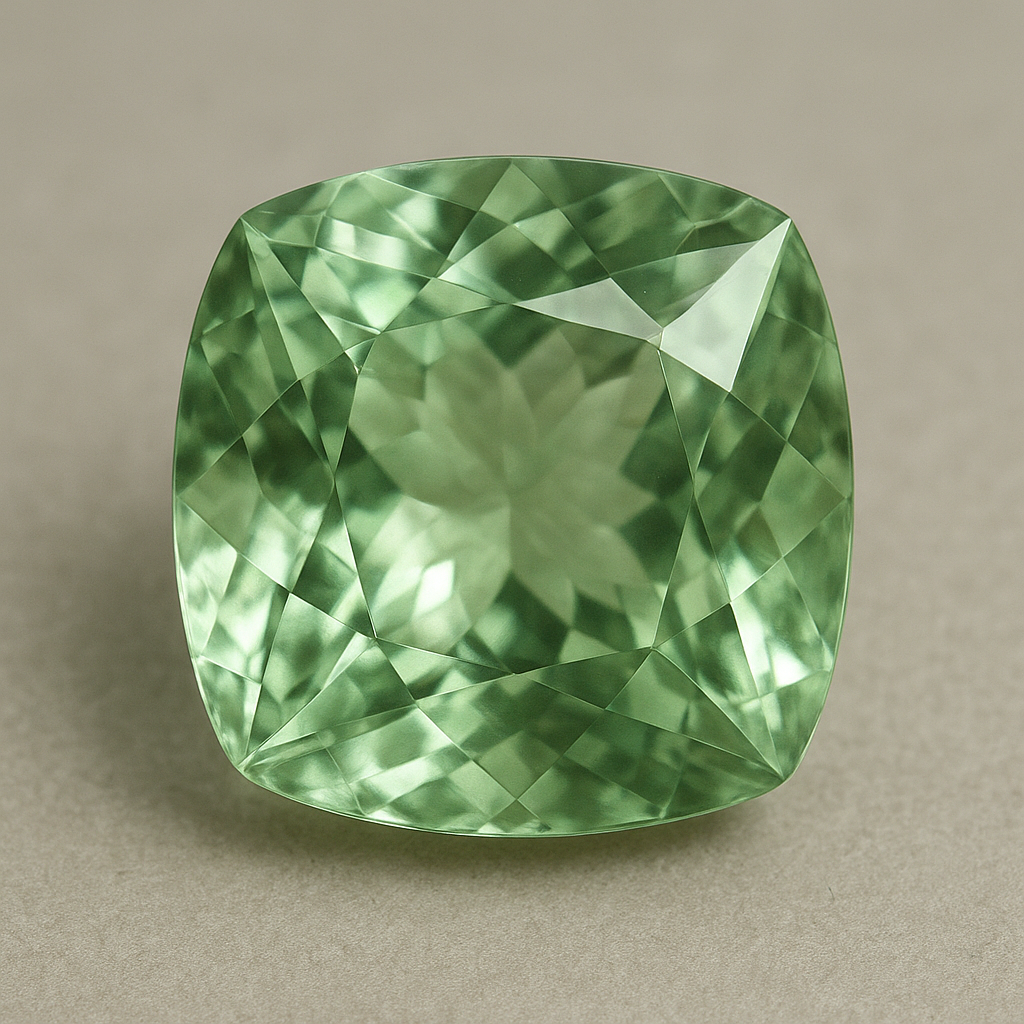
Prasiolite is a distinctive green variety of quartz valued for its subtle color, clarity, and versatility in jewelry. Although naturally occurring specimens are uncommon, the stone has gained popularity through treatments that transform ordinary purple amethyst into attractive green gems. This article explores the geology, gemology, treatment methods, sources, uses, and cultural significance of prasiolite, offering both practical advice for buyers and intriguing details for collectors and enthusiasts.
Occurrence and Geology
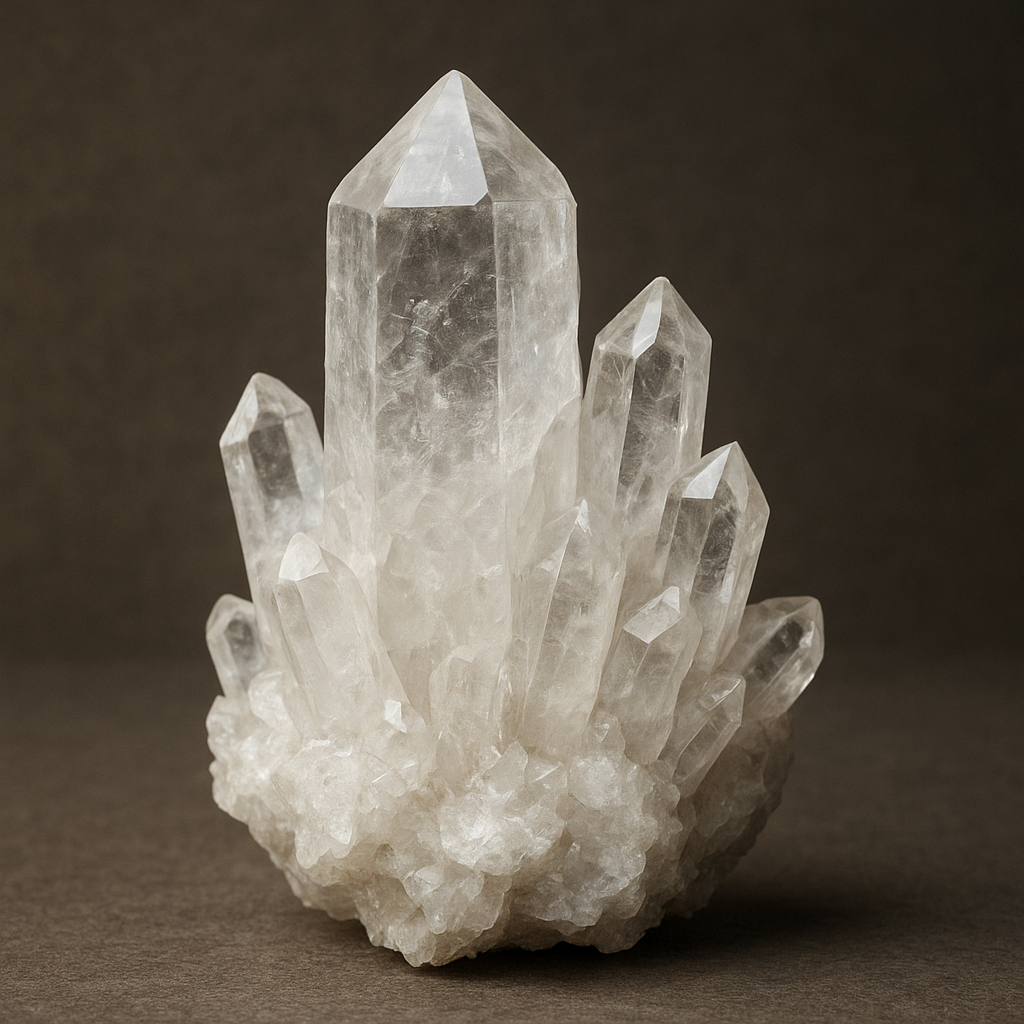
Prasiolite belongs to the family of quartz minerals, a ubiquitous and important group composed of silicon dioxide (SiO2). Quartz forms in a wide range of geological settings, including hydrothermal veins, geodes, pegmatites, and volcanic cavities. The green coloration of prasiolite is unusual in quartz and typically requires specific trace elements and physical conditions to develop. Natural green quartz is relatively rare; most green stones sold as prasiolite are produced by artificial processes applied to amethyst.
How prasiolite forms in nature
Natural formation of green quartz involves subtle changes in the chemical environment during crystallization or subsequent alteration. Trace amounts of iron within the crystal structure, together with exposure to heat or irradiation under specific conditions, can produce green hues. The precise mechanisms can involve changes in oxidation states of iron or the creation of color centers that absorb particular wavelengths of light, yielding a green appearance. Because those precise conditions are uncommon, sizable natural prasiolite crystals are scarce.
Notable localities
While natural prasiolite has been reported from a few locales around the world, the best-known sources are limited. Commercial prasiolite generally originates from the heat treatment of amethyst mined in places such as Brazil, where high-quality amethyst crystals are abundant. There are also noteworthy occurrences associated with the Thunder Bay region of Ontario, Canada, which has produced attractive green quartz material and contributed significantly to the stone’s presence in the market—hence the frequent mention of Thunder Bay in prasiolite discussions. Additional natural or reported occurrences exist in parts of Europe and North America, though they remain less prominent in the trade.
Gemological and Physical Properties
As a member of the quartz group, prasiolite shares many of the same measurable properties as other quartz varieties. These standardized characteristics are important for gem identification, grading, and care.
- Chemical composition: SiO2 (silicon dioxide).
- Crystal system: trigonal (typical quartz habit).
- Mohs hardness: 7 — quartz is relatively hard and durable for everyday wear, though it can still be scratched by harder materials.
- Refractive index: approximately 1.544–1.553.
- Birefringence: around 0.009 (uniaxial negative/positive classification is not typically used for consumer descriptions; birefringence helps gemologists identify quartz).
- Specific gravity: ~2.65.
- Fracture: conchoidal; no true cleavage.
Visually, prasiolite ranges from pale, delicate greens to deeper, slightly bluish or yellowish green tones. Transparency, cut quality, and the absence of inclusions all influence the stone’s appeal. Because the color can be subtle, cutting and polishing play a major role in maximizing the gem’s brilliance and perceived saturation.
Treatment, Synthesis, and Imitations
One of the most important aspects of prasiolite in the modern market is the prevalence of stone treatment. Most prasiolite available commercially is not naturally green but is instead produced by applying heat or irradiation to amethyst (purple quartz) or sometimes to pale citrine. These treatments alter the color centers in the crystal lattice and yield stable green hues under the right conditions.
Common treatments
- Heat treatment: Controlled heating of amethyst at specific temperatures can change its purple to yellow or green, depending on the starting composition and the heating profile. When carefully managed, heating produces the attractive green shades marketed as prasiolite.
- Irradiation followed by annealing: Some green quartz is produced by first irradiating the crystal to create color centers and then applying heat (annealing) to stabilize the green color. These processes must be performed under regulated conditions to achieve predictable results.
Because treatment is so widespread, reputable sellers and laboratories require disclosure of any treatments. The gemological community generally accepts the names prasiolite or “green quartz,” while the trade name “green amethyst” is discouraged by some authorities because it mixes names of different color varieties.
Imitations and look-alikes
Several materials can imitate or be mistaken for prasiolite:
- Dyed or colored glass: inexpensive and common, often used in mass-produced jewelry.
- Chrysoprase: a green variety of chalcedony colored by nickel; it has a different structure and typically more opaque appearance.
- Green tourmaline (verdelite) and peridot: genuine, more expensive green gems that can be confused with prasiolite by untrained buyers.
- Dyed chalcedony or aventurine: lower-cost green stones with different optical and physical properties.
Gemological testing—measuring refractive index, specific gravity, and observing inclusions—can distinguish prasiolite from imitations. Buyers should request a certificate from a recognized laboratory for valuable purchases and expect full treatment disclosure.
Uses in Jewelry and Design
The green hue of prasiolite is appealing for both contemporary and classic jewelry designs. Its relative affordability and good durability make it an attractive alternative to more expensive green gemstones.
Popular jewellery applications
- Faceted stones: prasiolite is commonly cut into ovals, cushions, emerald cuts, and brilliant cuts to maximize sparkle and color.
- Cabochons and beads: lower-grade or more translucent material may be fashioned into cabochons, beads, or carved elements for decorative jewelry.
- Statement pieces: deeper green and larger stones are used in pendants, cocktail rings, and brooches where color can be showcased.
- Accent stones: smaller sizes complement diamonds and other colored gemstones in multi-stone pieces.
When selecting a metal setting, many designers favor white metals—such as silver, white gold, or platinum—that enhance the cool tones of prasiolite. Rose gold can provide a warm contrast, creating an appealing juxtaposition. Because prasiolite’s color is often subtle, the choice of cut and setting greatly affects the perceived depth and beauty of the gem.
History, Names, and Cultural Context
The term prasiolite derives from the Greek word prason, meaning “leek,” a reference to the green color reminiscent of leek leaves. Historically, green quartz stones have appeared in various cultures, sometimes conflated with other green minerals. As scientific gemology developed, distinctions between different green materials became clearer, and prasiolite emerged as the accepted name for green quartz in many contexts.
In the gem trade, terminology matters. The use of the name “green amethyst” has been common in retail because it evokes the familiar amethyst while highlighting the unique color. However, that name is misleading: amethyst is by definition purple, and trained gemologists prefer “prasiolite” or “green quartz.” Reputable sellers should disclose that most market prasiolite is produced through treatment of amethyst, rather than implying natural origin without verification.
Metaphysical and Cultural Beliefs
While not scientific, metaphysical and spiritual communities often attribute various properties to gemstones, and prasiolite is no exception. Some of the commonly cited themes include emotional healing, renewal, clarity of thought, and prosperity. These beliefs draw on color symbolism—green is associated with growth, balance, and the heart chakra in many traditions.
Collectors who value stones for metaphysical reasons may seek prasiolite for meditation, energy work, or simply for the calming visual effect its green color provides. It’s important to treat such claims as cultural rather than empirical; prasiolite’s primary, measurable value remains as an attractive and durable gemstone.
Care, Maintenance, and Practical Advice
Prasiolite is relatively durable but requires mindful care to maintain its color and polish. Because many prasiolite gems are the result of treatment, they can be sensitive to extreme heat or prolonged high-energy light exposure.
- Avoid prolonged exposure to direct sunlight or high temperatures, which can cause the color to fade over time.
- Chemicals and household cleaners may damage the surface polish or setting; remove prasiolite jewelry when using harsh chemicals.
- Cleaning: warm water, mild soap, and a soft brush are safe for routine cleaning. Ultrasonic cleaners are generally acceptable for untreated quartz, but because treated prasiolite may respond unpredictably, consult a jeweler before using ultrasonic or steam cleaners.
- Storage: store prasiolite separately from harder gems (like diamonds) to prevent scratches; use soft pouches or lined jewelry boxes.
For high-value pieces, periodic inspection by a professional jeweler ensures settings remain secure and that the stone shows no signs of color alteration or damage.
Market Considerations and Buying Tips
Prasiolite occupies a niche in the colored gemstone market: more affordable than most green beryls and tourmalines, yet visually pleasing and suitable for many consumers. Prices depend on color saturation, clarity, cut quality, and size. Because many stones are treated, buyers should seek clear disclosure and prefer sellers who provide lab reports or reliable provenance when purchasing larger or more expensive pieces.
When evaluating prasiolite
- Ask whether the stone is natural or treated; treatment is common and acceptable, but it should be disclosed.
- Request measurements, weight (carats), and photos under different lighting conditions to judge the color’s stability and tone.
- Compare similar pieces from different vendors to assess fair pricing based on quality factors.
- For rare, naturally green prasiolite specimens, laboratory certification from a recognized gemological institute adds provenance and value.
Prasiolite’s relative affordability makes it a popular choice for fashion and fine jewelry alike. Designers frequently select it for seasonal collections or for pieces that emphasize a fresh, nature-inspired palette.
Interesting Facts and Notable Examples
Prasiolite’s journey from obscurity to fashionability involves a confluence of geology, technology, and design preference. Some points of interest include:
- Terminology controversies: The retail-friendly term “green amethyst” persists despite scientific objections; this highlights the balance between marketing and accurate gemological naming.
- Treatment science: The controlled heat and irradiation methods used to produce prasiolite demonstrate how human ingenuity can expand the palette of natural minerals while raising questions about disclosure and consumer education.
- Collector interest: Natural prasiolite specimens, when authenticated, can be highly prized by mineral collectors given their rarity.
- Design versatility: Prasiolite’s gentle green is easy to pair with other gems—diamonds, sapphires, and pearls—expanding its use in multi-stone designs.
Notable specimens and museum pieces
Because naturally green prasiolite is rare, museum-grade specimens are uncommon and often featured in educational displays about coloration mechanisms in minerals. Attractive cut stones from treatment processes, however, are widely used in commercial jewelry and occasionally in exhibitions focused on gem treatments and the ethics of disclosure.
Conclusion
Prasiolite is a fascinating example of how a common mineral—quartz—can present extraordinary variety through subtle changes in composition and external processes. Whether encountered as a naturally occurring curiosity or a carefully heat-treated gem from Brazil or other sources, prasiolite offers a pleasing green option for jewelry designers, collectors, and those drawn to the symbolic associations of green stones. Understanding the stone’s origins, properties, and the prevalence of treatment helps buyers make informed choices and appreciate the gem’s place within the broader world of mineralogy and gemology.