
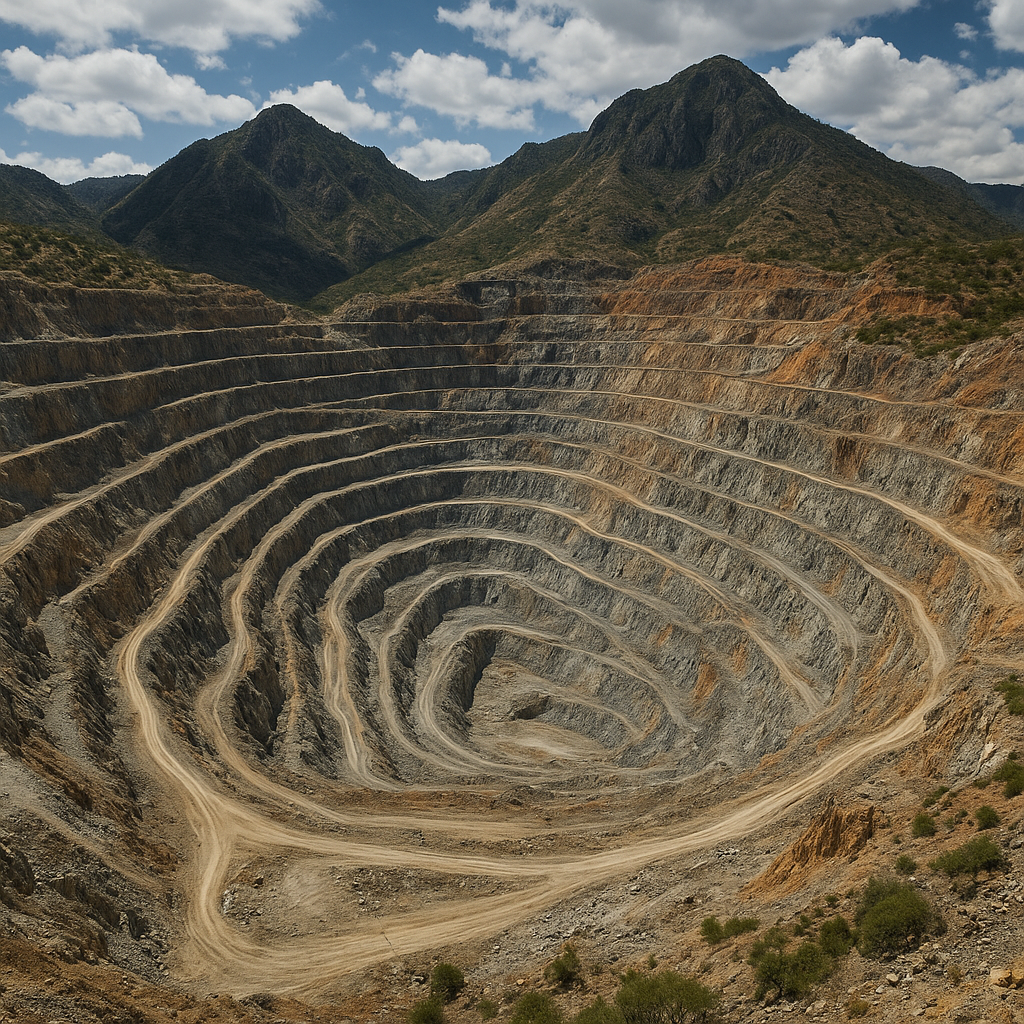
La Encantada is one of the noteworthy silver-producing properties in northern Mexico. Its story connects geology, technology, community impact and the wider role of silver in Mexico’s mining legacy. This article outlines where the deposit is located, what is extracted there, how the operation contributes economically, and several interesting technical and historical facets that make La Encantada an instructive example of modern silver mining in Mexico.
Location and geological setting
La Encantada lies in the northern part of Mexico, within the state of Coahuila, a region that forms part of the extensive mineralized belts of northern Mexico. The mine is sited in a landscape of semi-arid plains and low mountain ranges that host numerous silver and base-metal occurrences. Geologically, La Encantada is associated with vein and replacement-style mineralization developed in carbonate and volcanic sequences, typical of many productive Mexican silver districts.
The regional setting places the deposit within a tectonically active and metallogenically rich corridor. Over millions of years, fluid flow along faults and fractures introduced metal-bearing solutions that precipitated silver, often together with lead and zinc, in structurally favorable rocks. This type of setting has been a consistent source of high-grade silver deposits throughout Mexico’s mining history.
Deposit characteristics
Although specifics vary from one deposit to another, La Encantada-type deposits are generally characterized by:
- Complex vein networks and replacement bodies that concentrate silver along structural conduits.
- Polymetallic mineralization where argentiferous minerals coexist with lead and zinc sulfides or carbonates.
- Variability in grade and thickness, requiring detailed geological mapping and resource modeling to define mineable zones.
Understanding these geological attributes is crucial for designing an extraction sequence that captures the highest-value portions of the ore while maintaining safety and cost efficiency.
What is produced at La Encantada
The primary commodity targeted at La Encantada is silver. In most operations of this type, silver is recovered either as the main product or as a high-value co-product alongside lead and zinc. Concentrates typically contain the bulk of the silver and are either refined locally or exported to smelters and refineries where the silver is separated and purified.
Recovery typically involves crushing and grinding the ore followed by flotation to produce concentrates. Metallurgical circuits are designed to maximize recovery of precious metals while producing acceptable concentrate quality for buyers. Technologies such as gravity recovery, differential flotation, and modern process controls play key roles in optimizing production.
By-products and processing considerations
- Lead and zinc may be recovered as saleable concentrates, which can materially improve project economics.
- Silver grades can be highly variable; metallurgical testing and flexible processing are important to handle mineralogical complexity.
- Metallurgical recoveries, concentrate quality, and smelter terms together determine the realized revenue from mined ore.
Economic significance and contribution
La Encantada, like other mid-sized silver operations in Mexico, contributes on several levels: local employment, regional economic activity, national export earnings, and the global silver supply chain. Mining projects stimulate demand for services and supplies—everything from equipment and explosives to catering and transport—generating indirect employment beyond the mine site.
At the local level, the mine provides jobs for skilled and unskilled workers, supports small businesses, and often invests in community infrastructure such as roads, water projects, and health services. These investments can be significant in rural areas where alternatives for stable, well-paid employment are limited.
On a national level, silver is an important export commodity for Mexico, and operations like La Encantada contribute to the country’s mining revenues and foreign exchange earnings. Revenues flow via wages, royalties, taxes, and payments to suppliers. The precise economic impact depends on production scale, metal prices, and the terms agreed with authorities and contractors.
Fiscal and supply chain impacts
- Royalties and taxes collected at national and state levels support public budgets.
- Local procurement policies can stimulate regional suppliers and service industries.
- Linkages to smelters and traders integrate the mine into global commodity markets.
Socio-environmental aspects and modern practices
Modern mining operations, including La Encantada, operate in an environment of heightened scrutiny regarding environmental performance, community relations, and safety. Operators are expected to follow regulatory requirements and often adopt voluntary standards and best practices to reduce environmental impacts and improve transparency.
Key environmental and social considerations include water management, tailings storage, dust and emissions control, biodiversity protection, and respectful engagement with local communities. Investments in environmental controls—such as lined tailings facilities, water recycling systems, and progressive reclamation—help reduce the long-term footprint of mining activities.
Community engagement
- Consultation and communication channels are critical to building trust with nearby towns and villages.
- Workforce development and local hiring policies can create long-term socio-economic benefits.
- Mining companies often support education, health, and cultural initiatives as part of their social license to operate.
Technical challenges and operational practices
Extracting silver efficiently presents operational challenges that require technical solutions. These include variability in ore grade, complex mineralogy that affects recovery, and logistics in remote or arid environments. To overcome these challenges, mines rely on careful resource modeling, flexible mining methods, and adaptive processing circuits.
Risk management approaches—covering geotechnical stability, water scarcity, and commodity price volatility—are part of modern mine planning. Continuous improvement initiatives, automated monitoring, and digitization of operations are increasingly common to enhance safety and efficiency.
Common operational approaches
- Selective mining and grade control to target the most economic material.
- Metallurgical test work to optimize recoveries and concentrate grades.
- Progressive rehabilitation and closure planning integrated into the life-of-mine plan.
Historical and cultural context
Silver has been central to Mexico’s economic and cultural history since pre-Hispanic and colonial times. Mines like La Encantada are a continuity of that long tradition, blending centuries-old mineral wealth with contemporary mining methods. The presence of silver in northern Mexico shaped settlement patterns, urban growth, and regional economies.
Many modern mining sites sit near towns that developed because of historic mining activity. This continuity creates a cultural landscape where traditional knowledge, mining heritage, and modern industrial practices intersect. Small museums, local festivals, and place names often reflect the deep-rooted connection between communities and mineral resources.
Interesting technical and human stories
Several aspects of La Encantada and similar operations often attract technical and popular interest:
- Resource geology: The way silver is concentrated into veins and replacement bodies fascinates geologists and drives exploration innovation.
- Processing ingenuity: Metallurgists frequently design tailored circuits to unlock value from complex ores.
- Local impact: Stories of how a mine transforms a local economy—creating employment and new services—are common and compelling.
- Heritage: The continuity between historic mining practices and modern operations links the site to a broader cultural narrative.
- Market role: Although individual mines are small relative to global metal markets, cumulative production from Mexican silver mines influences global silver supply dynamics.
La Encantada’s appeal lies not only in the ounces of silver it produces but also in how it exemplifies the interplay of geology, technology, economics and community that defines contemporary mining in Mexico. For those interested in mining, geology, or regional development, the site offers a compact case study of modern resource extraction embedded within a long-standing mineral province.

