
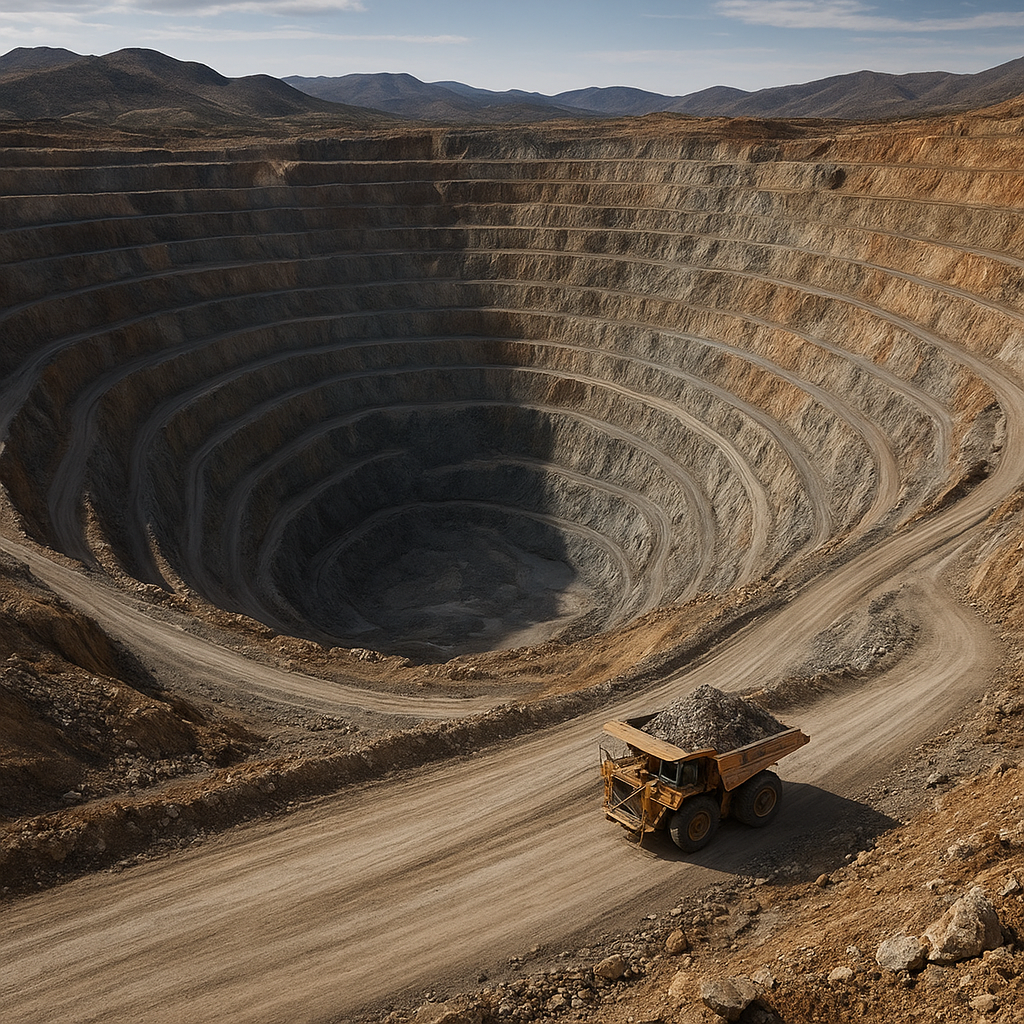
The Fresnillo Mine is one of the world’s most important silver-producing operations and a long-standing symbol of Mexico’s rich mining heritage. Located in the northern highlands of the state of Zacatecas, this mine has been a center of extraction for centuries and today remains a modern, industrial-scale operation. The following article examines where the mine is located, what minerals are extracted, its economic significance, and several compelling aspects that make Fresnillo notable in the global mining landscape.
Location and Geological Setting
The Fresnillo Mine lies in the municipality of Fresnillo in the state of Zacatecas, situated in the central-northern part of Mexico. Zacatecas is part of the broader Sierra Madre Occidental mineral province, a region characterized by extensive historic and modern mining activity. The town of Fresnillo itself grew around the mining industry and today serves as both a local administrative center and a community deeply connected to the mine.
The deposit at Fresnillo is hosted in a series of polymetallic, vein-type systems formed by hydrothermal fluids. These veins are classic examples of high-grade epithermal mineralization where precious and base metals precipitated in open fractures and fault structures. The primary commodity is silver, but the veins also carry significant quantities of gold, zinc, and lead. The geological setting has made Fresnillo one of the richest known silver-bearing properties in the world, with ore bodies that are relatively concentrated and often high-grade compared to many other silver deposits.
Minerals Extracted and Mining Methods
At the Fresnillo Mine, the mining and processing sequence is designed to recover multiple commodities efficiently. The principal products include:
- Silver — the dominant product by volume and the reason the mine is globally renowned.
- Gold — recovered as a significant byproduct and contributing materially to overall revenues.
- Zinc and Lead — recovered through flotation circuits and sold as concentrates or refined metal, depending on market arrangements.
Underground mining methods are employed at Fresnillo. The operation uses mechanized techniques adapted to steeply dipping vein systems, including long-hole stoping, cut-and-fill in areas of irregular vein geometry, and other selective underground methods that allow the extraction of narrow, high-grade structures. Access to ore zones is typically via declines and shafts, with modern ventilation, ground support, and haulage systems facilitating the movement of ore to surface.
Once at surface, the ore passes through a processing plant where it is crushed, milled, and subjected to beneficiation. Typical processing routes include:
- Crushing and grinding to liberate silver- and gold-bearing minerals.
- Flotation to produce zinc and lead concentrates where base metals are present.
- Leaching or cyanidation steps for the recovery of silver and gold from appropriate ore streams.
Economic Significance
The Fresnillo Mine plays a central role in both the local and national economies. As a major employer in the region, the mine supports thousands of direct jobs in mining, processing, and related services, and many more indirectly through suppliers, contractors, and community enterprises. The economic impact includes:
- Direct employment and skilled labor development in the municipality and surrounding areas.
- Fiscal contributions to municipal, state, and federal budgets through taxes, royalties, and social contributions.
- Export revenues and foreign exchange generation from refined silver and concentrate sales that help position Mexico as one of the largest silver producers globally.
- Investment in infrastructure such as roads, power, and water management systems that also benefit local communities.
Fresnillo’s output has a multiplier effect: wages paid to workers circulate in the local economy, procurement contracts benefit regional suppliers, and community programs funded by the operator enhance health, education, and social welfare. The mine’s operator, Fresnillo plc, is publicly listed and has used revenues from Fresnillo and other assets to expand exploration, modernize operations, and maintain a global presence in precious metals markets.
History and Evolution
Mining in Fresnillo has a deep historical pedigree. Small-scale extraction in the region dates back to colonial times, with the area being exploited for its silver since the 16th and 17th centuries. Over time, the scale and methods of mining evolved dramatically.
In the modern era, Fresnillo transformed from artisanal workings to an industrial mine, with the development of significant underground infrastructure, mechanized extraction, and centralized processing facilities. The mine has been through multiple phases of expansion and modernization, driven by improvements in geological understanding, investment in technology, and fluctuations in precious metal prices.
Exploration around the mine has repeatedly extended the life of the operation, with new veins and satellite deposits continually being identified. This combination of historical continuity and contemporary investment has allowed Fresnillo to remain a cornerstone asset in the portfolio of its owners and a benchmark for other silver mines worldwide.
Environmental Management and Technological Advances
Large, long-running mines like Fresnillo must manage environmental responsibilities proactively. Key environmental considerations include water usage and quality, tailings management, emissions, and the rehabilitation of disturbed land. The mine has implemented a series of measures to mitigate environmental impact:
- Tailings storage facilities designed according to modern engineering standards, with monitoring to limit seepage and ensure stability.
- Water recycling and treatment systems to reduce freshwater intake and protect local water resources.
- Energy efficiency initiatives and measures to reduce greenhouse gas emissions, including efforts to procure cleaner energy and optimize power use.
- Progressive rehabilitation and reclamation of disturbed areas, together with biodiversity monitoring programs.
Technological adoption has also been an important theme. The mine uses advanced geotechnical monitoring, computerized mine planning and scheduling systems, and increasingly mechanized fleets to improve safety and productivity. Digitalization of operations—such as real-time data collection, remote monitoring, and automation in processing—helps increase recoveries and reduce costs, while also improving workplace safety.
Social Responsibility and Community Impact
Mining operations of Fresnillo’s scale inevitably shape the social fabric of the surrounding communities. The mine and its operator have engaged in various social responsibility initiatives aimed at creating shared value:
- Investment in local health and education services, including schools and clinics.
- Support for small and medium enterprises through procurement policies that favor local suppliers.
- Training and apprenticeships for local workers to build technical skills and promote long-term employability.
- Programs focused on community development, such as housing projects, recreational facilities, and cultural initiatives.
At the same time, the presence of mining can generate tensions related to land use, environmental concerns, and expectations about benefits distribution. Meaningful engagement, transparent communication, and long-term planning are essential to maintaining a constructive relationship between the mine and local stakeholders.
Interesting Facts and Notable Characteristics
Several aspects of the Fresnillo Mine make it especially interesting:
- Longevity: Mining activity in the Fresnillo area spans several centuries, making it part of Mexico’s deep historical connection to silver extraction.
- Scale and grade: The mine is widely recognized as one of the world’s most productive and high-grade primary silver mines, helping to define global silver supply dynamics.
- Polymetallic nature: While celebrated for silver, the mine’s polymetallic veins allow recovery of other valuable metals, providing diversified revenues and resilience to commodity price swings.
- Exploration potential: Ongoing exploration around the property frequently identifies extensions to known veins and new targets, often sustaining the mine life beyond original expectations.
- Technological integration: Fresnillo has incorporated modern mining technologies that improve recovery, worker safety, and environmental performance—demonstrating how historic mining districts can adapt to 21st-century standards.
Challenges and Future Outlook
No major mining operation is without challenges, and Fresnillo is no exception. Key issues that will shape its future include:
- Commodity price volatility for silver and other metals, which affects profitability and investment decisions.
- Managing long-term environmental liabilities, including tailings and water management as regulatory standards evolve.
- Ensuring a sustainable social license to operate by addressing community concerns and providing clear benefits to local populations.
- Continued investment in exploration and technology to maintain productivity and extend mine life.
Despite these challenges, the mine’s combination of high-grade resources, experienced management, and ongoing exploration means it is likely to remain a significant asset in Mexico’s mining sector for years to come.
Final Notes on a Global and Local Landmark
Fresnillo is more than a place where minerals are extracted: it is a living example of how geology, history, economy, and technology intersect. The mine’s output contributes significantly to Mexico’s position as a leading silver producer and supports local livelihoods in Zacatecas. At the same time, the site exemplifies modern mining’s dual responsibilities—maximizing recovery and economic benefits while managing environmental and social impacts responsibly. For those interested in the story of silver and its place in world mining, Fresnillo remains a fascinating and vital chapter.

