
The following article explores the significance, location, geology and operational profile of the La Herradura mine in Mexico. It describes what the mine produces, how it is worked and processed, the broader economic role it plays, and several interesting aspects that make La Herradura notable within Mexican and global mining contexts.
Location and geological setting
The La Herradura mine sits in the northwestern Mexican state of Sonora, a region well known for its long history of mineral discovery and exploitation. The deposit occupies an arid to semi-arid landscape of rolling hills and desert scrub typical of coastal and inland Sonoran terrain. Geologically, La Herradura is hosted in a setting of volcanic and volcaniclastic rocks associated with Tertiary magmatism, a setting that commonly gives rise to high-quality precious-metal mineralization in Mexico.
La Herradura belongs to a class of deposits commonly described as low-sulfidation epithermal or intermediate-sulfidation systems, with mineralization occurring along structural zones, such as faults and breccia pipes, and within permeable, altered rock units. The dominant commercially recoverable commodity is gold, frequently accompanied by lesser amounts of silver and other trace metals. Hydrothermal fluids deposited gold in open spaces and within fractures, and subsequent weathering and alteration concentrated the ore into economically minable bodies.
Accessibility is an important factor for the mine’s development: road links to regional highways, seasonal water sources, and proximity to local towns make the site logistically viable. The climate is typically hot and dry, which affects water management and vegetation rehabilitation strategies following disturbance.
History, discovery and development
Exploration in Sonora intensified in the late 20th century as global demand for precious metals rose. La Herradura emerged from exploration work that combined geological mapping, geochemical sampling, and drilling campaigns. Once sufficient continuity and grade were demonstrated, the site advanced through engineering studies and permitting stages into full-scale production.
Development typically followed a sequence of clearing and establishing infrastructure, building access roads, preparing processing facilities and constructing waste and tailings management systems. While specific corporate ownership and exact timelines have varied over the years through mergers, acquisitions and corporate restructurings, the mine has remained a consistent contributor to Mexico’s gold output since construction was completed and processing commenced.
Mining methods and onsite operations
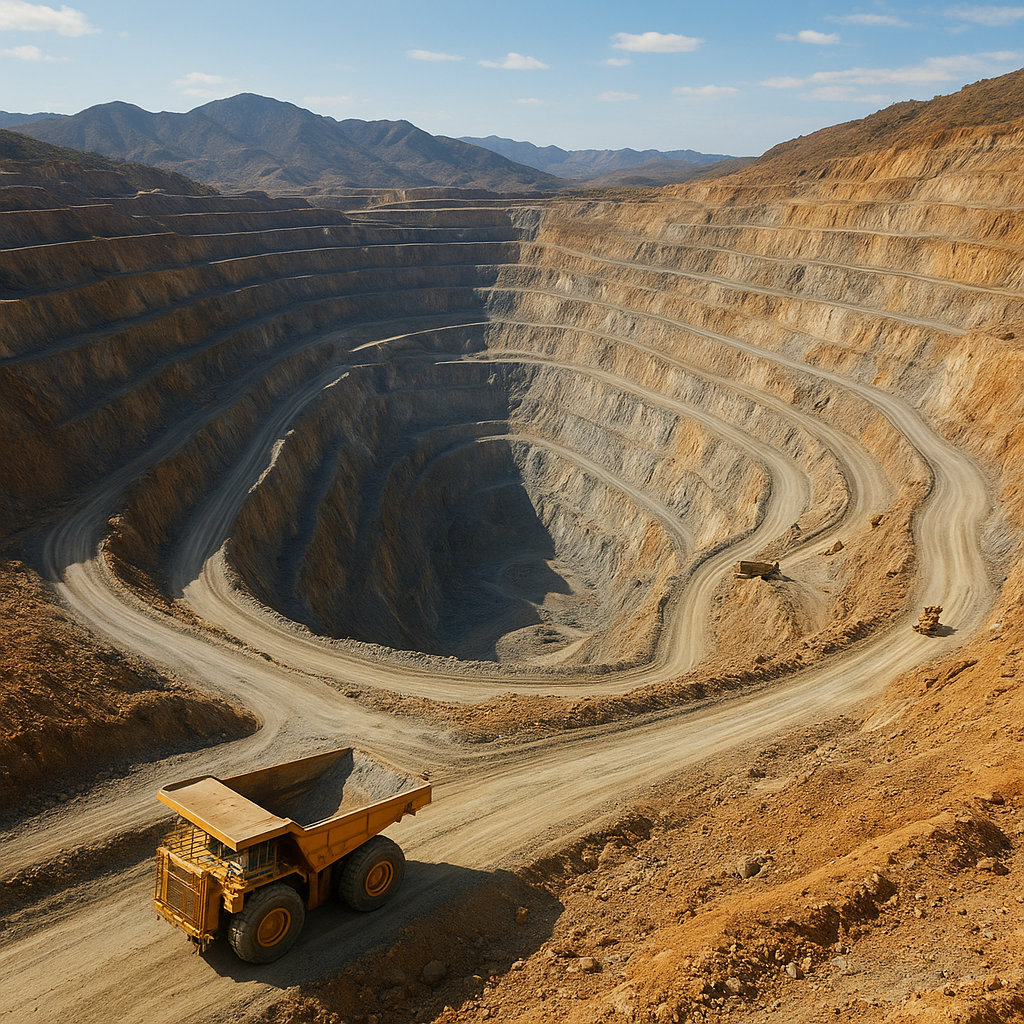
La Herradura is primarily an open-pit operation, a method chosen when near-surface mineralization and favorable strip ratios make bulk excavation economical. Open-pit mining permits the movement of large volumes of ore and waste with earthmoving fleets that include haul trucks, shovels or excavators, and drilling and blasting equipment. The scale of the operation necessitates comprehensive mine planning, including stage-by-stage pit design, slope stability monitoring and progressive reclamation.
Typical onsite functions include:
- Drilling and blasting of the ore and overburden
- Excavation and hauling to crushers and stockpiles
- Crushing and grinding to reduce particle size for processing
- Ore treatment using established metallurgical techniques
- Management of water, tailings and waste rock facilities
Processing and recovery
After extraction, ore is processed to liberate gold particles and concentrate the metal for sale. La Herradura uses a combination of crushing, grinding and chemical extraction methods to maximize recovery. Large-scale gold operations in this type of deposit frequently use cyanide leaching—either heap leaching or agitated leach circuits—followed by adsorption onto activated carbon and subsequent elution and electrowinning or smelting to produce doré bars. Secondary circuits may recover silver or other byproducts.
Processing efficiency is a crucial economic lever: improvements in grind size, reagent usage, residence time and carbon adsorption can materially affect the percentage of metal recovered and the operating cost per ounce produced. The mine invests in metallurgical testing and continual process optimization to maintain competitive production performance.
Reserves, resources and economic importance
La Herradura is recognized as one of the notable gold-producing assets in Mexico. Its calculated reserves and resources have supported multi-year production profiles, generating significant export earnings and tax revenues. Beyond the direct sale of metal, the mine stimulates the local and regional economy through purchases of goods and services, infrastructure improvements and payroll.
Key economic contributions typically include:
- Direct employment of hundreds to thousands of workers depending on the operational phase
- Opportunities for local contractors in trucking, catering, equipment maintenance and other services
- Fiscal contributions via royalties, taxes and fees paid to governmental authorities
- Indirect economic activity spurred by worker spending and local procurement
For many municipalities in Sonora, a large mine like La Herradura represents a major employer and a reliable source of business for suppliers. Mining taxes and royalties contribute to municipal budgets and, when paired with corporate social responsibility programs, can finance schools, clinics and community projects. On the national scale, precious-metal exports support the balance of trade and attract foreign investment into Mexico’s natural-resources sector.
Environmental management and community relations
Modern mining operations must align production with stringent environmental standards and maintain constructive relationships with local communities. La Herradura invests in measures designed to limit its ecological footprint, manage risks associated with containment of process solutions, and restore disturbed land. The management of tailings—the finely ground mineral residue from processing—is a central environmental and engineering concern. Tailings facilities are engineered with liners, seepage collection systems, monitoring wells and progressive closure plans to reduce the risk of contamination.
Water is another critical element in arid Sonora. Mines balance process water needs with the availability of local water resources, often implementing recycling, pond management and desalination or water-sourcing protocols to minimize net withdrawals from community supplies. Dust control, noise mitigation and visual impact reduction are additional environmental priorities addressed through road watering, berms and revegetation projects.
Community engagement programs typically include employment and training initiatives designed to build local capacity, regular public consultation and grievance mechanisms, and investment in health, education and local infrastructure projects. These programs help align the mine’s interests with those of nearby towns and indigenous or rural communities and can be essential for maintaining a social license to operate.
Regulatory framework and monitoring
La Herradura operates within a Mexican regulatory framework that governs environmental permitting, worker safety and land-use. Regular audits by regulatory authorities, third-party reviews and community oversight are common. Continuous environmental monitoring—air, water, biodiversity and groundwater—helps detect and address issues early. Remediation and progressive rehabilitation are integrated into mine plans to reduce long-term liabilities.
Workforce, safety and technology
The workforce at a large gold mine is diverse, including field operators, geologists, metallurgists, environmental scientists, engineers and administrative staff. Safety is paramount; mining companies implement training programs, health monitoring and workplace standards designed to reduce accidents and occupational hazards.
Technological advances have transformed operations at modern mines like La Herradura. Innovations range from fleet telematics and autonomous or semi-autonomous equipment to process control systems that optimize reagent use and energy consumption. Remote sensing and drone surveys enhance geological mapping and slope monitoring, while digital twins and advanced data analytics allow engineers to model performance and predict bottlenecks before they occur.
Interesting aspects and broader significance
Several features make La Herradura noteworthy beyond its role as a gold producer:
- Integration of modern processing: The combination of bulk open-pit mining with efficient metallurgical recovery methods demonstrates the industrial scale and technical complexity of contemporary gold operations.
- Geological education value: The deposit provides a natural laboratory for understanding epithermal mineralization, structural controls on ore distribution and the effects of weathering on ore bodies.
- Rural development driver: In an otherwise sparsely populated region, the mine’s presence has catalyzed transportation upgrades and improved access to services for nearby communities.
- Environmental innovations: Progressive reclamation, improved tailings management and water recycling strategies illustrate how mining projects can advance environmental engineering practices.
- Role in metal markets: As a consistent source of gold, the mine contributes to the supply side of precious-metal markets, with implications for refining, trade and downstream industries.
Beyond technical and economic factors, mines like La Herradura are often implicated in conversations about sustainability, indigenous rights and resource governance. They serve as focal points for debates on balancing resource extraction with long-term stewardship of land and water.
Future prospects and challenges
The future of a mine such as La Herradura depends on several interlinked factors: metal prices, ongoing exploration success, operating costs, technological improvements and the ability to manage social and environmental expectations. Continued exploration near existing pits and in adjacent concessions can extend the life of the operation by adding new reserves and resources. Innovations that reduce energy consumption, improve recovery and lower water usage will help maintain competitiveness.
Key challenges include volatility in global metal markets, regulatory changes, increasing expectations for environmental performance, and competition for scarce resources such as skilled labor and water in arid regions. Companies operating the site must adapt to evolving stakeholder expectations, invest in workforce development and maintain robust risk management systems to handle operational disruptions.
Concluding observations
La Herradura exemplifies a modern, large-scale gold mine in Mexico: a technically sophisticated operation embedded in a challenging but resource-rich landscape. Its contributions span direct employment and fiscal revenues to regional development and technological advancement. At the same time, the mine highlights the ongoing need to balance resource extraction with careful environmental management, community engagement and continual investment in safety and innovation.

