
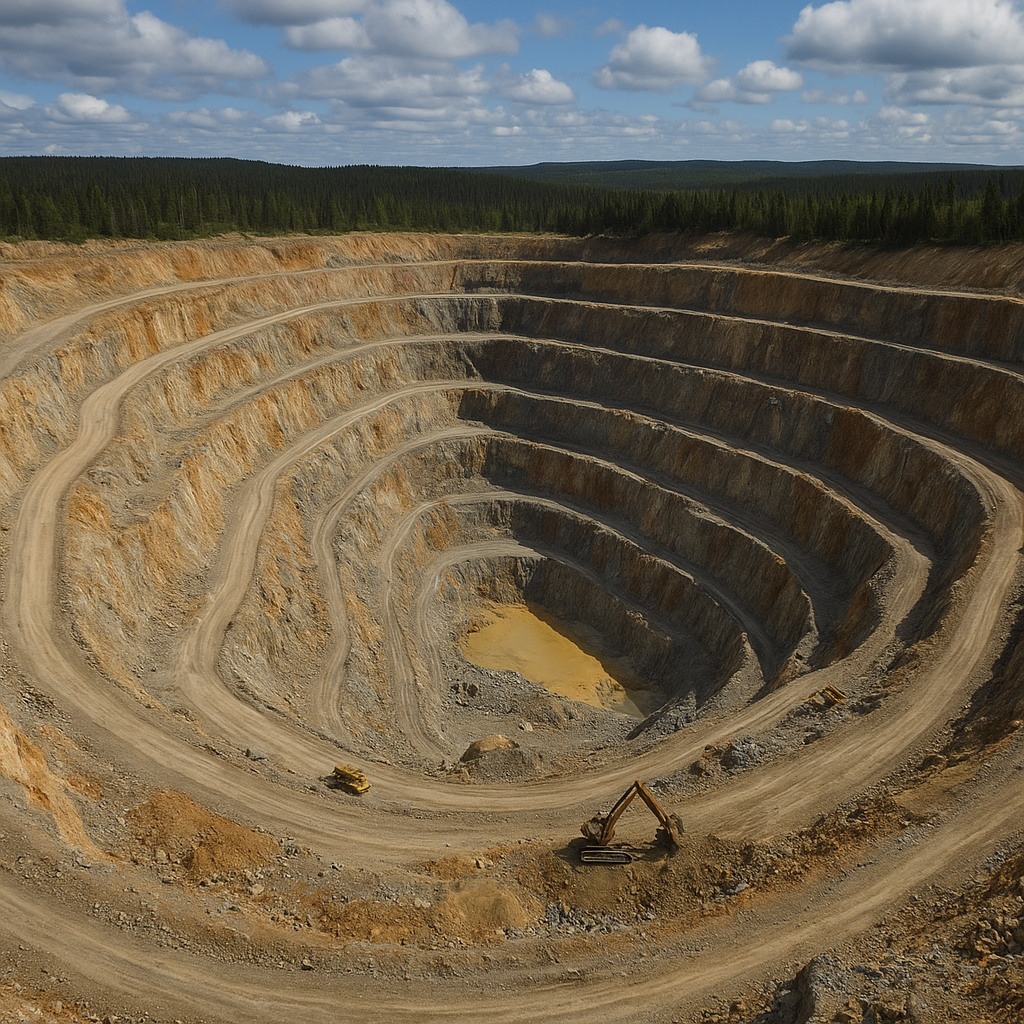
The Horne 5 Project represents one of the most talked-about mineral redevelopment initiatives in eastern Canada, situated in a region with a century-long tradition of metal extraction. Combining the legacy of historical mining with modern exploration, processing and environmental practices, Horne 5 aims to tap into a polymetallic resource that has both immediate commercial value and long-term strategic importance. This article examines where the project sits geographically and geologically, what metals it targets—primarily gold and copper—its broader economic implications, and several aspects that make the project particularly interesting for industry observers, local communities and policy makers.
Location and geological setting
The site associated with the Horne 5 initiative is located in the Abitibi-Témiscamingue region of Quebec, near the city of Rouyn-Noranda. The Abitibi greenstone belt is one of the world’s most prolific Archean mineral provinces and has produced a long list of significant base and precious metal deposits. The Horne area itself is a part of that historic mining landscape, where earlier large-scale mining operations established both physical infrastructure and an experienced workforce in the region.
Geologically, the deposit targeted by Horne 5 is part of the complex interplay of volcanic, sedimentary and intrusive rocks that characterize the Abitibi belt. Mineralization occurs where metal-rich fluids concentrated within structural traps and reactive host rocks, forming polymetallic assemblages. The distribution of copper and gold, often accompanied by silver, zinc and other minor elements, is controlled by both primary igneous processes and later hydrothermal activity. This geological setting offers both continuity with historically mined orebodies and potential for new discoveries through modern exploration techniques.
Regional infrastructure and advantages
One of the strengths of redeveloping a site like Horne 5 is the existing regional infrastructure. Rouyn-Noranda and surrounding communities have established transport links, skilled labor pools, suppliers and ancillary industries that reduce the lead time and risk compared with greenfield projects. In addition, Quebec’s reliable hydroelectric grid presents an attractive low-carbon energy source for mining and processing, a competitive advantage for projects requiring substantial power for crushing, grinding and metallurgical operations.
Mineralization, mining methods and processing
The Horne 5 Project targets polymetallic mineralization dominated by copper and gold. Historically, mines in the Horne area produced both metals with silver and other by-products recovered where present. Modern development focuses on maximizing recovery of the primary metals while capturing value from by-products through refined metallurgical flowsheets.
Mining methods
Given the nature of deep or structurally controlled orebodies in the Abitibi region, contemporary mining methods likely to be used at Horne 5 include a combination of mechanized underground mining and selective extraction techniques. Advances in automation, remote operation and geotechnical monitoring mean that deeper orebodies can be accessed more safely and efficiently than in the past. Where viable, backfilling, waste segregation and paste tailings technologies are considered to manage ground stability and minimize environmental footprint.
Processing and metallurgy
Processing flows at projects like Horne 5 typically include primary crushing, grinding (often in a semi-autogenous or ball mill circuit), flotation to produce copper or copper-gold concentrates, and subsequent dewatering and concentrate handling. Metallurgical testwork is crucial to optimize recovery of gold—which may be associated with sulfide minerals—and copper, and to understand how to treat refractory material if present. Modern metallurgical plants often integrate improved reagent schemes, controlled flotation circuits and more efficient concentrate filtration, all of which improve payable metal and reduce operating costs.
Economic significance and regional impact
The Horne 5 Project has the potential to generate substantial economic benefits at multiple scales: local, regional and national. Extractive projects in established mining regions create direct employment in operations, maintenance and metallurgy, and indirect jobs in services, supply chains and logistics. Because Rouyn-Noranda already hosts mining services, the multiplier effects on employment and local small businesses can be immediate.
- Direct employment: Skilled technicians, geologists, metallurgists and operations staff are required for construction and sustained operations.
- Indirect employment: Local suppliers, contractors, transport firms and hospitality services benefit from project activities.
- Government revenues: Royalties, corporate taxes and payroll taxes increase public revenues that can be reinvested in infrastructure and social services.
Beyond jobs and government income, there are strategic considerations. The global transition to low-carbon energy and electrification increases demand for copper, a critical conductor in grids, electric vehicles, renewable energy installations and transmission systems. At the same time, gold remains a significant financial hedge and industrial metal. A reliable domestic or allied supply of these metals contributes to resource security for manufacturing and national industries.
Local community benefits and challenges
Mining projects in established towns can sustain local economies, support skills development and fund community initiatives. Training programs often accompany construction phases to prioritize local hiring and to transfer technical knowledge. However, projects must also address potential challenges: housing availability during peak construction, environmental concerns, and the need to ensure long-term economic diversification once the mine life ends. Stakeholder engagement and benefits sharing frameworks are essential for maximizing positive outcomes.
Environmental management and legacy considerations
Any redevelopment in a historic mining district brings both the responsibility and the opportunity to address past environmental legacies. Horne 5 is positioned to demonstrate modern approaches to waste management, water treatment and reclamation. Key environmental elements include effective management of tailings, control of acid rock drainage where sulfide-rich material exists, and progressive rehabilitation of disturbed areas.
- Tailings management: Contemporary tailings facilities emphasize stability, lower water content, and options for reprocessing historic tailings where residual metal can be recovered.
- Water stewardship: Closed-loop water circuits, advanced treatment systems and continuous monitoring protect local waterways.
- Reclamation and biodiversity: Progressive reclamation helps shorten the period between disturbance and ecological recovery, often incorporating local species and traditional land-use considerations.
Innovations such as tailings reprocessing can transform legacy waste into a secondary resource stream, extracting remaining gold or copper while reducing long-term environmental liabilities. Equally, using low-carbon power sources diminishes greenhouse gas emissions from operations, aligning the project with broader climate goals.
Regulation, permitting and Indigenous engagement
Mining in Quebec is governed by a comprehensive regulatory framework that balances resource development, environmental protection and social consultation. Modern projects like Horne 5 must pass through multiple permitting stages that include environmental assessments, community consultations and, where applicable, agreements with Indigenous nations. These processes ensure that cumulative effects are considered and that compensation, employment, training and cultural protections are addressed.
Engagement with local Indigenous communities is both a legal and ethical imperative. Successful projects typically co-develop benefit-sharing models, training programs and economic partnerships that reflect community priorities and foster long-term relationships.
Technological and operational highlights
Horne 5 serves as a microcosm of how historical mine districts can be revitalized with contemporary technologies. Some of the notable operational and technical themes include:
- Automation and remote operations to boost safety and productivity.
- Advanced exploration techniques, such as 3D geological modeling and high-resolution geophysics, to better delineate orebodies and reduce drilling uncertainty.
- Metallurgical optimization using detailed ore characterization to maximize recovery of both gold and copper and to identify opportunities for by-product recovery.
- Integration of renewable energy and energy efficiency measures to lower the carbon intensity of production.
These technologies not only improve economics but also reduce environmental and social impacts, making the operation more acceptable to regulators and communities.
Interesting aspects and historical context
The Horne district has a storied mining history that enriches the narrative of Horne 5. Past operations established processing facilities, transport networks and a culture of technical expertise that can be repurposed or serve as a foundation for new development. Several points of interest make the Horne 5 Project stand out:
- Legacy resource potential: Historic mines often leave behind complexities and pockets of mineralization that modern exploration can re-evaluate with new techniques.
- Tailings as opportunity: The possibility of reprocessing tailings for residual gold and copper is both an environmental solution and a source of additional revenue.
- Low-carbon power: The availability of abundant hydroelectricity in Quebec positions the project to be a relatively low-emission source of critical metals.
- Community knowledge: A local workforce with multi-generational mining experience accelerates ramp-up and fosters local contractor networks.
- Strategic metals: With rising global demand for copper driven by electrification and continued importance of gold for investors and industry, Horne 5 aligns with market trends.
Beyond the technical and economic, there is also cultural and educational value: redeveloping a historic site can catalyze local museums, interpretive centers and partnerships with universities and technical colleges, preserving mining heritage while building skills for the future.
Risks, uncertainties and forward outlook
As with any mineral project, Horne 5 faces common industry risks: commodity price volatility, permitting timelines, technical challenges during construction and extraction, and social license considerations. Mitigating these risks involves robust feasibility studies, transparent engagement with stakeholders, conservative financial planning and adaptive environmental management strategies.
Looking forward, the project’s viability will be influenced by global metals markets, advances in extraction and processing technology, and the extent to which the project can demonstrate sustainable practices. If successfully developed, Horne 5 could become an exemplar of how legacy mining regions can be renewed to meet 21st-century resource needs while delivering tangible benefits to local communities.

