Molybdenite is a mineral that has quietly shaped industries from metallurgy to electronics. As the principal ore of molybdenum, its dark, metallic grains hide a versatile chemistry and a layered crystal structure that make it important both in traditional steelmaking and in cutting-edge nanotechnology. This article explores the mineral’s physical and chemical properties, its geological settings and global occurrence, the ways it is mined and processed, and the diverse applications that flow from its unique characteristics.
Mineralogy, Structure and Key Properties
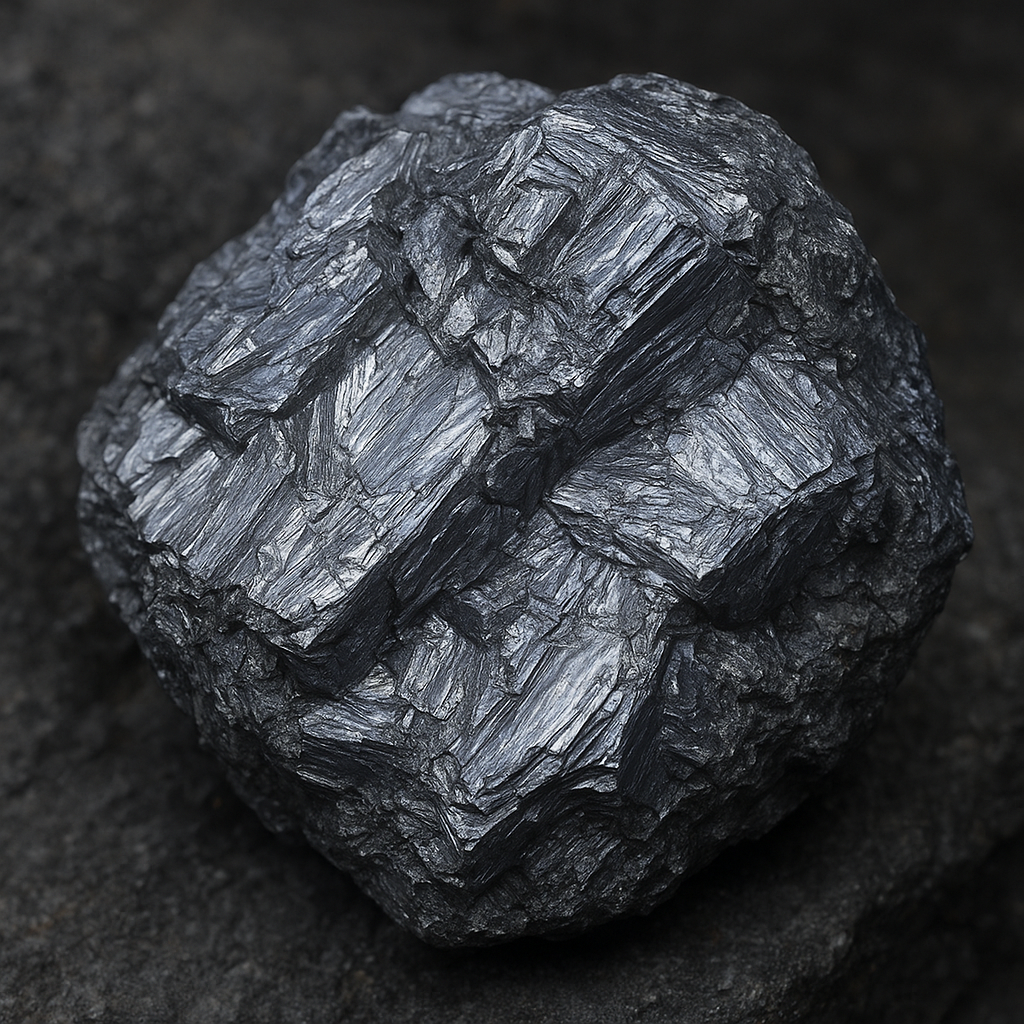
Molybdenite (chemical formula MoS2) is a naturally occurring compound composed of molybdenum and sulfur. Crystallizing most commonly in the hexagonal system, molybdenite forms thin, platy crystals with a distinct metallic luster and a lead-gray to black color. Its physical softness (Mohs hardness around 1–1.5) and greasy feel are due to a layered crystal architecture: each layer consists of a plane of molybdenum atoms sandwiched between two planes of sulfur atoms, with strong covalent bonding inside the layers and weak van der Waals forces between them. That weak interlayer bonding is the property that gives molybdenite a suite of technologically valuable behaviors.
- Molybdenite density: typically 4.6–5.1 g/cm3.
- Chemical composition: about 59.9% molybdenum by mass in pure MoS2.
- Crystal habits: platy, scaly, foliated aggregates; common polytypes include 2H and 3R.
- Electrical behavior: semiconducting, with band gap sensitive to thickness and phase.
- Tribological behavior: very low friction coefficient along basal planes—valuable for lubricants.
At the nanoscale, molybdenite transforms from an indirect band-gap semiconductor in bulk to a direct band-gap semiconductor when thinned to a single layer, a transition that has driven interest in creating atomically thin transistors and photonic devices. Different structural phases (e.g., the semiconducting 2H and the metallic 1T) provide opportunities for tailoring electronic properties through chemical treatment or strain engineering.
Geological Settings and Global Occurrence
Molybdenite commonly forms in high-temperature hydrothermal environments and is a characteristic mineral in specific ore deposit types. The most economically important setting is the porphyry copper-molybdenum deposit, but it is also found in skarns, greisens, and vein systems. In many deposits molybdenite is disseminated through host rocks, while in others it occurs as veinlets or banded masses.
Common deposit types
- Porphyry copper–molybdenum systems: Molybdenite occurs disseminated in the altered porphyries and associated hosted rocks. Many of the world’s molybdenum resources are recovered as primary products or byproducts of large porphyry copper mines.
- Primary molybdenum deposits: Some deposits are dominated by molybdenite without significant copper; these are mined primarily for molybdenum.
- Skarn and greisen deposits: Molybdenite can occur with other metallic minerals in metasomatic zones where intrusions interact with carbonate or granitic host rocks.
- Vein and replacement deposits: Locally important sources of coarse molybdenite crystals.
Notable global occurrences
Important molybdenite-bearing districts include the western United States (historic mines such as Climax and Henderson in Colorado), Canada (British Columbia and Ontario), Chile and Peru in South America, China, Kazakhstan, Russia, and parts of Europe. Many large copper mines (Chile’s large porphyry mines, for example) recover molybdenite as a byproduct, contributing substantially to the global ore supply. The distribution is tied closely to the global tectonic pattern: convergent margins and magmatic arcs are prime locations for the porphyry systems that host molybdenite.
Mining, Beneficiation and Metallurgical Processing
Because molybdenite is soft and platy and has distinct surface properties, it is amenable to conventional mineral processing techniques. The economic path from raw mineral to refined molybdenum metal typically includes mining, comminution, flotation, roasting or hydrometallurgical conversion, and refining.
Extraction and concentration
- Open-pit and underground mining methods are used depending on deposit geometry and depth.
- Crushed ore is subjected to froth flotation to produce a molybdenite concentrate; its hydrophobic basal surfaces help it separate from gangue minerals.
- Flotation circuits are tuned to suppress copper minerals (if present) and to maximize molybdenite recovery, often using specialized collectors and depressants.
Processing to usable products
Concentrates (typically 30–60% Mo) are processed further. The conventional route is roasting the concentrate in air to produce molybdenum trioxide (MoO3), which can then be reduced to metallic molybdenum powder by hydrogen reduction or converted to ammonium molybdate via dissolution for chemical production. Hydrometallurgical flowsheets, including pressure leaching and solvent extraction, are used increasingly, particularly for low-grade concentrates or complex feeds. Recycling and secondary processing of molybdenum-bearing scrap also contribute significantly to supply.
Industrial Applications and Uses
The bulk of refined molybdenum produced from molybdenite is used for metallurgy and alloying. A large fraction makes steels stronger and more heat-resistant, but molybdenum’s influence extends to catalysts, lubricants, electronics, and advanced materials. Its high melting point, good strength retention at elevated temperatures, and corrosion resistance make molybdenum indispensable across several industries.
- Molybdenum in steel: small additions (fractions of a percent to a few percent) dramatically improve strength, toughness, and high-temperature performance. Stainless steels and high-strength alloy steels often contain molybdenum to resist corrosion and creep.
- Superalloys and high-temperature components: molybdenum and molybdenum alloys are used where temperatures surpass the capability of conventional steels.
- Catalysis: molybdenum compounds (notably MoS2-based formulations) are central to hydrodesulfurization catalysts in oil refining, where sulfur is removed from petroleum feeds using promoted molybdenum sulfide catalysts (often with cobalt or nickel).
- Lubricants and solid-film coatings: molybdenite’s layered structure produces low friction; it is used as an additive in greases and as a dry lubricant in space and industrial applications.
- Electronics and optics: exfoliated MoS2 monolayers behave as atomically thin semiconductor channels in field-effect transistors and show promise in photodetectors, flexible electronics, and valleytronic devices.
- Chemicals: molybdenum trioxide and ammonium molybdate are feedstocks for catalysts, pigments, and other molybdenum chemicals.
Unconventional and emerging uses
Beyond conventional uses, molybdenite is central to many research-front technologies. Exfoliation of molybdenite to single- and few-layer sheets enables exploration of two-dimensional electronic phenomena. In energy research, MoS2-based electrocatalysts are investigated for hydrogen evolution (water splitting), and composite materials leverage MoS2 for battery electrodes and supercapacitors. The combination of a tunable band gap and mechanical flexibility makes MoS2 a leading candidate among two-dimensional semiconductors.
Molybdenite at the Cutting Edge: 2D Materials and Electronics
Interest in materials science grew when researchers found that molybdenite can be cleaved to atomically thin sheets through mechanical or chemical exfoliation. A single layer of MoS2 exhibits a direct band gap (~1.8 eV) suitable for transistor channels and light-emitting devices. Engineering of phase transitions (e.g., converting semiconducting 2H to metallic 1T locally) allows the creation of heterostructures for contact engineering and novel device architectures.
- Field-effect transistors (FETs): MoS2 FETs show promising on/off ratios and subthreshold slopes, and they can function at nanometer thicknesses where silicon struggles.
- Optoelectronics: monolayer MoS2 is an efficient light absorber and emitter, leading to prototypes of ultrathin LEDs and photodetectors.
- Heterostructures: stacking MoS2 with other 2D materials (graphene, h-BN) forms devices with tailored electronic and thermal properties.
- Strain and defect engineering: mechanical strain and controlled defects adjust band structure, opening paths toward sensors and tunable devices.
The ability to pattern metallic and semiconducting phases on a single flake through chemical or electrochemical methods is especially exciting: researchers are effectively drawing circuits and contacts at microscopic scales by inducing local phase changes, a process sometimes referred to as exfoliation-enabled device fabrication.
Environmental, Health and Economic Considerations
Like any mined commodity, molybdenite and its processing raise environmental and human-health issues that must be managed. Molybdenum itself is an essential micronutrient for plants and animals at low concentrations, involved in enzymes such as nitrogenase and nitrate reductase; however, elevated exposures can cause ecological and health effects.
- Environmental management: tailings from molybdenite flotation and processing require containment and water treatment to prevent the mobilization of metals or acidity.
- Occupational health: inhalation of fine molybdenum dust from concentrate or metal processing is a workplace hazard requiring dust control and proper respiratory protection.
- Recycling and resource efficiency: molybdenum is readily recycled from alloy scrap and spent catalysts, improving resource sustainability and reducing pressure on primary resources.
Economically, molybdenite’s value is tied to the price of molybdenum metal and to demand from the steel, oil refining and high-tech sectors. Because much of the world’s molybdenum is produced as a byproduct of copper mining, fluctuations in copper markets can indirectly influence molybdenum availability and pricing. Primary molybdenum mines respond directly to molybdenum price signals, while byproduct supply is less price-responsive.
Cultural and Historical Notes, and Other Interesting Facts
Molybdenite’s story intersects chemistry and history. The name traces back to the Greek root molybdos, meaning lead, because early assays of the mineral confused it with lead-bearing minerals and graphite. Pioneering chemical work in the 18th century showed that molybdenum compounds were chemically distinct; the metal was isolated and characterized by late-18th and early-19th-century chemists. The progress from a curious dark mineral to a foundation of modern alloys and electronics illustrates how deep knowledge of crystal chemistry can lead to broad technological impact.
- Appearance: large, well-formed molybdenite crystals can be visually striking despite the mineral’s low hardness, and specimen collectors prize certain crystal habits.
- Confusion with graphite and galena: molybdenite’s metallic sheen and softness led early miners and assayists to misidentify it; modern analytical techniques quickly discriminate it via X-ray diffraction or electron microprobe.
- Isotopes and geochronology: Re-Os isotope systematics applied to molybdenite permit precise dating of ore-forming events, providing critical constraints on the timing of mineralization in porphyry systems.
Practical Tips for Students and Professionals
If you are a geology student, a materials scientist, or an engineer encountering molybdenite for the first time, here are a few practical pointers:
- Identification: field identification relies on color, metallic luster, thin-platy habit and greasy feel; confirm with more definitive analytical methods (XRD, Raman, SEM-EDS).
- Sample handling: molybdenite flakes separate easily along basal planes; store fine powders in sealed containers to prevent dust generation.
- Materials experiments: beware that chemical treatments or thermal processing can convert MoS2 phases and alter electronic properties—document pre-treatments carefully.
- Safety: follow standard industrial hygiene for dust and fumes, and treat process waters and tailings in compliance with environmental regulations.
Concluding Observations
Molybdenite is more than a source of an industrial metal: it is a mineral whose layered structure bridges classic economic geology and frontier materials science. From strengthening steels in construction and transport to enabling atomically thin transistors and catalysts for cleaner fuels, molybdenite’s versatility underlies a broad spectrum of modern technology. Understanding its geology, processing pathways, and material behavior is essential for responsibly harnessing its potential and for innovating in fields that will shape future applications.