
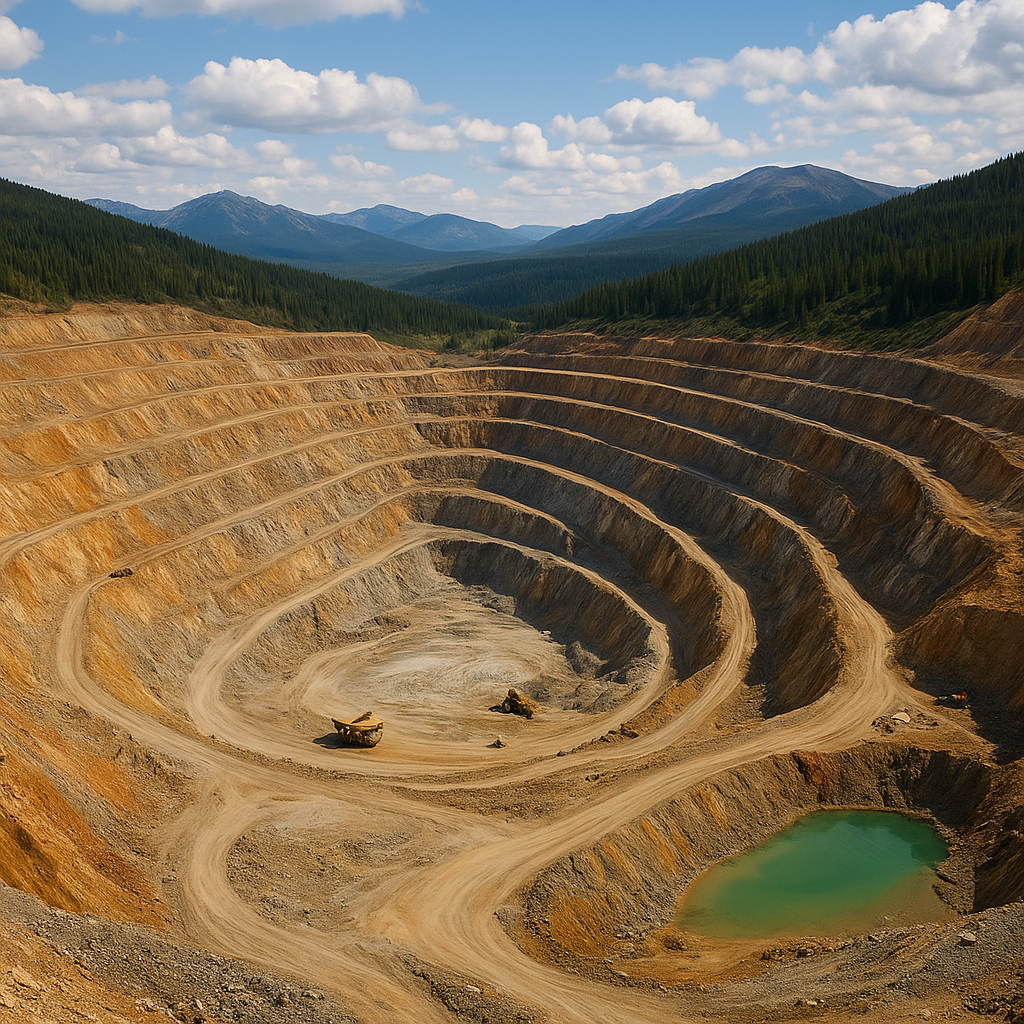
The Minto Mine is a notable example of a modern Canadian base metal operation that combines remote location, significant mineral resources, and a range of technical, social and environmental challenges. This article explores where the mine is located, what is extracted there, its broader economic role and several aspects that make Minto interesting from both a mining and regional development perspective.
Location and geological setting
Located in the interior of the Yukon Territory in northwestern Canada, the Minto Mine sits within a rugged landscape of forests, rivers and rolling hills. The site is accessible by a network of roads from the territorial capital and by seasonal logistics routes that support mining activity. Its remote position underscores many operational choices, from workforce logistics to energy supply and environmental management.
The deposit at Minto contains a combination of copper and gold, along with other associated metals recovered as by-products during processing. Mineralization occurs within host rocks that record a complex geological history of magmatism and hydrothermal activity, which concentrated metallic elements into mineable zones. Geologists have described the deposit as economically important for the region because of its sizable copper endowment paired with significant gold credits that enhance the value of production.
Geologically, deposits like Minto are valuable because they provide both a primary metal—copper—and precious metal credits such as gold that can dramatically change project economics. The presence of both metals allows operators to adjust processing and marketing strategies depending on market conditions, and it attracts exploration interest for satellite deposits and extensions along mineralized trends.
Mining methods and processing
Minto has employed a combination of surface and subsurface mining methods to extract ore, reflective of the deposit’s geometry and depth. The visible portion of the deposit permitted initial open excavation, while deeper or higher-grade shoots have been accessed through underground development when economics and safety considerations favored it. This hybrid approach—using both open-pit and underground methods—helps optimize recovery of the resource while managing cost and environmental footprint.
Once ore is brought to the surface, it is crushed, milled and processed to concentrate the valuable minerals. The typical product from Minto-style operations is a copper concentrate containing copper sulfides, with measurable precious metal content that provides additional revenue streams. Processing plants are designed to recover metal efficiently while minimizing water and energy use, important factors in a region where logistics and resource conservation are priorities.
Key operational elements
- Production: The mine produces copper concentrate with gold and silver credits; production volumes are influenced by market conditions and operational decisions.
- On-site facilities include crushing, milling and flotation circuits, as well as tailings management infrastructure and water treatment systems.
- Support infrastructure generally comprises a maintenance workshop, fuel and reagent storage, administrative buildings and worker accommodations.
- Seasonal climate affects both operations and logistics, so mines in the Yukon typically plan around freeze-thaw cycles and winter road availability.
Economic and social significance
From a territorial and national perspective, mines like Minto contribute multiple layers of economic value. They generate direct employment for operational staff and contractors, stimulate indirect jobs through service providers and suppliers, and create opportunities for local businesses in transportation, hospitality and logistics. The multiplier effects of mining activity are especially visible in smaller regional economies where a single large employer can support a diverse web of services.
Minto’s role in the regional economy also encompasses tax revenues, royalties and payments to government that fund public services and infrastructure. Many mining operations establish procurement and training programs intended to prioritize regional suppliers and to develop local capacity. This can include apprenticeships for tradespeople, contracts for local trucking firms, and partnerships with vocational training providers to prepare residents for long-term employment in the mining sector.
Engagement with Indigenous communities and local stakeholders is another critical economic and social dimension. Modern projects increasingly incorporate benefit agreements, employment targets and community investment programs that aim to share economic gains and build local capability. These initiatives can help secure social license to operate while contributing to local well-being through scholarships, business development funds and cultural heritage programs.
Environmental management and regulation
Operating in a sensitive northern ecosystem brings strong regulatory scrutiny and community interest in environmental performance. Minto-style operations focus on minimizing impacts to land, water and wildlife through comprehensive environmental management plans. Key components typically include progressive reclamation to stabilize disturbed areas, water treatment facilities to manage runoff and effluent, and erosion control measures on slopes and haul roads.
Tailings and waste rock management receive particular attention because of their potential to generate acid rock drainage and to mobilize metals into surface or groundwater. Modern designs emphasize engineered containment, impermeable liners where justified, and monitoring networks that track water quality over time. When operations cease, closure and reclamation plans are implemented to return the landscape to a stable, productive condition according to regulatory expectations and community agreements.
Adaptive management is a core principle in northern mining: operators monitor environmental indicators, review results with regulators and stakeholders, and modify practices as needed. This iterative approach helps build trust and ensures that evolving science and technologies inform onsite mitigations. For example, water treatment systems can be upgraded to improve removal of specific contaminants, or revegetation programs can be adapted to enhance habitat value.
History, ownership dynamics and exploration potential
Like many mineral projects in Canada, Minto has experienced periods of active production, idling and redevelopment influenced by commodity cycles and capital availability. Exploration and development phases require significant upfront investment in drilling, resource definition and infrastructure. Once a viable resource is delineated, a mine is built, operated, and ultimately closed or placed on care-and-maintenance pending market conditions or further discoveries.
Ownership of such projects can change hands several times through mergers, asset sales or strategic shifts among mining companies. These transfers reflect broader market dynamics and the specialist nature of some operators who focus on development, construction or long-term operation. For communities and workers, changes in ownership can bring new capital and renewed activity—or create uncertainty if operations are scaled down.
Even after a primary operation is established, the surrounding district may hold exploration upside. Satellite deposits, deeper ore shoots and previously untested targets can extend mine life materially. As exploration technologies and geological models improve, companies often return to mature mining districts to apply new methods and seek economically recoverable extensions.
Interesting aspects and outlook
Minto stands out for several reasons that make it more than just another mining operation:
- Its combination of base and precious metals means that the project is inherently flexible in responding to commodity price swings. When copper markets are strong, the operation benefits directly; when gold prices surge, the precious metal credits help sustain revenue.
- The logistical challenge of operating in the Yukon—managing supplies, workforce transport and seasonal weather—means that innovation in camp design, supply chain planning and cost control are essential. These operational lessons are widely applicable to other remote projects worldwide.
- Community and stakeholder engagement in the region often leads to creative partnerships. Training programs, local hiring practices and small-business procurement can leave a durable economic legacy even after production ends.
- Employment and skills transfer are tangible outcomes: many workers who gain experience at northern mines go on to support other northern industries, helping sustain a specialized labor pool across multiple projects.
- From a strategic materials standpoint, copper is central to global decarbonization trends: its role in electrical infrastructure, renewable energy systems and electric vehicles gives projects like Minto broader relevance to national and international policy priorities.
Technological developments also shape the mine’s future. Advances in ore sorting, remote sensing and automation can improve recovery rates, reduce environmental footprint and lower unit costs. These changes make it possible to re-evaluate lower-grade portions of a deposit or to operate more sustainably in sensitive landscapes.
Finally, the ongoing dialogue between mining companies, regulators and communities creates a dynamic environment in which social expectations and technical possibilities evolve together. As regulations tighten, and as markets reward better environmental and social performance, mines that adapt—through technology, governance and investment—tend to be the most resilient.

