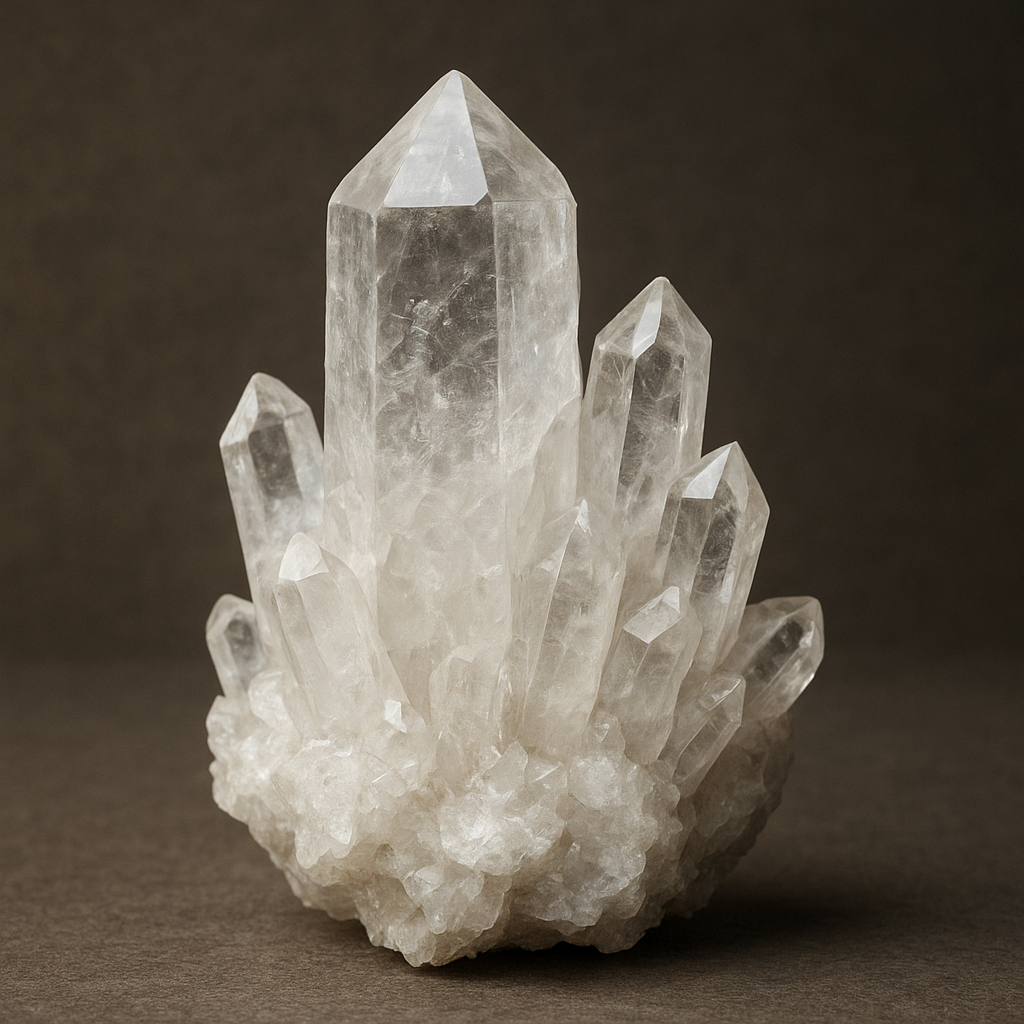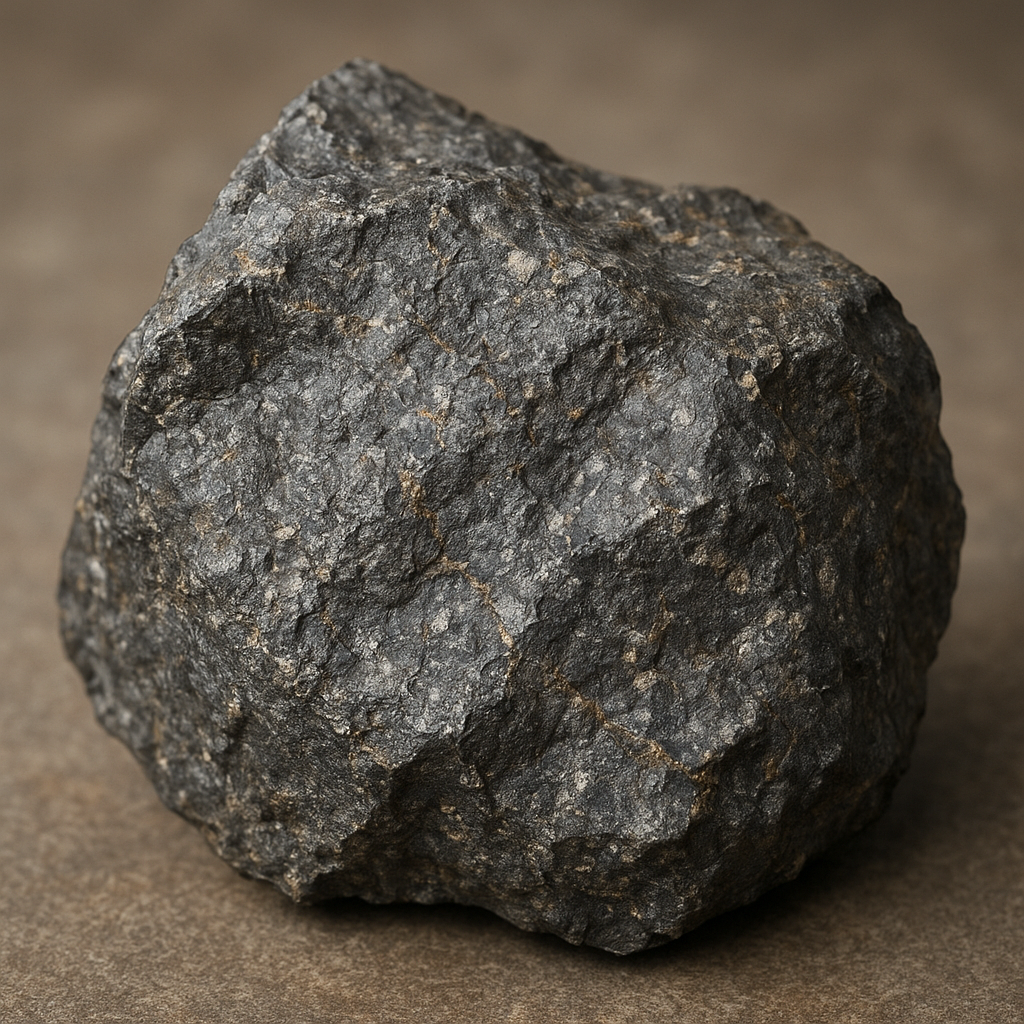
Meionite is a fascinating and scientifically valuable mineral that often goes unnoticed outside specialist circles. As the calcium-rich endmember of the scapolite solid-solution series, meionite records significant information about the interaction of rocks and fluids during metamorphism and metasomatism. This article explores its chemistry, common geological settings, physical and optical properties, practical applications, and a few intriguing aspects that make meionite important for both collectors and researchers.
Chemistry and crystal structure
Meionite belongs to the broader scapolite group, a family of minerals characterized by a framework of silica and alumina tetrahedra that accommodates a mix of larger cations and anions in its channels. The scapolite series is commonly described by a generalized formula in which sodium and calcium substitute for each other and anions such as chloride, carbonate, and sulfate occupy channel sites. As the calcium-dominant member, meionite contrasts with the sodium-rich marialite endmember; natural scapolite compositions cover a continuous solid solution between these endmembers.
Crystallographically, scapolites (including meionite) crystallize in the tetragonal system and typically form prismatic crystals with well-developed cleavage. The framework structure is relatively open, allowing channel anions (like carbonate or chloride) and variable amounts of water or halogens to enter and leave during metamorphic or hydrothermal processes. This structural flexibility is what makes meionite and related scapolites such sensitive recorders of fluid compositions and physicochemical conditions.
Where meionite occurs: geological environments and associations
Meionite is most commonly found in environments where rocks have been subjected to intense chemical change due to the introduction of external fluids, particularly those rich in calcium and carbon dioxide. Typical settings include:
- Skarns and contact-metamorphosed limestones: When silica- and alumina-bearing magmas intrude carbonate rocks, high-temperature fluids promote the formation of calcareous silicate minerals. Meionite frequently appears alongside garnet, diopside, wollastonite, and vesuvianite in classic skarn assemblages.
- Regional metamorphism of calcareous and aluminous rocks: In high-grade metamorphic terrains where CO2-bearing fluids are present, meionite-bearing scapolite can form in marbles and gneisses, recording fluid-rock interaction during prograde metamorphism.
- Hydrothermal veins and metasomatized wall rocks: Meionite can precipitate from metasomatic fluids that alter country rocks, especially where calcium is abundant and halogen or carbonate activity is significant.
- Igneous and pegmatitic contexts: Although less common, scapolite-group minerals (including meionite) sometimes occur in coarse-grained igneous rocks and pegmatites where volatile-rich melts or fluids enable their formation.
Typical mineral associations emphasize the calcareous, high-temperature nature of meionite-bearing systems: garnet, clinopyroxene (often diopside), wollastonite, grossular, calcite, plagioclase, and various accessory silicates. These associations are used by geologists to reconstruct pressure-temperature-fluid pathways during metamorphism and skarn formation.
Physical and optical properties useful for identification
Meionite shares many observable features with other scapolites but has some distinguishing characteristics:
- Color: Range commonly from colorless to shades of yellow, brown, and pink; deep colors often reflect trace impurities or radiation damage. Transparent yellow to golden hues are prized in gem varieties.
- Luster: Vitreous to resinous on crystal faces and broken surfaces.
- Hardness: Approximately 5 to 6 on the Mohs scale, making it moderately hard and suitable for some jewelry use when cut and properly set.
- Specific gravity: Moderate, typically in the 2.6–2.8 range depending on composition and anion content.
- Cleavage: Distinct in two directions, typical of scapolites, which influences how crystals break and how gem material should be cut.
- Optical properties: Scapolites are uniaxial minerals in the tetragonal system and display moderate birefringence. Pleochroism may be present in colored specimens, which is important in gem and lapidary work.
In hand specimen and thin section, meionite can be recognized by its prismatic habit, association with calcareous silicate minerals, and measurable composition from electron microprobe or similar analyses that show high calcium content relative to sodium.
Meionite as an indicator mineral: why geologists care
One of the most important scientific roles of meionite is as a petrogenetic indicator. Because scapolite composition is sensitive to the chemistry of coexisting fluids — especially the proportions of Na vs. Ca and the relative abundance of anions such as chloride and carbonate — the presence and composition of meionite-rich scapolite provide direct clues about fluid composition, halogen content, and whether CO2-rich fluids were involved.
For example:
- High meionite content generally implies Ca-rich, Na-poor conditions and often the dominance of carbonate species in the fluid. This is typical of skarn formation where carbonate rock is the protolith.
- The relative proportions of marialite (Na-rich) and meionite (Ca-rich) can be used to infer fluid evolution — for instance, whether a system evolved toward more saline, Cl-rich fluids or toward CO2-rich metasomatism.
- In metamorphic terrains, scapolite compositions can be used alongside garnet, biotite, and other minerals to perform geochemical modeling and track changes in fugacity of CO2, H2O, and halogens during metamorphism.
Because of these diagnostic abilities, meionite-bearing rocks are frequently studied in metamorphic petrology, skarn research, and hydrothermal alteration studies aimed at understanding ore genesis and fluid pathways.
Uses and applications — practical and scientific
Meionite has few large-scale industrial uses but plays several important roles:
- Gemstone and ornamental use: Transparent, well-colored specimens of scapolite (including meionite-rich varieties) are occasionally faceted as gemstones. Typical gem colors are yellow, orange, and pink; some stones display attractive internal glow or pleochroism. Because of moderate hardness and cleavage, care is needed when wearing and setting scapolite gems.
- Educational and collector material: Well-formed meionite crystals are valued in mineral collections and museum displays for their aesthetic and geological significance.
- Research and exploration: As noted above, meionite is a useful mineral for reconstructing fluid compositions and metamorphic histories, and it can help guide mineral exploration for skarn-hosted ore deposits where precious and base metals are introduced by metasomatic fluids.
- Indicator of halogen and volatile cycles: The ability of scapolite to incorporate chloride, carbonate, and sulfate makes meionite-bearing assemblages valuable for studying the distribution of volatile elements during crustal processes.
Gemology, treatments, and market considerations
When meionite or scapolite is sold commercially as a gemstone, certain considerations apply:
- Color enhancement: Some scapolite stones are heat-treated to modify or intensify color; however, treatments are less common and less well-documented than for mainstream gem materials.
- Durability and care: With a hardness around 5–6 and prominent cleavage, scapolite gems require protective settings and careful handling to avoid chips and cleavage-related breaks.
- Value drivers: Transparency, saturation of color, and absence of inclusions raise gemstone value. Cut and polish quality also significantly affect market prices.
- Identification: Gemologists use refractive indices, birefringence, and spectroscopic features to distinguish scapolite (including meionite-rich varieties) from visually similar gems such as citrine, topaz, or certain garnets.
Research frontiers and interesting scientific questions
Meionite-related research spans several active areas:
- Fluid evolution and metasomatism: Detailed chemical studies of scapolite compositions in skarns and metamorphic rocks help quantify mass transfer between magmas, country rocks, and fluid phases. Meionite fractions can reveal the timing and composition of CO2-rich pulses that accompany intrusion and metamorphism.
- Isotopic studies: Isotopic analysis of carbon and oxygen in scapolite-associated carbonate phases, combined with meionite occurrence, helps unravel the sources of carbon (magmatic vs. sedimentary) and constrains temperatures of formation.
- Experimental petrology: Laboratory experiments that synthesize scapolite phases under controlled temperature, pressure, and fluid chemistry conditions refine thermodynamic models and allow more precise use of scapolite as a geothermometer or fluid indicator.
- Environmental and geochemical cycles: Since meionite can incorporate halogens and carbonates, studies examine how these elements cycle through the crust during tectonic and magmatic events, with implications for long-term volatile budgets.
Notable occurrences and collecting highlights
Meionite and related scapolites have been reported from a range of classical mineral localities worldwide. Collectors prize well-formed, transparent crystals from skarn and metamorphic localities where clear associations with garnet and diopside produce attractive specimens. While specific commercial sources fluctuate, many alpine-type metamorphic belts and contact-metamorphosed carbonate regions yield noteworthy meionite-bearing samples.
Collectors and field geologists often look for characteristic prismatic crystals in association with calcareous silicates; hand-specimen recognition is enhanced by attention to color, cleavage, and the mineral assemblage. For serious identification and study, chemical analyses (electron microprobe or X-ray fluorescence) confirm the calcium-rich nature that defines meionite.
Practical tips for hobbyists and researchers handling meionite
Whether you are a mineral collector, lapidary enthusiast, or geologist, a few practical tips help preserve meionite specimens and make best use of them scientifically:
- Store cut stones and crystals away from harder materials; scratches can mar the luster and reduce value.
- Avoid harsh chemical cleaners — mild soap and water are safest for most specimens.
- When sampling for study, document the precise geological context (host rock, alteration features, and mineral associations) because meionite’s value as a petrogenetic indicator depends on contextual information.
- For research-grade work, pair petrographic observations with quantitative chemistry to determine where a scapolite falls on the marialite–meionite compositional join.
Final scientific perspective
Meionite may not be the flashiest mineral, but it occupies a crucial niche in earth sciences and in the mineral trade. As a calcium-rich representative of the scapolite family, it acts as a sensitive recorder of fluid chemistry, metamorphic history, and metasomatic processes. From informing skarn and contact-metamorphic models to supplying attractive gem material for niche markets, meionite bridges aesthetic and scientific interests. Its study continues to yield insights into the behavior of halogens, carbonate species, and volatiles in the crust — a reminder that even modest-looking minerals can hold powerful geological stories.