
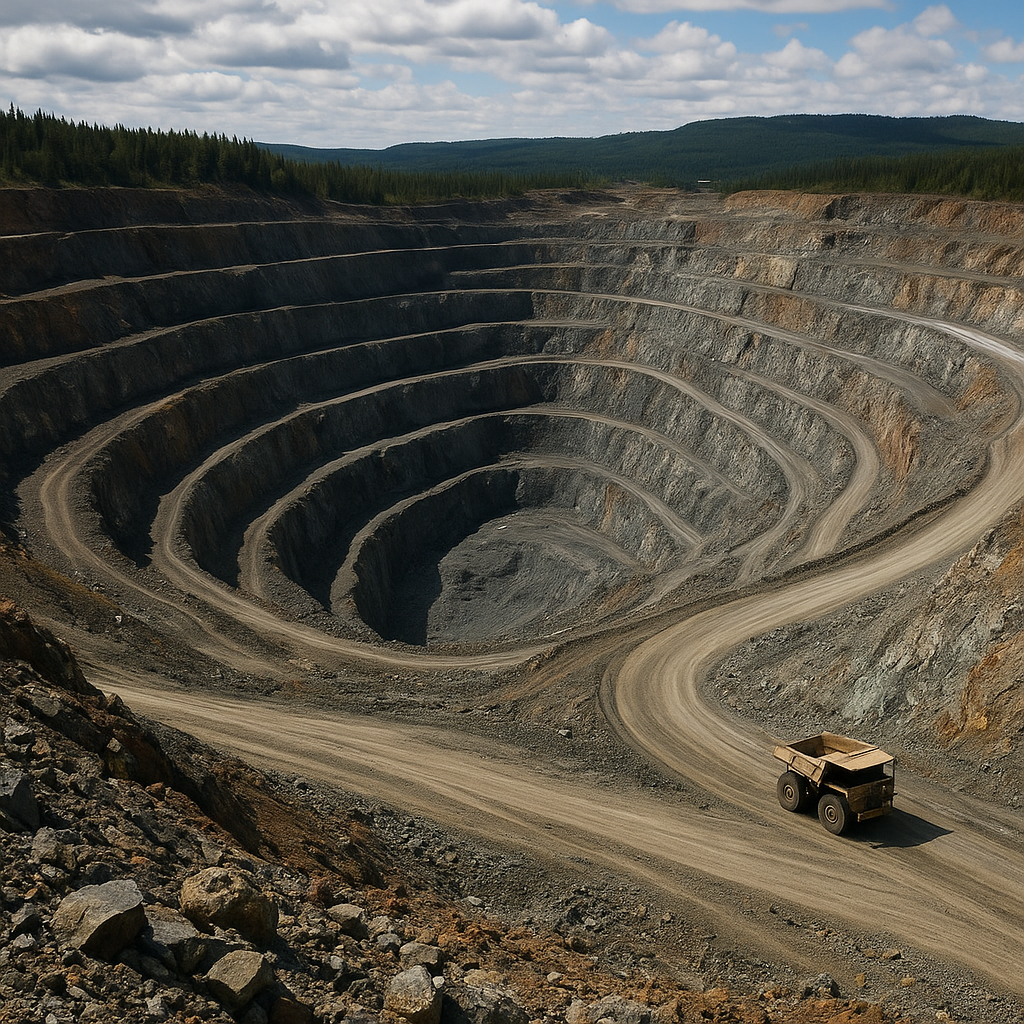
The Raglan operation is one of Canada’s most remote and technically interesting mineral projects. Located well north of the tree line in Quebec’s Arctic region, it extracts high-value base metals that play a strategic role in modern industry. This article describes where the site is, what is produced there, how mining and processing take place, the economic role of the mine for regional and national economies, and several aspects that make Raglan unusual and noteworthy.
Location and environment
The Raglan complex sits on the eastern shore of Hudson Strait in the region known as Nunavik, the northern portion of the province of Quebec. The deposit lies in a remote Arctic setting characterized by tundra, coastal cliffs, and long, cold winters with persistent sea ice. Access is limited: there are no public highways linking the site to southern population centers. Instead, transport relies on a combination of scheduled and charter flights, seasonal maritime shipping via a nearby port, and specially designed logistics to move supplies and concentrate products.
Because of its latitude, the Raglan area experiences extreme seasonal variations in daylight and weather, including polar night in winter and continuous daylight in summer. These environmental conditions have a major influence on infrastructure design, camp operations, and worker rotations. The coastal location also means that marine conditions, including ice cover in winter and Arctic storms, must be addressed in planning for shipping and port facilities.
Geology and mineralization
Magmatic sulfide origin
The mineralization exploited at Raglan is primarily a magmatic sulfide deposit formed by the segregation of metal-rich sulfide liquids from ultramafic or mafic magmas. These deposits commonly host concentrations of nickel, copper and accessory metals such as cobalt and the platinum group elements. The geological setting at Raglan includes layered intrusive rocks and associated structures that concentrated sulfides into mineable lenses.
Ore characteristics
Raglan’s ores are generally sulfide-dominated, meaning they are suitable for conventional concentration by flotation. The resulting concentrates are rich in nickel and copper sulfides and typically require further smelting or refining downstream to produce saleable metal products. The physical and mineralogical characteristics of the ore dictate the processing flowsheet, which in cold climates must be adapted to operate reliably in remote, subarctic conditions.
Mining, processing and infrastructure
Underground mining methods
Because the ore bodies at Raglan are predominantly subsurface lenses rather than large, near-surface open pits, mining is carried out using underground methods. Underground mines in Arctic settings require careful planning for ground support, ventilation, and water control. In addition, cold temperatures influence equipment selection and maintenance regimes. Mining cycles are organized to balance continuous ore supply with the logistical constraints of resupply and workforce rotations.
Concentration and material handling
After extraction, ore is crushed and milled on site, then subjected to flotation to produce a nickel-copper concentrate. Tailings are managed according to local regulations and environmental design principles appropriate for cold climates. Concentrate is typically transported offsite for smelting and refining, either by ship during the ice-free season or, where applicable, by rail and road after transshipment.
Support facilities
- Camp and accommodations sized for rotating crews with on-site medical and welfare services.
- Power generation (often modular plants using diesel or LNG in remote sites), heating systems, and water treatment.
- Maintenance workshops, warehouses, and explosives magazines designed for Arctic safety standards.
- Port and stockpile facilities adapted for seasonal shipping and ice management.
The logistical complexity of maintaining an industrial site in such a remote location is a defining operational challenge. Companies operating in the region invest heavily in resilient, winterized infrastructure to ensure continuous production and safe working conditions.
Economic significance
Regional employment and community impact
Raglan is an important employer for northern communities and plays a significant role in the socio-economic fabric of Inuit populations in nearby settlements. Employment at the mine spans professional, technical and trades roles, as well as service and supply chain jobs. Beyond direct employment, the mine supports indirect economic activity through procurement of goods and services, transportation contracts, and local business opportunities.
Contribution to provincial and national economies
As a source of critical base metals, Raglan contributes to Quebec’s mineral exports and to Canada’s overall resource sector. Nickel and copper are essential inputs for multiple industries: stainless steel production, electrical systems, and increasingly, components in clean energy technologies and electrochemical storage. Revenues, royalties, and taxes generated by such projects support public services, infrastructure development, and further economic diversification in the broader region.
Global commodity supply
Metals produced at Raglan enter international markets and form part of global supply chains. Nickel, in particular, has strategic importance due to its role in alloys and in battery chemistries for electric vehicles and stationary storage. Mines that produce reliable, responsibly-sourced concentrates are valued by downstream manufacturers seeking to secure long-term supplies.
Environmental stewardship and social responsibility
Environmental management in Arctic conditions
Operating in an Arctic environment imposes strong expectations for environmental protection. Companies working around Raglan typically implement comprehensive monitoring programs for air, water, and wildlife; design tailings and waste facilities to resist cold-climate effects; and employ rehabilitation strategies tailored to tundra ecosystems. Special care is taken to minimize the risk of accidental releases to marine environments and to manage any impacts on fish and marine mammal habitats.
Engagement with Indigenous communities
Long-term social license to operate depends on constructive relationships with nearby communities. This includes agreements on employment, training, procurement, and cultural preservation. Projects in the region often incorporate benefit agreements, joint monitoring programs, and support for local education and infrastructure. Respect for traditional land uses and consultative planning are key elements of responsible operations.
Energy and emissions
Remote mining operations historically rely on diesel-based power, which results in significant greenhouse gas emissions. In recent years many Arctic operations have investigated or implemented fuel efficiency measures, partial electrification, or the integration of lower-emission fuels. Energy choices influence both operational cost and the project’s environmental footprint, and are therefore a central part of strategic planning.
Logistics and seasonal constraints
The Raglan site’s coastal position means that maritime logistics play a central role. A brief summer shipping window often allows movement of heavy equipment, fuel resupply, and export of concentrates. Outside that window, air transport is typically the only reliable way to move personnel and urgent supplies. Seasonal sea ice and Arctic weather dictate narrow windows for certain activities and require careful contingency planning.
Ice management and port infrastructure must be robust to withstand pack ice and storms. Intermediate storage facilities are often used to accumulate concentrate and supplies during the ice-free period. The company and its contractors design transport chains to minimize downtime and ensure that critical materials are available when needed.
Interesting and unique aspects
- Remoteness and logistics engineering: Operating successfully at Raglan requires creative engineering and logistics solutions tailored for Arctic realities. From winterized equipment to specialized shipping schedules, the project showcases how modern mining can function in extreme conditions.
- Workforce rotation culture: Rotational shifts (for example, multi-week on/off patterns) are common, and camps are designed to be self-sufficient, providing recreation, healthcare and community spaces to support employee wellbeing.
- Cultural partnerships: The role of Indigenous partnerships at Raglan highlights evolving models for benefit sharing, joint stewardship, and local procurement that aim to balance development with cultural continuity.
- Adaptation to climate: Infrastructure and environmental design reflect adaptations to permafrost, seasonal thaw, and coastal erosion, and provide valuable case studies for Arctic engineering.
- Strategic metals: The fact that Raglan produces metals used in modern energy and manufacturing technologies underlines its relevance beyond regional economics — it contributes to global transitions in mobility and energy storage.
Challenges and future outlook
Like many remote mineral operations, Raglan faces a mix of technical, economic and social challenges. Commodity price fluctuations can influence investment and expansion decisions. Environmental permitting and community expectations shape operations and require ongoing dialogue. Technological evolution, such as increased electrification of mobile equipment, improvements in processing efficiency, and advances in mine automation, offer pathways to reduce costs and emissions while improving safety.
Strategic prospects include optimizing ore recovery, extending mine life through exploration of adjacent deposits, and enhancing value capture by partnering with downstream processors. The broader trend toward decarbonization and electrification globally could increase demand for the metals produced at Raglan, creating incentives for sustained investment in responsible Arctic mining.
Concluding observations
The Raglan operation exemplifies a modern, remote base-metal mine that balances extraction of valuable commodities with the practicalities of Arctic life and the responsibilities of environmental and social stewardship. Its output of nickel, copper and associated metals is not only economically important for the region but also strategically relevant in global supply chains. The technical ingenuity required to maintain production, the partnerships with local communities, and the constant adaptations to a changing climate make Raglan an instructive case in contemporary mining.

