Lizardite is a subtle but scientifically significant member of the serpentine mineral group. Often overlooked in favor of more dramatic minerals, it nevertheless plays an important role in rock alteration, global geochemical cycles and contemporary research into carbon capture and the origin of life. This article explores the mineral’s structure and properties, where it forms in nature, its practical and emerging applications, and several surprising connections between lizardite and planetary processes.
Geological nature and crystal structure
Lizardite belongs to the broader family of serpentine minerals, a group of hydrated magnesium silicates that commonly form during the low-temperature metamorphism of ultramafic rocks. The ideal chemical formula is often written as Mg3Si2O5(OH)4, which highlights the dominance of magnesium in its composition. Structurally, lizardite is a sheet or plate-like mineral classified as a phyllosilicate, meaning its silicon-oxygen tetrahedra are arranged in continuous sheets linked to octahedral layers. This layered structure explains many of lizardite’s physical properties, such as its flaky habit, low hardness and tendency to split into thin laminae.
Polymorphism within the serpentine group
Within the serpentine group, several polymorphs share the same general chemistry but differ in how their sheets are stacked and bent. The most commonly discussed polymorphs are lizardite, antigorite and chrysotile. Lizardite typically forms as a relatively flat-sheeted phase, whereas antigorite shows a corrugated lattice and chrysotile forms fibrous cylinders. These differences influence mechanical behavior and stability: lizardite is stable at relatively low temperatures and is a common product of weathering and hydrothermal alteration of peridotite and dunite near the Earth’s surface or in shallow subseafloor environments.
Microstructures and textures
Microscopically, lizardite often appears as fine-grained aggregates, platy crystals and vein-filling masses. It can occur intergrown with magnetite, brucite, talc and carbonates, producing a variety of textural relationships that record the history of fluid-rock interaction. The sheeted habit means surfaces can be smooth and slightly greasy in feel, while thin sections reveal characteristic parallel layering under the microscope.
Where lizardite occurs: geological settings and global distribution
Lizardite forms wherever ultramafic rocks undergo hydration and low-temperature metamorphism. These conditions are widespread in several tectonic environments, and the mineral is associated with distinct geological settings.
Ophiolites and obducted mantle slices
One of the most productive contexts for lizardite formation is in ophiolites, slices of oceanic lithosphere thrust onto continental margins during tectonic collisions. Ophiolitic sequences often include peridotite bodies that have been extensively altered by seawater-derived fluids. Classic lizardite-bearing localities include parts of the Alpine ophiolites of Italy and Austria, the Semail Ophiolite in Oman, and numerous Mediterranean ophiolites where pervasive serpentinization has transformed mantle rocks.
Mid-ocean ridges, fracture zones and subseafloor alteration
At mid-ocean ridges and along transform faults, seawater penetrates into the oceanic mantle and reacts with olivine-rich peridotites to produce serpentine minerals including lizardite. These hydrothermal reactions are not limited to high-temperature black smoker systems; low-temperature serpentinization in the subseafloor can produce extensive lizardite-rich zones. Such processes are important contributors to the global cycling of water, hydrogen and other volatiles.
Continental ultramafic massifs and mantle xenoliths
On continents, lizardite is found in ultramafic massifs (large bodies of mantle-derived rock exposed by uplift and erosion), in shear zones and in serpentinized mantle xenoliths in volcanic terrains. Notable continental occurrences include parts of Newfoundland and northern Quebec in Canada, ophiolitic belts in Turkey and Greece, and ultramafic complexes in New Zealand and the western United States.
- Europe: ophiolites and ultramafic complexes across the Alps, Balkans and Iberian Peninsula
- Middle East: large serpentinized bodies in Oman and Turkey
- North America: scattered occurrences in the Appalachian ophiolites and western ultramafic terranes
- Oceania: New Zealand’s alpine ultramafic belts
- Seafloor: widespread along slow- and fast-spreading ridges, fracture zones and in faulted ophiolitic fragments
Physical and chemical properties relevant to applications
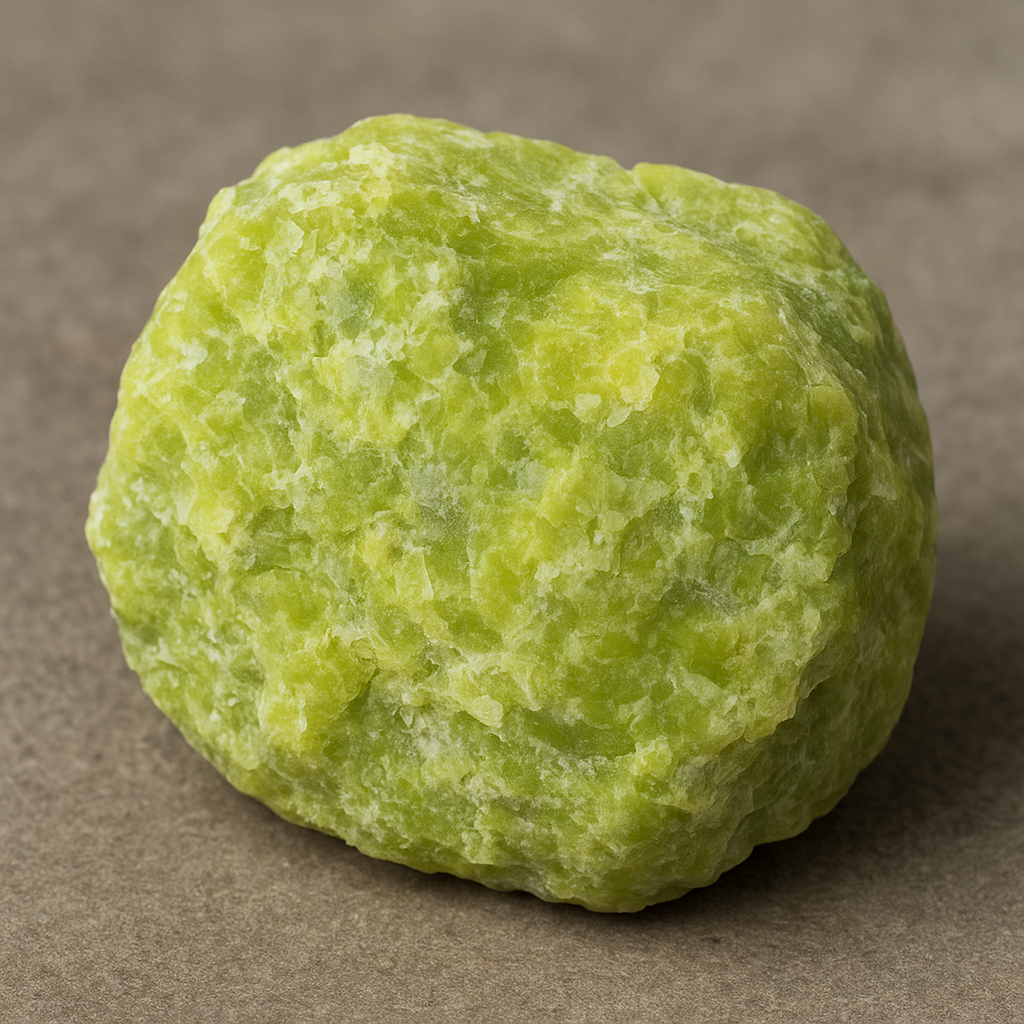
Lizardite’s combination of chemistry and structure gives it several noteworthy properties. It is generally soft (Mohs hardness around 2.5–3), has a low to moderate density, and exhibits a greenish to pale color range due to its magnesium silicate composition and the presence of minor iron. The sheet-like structure leads to a characteristic basal cleavage and a tendency to form thin flakes.
Chemical reactivity and weathering behavior
Because lizardite is a hydrated mineral, it participates actively in geochemical reactions. When olivine and pyroxene are hydrated to form serpentine minerals, the process—called serpentinization—releases heat and generates hydrogen and alkalinity. Lizardite can further react with circulating CO2-bearing fluids to form magnesium-rich carbonates, a reaction that underpins interest in mineral carbonation as a long-term carbon sequestration strategy.
Role in fluid-rock systems
Lizardite-rich rocks can act as both sources and sinks for elements during fluid flow. They can scavenge trace metals, influence pH and redox conditions, and host microbial communities in subsurface settings by providing chemical energy in the form of hydrogen and reduced iron.
Uses, historical context and industrial relevance
Historically, serpentine minerals have a variety of uses and associations. Lizardite itself has not been exploited to the same extent as some other minerals, but its presence is important in several industrial and research contexts.
Dimension stone and decorative materials
Non-fibrous serpentine rocks—including those dominated by lizardite—are sometimes used as decorative stone, polished for architectural details and small ornaments. Their attractive green tones and ability to take a good polish make them suitable for interior use. Such ornamental material is often marketed under the umbrella term serpentine or verde marble.
Asbestos and occupational health
The fibrous member chrysotile is the most common asbestos mineral and also belongs to the serpentine family. While lizardite typically forms non-fibrous platy aggregates, it can be part of rock assemblages that also contain fibrous phases. For this reason, ultramafic and serpentinized rock bodies have sometimes been sources of industrial asbestos or have presented occupational health challenges during mining and quarrying. Modern regulation and careful mineralogical assessment are essential where serpentine minerals are present.
Mineral carbonation and climate mitigation
Lizardite’s magnesium-rich chemistry makes it a target for research into mineral carbonation—transforming silicate minerals into stable carbonate minerals to lock up atmospheric CO2. Several approaches are under study:
- In situ carbonation of serpentinized rocks by injecting CO2-charged fluids into fractured ultramafic bodies.
- Ex situ processing in which mined serpentine minerals are reacted with CO2 under controlled conditions to form magnesite or other carbonates.
- Hybrid methods that leverage natural serpentinization reactions to enhance CO2 uptake.
Such strategies benefit from the thermodynamic favorability of converting magnesium silicates to carbonates, but practical challenges include reaction kinetics, energy costs, and the management of co-produced fluids.
Environmental and biological significance
Beyond industrial use, lizardite-rich environments have major implications for ecosystems, resource cycles and even theories about the origin of life. Serpentinization reactions generate hydrogen and can create strongly alkaline, reducing fluids that support unique microbial ecosystems. These chemosynthetic communities do not rely on photosynthesis; instead, they oxidize hydrogen or methane produced by rock-water reactions.
Hydrothermal systems and biological hotspots
Places such as the Lost City Hydrothermal Field in the Atlantic show how serpentinization can power robust microbial communities. Although Lost City is characterized largely by antigorite and related serpentines, similar processes operate where lizardite forms. The local production of hydrogen and methane provides metabolic energy for microbial mats and biofilms, and these systems are of keen interest to astrobiologists because they illustrate how life can thrive in environments without sunlight.
Soil chemistry and plant communities
On land, soils developed on serpentinite and lizardite-bearing rocks often have unusual chemistry: low in essential nutrients such as calcium and phosphate, high in magnesium and sometimes enriched in heavy metals like nickel and chromium. These conditions foster distinctive plant communities, including endemic and metallophyte species adapted to serpentine soils. Conservation biologists pay special attention to serpentine outcrops because they harbor rare flora and unique ecosystems.
Research frontiers and planetary connections
Interest in lizardite stretches from practical engineering to big-picture planetary science. Several active research directions involve the mineral directly or the processes that create it.
Implications for early Earth and astrobiology
Serpentinization has been invoked in theories about the origin of life because it produces chemical gradients and reduced gases that could fuel proto-metabolic systems. The hydrogen and methane generated when water reacts with ultramafic rocks provide plausible energy sources for early microbial metabolisms. Detection of serpentine minerals, including lizardite and related phases, on Mars and on hydrated asteroids supports the idea that water-rock interaction was widespread in the early solar system, with potential implications for habitability beyond Earth.
Carbon capture technologies and scaling challenges
Translating laboratory success in mineral carbonation into economically viable, large-scale CO2 removal remains a challenge. Lizardite-bearing rocks are attractive feedstocks because of their abundance and reactivity, but practical questions remain about mining impacts, process energy requirements and long-term monitoring. Pilot projects and field trials are underway in several regions to evaluate different approaches, including passive in situ carbonation and accelerated ex situ reactions.
Advanced materials and nanoscience
At the nanoscale, the layered structure of lizardite has inspired investigations into its potential as a component in composite materials, coatings and sorbents. Its surface chemistry can be modified to enhance interactions with pollutants or to create stable matrices for immobilizing heavy metals. These avenues are still largely experimental but illustrate the breadth of potential uses beyond traditional mineral applications.
Practical considerations for geologists and engineers
Recognizing and properly characterizing lizardite is important in both academic and applied settings. Mineralogical analysis using X-ray diffraction, scanning electron microscopy and microprobe techniques can distinguish lizardite from other serpentine polymorphs and from non-serpentine alteration products. For engineers, the presence of lizardite may affect rock strength, permeability and reactivity—factors that matter in tunneling, slope stability and groundwater flow.
When lizardite occurs alongside fibrous serpentine minerals, careful sampling and occupational health controls are essential to mitigate exposure risks. In environmental assessments, the potential for nickel and chromium release from serpentinized rocks requires monitoring, particularly where soils are disturbed or groundwater flow may mobilize metals.
Closing perspectives
Lizardite sits at the intersection of mineralogy, geochemistry and environmental science. Its humble appearance belies a significance that spans fundamental geologic processes, modern technological challenges and profound questions about life’s potential on other worlds. Whether viewed as an agent of serpentinization, a player in carbon sequestration strategies, or a host for unique biological communities, lizardite deserves sustained attention from researchers and practitioners seeking to understand and harness Earth’s dynamic systems.