Langite is a delicate and visually striking mineral that occupies a niche role among the secondary copper minerals. Its pale blue-green hues and often crystalline, botryoidal or crust-like habit make it a favorite for mineral collectors and a useful clue for geologists working on the oxidation zones of copper-bearing deposits. This article explores what langite is, where it forms and is found, its scientific and practical relevance, and several fascinating points that connect mineralogy, environmental science and collecting practice.
What is langite? Composition, appearance and basic properties
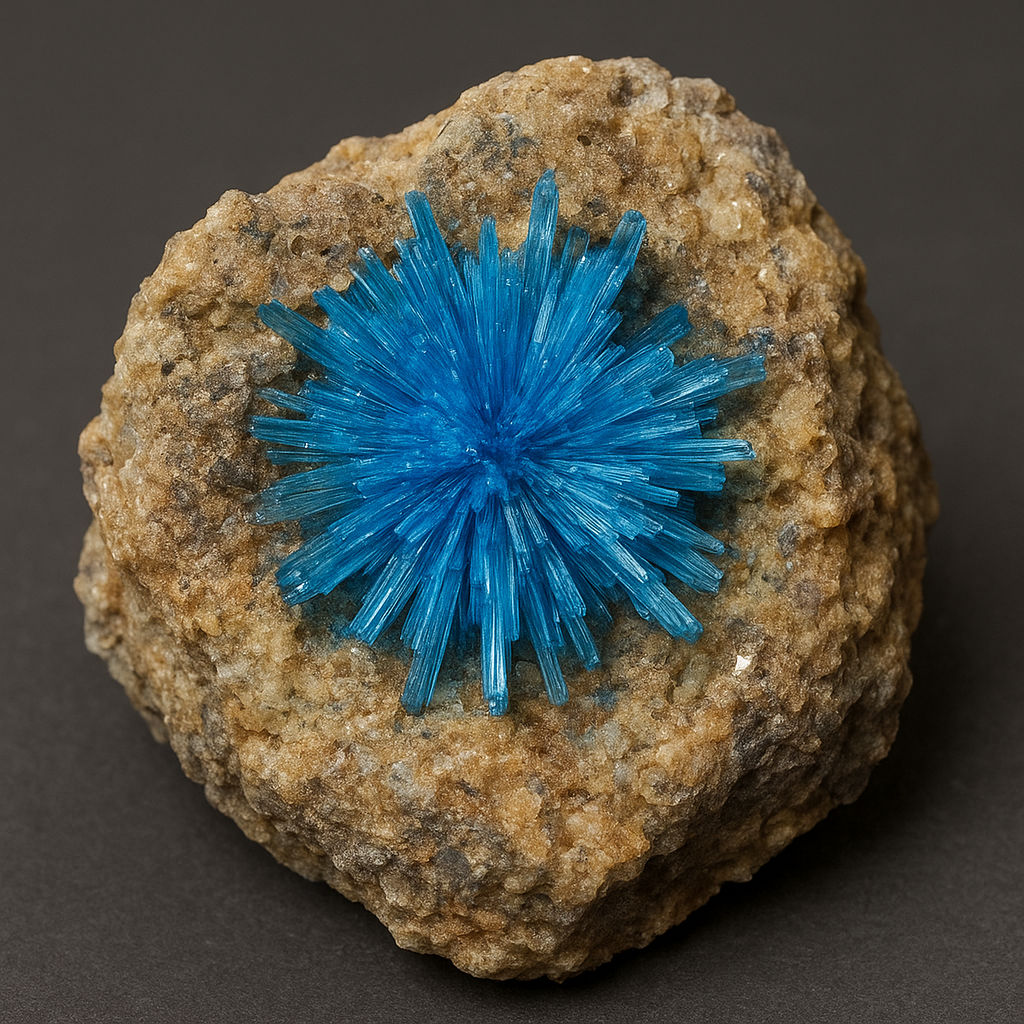
Langite is a secondary copper sulfate-hydroxide mineral whose idealized chemical formula is Cu4(SO4)(OH)6·2H2O. It contains copper in combination with the sulfate group, hydroxide ions and water molecules, making it a truly hydrated sulfate mineral. Langite frequently displays delicate pale blue to bluish-green colors that range toward greenish tones depending on associated impurities and the size of the crystals.
Morphologically, langite commonly forms as thin tabular crystals, small crusts, or micaceous aggregates. In hand specimen it may appear as compact crusts or velvety coatings over host rock; in thin section or under magnification it can reveal tiny flattened blades and radiating sprays. The mineral is relatively soft and fragile, which contributes to its rarity in well-preserved large crystals. Typical physical features that help recognize langite include its color, silky to vitreous luster on crystal faces or a duller luster on earthy crusts, and frequent association with other bright secondary copper minerals.
Where langite occurs: geological settings and notable localities
Langite forms almost exclusively as a result of near-surface chemical processes that act on primary copper sulfide minerals. These oxidation and weathering processes liberate copper and sulfur which then recombine in the presence of oxygen and water to produce an array of secondary sulfate and carbonate species. Because of this origin, langite is commonly encountered in the oxidized zones of copper ore deposits, especially in arid to temperate climates where sulfate mobility and evaporation can favor its crystallization.
Typical geological settings
- Oxidized upper levels of copper sulfide deposits—above the water table where atmospheric oxygen acts on sulfides.
- Old mine dumps and galleries where mine waters and humid air react with primary copper minerals.
- Arid-region supergene environments where evaporation concentrates copper-bearing solutions, prompting sulfate mineral precipitation.
- Fracture fillings and vugs in host rocks where slow precipitation allows delicate crystals to form.
Notable localities and distribution
Langite is worldwide in distribution but is locally abundant only where the right combination of copper supply, sulfate availability and gentle evaporation or evaporation–infiltration cycles exist. Collectors and mineralogists commonly report langite from mining districts and classic localities across Europe, the Americas and other continents. Typical regions with historically documented finds include old copper workings in Central and Eastern Europe, parts of the British Isles, the western United States, South America’s Andean mines and select Chilean localities. Because langite is a secondary mineral that forms in oxidation zones, many of the best specimens come from older mines where subsequent mining exposed and collected the fragile crusts and microcrystals.
Paragenesis and relationships with other minerals
Langite rarely forms in isolation. Its formation is part of a complex paragenetic sequence of copper mineral alteration. Primary copper sulfides such as chalcopyrite, bornite or chalcocite oxidize and release copper and sulfate into circulating waters. These solutions may precipitate a sequence of sulfate and hydroxide minerals depending on pH, Eh (redox potential), temperature and the relative concentration of other ions. Commonly associated minerals include brochantite, posnjakite, atacamite, malachite, azurite and various hydrated sulfates that form under slightly different micro-environmental conditions.
- Brochantite tends to form in slightly more alkaline or less sulfate-concentrated conditions and is often found with langite in oxidized zones.
- Posnjakite and other hydrated copper sulfates can appear as transitional phases as solutions evolve chemically.
- Carbonates such as malachite and azurite indicate CO2-rich waters and may replace or mask sulfate phases in carbonate-buffered environments.
Langite’s stability field in geochemical space is narrow; changes in humidity, pH or aggressive drying can destabilize it, leading to alteration to other sulfates or even to amorphous copper hydroxides. Consequently, langite is often a transient mineral in active weathering profiles, making intact specimens evidence of specific past micro-environmental conditions.
Analytical identification and laboratory techniques
Because langite crystals are often very small or intergrown with other phases, definitive identification frequently requires analytical methods beyond simple hand-specimen observation. Mineralogists use a suite of techniques to document and characterize langite:
- X-ray diffraction (XRD) to determine crystal structure and confirm mineral identity.
- Raman and infrared (IR) spectroscopy to identify sulfate vibrational modes and water/hydroxyl signatures.
- Scanning electron microscopy (SEM) combined with energy-dispersive X-ray spectroscopy (EDS) to image microscopic crystal habits and measure elemental composition, especially the copper:sulfur ratio.
- Microchemical spot tests and optical microscopy for preliminary assessment in the field or laboratory.
These methods not only confirm the presence of langite but also help place it within a paragenetic sequence and assess its association with other secondary minerals.
Uses, practical relevance and roles in related topics
Langite is not an ore mineral in the economic sense: it is too rare and unstable to be an industrial source of copper. However, the mineral has several important roles and applications in science, education and environmental studies.
- Collector and educational specimens: Langite’s attractive color and delicate habit make it desirable for mineral collectors and as illustrative material in teaching about supergene processes and sulfate mineralogy.
- Indicator mineral: In exploration and environmental geology, the presence of langite can signal the former or current mobility of copper and sulfate in the near-surface environment. It can indicate localized oxidizing conditions and point to underlying primary copper mineralization.
- Environmental science: As a product of sulfide oxidation, langite formation is part of the broader chemistry of acid mine drainage and metal mobility. Mapping where and how langite forms can inform remediation strategies by highlighting zones where copper is being temporarily sequestered in mineral phases versus where it remains soluble and mobile.
- Research in mineral stability: Langite serves as an experimental subject for studies on hydration/dehydration behavior, solid-solution with related sulfates, and transformation pathways under changing humidity and chemical conditions.
Because langite precipitates under specific chemical conditions, researchers can use it to reconstruct aspects of past aqueous environments at mine sites and ore bodies. For example, paired occurrences of langite with other sulfate or carbonate assemblages may help infer pH variations and seasonal changes in groundwater composition.
Conservation, collecting tips and preparation
Langite specimens require careful handling and storage. Their delicate crystalline nature and sensitivity to changes in humidity or mechanical shock mean that preparation and display need special attention:
- Avoid cleaning with water or acids: many secondary copper sulfates are soluble or alter when exposed to common cleaning agents.
- Store specimens in a stable, moderate-humidity environment to minimize dehydration or recrystallization. Use display cases that protect from dust and vibration.
- Label provenance carefully: locality data is especially important for transient minerals like langite because they record specific environmental histories.
- When photographing or studying specimens, use low-angle, diffuse lighting to reveal the subtle textures and color variations without overheating or drying the surface.
Interesting facts and connections to wider themes
Several aspects of langite connect to broader interests in geology and environmental science:
- Color and chemistry: The pale blue-green tones of langite arise from copper’s electronic transitions and the presence of water and hydroxyl in the structure. Slight chemical substitutions or intergrowths with similar minerals can shift the color toward bluer or greener hues.
- Transient character: Langite’s ephemeral nature in many settings makes it a kind of geological “snapshot” — its presence often records specific intervals of water chemistry or microclimate conditions that no longer exist.
- Environmental monitoring: In mine remediation, langite and similar phases can temporarily immobilize copper. Understanding the conditions that favor such sequestration helps design longer-term solutions for contaminated sites.
- Microscale beauty: Under microscopic examination langite can display elegant microcrystalline habits—thin blades, radiating sprays and lustrous, nearly transparent plates—that reveal how complex and ordered secondary mineral growth can be even at small scales.
Related minerals and comparative notes
Langite belongs to a suite of copper sulfate-hydroxide minerals that collectively illustrate the chemical diversity of supergene environments. Comparing it to related minerals helps clarify formation pathways:
- Brochantite and antlerite are other copper hydroxysulfates that can replace or be replaced by langite depending on pH and sulfate activity.
- Posnjakite is another hydrated copper sulfate that shares paragenetic space with langite; differentiating between them often requires spectroscopic or diffraction analysis.
- Atacamite and other chloride-bearing copper minerals may appear in the same environments when chloride-bearing waters or saline aerosols influence mineralogy.
These relationships are valuable for field geologists and mineralogists trying to reconstruct alteration histories and the evolving chemistry of mine-impacted environments.
Final remarks on observing and studying langite
Langite exemplifies the interplay between chemistry, hydrology and time in the near-surface Earth. Although it is not economically important as an ore, the mineral is scientifically valuable as an indicator of past and present geochemical processes. Its presence can guide exploration, inform remediation strategies, and delight collectors with fragile, stunning specimens that encapsulate a fleeting moment in a deposit’s alteration history. Whether approached from the perspective of mineralogy, environmental geology or museum curation, langite offers multiple avenues for observation, analysis and appreciation.