Labradorite Spectrolite is a captivating variety of feldspar prized for its vivid play of color and mysterious optical effects. Its shifting flashes of blue, green, gold, and sometimes crimson have inspired both scientific curiosity and artistic admiration. In this article you will find an overview of what Spectrolite is, where it is found, how it is used in industry and jewelry, and several intriguing facts that connect geology, history, and culture. The goal is to offer a thorough, readable guide that balances technical detail with accessible descriptions for collectors, jewelers, and anyone fascinated by natural color.
What is Labradorite Spectrolite?
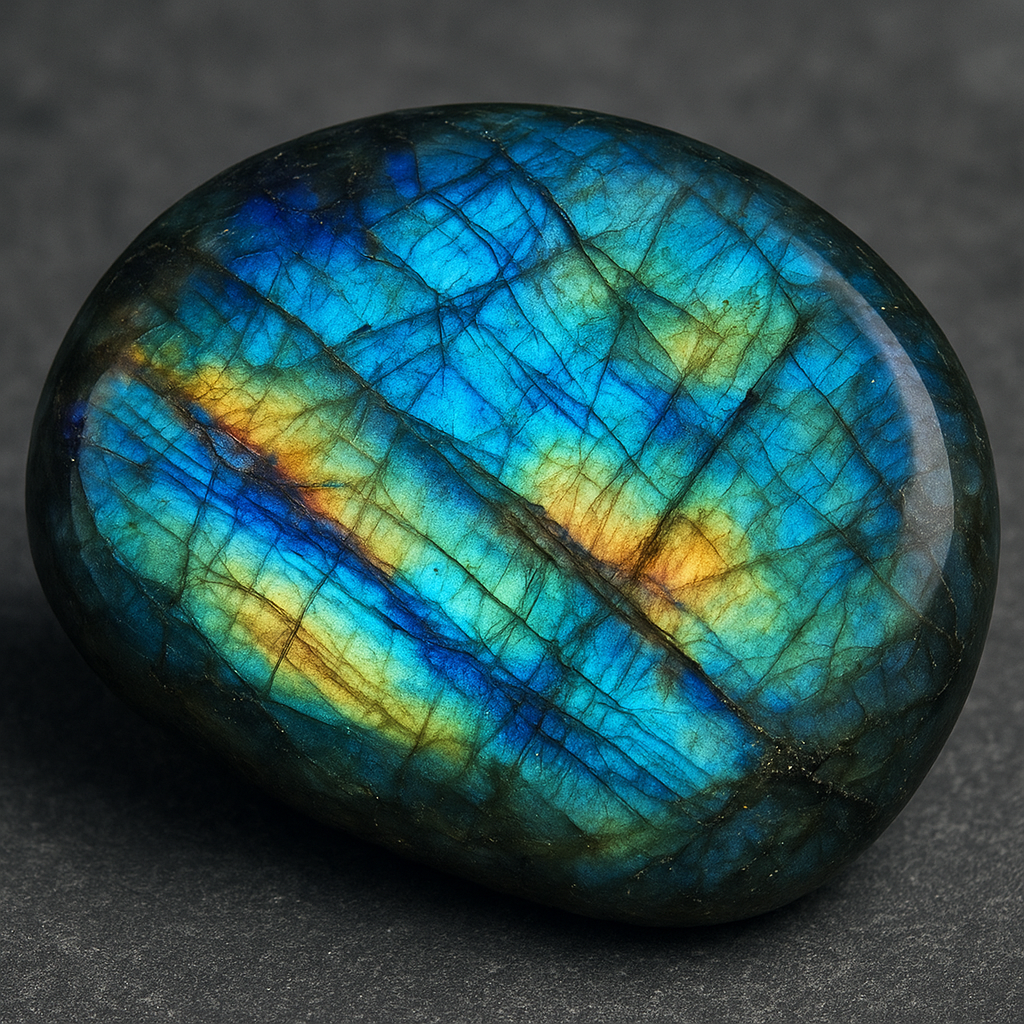
At its core, Spectrolite is a variety of Labradorite, a member of the broader feldspar mineral group. Labradorite is an intermediate composition within the plagioclase series, chemically situated between albite and anorthite. What distinguishes Spectrolite is its particularly intense and broad-spectrum optical phenomenon called labradorescence — the remarkable iridescent play of color seen when light strikes internal structures within the mineral.
The effect often appears as metallic or pearly flashes, technically arising from thin lamellar intergrowths and exsolution within the crystal. These microscopic layers interfere with incoming light and produce the visible spectrum of colors depending on viewing angle and light source. In Spectrolite, the colors tend to be both more saturated and more diverse than in ordinary labradorite specimens, sometimes including vivid purples and deep reds in addition to blues and greens.
Optical characteristics and terminology
- Labradorescence — the common term for the schiller-like effect seen in labradorite; results from light diffraction within thin layers.
- Iridescence — a related optical quality, often used more broadly for color-changing surfaces in minerals and other materials.
- Play-of-color — descriptive phrase used by gemologists and collectors to quantify the variety and intensity of visible hues.
Collectors and gemological literature sometimes reserve the name Spectrolite for the most vibrantly colored material, though naming conventions can vary by country and market. In scientific contexts, Spectrolite is still labradorite by composition; the name highlights the superior optical performance that makes certain pieces more desirable.
Where Spectrolite occurs
Spectrolite has a few notable geographic sources, each with its own geological story. The most famous locality for strongly colored Spectrolite is in northern Europe, but excellent material is also found in North America and elsewhere.
Primary localities
- Finland — The best-known source of true Spectrolite is in the coastal and near-coastal regions of western and northern Finland, especially around Ylämaa and the Korpiselkä area. Finnish Spectrolite was first intensely marketed in the 20th century and became synonymous with the name Spectrolite in the gem trade.
- Canada — Labrador, the region that gave labradorite its name, yields impressive specimens. Canadian labradorite is widely distributed and often shows strong blue flashes; some pieces rival Finnish Spectrolite in brightness.
- Madagascar — In recent decades Madagascar has become a major producer of colorful labradorite and related feldspars. Material from this island often forms a significant part of the commercial market.
- Other locations — Spectrolite-like labradorite occurs in parts of Russia, the United States (e.g., Oregon and New York), and several African localities. Each source has distinctive color tendencies and crystal habits.
Geologically, labradorite forms in igneous rocks such as basaltic lava flows, gabbros, and anorthosite bodies, as well as in metamorphic rocks where original plagioclase has undergone recrystallization. The lamellar structure responsible for Spectrolite’s optical phenomena develops during slow cooling or subsequent exsolution processes that separate mineral phases on a microscopic scale.
Uses and applications
Spectrolite is versatile in both decorative and functional contexts. Its visual appeal makes it a popular choice across several fields.
Jewelry and ornamentation
- Gemstone jewelry: Spectrolite is cut into cabochons, beads, and sometimes faceted forms to highlight its iridescence. Cabochons are most common because a smooth dome showcases the play-of-color best.
- Artistic pieces: Sculptors and lapidary artists use Spectrolite to create polished inlays, mosaics, and standalone carved objects.
- Designer jewelry: Contemporary jewelers value Spectrolite for statement pieces, where the stone’s shifting color becomes the focal point.
Because Spectrolite can be brittle along cleavage planes, jewelers must choose cutting and setting methods carefully to preserve the stone and optimize visual impact. Settings that protect edges and show the stone at favorable angles enhance both durability and beauty.
Architectural and decorative stone
Large slabs or thin sections of labradorite — occasionally including Spectrolite material — are used as striking countertops, wall claddings, and decorative panels. When backlit or illuminated with directional lighting, these installations can create dramatic color-shifting surfaces that change with ambient conditions.
Collectors and museums
Fine Spectrolite specimens are sought by mineral collectors and displayed in museums as prime examples of mineral optical phenomena. Exceptional pieces can command high prices on the collector market, especially when the color saturation is unusually broad and uniform across the stone.
Metaphysical and alternative use
In the realm of crystal healing and metaphysical practice, Spectrolite is often associated with transformation, intuition, and protection. While such uses are not supported by empirical scientific evidence, the aesthetic and tactile qualities of the stone make it a popular choice for meditation tools and talismans. The word healing appears frequently in trade descriptions, reflecting popular belief rather than proven efficacy.
Physical and gemological properties
Understanding the physical traits of Spectrolite helps in identification and valuation. Below are key properties that gemologists and collectors consider.
- Composition: Plagioclase feldspar between albite and anorthite end members; often described chemically by sodium and calcium content.
- Hardness: Around 6–6.5 on the Mohs scale — reasonably durable but softer than quartz and susceptible to abrasion.
- Cleavage: Two directions of perfect cleavage, which can create challenges for cutting and make some pieces fragile along cleavage lines.
- Specific gravity: Typically between 2.6 and 2.8.
- Transparency: Ranges from opaque to translucent. Most jewelry-grade Spectrolite is translucent with the labradorescent surface visible when cut.
- Color: Body color may be gray, brown, or dark; the play-of-color introduces blues, greens, golds, and reds.
Gemological testing can differentiate Spectrolite from other iridescent stones. Observing the specific pattern and orientation of color flashes, refractive indices, and cleavage characteristics assists experts in confirming identification. Spectrolite is not typically treated, though stabilization or resin infill can occur with lower-quality material to improve durability.
Cutting, care, and valuation
Cutting techniques
Cutters aim to orient Spectrolite so that the labradorescence is optimized. This usually means cutting cabochons with the base parallel to the lamellar layers so that light enters and reflects back through the dome. Faceting is less common, since it can diminish the shimmering effect, but well-angled facets can produce attractive, if different, visual results.
Care and maintenance
- Avoid exposure to harsh chemicals and prolonged heat, which can damage the surface or alter internal structures.
- Clean Spectrolite with warm soapy water and a soft brush; ultrasonic cleaners are not recommended for stones with visible cleavage or fractures.
- Store separately from harder stones such as diamonds to prevent scratching.
Factors affecting value
Several factors influence a specimen’s market price:
- Color intensity and range — the broader and more saturated the play-of-color, the higher the value.
- Uniformity — evenness of color across the surface is prized.
- Size and thickness — larger, well-colored cabochons are rarer and more valuable.
- Clarity and absence of fractures — reduced cleavage and internal cracks increase desirability.
- Provenance — material from renowned localities like Finnish Spectrolite can command premium prices.
Cultural, historical, and interesting facts
Spectrolite has influenced both scientific nomenclature and local cultures. The name labradorite derives from the Labrador Peninsula in Canada, where indigenous peoples first reported the stone’s unusual sheen. Finnish Spectrolite received international attention in the 20th century and became a symbol of regional craftsmanship and geological heritage.
Historical anecdotes
- Indigenous lore: Early accounts from Inuit communities included descriptions of luminous stones that inspired stories about the Northern Lights and spiritual phenomena.
- Finnish discovery: In Finland, lapidaries and geologists recognized the exceptional color range of certain labradorite beds and coined Spectrolite as a trade term to highlight the difference.
- Architectural uses: Designers occasionally incorporate Spectrolite slabs in high-end interiors to create moving color fields that respond to ambient light, blending geology and modern design.
A particularly compelling aspect of Spectrolite is how its aesthetic character changes dramatically with light direction and intensity. In low-angle light a piece may appear smoky or subdued; under bright or directional light the same stone can explode into brilliant color. This dynamic quality has made Spectrolite a favorite among photographers and visual artists who exploit its capacity to transform scenes as the viewer moves.
Scientific significance
From a geological perspective, the presence of Spectrolite indicates specific cooling and exsolution histories in igneous rocks. Studying these specimens can reveal clues about the thermal evolution of the host rock and the timing of mineral separation. Petrologists examine lamellar thickness and orientation to infer the conditions that produced the color effects.
Practical buying tips and identification
If you are considering acquiring Spectrolite, either as jewelry or a specimen, keep these practical tips in mind:
- Ask about origin — reputable dealers will disclose whether a piece comes from Finland, Canada, Madagascar, or elsewhere.
- Examine the stone under different lighting conditions and angles to assess the full range of color.
- Request certification for high-value purchases; a gemological report helps confirm identity and any treatments.
- Be cautious of imitations — some man-made glass or lab-grown materials are marketed to mimic labradorescence.
When evaluating an item, consider not just the brightest flash but the overall aesthetic harmony. A stone with a few spectacular color patches may be less pleasing than one with consistent, moderate labradorescence across the surface. Think about how you will wear or display the stone: jewelry pieces that are worn frequently require more durable settings and thoughtful design to protect the fragile edges.
Final notes on appreciation
Spectrolite occupies a special place at the intersection of geology, art, and popular fascination. Its ability to change color and mood makes it an expressive material for designers and a rewarding specimen for collectors. Whether studied for its geological story or loved for its optical drama, Spectrolite invites repeated observation: each viewing angle yields a new visual chapter in the mineral’s ever-changing performance.