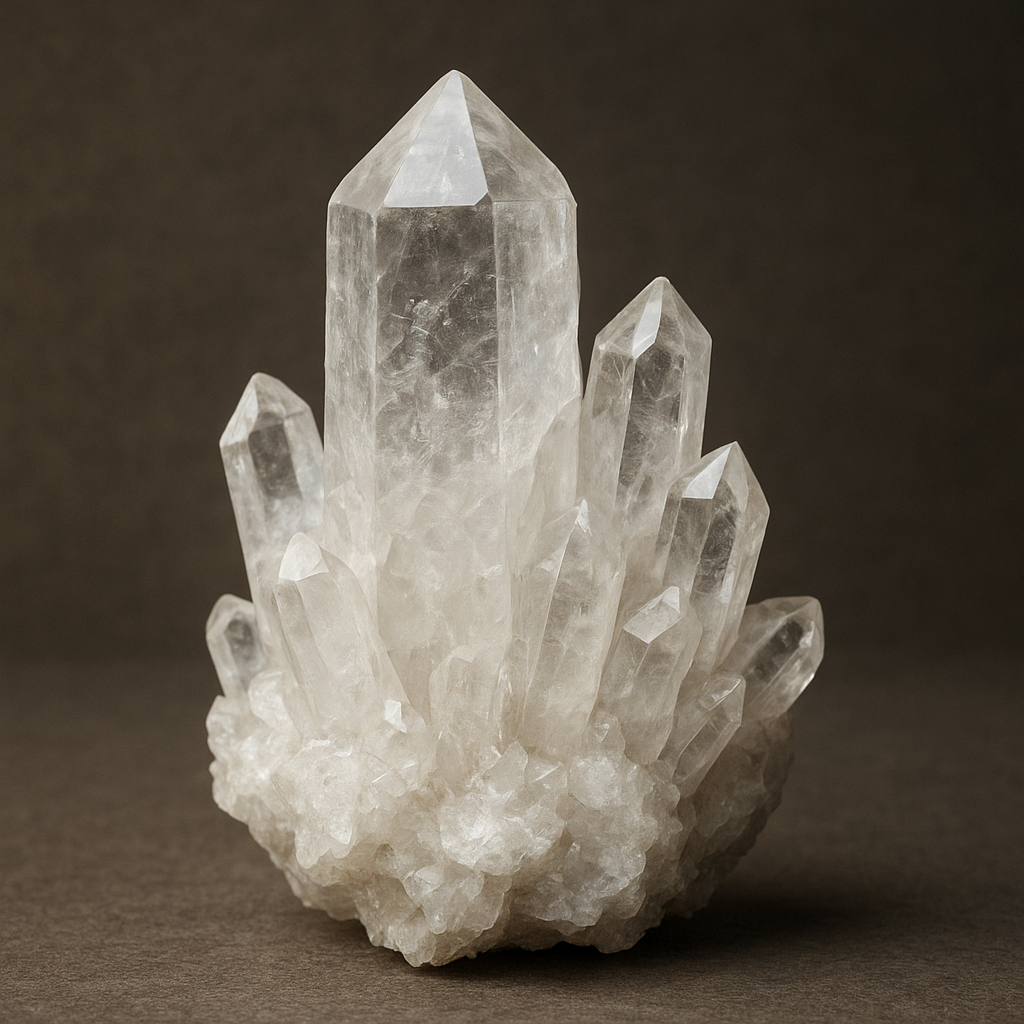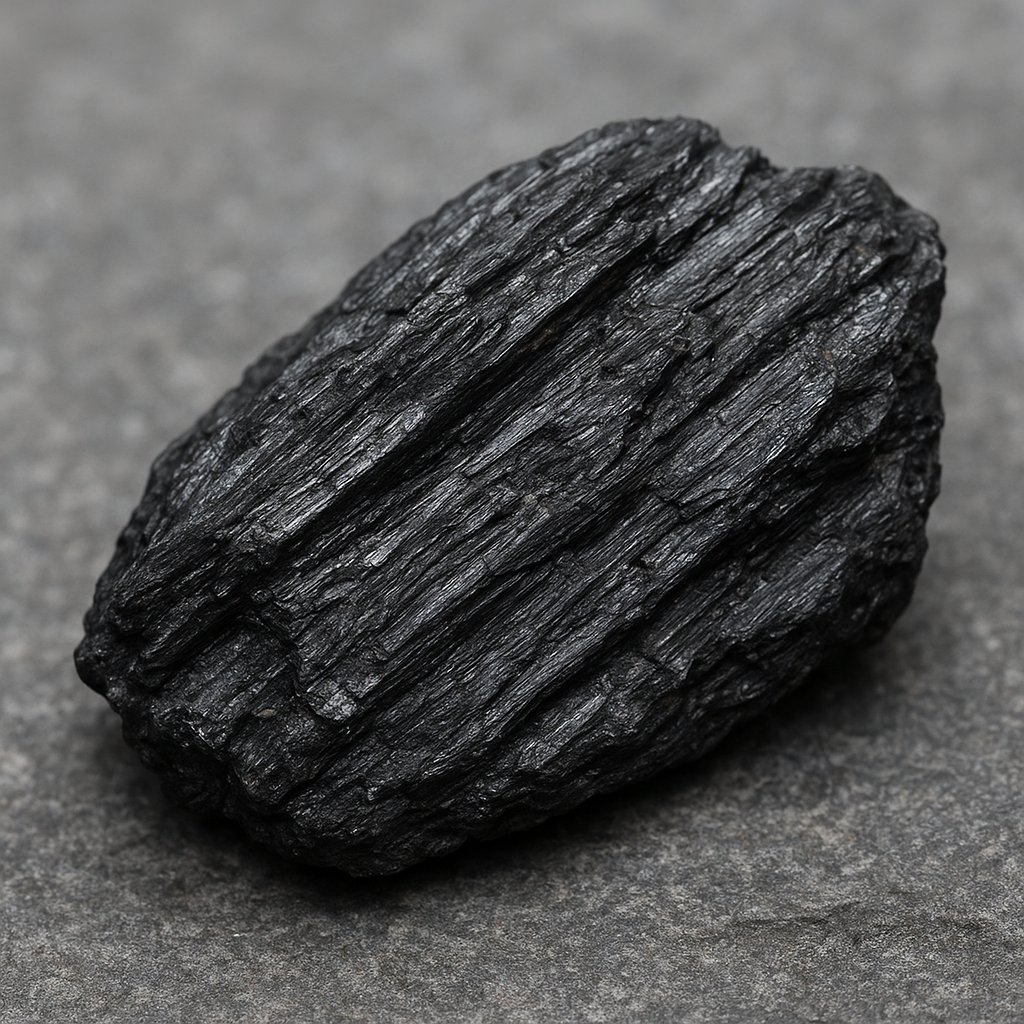
Kyanite Black is a striking and versatile variant of the aluminum silicate mineral family, valued both as a collector’s specimen and for practical industrial applications. Although less famous than its blue cousin, black kyanite attracts attention for its dramatic fan-like blades, fibrous habit and unique combination of physical properties. This article explores where kyanite occurs, how it forms, its physical and chemical characteristics, the industries that rely on it, and some of the more intriguing cultural and scientific aspects associated with this mineral.
Geology and formation
Kyanite is one of three polymorphs of aluminum silicate (Al2SiO5), together with andalusite and sillimanite. What distinguishes the three is their stability under different pressure-temperature regimes. Black kyanite typically forms in rocks subjected to regional metamorphism, especially those that experienced relatively high pressure during burial or tectonic compression. It is commonly found in metamorphosed pelitic rocks (derived from clay-rich sediments), schists and gneisses, and in some high-pressure metamorphic assemblages such as eclogites.
Typical geological contexts include:
- Regional metamorphic belts where continental collision or subduction produced high pressures and moderate temperatures.
- Contact zones near intrusions where localized pressure and fluid activity altered host rocks.
- Hydrothermal environments that introduced iron and other elements which can influence coloration and habit.
Black kyanite often forms as radiating, bladed aggregates. The black coloration arises from trace inclusions or elemental substitutions such as iron or titanium that absorb visible light. Its fibrous structure and radial groupings give many specimens an aesthetic, flower-like appearance prized by collectors.
Physical and chemical properties
At its core, kyanite is an aluminum silicate mineral. Its defining characteristics include a pronounced cleavage, a vitreous to pearly luster, and a notable anisotropy of hardness — meaning the mineral’s scratch resistance depends on the direction of measurement. This anisotropic hardness is a hallmark of kyanite and is used as a diagnostic property in mineral identification.
- Crystal system: triclinic, often forming elongated, bladed crystals or fibrous radiating sprays.
- Hardness: varies with crystallographic axis; commonly around 4.5–5 parallel to the length of the blades and 6.5–7 across the blades.
- Specific gravity: typically ~3.5–3.7 depending on chemical composition and inclusions.
- Color: shades from blue and green to white, grey and black; black varieties owe their color to iron/titanium content or included sulfides/oxides.
- Optical properties: strongly anisotropic, pleochroic in colored varieties, and often exhibits distinct twinning.
Chemically, pure kyanite is Al2SiO5, but natural specimens frequently contain minor amounts of Fe, Ti, Mg, Mn and trace elements. These impurities can alter both color and specific gravity, and in the case of black kyanite they help give the mineral its characteristic dark tones.
Where it is found: major deposits and mining regions
Black kyanite is not restricted to a single continent; occurrences are distributed worldwide, often in the same regions that produce more familiar blue kyanite. Significant sources include:
- Brazil — a major supplier of decorative and collector-grade kyanite, including dark and black specimens.
- India — regions such as Jharkhand, Odisha and other metamorphic provinces are important industrial and gem-quality sources.
- United States — historical and modern occurrences in states like North Carolina, Georgia and Virginia.
- Africa — Kenya and Madagascar have produced attractive specimens, some of which are exported to the international collector market.
- Myanmar, Switzerland and Russia — known for occasional high-quality finds.
The mineral is typically extracted from hard rock mining operations, sometimes as a byproduct of broader metamorphic rock quarrying. Depending on the deposit, material intended for industrial use is processed differently than specimens destined for the collector or jewelry market.
Industrial applications and technical uses
The industrial value of kyanite — including darker varieties — stems mainly from its behavior when heated and its high alumina content. When fired at high temperatures, kyanite undergoes an irreversible transformation and expands; it converts to mullite and free silica, which are desirable phases in certain ceramic and refractory applications. The formation of mullite (3Al2O3·2SiO2) increases high-temperature strength, thermal shock resistance and chemical durability.
Common technical uses include:
- Refractory products: kyanite is used in refractory bricks, kiln linings, ladles and other components that must withstand extreme heat.
- Ceramics: added to porcelain, spark plug insulators and ceramics to improve mechanical properties and thermal stability.
- Foundry applications: in molds and cores where expansion behavior and high-temperature phases improve casting quality.
- Specialized abrasives and high-strength composites where hardness and thermal behavior are advantageous.
Because kyanite expands on heating for certain particle sizes and formulations, it is valuable where dimensional changes can be used beneficially (for instance, compensating shrinkage in ceramic processing). It is often regarded as an economical source of alumina and silica for high-performance industrial materials.
Processing and material science considerations
Raw kyanite ore goes through crushing, milling and classification to produce the appropriate particle size distributions for different applications. For refractories and ceramics, precise control of particle size and purity is essential, as contaminants can affect sintering behavior and final mechanical properties.
During thermal processing:
- Kyanite first dehydrates and then transforms to mullite plus amorphous silica at temperatures typically above 1,100–1,300 °C (temperature depends on composition and particle size).
- The transformation is accompanied by volumetric changes; engineers must design for this behavior to avoid unwanted cracking or warping.
- The resulting mullite phase is prized for its low thermal expansion and high creep resistance at elevated temperatures.
Synthetic alternatives (e.g., pure alumina, synthetic mullite) can compete with natural kyanite in some applications, but natural kyanite remains attractive for cost-sensitive and certain high-performance niches.
Gemological, aesthetic and metaphysical aspects
While blue kyanite is the most familiar gemstone variety, black kyanite occupies a niche as a decorative and metaphysical stone. Its fan-like, blade clusters make it a favorite for mineral displays and artistic arrangements rather than traditional faceted jewelry. The fibrous nature resists standard lapidary cutting and polishing, so specimens are often left in their natural habit or gently trimmed for use in cabochons and pendants.
From a metaphysical perspective, black kyanite has a reputation in many crystal-healing and spiritual communities as a grounding and clearing stone. Though these uses are outside mainstream science, they influence market demand and the form in which specimens are sold (e.g., polished slices, natural blades, or paired with other minerals).
Environmental and economic considerations
Like many mined minerals, the extraction of kyanite raises environmental, social and economic questions:
- Mining footprint: open pit or small underground excavations can disturb local ecosystems and require rehabilitation plans.
- Processing impacts: milling and beneficiation generate dust and require water and energy, which can strain local resources if not managed.
- Market dynamics: prices vary with industrial demand for refractories and ceramics, availability of substitutes and the size/quality of deposits.
Responsible sourcing is increasingly important. Some manufacturers and buyers prefer materials traceable to well-managed operations with community benefits and environmental mitigation. Recycling of refractory bricks and development of synthetic alternatives also play roles in reducing raw material demand.
Practical identification and care
For collectors or craftsmen handling black kyanite, a few practical notes are useful:
- Identification tips: note the bladed habit, radiating clusters, anisotropic hardness and pearly luster. Kyanite’s variable hardness is a reliable diagnostic when used cautiously.
- Handling: the fibrous structure can splinter; handle specimens gently and avoid heavy mechanical stress.
- Cleaning: use soft brushes and mild detergents; avoid harsh acids and prolonged mechanical scrubbing that may damage delicate blades.
Because of the mineral’s unique cleavage and fibrous habit, it is not a mainstream jewelry stone, but as a display specimen it requires relatively little maintenance beyond careful dusting and secure mounting.
Interesting scientific and cultural notes
Several facts make kyanite — including its black varieties — especially interesting:
- The name kyanite comes from the Greek kyanos, meaning “dark blue,” a historical nod to the common blue color even though the mineral family presents a wide range of hues.
- Kyanite’s presence in a rock is significant to geologists because it can indicate the pressure-temperature history of metamorphism; its polymorphic relationship with andalusite and sillimanite provides important petrological clues.
- The anisotropic hardness of kyanite — softer along the length of crystals and harder across them — is unusual and educationally valuable for mineralogy students.
- In industrial ceramics research, kyanite-derived mullite remains a subject of ongoing study for improving high-temperature structural ceramics and composite materials.
Where research and markets are heading
Research continues into optimizing kyanite’s use in high-temperature materials, improving beneficiation and reducing environmental impacts. Demand is tied closely to steel and foundry production, the ceramics industry and specialized refractory markets. Meanwhile, the collector market for distinctive black kyanite specimens remains robust, fueled by aesthetic interest and metaphysical communities.
Innovations likely to influence the kyanite supply chain include better resource characterization, more efficient thermal processing that controls mullite formation, and improved recycling of refractory products. These changes could maintain kyanite’s role in industry while reducing ecological costs.
Final remarks
Kyanite Black offers a compelling combination of industrial utility and visual drama. Whether appreciated for its role in creating high-temperature ceramics and refractories or for the striking, fan-like specimens that decorate collections, black kyanite occupies a distinctive place within the mineral world. Understanding its geological origins, physical behavior and practical applications reveals why this often-overlooked variety deserves attention from geologists, engineers and collectors alike.