Kurnakovite is a lesser-known but intriguing member of the world of borate minerals. Found primarily in evaporitic basins where boron-rich brines concentrate and crystallize, this mineral tells a story about fluid chemistry, climate-driven deposition, and the industrial importance of boron. The following article explores where kurnakovite appears in nature, how it is recognized and studied, its uses (both direct and indirect), and several related topics that mineralogists, collectors and industrial geologists find compelling.
Occurrence and geological settings
Kurnakovite typically forms in deposits associated with concentrated, evaporating brines. These environments are commonly referred to as evaporite basins or playas, where repeated cycles of inflow and evaporation produce layers of salts and borates. Because it is a product of low-temperature, near-surface processes, kurnakovite is usually encountered in shallow, sedimentary contexts rather than deep hydrothermal veins.
- Typical environments: saline lakes, closed basins, playas and pan deposits where boron becomes concentrated by evaporation.
- Climate control: arid to semi-arid climates favor the development of the concentrated brines required for borate mineral precipitation.
- Stratigraphic setting: kurnakovite can occur in the upper parts of evaporite sequences and in diagenetically altered layers where ground waters have redistributed boron and cations.
Notable localities
Although not as ubiquitous as some other borates, kurnakovite is reported from a number of well-known borate-producing regions. Many of these localities host a suite of borate minerals that form under similar environmental conditions:
- Western Anatolia, Turkey — areas such as Bigadiç and Kırka are world-class borate provinces where a diverse assemblage of borate minerals is found.
- California and Nevada, USA — playa deposits (for example in and near Searles Lake and other borate basins) where evaporitic concentration has produced borate minerals over geological time.
- Central Asia and the former Soviet regions — several borate occurrences in Russia and adjacent countries have produced samples of kurnakovite.
- South America — borate-rich salars and evaporitic basins in Chile and Argentina may contain related borate phases and occasional kurnakovite occurrences.
Because borate mineral distributions reflect local chemistry, the precise assemblage including kurnakovite depends on the composition of the inflowing waters (sources of boron and cations), evaporation rates, and subsequent diagenetic alteration.
Physical and chemical characteristics
Kurnakovite is a member of the broad family of borate minerals, characterized by structural units built from boron coordinated with oxygen and hydrogen. It is a hydrous species, meaning that water molecules are integral to its structure. Physically, it is often described as soft and lightweight, typical of many evaporite minerals.
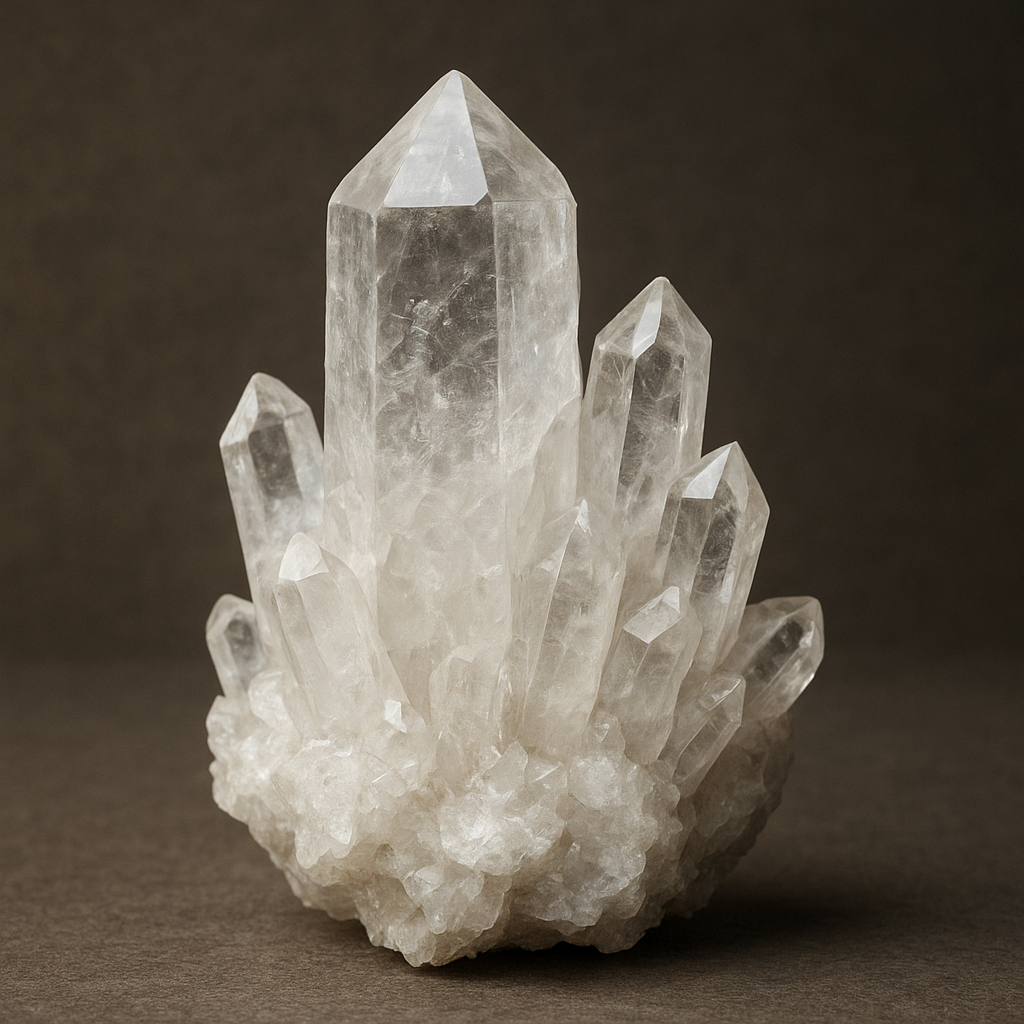
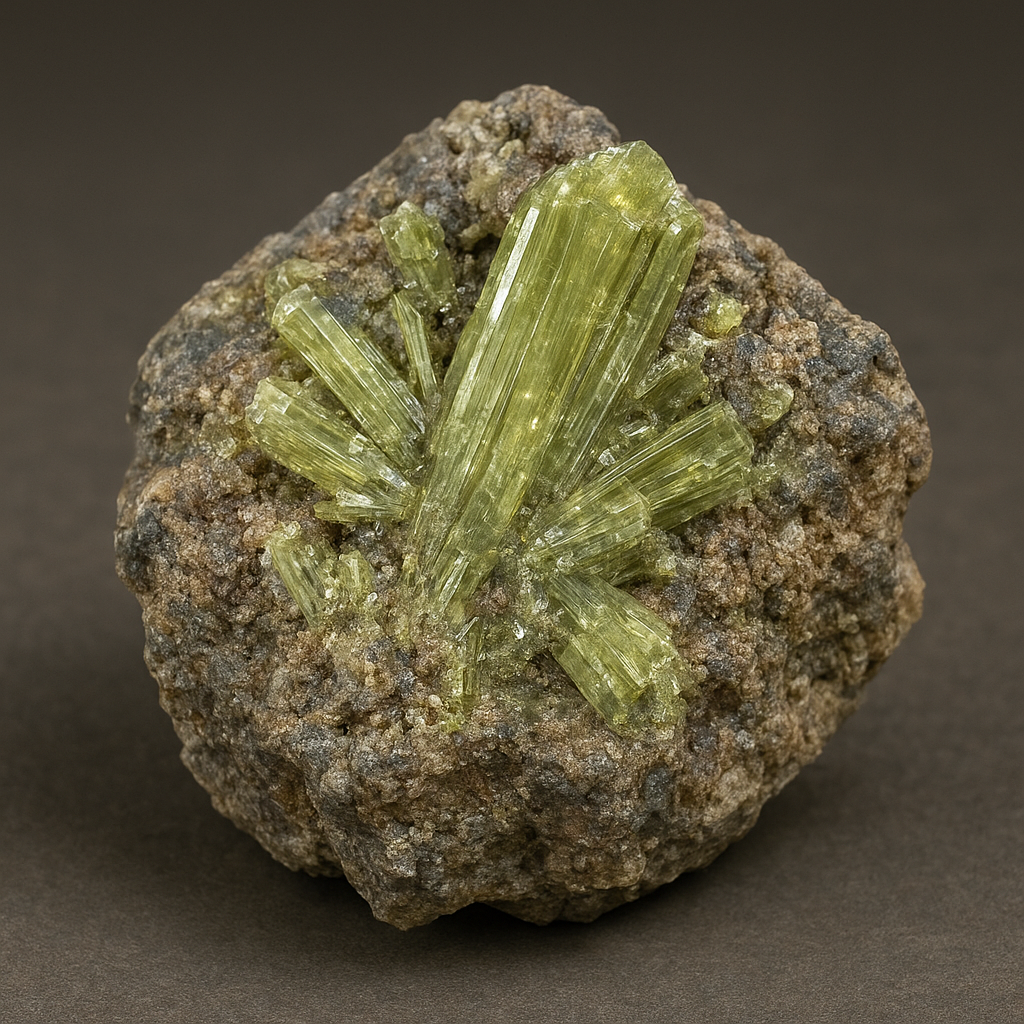
- Appearance: commonly white to colorless; may occur as earthy masses, fibrous aggregates or as small crystalline plates. Luster ranges from vitreous to pearly on cleavage surfaces.
- Hardness and durability: generally soft, easily scratched, and readily altered by exposure to moisture or heat; these properties limit its direct use as a durable material.
- Density: relatively low compared to many rock-forming minerals because of its hydrous nature.
- Associations: frequently found with other borates such as borax, colemanite, ulexite, kernite and tincalconite, and with evaporitic salts like halite and gypsum.
In hand specimen and under the microscope, kurnakovite may be mistaken for other white borates; careful mineralogical study (including optical properties, X-ray diffraction and sometimes chemical analyses) is used to confirm its identity.
Identification techniques
- Optical mineralogy: thin-section and reflected-light studies help characterize crystal habit and optical behavior.
- X-ray diffraction (XRD): definitive structural identification is usually achieved by comparison of diffraction patterns to known standards.
- Chemical analysis: electron microprobe, ICP-MS or wet chemical analysis can determine boron content and associated cations.
Uses and economic importance
While kurnakovite itself is not typically mined as a major commercial ore, it plays a role in the broader economic context of borate resources. The industrial importance of boron compounds—used in glass, ceramics, detergents, fertilizers and many chemical processes—means that understanding all borate phases in a deposit has practical value.
- Ore indicator: the presence of kurnakovite in a deposit can indicate specific chemical conditions and guide exploration for more abundant borates.
- Source of boron: when present in sufficient quantities, kurnakovite may be processed along with other borates to extract boron for conversion into boric acid and borate salts.
- Scientific and educational value: specimens are of interest to mineral collectors and to researchers studying crystallography and low-temperature geochemical processes.
Because many borate deposits host a complex mixture of minerals, resource evaluation must consider how easily individual species can be separated and processed. Some borates respond well to simple leaching and conversion to commercial borates; others are more refractory.
Associated minerals and mineralogical relationships
Kurnakovite is part of a larger mineralogical network in evaporite settings. Understanding these relationships helps reconstruct the chemical evolution of brines and the sequence of mineral precipitation.
- Common associates: borax, colemanite, ulexite, kernite, tincalconite, probertite and other borates.
- Evaporitic salts: halite and gypsum often occur in the same deposits, reflecting overlapping ranges of salinity and ionic strength.
- Alteration products: many borates dehydrate or recrystallize on burial or exposure; some species transform into more stable phases depending on temperature and humidity.
What the assemblage reveals
By studying the order in which borate minerals appear in a deposit, geoscientists can infer the changing chemistry of the parent brine. For example, certain borates precipitate at relatively low concentrations of specific cations, while others require higher ionic strengths or different pH conditions. Kurnakovite’s presence narrows the range of possible formation scenarios and helps model the paleohydrology and paleoclimate of the basin.
Historical context and scientific interest
The mineral is named in honor of a prominent figure in chemistry and mineralogy, Nikolai Kurnakov, reflecting the tradition of recognizing scientists who contributed to the understanding of inorganic chemistry and mineral systems. Kurnakov’s work emphasized the chemistry of compounds under various conditions, a theme that resonates with the study of evaporite minerals which form through chemical concentration and reaction at low temperatures.
Interest in kurnakovite extends beyond simple cataloguing. Researchers use borate minerals to:
- track the mobility of boron in surficial environments;
- investigate how changing climate influences evaporite deposition;
- study crystal structures that include complex boron-oxygen polyhedra, which are of interest in solid-state chemistry and materials science.
Analytical and experimental studies
Laboratory work on kurnakovite and analogous borates often explores stability fields (temperature, pH, salinity), dehydration behavior, and crystal chemistry. Such studies inform industrial processing strategies and help refine models of natural deposit evolution. Additionally, synthetic borates inspired by natural structures can show useful optical or chemical properties in materials research.
Interesting aspects and broader connections
Several broader themes make kurnakovite and related borates compelling:
- Boron as an environmental tracer: boron isotopes preserved in minerals can record past seawater or brine chemistry, offering insights into paleoenvironmental reconstructions.
- Evaporite records: evaporite deposits that contain borates are archives of paleoclimate and basin evolution; they record aridity cycles and hydrologic isolation events.
- Mineral aesthetics: though often understated in color, some kurnakovite specimens exhibit interesting habits and textures prized by collectors who specialize in evaporite minerals.
- Industrial cascade: understanding the full mineral suite in borate deposits, including minor members like kurnakovite, improves resource assessment and processing economics for major borate producers.
Collector and museum interest
For mineral collectors, kurnakovite represents a niche group: evaporite minerals that tell a clear geological story. Museums that display evaporite assemblages often include kurnakovite as an example of how simple aqueous chemistry can generate structurally diverse compounds. Well-documented locality specimens are valuable for educational displays and for specialists studying borate mineralogy.
Practical considerations for field and laboratory workers
When working with kurnakovite in the field or laboratory, a few practical points are worth noting:
- Fragility: samples are often friable and must be handled with care to preserve crystal habit and surface features.
- Solubility and alteration: being hydrous, many borates are sensitive to humidity and can dehydrate; store specimens in stable, low-humidity environments to minimize alteration.
- Analytical precautions: because boron is light and challenging to measure precisely by some techniques, combining multiple analytical methods (e.g., XRD plus ICP-MS) improves confidence in identification.
These considerations influence how material is sampled for both scientific study and potential industrial evaluation.
Conclusion of sections
Although not a household name, kurnakovite occupies a distinct niche within borate mineralogy. Its occurrence in evaporite settings links it to stories of climate, brine chemistry and the practical uses of boron in modern industry. Whether examined by a mineralogist deciphering depositional histories, a collector admiring an unusual crystal habit, or an exploration geologist evaluating a borate resource, kurnakovite contributes to a broader understanding of how simple chemical processes at Earth’s surface create fascinating and economically relevant minerals.