
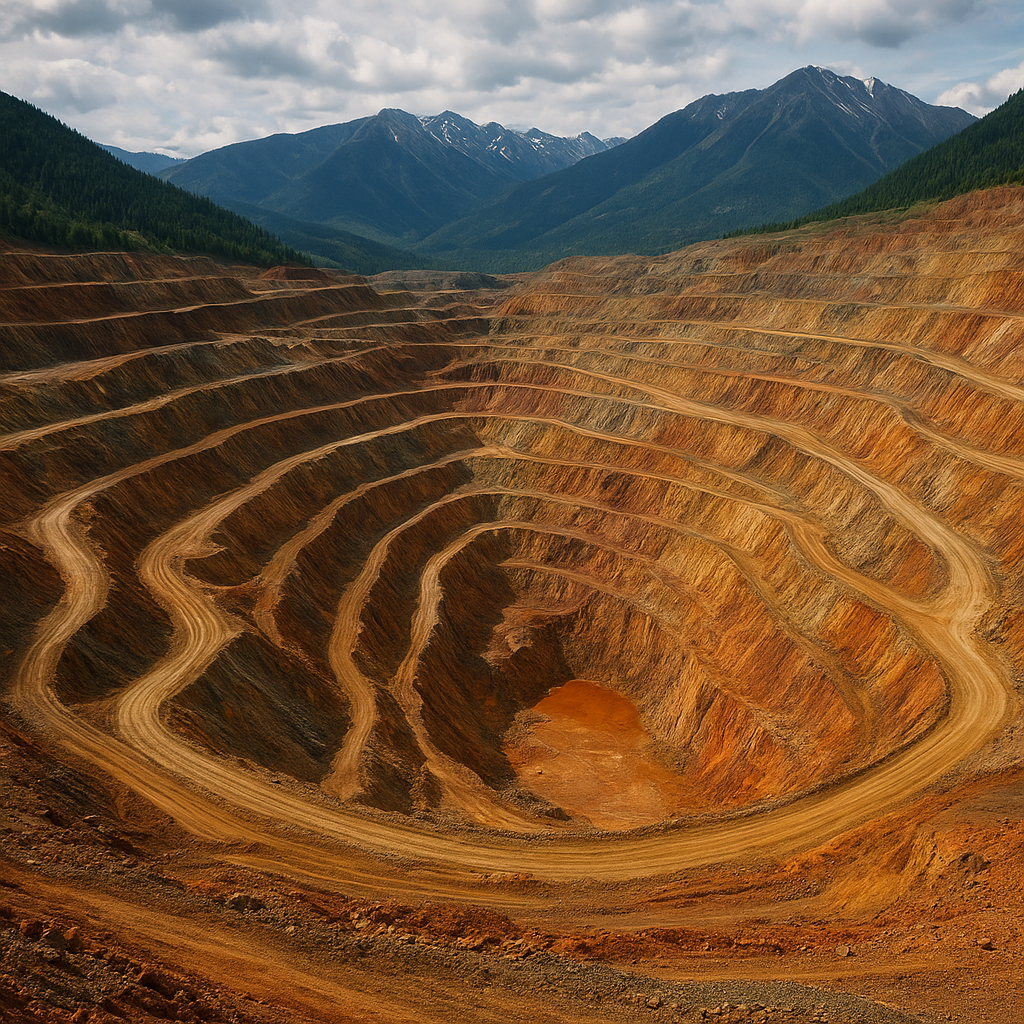
The Similkameen Copper Mine sits within the broader mining landscape of the Similkameen Valley in southern British Columbia, Canada. While not as internationally famous as some of the province’s large-scale operations, the site and the surrounding region have played a meaningful role in the development of local mining, offering important deposits of copper often accompanied by gold, silver and associated minerals. This article explores the mine’s location, geological character, historical and contemporary activity, economic significance, environmental and social issues, and some intriguing facts that make the Similkameen story noteworthy.
Location and Geological Setting
The Similkameen Valley lies in southern British Columbia, running roughly parallel to the Canada–United States border and cutting through a landscape of rugged mountains, forested slopes and river terraces. The valley is drained by the Similkameen River and is accessed via highways connecting communities such as Princeton, Keremeos and Hedley. The Similkameen Copper Mine and related prospects are typically located on the valley flanks and nearby uplands where bedrock is exposed.
Geological framework
The region falls within a complex geological corridor characterized by porphyry and volcanic-associated mineral systems that have produced a variety of metal deposits across southern BC. Porphyry-style copper ± gold ± molybdenum mineralization is common in the province and can be present in the Similkameen area as well. Rocks here record episodes of volcanic activity, intrusive emplacement, deformation and hydrothermal fluid flow — conditions that are favorable for creating disseminated copper mineralization and higher-grade veins.
Mineral assemblages and host rocks
- Host rocks often include andesitic to felsic volcanic sequences and intrusive porphyries that acted as heat and fluid sources.
- Copper typically occurs as chalcopyrite and other sulphides; associated molybdenum and precious metals can occur in specific zones.
- Secondary alteration zones (sericitic, potassic, propylitic) indicate hydrothermal overprints and are important exploration targets.
History of Mining and Exploration
Mining in the Similkameen region has roots stretching back to the 19th and early 20th centuries with gold and copper discoveries that prompted prospecting, small-scale development and local communities centered around resource extraction. Many of the early operations were narrow, labor-intensive underground workings and small open pits targeting high-grade veins rather than the extensive bulk-tonnage systems that characterize modern porphyry mines.
Early operations
Historical mines and prospects in the Similkameen and adjacent areas, such as those near Hedley and Princeton, yielded gold and copper. These operations were often limited by the technology and infrastructure of their time but were locally important employers and economic drivers. Remnants of old adits, tailings and altered landscapes still testify to that era.
Modern exploration
From the mid-20th century onward, improved geological understanding, geophysical techniques and metallurgical methods transformed how companies evaluate and develop deposits. Exploration in the Similkameen area has included soil and rock geochemistry, airborne and ground geophysics, and diamond drilling campaigns designed to define the continuity and grade of copper-bearing zones. Some projects have been driven by junior exploration companies seeking to advance discovery-stage targets, while others have attracted interest from larger mining firms assessing strategic synergies with existing operations in the region.
What Is Mined: Commodities and Methods
The primary commodity associated with the Similkameen Copper Mine is obviously copper, but mineralization in this part of British Columbia can be polymetallic. Typical extracted or targeted constituents include copper, gold, silver and lesser amounts of molybdenum and sometimes base metals such as zinc and lead in certain veins.
Types of ore and mining methods
- Historic workings: small underground mines and adits that followed higher-grade vein-hosted mineralization.
- Exploration-stage concepts: bulk-tonnage porphyry deposits that could, in principle, be mined by open-pit methods if size and economics justify development.
- Modern approaches: a combination of open-pit mining for disseminated ores and selective underground methods for high-grade shoots, depending on deposit geometry.
Metallurgical processing for copper ores in the region typically relies on crushing, grinding and flotation to produce a copper concentrate which is then shipped for smelting. When gold and silver are present, they are recovered to the concentrate stream and contribute to project economics.
Economic Impact and Regional Importance
Even modest mining operations can have outsized effects on rural economies, and the Similkameen area is no exception. The presence of copper and other metals supports a chain of economic activities: exploration firms, contractors, equipment suppliers, local labor markets, transportation and service industries. The broader benefits extend to municipal revenues, local businesses and employment opportunities in communities that may otherwise have limited economic diversity.
Direct economic contributions
- Job creation in exploration, construction, mining and processing activities — from geologists to heavy-equipment operators.
- Local procurement of goods and services during exploration and operation phases, supporting small businesses in towns such as Princeton and Keremeos.
- Royalties, taxes and land-use payments that contribute to provincial and regional coffers.
Strategic and supply-chain relevance
Copper is a critical metal for electrification, renewable energy systems and infrastructure — all priorities for the global economy. Projects in British Columbia, including those in the Similkameen corridor, contribute to national and continental supply chains for copper concentrate, which reduce dependence on overseas sources. The mine’s potential role in supporting electrification, transmission and advanced manufacturing enhances its strategic value beyond local employment.
Environmental and Social Considerations
Mining today must confront heightened environmental expectations and community scrutiny. The Similkameen area, with intact ecosystems, Indigenous territories and recreational landscapes, requires careful planning to balance resource development with conservation and cultural values.
Environmental management
- Water management: protecting the Similkameen River watershed from sedimentation, acid rock drainage and metal leaching is paramount; modern operations design containment and treatment systems to mitigate these risks.
- Reclamation planning: progressive reclamation during and after mine life aims to restore topography, soils and vegetation to a stable condition supportive of wildlife and human uses.
- Wildlife and biodiversity: habitat assessments guide mitigation measures to minimize impacts on species at risk and maintain ecological connectivity.
Community and Indigenous engagement
Meaningful consultation and participation with local communities and Indigenous Nations are central to project social license. The Similkameen area is home to Indigenous peoples with deep cultural ties to the land. Modern projects typically establish benefit agreements, employment and training programs, and shared stewardship initiatives to ensure that development proceeds with respect for rights, traditions and local priorities.
Interesting Aspects and Lesser-Known Details
Beyond the technicalities of geology and economics, the Similkameen Copper Mine and its environs offer a range of cultural, historical and ecological points of interest that enrich the story of mining in the region.
Historical remnants and mining heritage
- Scattered relics of early mining — old adits, wooden structures, and tailings piles — serve as tangible links to the past and are sometimes subjects of heritage preservation efforts.
- Local museums and archives preserve records and artifacts that document the lives of miners, the evolution of techniques, and the social fabric of mining towns.
Landscape contrasts and recreation
The Similkameen Valley juxtaposes productive mineral belts with areas prized for agriculture (notably orchards and vineyards), outdoor recreation and tourism. This creates a dynamic where land-use planning must reconcile multiple, and sometimes competing, interests. Hikers, hunters and anglers share the landscape with exploration crews and local ranchers, making the region a mosaic of uses.
Technological and research interest
Exploration in regions like the Similkameen benefits from advances in geoscience: 3D modeling, remote sensing, isotopic studies and improved metallurgical testing. These tools refine targeting and reduce the footprint of discovery activities. Academic collaborations with universities and research institutes often focus on understanding ore-forming processes and improving environmental baseline assessments.
Climate and operational challenges
High-elevation terrain, winter weather and limited local infrastructure present operational challenges that influence project design, scheduling and cost. Companies operating in the Similkameen must plan for seasonal access restrictions, winterization of equipment and resilient supply lines for fuel and consumables.
Future Prospects and Development Pathways
The future of copper projects in the Similkameen region depends on a combination of geologic merit, commodity markets, permitting climates and community acceptance. Several development pathways exist, from continued exploration to stage-gated development contingent on feasibility studies, financing and stakeholder agreements.
Key determinants of success
- Grade and tonnage: the fundamental geology must provide a competitive resource that justifies capital investment in extraction and processing.
- Commodity pricing: copper and byproduct prices strongly influence project economics and the timing of development.
- Regulatory and social license: timely permitting and strong community and Indigenous partnerships can accelerate or stall progress.
- Access to infrastructure: proximity to roads, power and processing facilities lowers costs and improves viability.
Innovation and sustainability trends
Mining in mature jurisdictions like British Columbia is increasingly oriented toward lower-carbon operations, circular economy principles (e.g., maximizing recovery and minimizing waste) and co-development approaches that share benefits locally. Advances in electrified haulage, renewable energy integration at remote sites and improved tailings management practices can shape how future projects in the Similkameen are developed.
Opportunities for local communities
When well-managed, project development can create long-term employment, skills transfer and business opportunities. Investment in local training programs, supplier development and environmental monitoring jobs helps ensure that economic benefits remain in the region beyond the mine life.
Final points of interest
The Similkameen Copper Mine exemplifies many themes seen across British Columbia’s mining landscape: promising geology, layered history, community interactions and pressing environmental responsibilities. Its contribution is not only measured in tonnes of metal but also in the way it shapes regional economies, stewardship practices and local identities. For those interested in geology, resource economics or rural development, the Similkameen offers a compelling case study of how a resource-rich valley navigates the trade-offs and opportunities of modern mining.

