
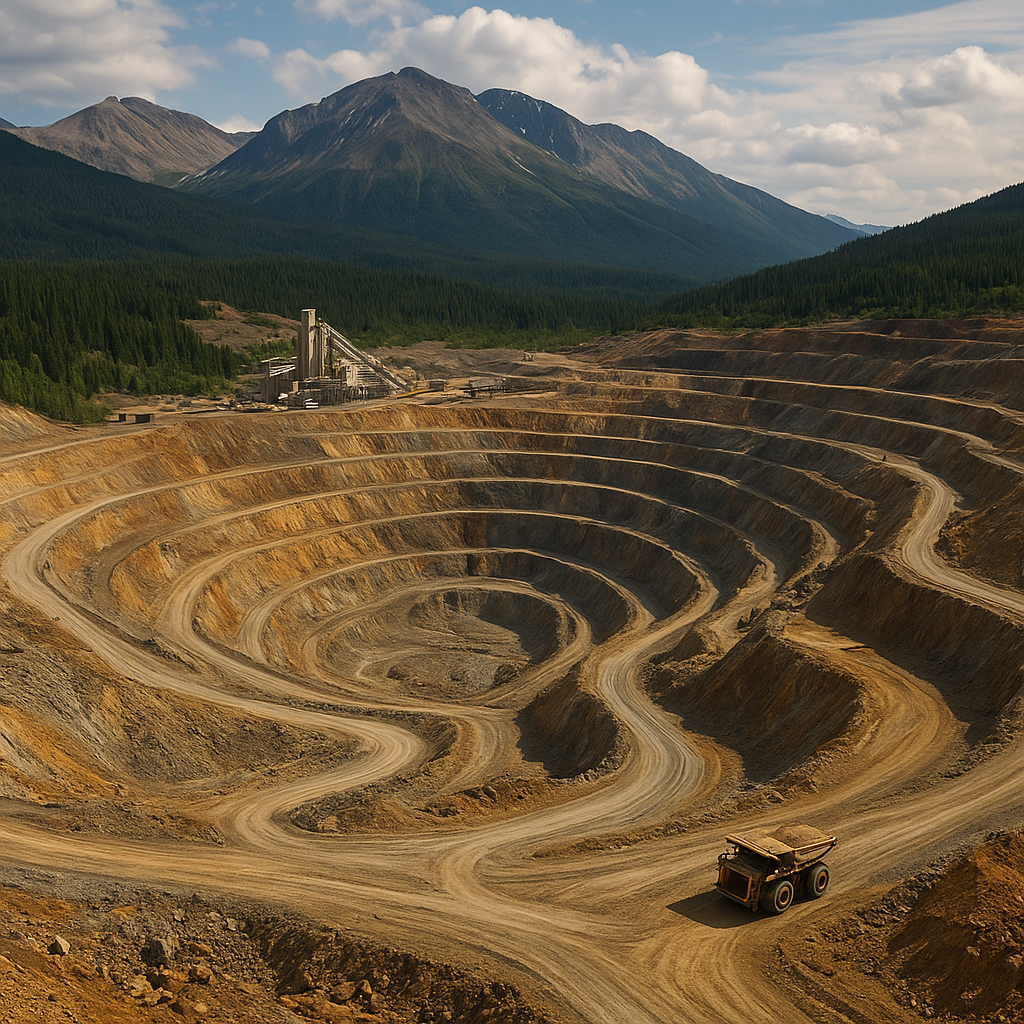
The Mount Milligan mine is a prominent example of a large-scale, modern mineral operation in Canada’s interior. Located in north-central British Columbia, it is a significant source of both copper and gold and plays a multifaceted role in the regional economy, infrastructure, and local communities. This article explores where Mount Milligan is, what is produced there, its economic importance, environmental and social issues tied to its operation, and several intriguing aspects that make it noteworthy in the global mining landscape.
Location, Access and Geological Setting
Mount Milligan sits in the rugged terrain of north-central British Columbia, approximately several hours’ drive northwest of Prince George and within reach of local communities such as Fort St. James. The site is remote enough to require careful logistical planning yet accessible by well-maintained industrial roads and an airstrip that facilitates personnel movement and supplies.
Geological context
The deposit at Mount Milligan is a classic large-tonnage, low- to medium-grade porphyry system. Porphyry deposits host disseminated mineralization distributed through large volumes of rock rather than concentrated veins, making them well suited to bulk mining methods. These systems typically contain both base metals (notably copper) and precious metals (notably gold), which is precisely the combination exploited at Mount Milligan.
Porphyry deposits form in magmatic arcs and are associated with extensive hydrothermal systems. At Mount Milligan, mineralization occurs primarily as chalcopyrite and bornite (copper sulfide minerals) with associated gold often occurring as microscopic inclusions or associated with sulfide minerals. The host rocks and alteration halos span tens to hundreds of meters, giving miners an economically attractive tonnage to mine and process.
Infrastructure and climate considerations
The mine’s northern location means operators contend with a continental climate: cold winters, snow, and a limited construction season. Infrastructure investments—such as roads, power supply lines, water management systems, and worker facilities—have to be resilient to seasonal extremes. Because of the remoteness, the mine maintains on-site camps, maintenance facilities, and carefully planned supply chains to ensure steady operations year-round.
Mining Method, Processing and Production
Mount Milligan is operated primarily as an open-pit mine. Open-pit mining is the preferred method for large, near-surface porphyry deposits because it allows efficient removal of large volumes of overburden and ore using heavy mobile equipment. Ore is hauled to a concentrator on site where mineralization is liberally processed to produce copper-gold concentrates for sale to smelters and refiners.
Mining and milling workflow
- Drilling and blasting break up the rock in the pit for load-and-haul operations.
- Haul trucks and shovels transfer ore to the primary crusher or directly to stockpiles.
- Crushing and grinding reduce ore to a size suitable for flotation.
- Flotation produces a copper-gold concentrate that is filtered and shipped off-site.
- Waste rock and tailings are managed in engineered facilities with water treatment systems.
The concentrator recovers both copper and gold into a concentrate product. While yields and grades vary with the ore body and mining sequence, the combination of base and precious metals gives the operation resilience: copper prices and gold prices don’t always move in tandem, helping stabilize revenue streams across market cycles.
Processing challenges and innovations
Processing porphyry ore efficiently requires advanced metallurgical knowledge and continuous optimization. Metallurgical variability can be addressed through blending ore, tailoring reagent regimes in flotation, and employing modern grinding technologies to improve liberation. Mount Milligan’s operators employ ongoing metallurgical testing and process improvement, and many modern mines of this type leverage automation in hauling and processing to improve safety and reduce costs.
Economic Significance and Employment
Beyond the obvious value of producing valuable metals, Mount Milligan contributes to local and regional economic development on multiple fronts. It directly creates employment, supports contractors and suppliers, generates government revenue through taxes, royalties and lease payments, and stimulates secondary economic activity in nearby towns.
Employment and local businesses
A large mine like Mount Milligan provides hundreds of direct jobs during operations — from miners and equipment operators to metallurgists, environmental scientists, and administrative staff — and many more indirect positions through service contractors (transport, catering, equipment maintenance, engineering). In remote regions with fewer economic options, such employment opportunities can be transformative, supporting households and community services over the life of the mine.
Government revenue and economic multipliers
Mining activities contribute to public coffers via corporate taxes, mineral royalties, property assessments, and employment taxes. These revenues can support regional infrastructure, healthcare and education. Moreover, local procurement multiplies the economic impact: construction contractors, fuel suppliers, and transport firms derive sustained business from mine operations.
Importantly, the presence of a major industrial project can catalyze additional investments such as improved roads and power infrastructure that benefit the wider region beyond the mine’s footprint.
Social and Indigenous Relations
The social license to operate is essential for long-term mining projects. Mount Milligan’s location places it in the traditional territories of Indigenous peoples and proximate to small, often economy-sensitive communities. Operators typically engage in formal agreements with local First Nations, employ local workers, and implement community investment programs.
Partnerships, benefits and training
- Impact-benefit and collaboration agreements that include employment quotas, business opportunities, and training programs for local and Indigenous communities.
- Education and skills development initiatives aimed at increasing local participation in the skilled aspects of mining operations.
- Support for community infrastructure projects, such as road upgrades, health programs, or cultural heritage initiatives.
These measures help ensure that the benefits of resource development are shared more broadly and that communities have a stake in environmental protection and ongoing monitoring.
Environmental Management and Reclamation
Large-scale mining inherently affects the landscape, water, and ecosystems, which makes environmental management an operational priority. Modern mines like Mount Milligan operate under stringent regulatory frameworks and are required to implement comprehensive environmental protection, monitoring and closure plans.
Water, tailings and reclamation
Key environmental controls include:
- Engineered tailings facilities designed to contain tailings and manage seepage.
- Water treatment systems to ensure process and runoff water released meets regulatory standards.
- Progressive reclamation including topsoil stockpiling, recontouring, and revegetation to restore habitat where possible.
Regulators and operators also plan for long-term closure costs and post-closure monitoring. Modern reclamation practice increasingly focuses on restoring ecosystem function rather than simply reshaping landforms.
Sustainability and emissions reduction
Mining companies face pressure to reduce greenhouse gas emissions and energy use. Initiatives can include improving energy efficiency at the concentrator, electrifying equipment, connecting to grid power where feasible, and adopting low-carbon technologies. The term sustainability is central to how investors, regulators and communities evaluate the acceptability of a mining project today.
Interesting Facts and Operational Highlights
Mount Milligan has several features that make it noteworthy beyond raw production metrics.
- Scale: As a porphyry-hosted bulk-tonnage deposit, the mine must move and process very large volumes of rock, which requires significant capital investment in heavy equipment and processing infrastructure.
- Dual metal economics: Producing both copper and gold provides revenue diversification, which can buffer the operation against price volatility in any single metal.
- Remote operations: Operating in north-central British Columbia demands robust logistics planning, self-sufficient camps and supply chains, and a high degree of preparedness for seasonal weather extremes.
- Community engagement: The mine illustrates modern approaches to community agreements, local hiring and Indigenous partnerships that are increasingly expected across Canada.
Ownership and corporate evolution
Ownership histories of large projects often reflect strategic moves in the global mining industry. Mount Milligan has been developed and operated under the stewardship of major mining companies that brought the necessary capital, technical expertise, and governance frameworks to take a large porphyry deposit from exploration through to production. Such projects highlight the interplay between exploration success, financing, permitting and operational execution in the resource sector.
Future Prospects and Challenges
The longevity and prospects of a mine like Mount Milligan depend on a combination of remaining reserves and resources, commodity prices, operational efficiency and social-licence factors. Ongoing exploration around the pit area and in nearby targets could expand resources and potentially extend the mine life. Improvements in metallurgical recoveries or process efficiencies could likewise enhance the project’s economics.
Market drivers
Global demand for copper is expected to remain strong over the coming decades due to electrification and renewable energy infrastructure, while gold continues to play roles in investment portfolios and as an inflation hedge. These market fundamentals are favorable to polymetallic operations that can supply both metals.
Regulatory, environmental and social risks
Conversely, the project must navigate environmental regulations, potential changes in royalty frameworks, and evolving expectations from Indigenous communities and other stakeholders. Climate-related risks and a global push toward lower emissions also change the cost structure and investment priorities for mining operations.
Conclusion
Mount Milligan exemplifies a modern, integrated copper-gold mining operation in a remote but resource-rich part of British Columbia. Its significance extends beyond mineral production: the project influences regional economies, provides employment and business opportunities, and demands sophisticated environmental and social stewardship. As global demand for metals associated with energy transition grows, operations like Mount Milligan will continue to be strategically important, provided they maintain strong relationships with local communities, embrace sustainable practices, and adapt to evolving market and regulatory environments.

