
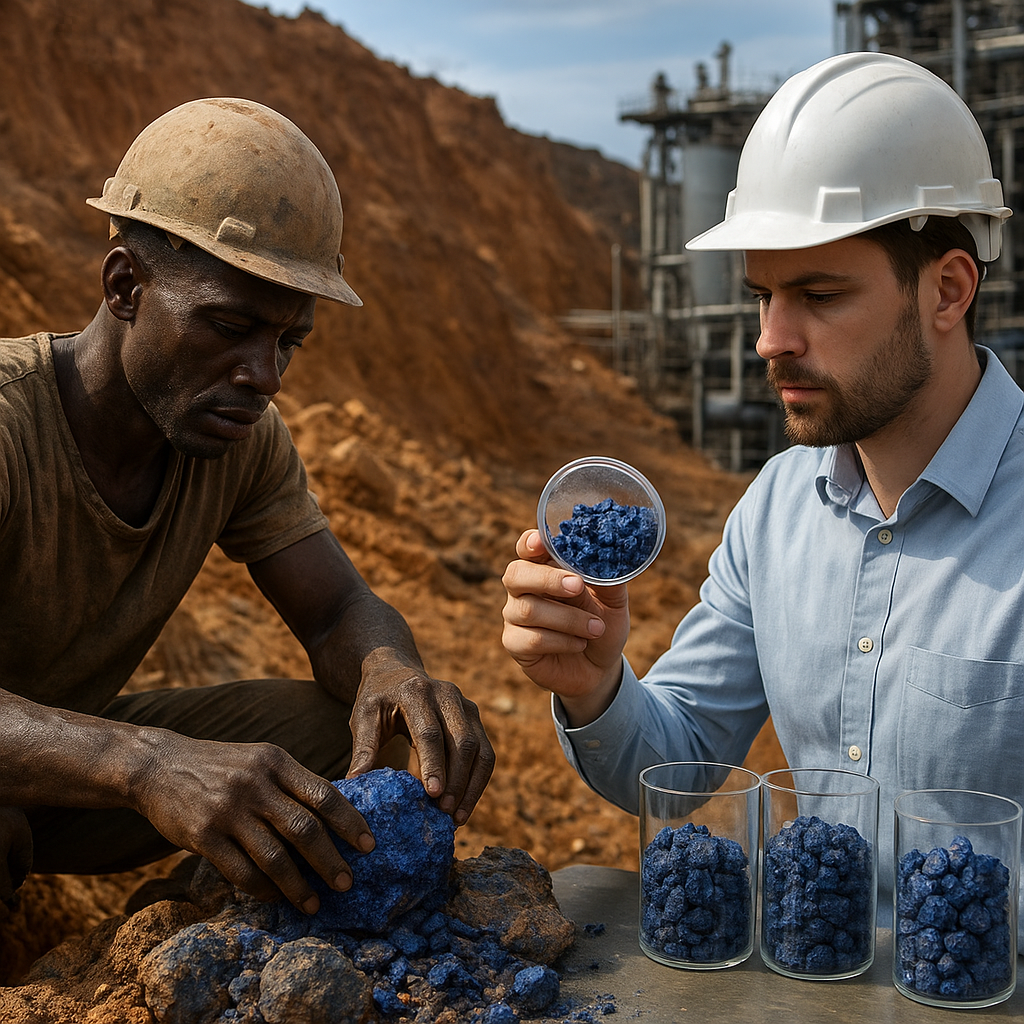
The global demand for batteries, electric vehicles and portable electronics has placed the metal cobalt at the center of intense industrial and ethical scrutiny. This article examines the complex web of social, environmental and corporate responsibilities that surround modern mining and supply chain practices. By unpacking the most pressing concerns — from child labor and hazardous working conditions to environmental degradation and opaque procurement systems — stakeholders can better understand the choices that shape whether cobalt contributes to sustainable development or perpetuates harm.
Root causes and human rights concerns
At the heart of the debate are the people who extract and process cobalt. Much of the world’s supply flows from regions where governance is weak and economic opportunities are limited. In these contexts, informal or artisanal mining operations frequently coexist with larger industrial projects. The human cost can be high: hazardous working conditions, exposure to toxic dust and chemicals, and extremely low wages. Perhaps the most shocking aspect reported by investigators and NGOs is the involvement of children in mining activities — a practice that violates basic human rights and often traps families in cycles of poverty.
Working conditions and occupational health
Occupational hazards in small-scale mining include accidents, insufficient protective equipment, and long-term health issues from inhaling particulate matter. Industrial mines are not immune: inadequate enforcement of labor standards and subcontracting can create gray areas that reduce accountability. Recognizing these points, multinational buyers must assess whether their procurement practices encourage improvements or inadvertently support hazardous employment arrangements.
Socioeconomic drivers
Poverty, lack of alternative livelihoods, and weak public services drive people to the mines. Addressing these underlying conditions requires coordinated public policy, community investment and economic diversification. Ethical interventions that focus only on the mine without improving education, healthcare and local infrastructure are unlikely to produce lasting change.
Environmental impacts and intergenerational effects
Mining operations, whether artisanal pits or open-pit industrial sites, can have profound effects on local ecosystems. Tailings and waste-rock can contaminate soil and water, and deforestation associated with access roads and settlement expansion reduces biodiversity. Communities relying on agriculture or fishing are especially vulnerable. Protecting the natural environment is not only an ecological imperative but a social one: environmental harm compounds human suffering and burdens future generations.
- Environment: Water contamination, soil erosion and habitat loss are common impacts that undermine food security and health.
- Airborne particulates from ore processing may increase respiratory disease incidence in nearby towns.
- Long-term contamination of river systems can render land unusable for decades, pushing migration and social instability.
Remediation and prevention
Effective mitigation requires both technical measures — proper tailings management, dust suppression, reclamation of disturbed lands — and robust regulatory oversight. Investors and manufacturers can push for higher environmental standards by conditioning contracts on site reclamation plans and continuous environmental monitoring. Greater investment in cleaner processing technologies and less toxic alternatives can reduce the environmental footprint of cobalt extraction.
Traceability, transparency and corporate responsibility
One of the most persistent challenges in ethical cobalt sourcing is the lack of reliable traceability. Cobalt often changes hands multiple times — from miners to middlemen to exporters to refiners — before it becomes a usable chemical for battery cathodes. At every transfer, information can be lost. Companies that fail to trace their supplies risk both complicity in rights abuses and significant reputational damage.
Due diligence frameworks
International frameworks such as the OECD Due Diligence Guidance for Responsible Supply Chains provide practical steps for companies to identify, prevent and mitigate risks. Conducting effective due diligence involves mapping suppliers, auditing conditions, engaging with stakeholders and implementing corrective action plans. Importantly, due diligence should be iterative and context-specific rather than a one-time compliance exercise.
Business models and procurement pressure
Corporate purchasing practices can either improve conditions or entrench problems. Short-term, price-driven procurement encourages suppliers to cut corners. Conversely, long-term contracts and premium payments for certified materials can create incentives for better labor and environmental practices. Transparency about sourcing policies, and the public disclosure of supplier lists where safe and feasible, strengthens transparency and helps consumers make informed choices.
Regulation, certification and multi-stakeholder initiatives
Regulatory approaches range from national mining laws and export controls to international trade restrictions and corporate reporting mandates. Certification schemes and industry coalitions attempt to set standards and provide market signals for responsibly sourced cobalt. However, certification is not a panacea: standards vary, audits can be superficial, and some schemes struggle with the complex realities of informal mining.
- Government regulation is essential for establishing baseline protections for labor, health and the environment.
- Independent third-party audits can improve credibility, but must be frequent, unannounced and locally informed to be effective.
- Multi-stakeholder partnerships — involving companies, governments, civil society and communities — are often necessary to implement systemic change.
Limitations and risks of certification
Certification programs sometimes fail to reach the most vulnerable artisanal miners because of costs, administrative hurdles or geographic exclusion. There is also the risk of “greenwashing” where participation in a scheme is used for public relations without substantive improvements on the ground. Effective programs combine certification with community development, technical assistance and mechanisms to include small-scale miners in formal markets.
Technology, innovation and alternative pathways
Technological advances can assist ethical sourcing. Blockchain and digital chain-of-custody systems promise improved provenance tracking, while geospatial monitoring and remote sensing can detect environmental impacts. Battery manufacturers are also researching cobalt-reduction in cathode chemistries and shifting toward materials with less dependency on high-risk supply chains.
Recycling and circular economy
Promoting recycling of lithium-ion batteries can reduce the pressure on primary cobalt extraction. Urban mining initiatives, extended producer responsibility (EPR) schemes, and improved collection infrastructure help recover valuable metals and lower the need for new mining. However, recycling alone cannot immediately meet global demand and must be scaled alongside reductions in consumption intensity and design for recyclability.
Responsible innovation
Technological fixes must be paired with social safeguards. For example, switching to less cobalt-intensive batteries may alter demand patterns and affect livelihoods in producing regions. Ethical foresight requires planning for transitions that protect communities reliant on mining income, including retraining programs and investment in alternative sectors.
Community engagement and equitable benefit-sharing
Meaningful engagement with affected communities is a cornerstone of ethical supply chain practices. Local people should participate in decision-making about projects that affect their land, health and livelihoods. Mechanisms for benefit-sharing — such as royalties, community development funds and local hiring commitments — can ensure that extraction contributes to local development rather than external profit alone.
- Free, prior and informed consent (FPIC) is critical for projects on or near indigenous lands.
- Community monitoring and grievance mechanisms increase accountability and give residents a voice.
- Investment in education and healthcare create long-term social returns and reduce dependence on hazardous work.
Recommendations for stakeholders
Addressing ethical concerns in cobalt supply chains requires action across actors and levels. Governments must strengthen oversight, enforce labor and environmental laws, and invest in rural development. Companies should implement rigorous due diligence, favor long-term procurement practices that support improved standards, and invest in traceability systems. Civil society and media play a watchdog role by documenting abuses and amplifying community voices. Consumers and investors can exert pressure through informed choices and shareholder engagement.
Key policy and corporate measures
- Implement transparent supply chain mapping and publish responsible sourcing policies.
- Condition purchasing on verifiable improvements in labor and environmental performance.
- Support formalization of artisanal mining with technical assistance, safety training and access to markets.
- Invest in recycling infrastructure and research on low-cobalt battery chemistries.
- Establish clear remediation and compensation mechanisms for communities affected by mining.
Ultimately, ensuring that cobalt contributes to a just and sustainable energy transition requires a balanced approach: protecting human rights, preserving ecosystems, and enabling economic development through inclusive, traceable and accountable practices. Without these measures, the metal that powers clean technologies risks perpetuating harm rather than enabling progress, and stakeholders from governments to consumers share responsibility for steering the supply chain toward a more ethical future.
