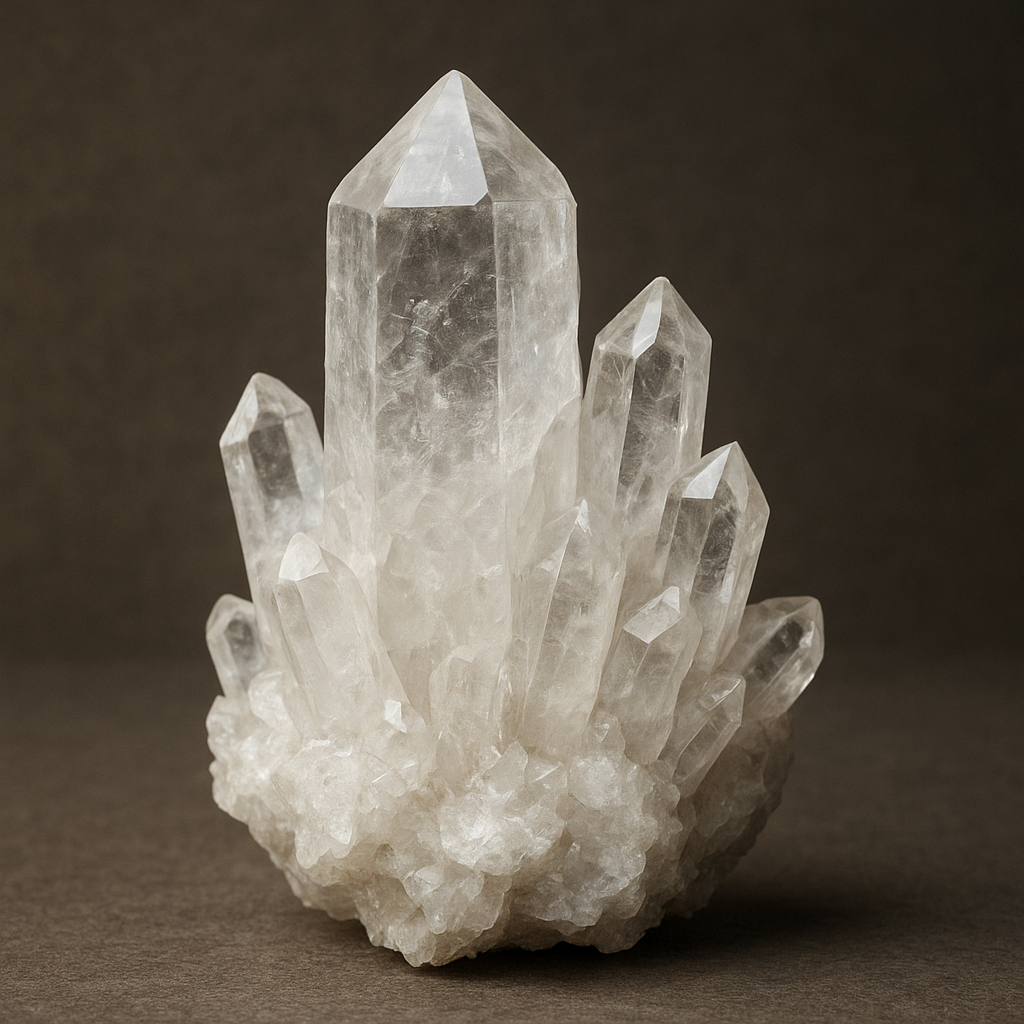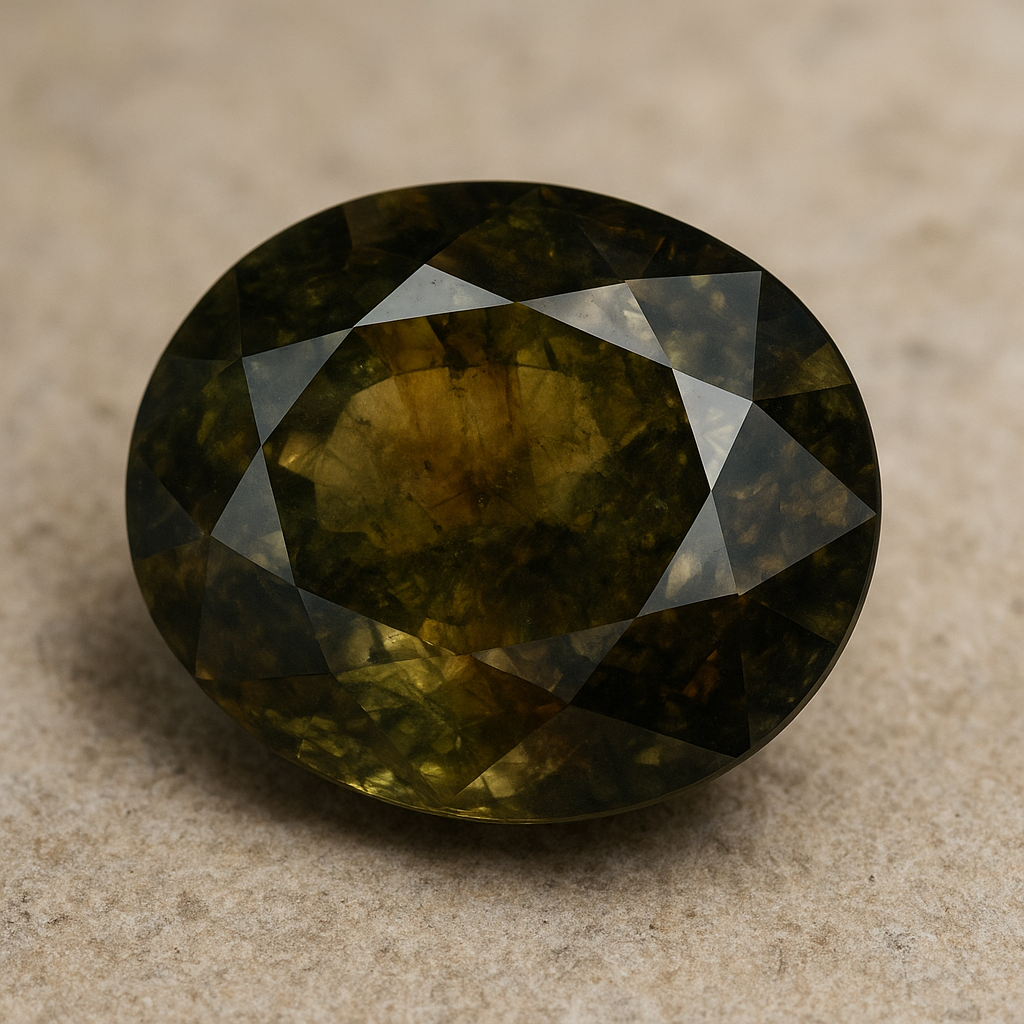
Kornerupine is a rare and intriguing silicate mineral that captures the attention of mineralogists, gemologists, and collectors alike. Combining unusual chemistry, complex crystal structure, and striking optical effects, it occupies a special place among the more exotic gemstones and metamorphic minerals. This article explores its chemistry and crystal habits, the geological environments where it forms, its uses — particularly as a gemstone — and why kornerupine remains a subject of ongoing scientific and hobbyist interest.
Mineralogy and Crystal Chemistry
Kornerupine belongs to the family of complex borosilicate minerals. Its general formula is often written in a simplified way as (Mg,Fe,Al)7(BO3)(SiO4)3(OH), but in practice kornerupine exhibits significant chemical variation. Substitutions among magnesium, iron, manganese, and aluminum (or aluminum in different localities) produce a compositional range that affects color, density, and optical properties. The presence of boron in its structure is one of the defining characteristics that classifies kornerupine among borosilicate minerals, and the interplay of these elements creates structural complexity that interests crystallographers.
Crystal structure and habit
Kornerupine crystallizes in the orthorhombic system and typically forms prismatic to stubby crystals that can be striated. Well-formed crystals are uncommon; more frequently kornerupine occurs as granular or intergrown masses within metamorphic rocks. Despite its rarity in gem-sized crystals, gem-quality pieces have been cut from transparent fragments, showcasing attractive colors and optical phenomena.
Chemical variability
- Mg-Fe substitution: Magnesium-rich varieties tend to be lighter in color and specific gravity, while iron-rich kornerupine can be darker and denser.
- Boron content: The boron-bearing groups influence structural stability and can be used to differentiate kornerupine from other visually similar silicates.
- Impurities: Trace elements such as chromium, vanadium, and titanium may cause hues ranging from green to brown or yellow.
Because kornerupine’s composition is variable, careful chemical and spectroscopic work is often necessary to accurately identify specimens, especially when differentiating from related minerals such as tourmaline, diopside, or other green metamorphic silicates.
Occurrences and Geological Settings
Most kornerupine forms in high-grade metamorphic environments where boron-rich fluids or precursor rocks have been subjected to intense pressure and temperature. It is commonly associated with other boron-bearing minerals and metamorphic index minerals that indicate medium- to high-grade metamorphism.
Typical host rocks
- Skarns — contact metamorphic zones where carbonate rocks interact with igneous intrusions, introducing boron and other elements.
- Metapelitic schists — aluminous, clay-rich sediments that undergo regional metamorphism, sometimes producing kornerupine in the presence of boron.
- Gneisses and amphibolites — high-temperature metamorphic rocks that can host kornerupine when suitable chemical components are present.
Notable localities
Kornerupine is found sporadically around the world, with a few localities famous for producing gem-quality material. Among these:
- Sri Lanka — historically important for gem-grade kornerupine; Sri Lankan stones often display attractive green to bluish-green hues and excellent clarity.
- Tanzania — produces both crystals and gem material, sometimes in association with other gemstones.
- Other occurrences include Madagascar, Australia, Brazil, Russia, Myanmar, and parts of North America and Europe, though gem-quality finds are rare.
Field geologists look for kornerupine in areas where boron-rich sediments or hydrothermal fluids have interacted with aluminous rocks under high-temperature conditions. The identification of kornerupine in the field can be difficult without laboratory analysis due to its often similar appearance to other green minerals.
Physical and Optical Properties
Kornerupine’s physical and optical characteristics are part of what makes it valuable as a collected specimen and occasionally as a gemstone. Understanding these properties helps gem cutters and lapidaries assess its suitability for use in jewelry.
Color and pleochroism
Kornerupine is prized for its range of colors — most commonly green, yellow-green, brown, and sometimes bluish tones. A distinctive feature is pleochroism, the property of showing different colors when viewed from different crystallographic directions. Strong pleochroism can make kornerupine particularly attractive when cut to exploit this optical effect, similar to the way corundum or tourmaline cuts are chosen to enhance color.
Refractive index and brilliance
Kornerupine has a moderate to high refractive index, contributing to a nice level of brilliance in faceted stones. Its birefringence and dispersion are modest compared to diamonds but sufficient to give depth and character to faceted gems. Transparency ranges from transparent in gem-grade pieces to translucent or opaque in massive forms.
Hardness and durability
With a Mohs hardness typically in the range of 6.5–7.5, kornerupine is reasonably durable for jewelry, though it is not as hard as corundum (sapphire/ruby) or spinel. This hardness is sufficient for earrings, pendants, and occasionally rings if care is taken. The mineral can be brittle and sensitive to cleavage-related breakage, so correct gem cutting and protective settings are important.
Kornerupine as a Gemstone
While kornerupine is not a mainstream gemstone, it is sought after by collectors and connoisseurs for its rarity and unusual optical properties. When transparent and well-colored, kornerupine can be faceted into attractive gems that display vivid pleochroism and rich tones.
Cutting and orientation
- Because of strong pleochroism, gem cutters orient kornerupine to highlight the most desirable color and to balance color change across the face of the gem.
- Faceting designs aim to maximize color saturation and minimize windowing (areas where light leaks through). Step cuts and certain brilliant cuts can both be appropriate depending on rough geometry.
- Care is taken to avoid cleavage directions and to preserve stone integrity during cutting and polishing.
Typical jewelry uses
Due to its relative rarity and distinctive appearance, kornerupine is often used in bespoke and artisan jewelry rather than mass-market designs. Common uses include:
- Earrings and pendants — where stones are less exposed to knocks.
- Brooches and pins — allowing for protective settings.
- Collectors’ gemstones — often sold loose or within custom mounts for display.
Market and value
Prices for kornerupine vary widely depending on color, clarity, size, and origin. Transparent, well-colored stones from classic localities like Sri Lanka and Tanzania command higher prices. Because supply is limited and production unpredictable, kornerupine retains a premium compared to more abundant green gems. However, its market remains niche, driven primarily by collectors and specialty gem dealers rather than mainstream jewelry retail.
Care, Treatments, and Ethical Considerations
Owners and dealers should be aware of both practical care for kornerupine and the treatment and sourcing issues that affect its market.
Care and cleaning
- Avoid ultrasonic cleaners and steam cleaning for fragile or included stones; hand cleaning with mild soap and warm water is safest.
- Protect kornerupine jewelry from hard knocks and abrasive surfaces due to potential brittleness or internal fractures.
- Keep kornerupine away from prolonged exposure to harsh chemicals which could affect polish or cause surface damage.
Treatments
Unlike some gemstones that are routinely heat-treated or irradiated, kornerupine typically reaches the market in its natural state. However, careful gemological testing is advised for high-value pieces to rule out enhancements or misidentification (for example, confusing kornerupine with green tourmaline or chrysoberyl).
Ethical sourcing
Sourcing of kornerupine is usually on a small-scale, artisanal level. Buyers should enquire about provenance and responsible mining practices, particularly if acquiring larger or higher-value specimens. Transparency about origin benefits both buyers and responsible miners, and provenance information often enhances the collectible value of kornerupine pieces.
Related Minerals and Scientific Interest
Kornerupine’s relationship to other borosilicates and its behavior under metamorphic conditions make it interesting to Earth scientists. It is often studied alongside minerals such as tourmaline, tremolite, and other boron-bearing phases to better understand fluid-rock interactions during metamorphism.
Petrogenetic significance
The presence of kornerupine in metamorphic terrains signals certain chemical conditions: availability of boron and a mix of magnesium, iron, and aluminum at relatively high temperatures. Geologists use kornerupine occurrences to interpret pressure-temperature histories and fluid compositions in metamorphic terranes, which in turn informs broader questions about crustal processes and tectonic evolution.
Research methods
- Electron microprobe analyses reveal detailed chemical zoning and substitutions within kornerupine crystals.
- X-ray diffraction and crystallography clarify subtle structural variations and polymorph relationships.
- Spectroscopic techniques (Raman, IR, UV-Vis) help characterize optical centers and chromophores responsible for color and pleochroism.
Famous Localities and Notable Specimens
Although rare overall, a few finds of gem-quality kornerupine have attracted considerable attention. Collectors prize transparent, well-colored pieces and museum collections sometimes include impressive kornerupine specimens that display exceptional crystal form or optical properties.
Important finds
- Instances from Sri Lanka have historically supplied some of the finest kornerupine gems, prized for their clarity and color.
- Tanzanian material has contributed both crystallographic specimens and facetable rough that has made its way into collector markets.
- Occasional Brazilian and Madagascan gem finds have added to the diversity of kornerupine available, though these occurrences tend to be limited and sporadic.
Noteworthy museum specimens are often displayed with explanatory notes on their formation environment and mineral associations, helping visitors appreciate the geological rarity of kornerupine compared with more common gem minerals.
Collecting, Identification, and Practical Tips
For mineral collectors and gem enthusiasts interested in kornerupine, a few practical tips can improve acquisition and appreciation.
How to identify kornerupine
- Look for green to brownish-green colors combined with strong pleochroism in transparent samples.
- Check hardness (around 6.5–7.5) and specific gravity as supportive tests.
- When possible, obtain gemological verification: refractive index measurements, spectroscopic signatures, or X-ray diffraction are definitive.
Collecting ethics and documentation
Request locality information and, for higher-value purchases, independent gem certificates. Good documentation adds scientific value and resale credibility. Supporting reputable dealers who adhere to ethical collecting and trading practices helps preserve access to rare minerals like kornerupine and ensures fair treatment of local mining communities.
Display and storage
Store kornerupine away from direct sunlight to avoid any potential long-term color fading in certain varieties, and keep specimens cushioned to prevent chipping. For jewelry, consider protective settings such as bezels or halo mounts to reduce exposure of the stone’s edges.
Concluding Thoughts on Kornerupine’s Appeal
Although kornerupine never reached broad popularity like sapphire or emerald, its combination of geological rarity, chemical complexity, and visual appeal secures a loyal following. Whether appreciated by scientists for the clues it offers about metamorphic processes or by gem collectors for its dramatic pleochroism and uncommon colors, kornerupine remains a mineral that rewards curiosity. Its scarcity in gem-quality form means each fine specimen is notable, and ongoing geological exploration continues to reveal new occurrences that expand our understanding of this captivating mineral.