Kamaya Jasper captures attention with its rich colors and intricate patterns, a member of the broad family of jasper materials prized by collectors and artisans alike. More than a pretty stone, it is a piece of the Earth’s story — a compact record of silica-rich waters, mineral impurities, and geological pressures that together produced the dense, durable material lapidaries value. In this article we explore where Kamaya Jasper appears in nature, how it is used, the techniques and trades that surround it, and several intriguing details that connect geology, craft, and culture.
Geology and Formation
At its core, jasper is a microcrystalline variety of chalcedony, itself a form of silica. Jaspers typically form when silica-rich fluids percolate through volcanic ash, sedimentary layers, or cavities and slowly precipitate microscopic quartz crystals. The presence of various trace elements and inclusions — most commonly iron oxides — creates the wide palette of colors and the dramatic banding, spots, or dendritic veining seen in many jaspers.
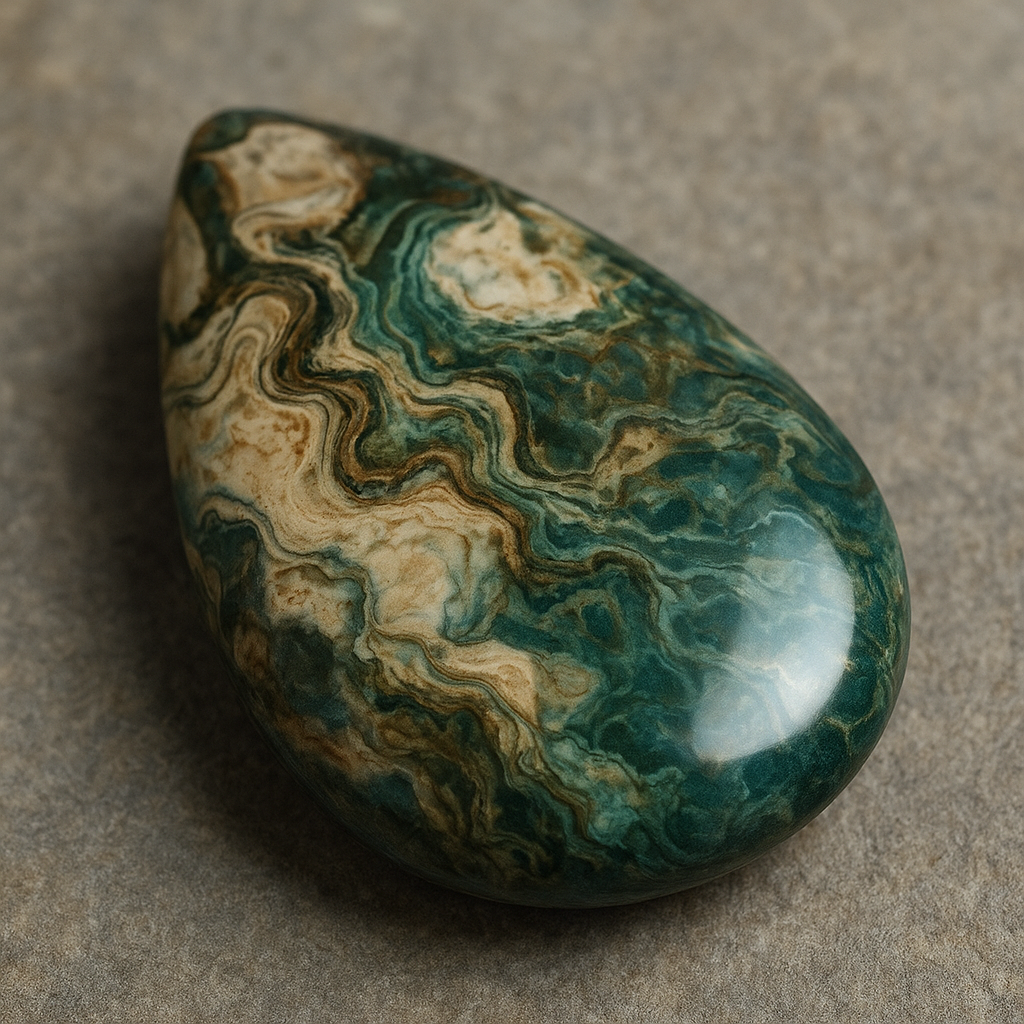
Kamaya Jasper, as a commercial name, refers to a distinctive appearance within this family. Its aesthetic is often defined by complex interplay of reds, browns, creams, and occasional greens or blacks, organized into swirling patterns, orbicular spots, or layered bands. The textures and motifs are produced by fluctuating conditions during deposition: varying chemistry of the silica solution, episodic influxes of iron-rich material, and micro-environments that trapped organic matter or other minerals.
Typical mineralogy
- Predominant: microcrystalline quartz (chalcedony)
- Common inclusions: iron oxides (hematite, goethite), manganese, clay minerals
- Accessory components: tiny fragments of volcanic glass, silica-rich sediment, or organic films that can affect color
How patterns form
Many of the captivating patterns arise from cyclical deposition: thin layers of silica alternated with iron-bearing films, or localized pockets where different minerals concentrated. In some places, silica infiltrates cavities and forms concentric growths that become orbicular or circular patterns after cutting and polishing. Understanding this micro-environment helps explain why no two pieces are identical — the geology is essentially a microscopic painting made over long geological timeframes.
Locations and Mining — Where Kamaya Jasper Occurs
The name Kamaya often suggests a regional origin and is commonly associated with material sourced in parts of maritime Southeast Asia, notably islands within the Indonesian archipelago. Indonesia, with its extensive volcanic history and complex sedimentary basins, is a logical source for diverse jasper types. Within that broader context, stones marketed as Kamaya usually come from small, localized outcrops that miners work by hand.
Because trade names in the gemstone market can become detached from strict geological locality names, it’s worth understanding two realities:
- Provenance can be imprecise — stones sold under a single commercial name may come from several nearby quarries or alluvial deposits.
- Local small-scale mining is common — miners often extract nodules from weathered rock or river gravels rather than large open-pit operations.
Typical extraction methods for such jaspers include careful hammering of host rock, sifting of river gravels, and hand-sorting of nodules. Because the material tends to be durable and relatively abundant in small deposits, it is amenable to artisan-scale production rather than exclusively industrial mining.
Lapidary Uses and Techniques
Kamaya Jasper lends itself easily to the kinds of workmanship prized by jewelers and lapidaries. Its hardness (around 6.5–7 on the Mohs scale, typical for chalcedony) and compact structure allow for clean cutting, polishing, and carving.
Common forms and products
- Cabochons — smooth, domed gems used in rings, pendants, and earrings highlight the stone’s patterns.
- Beads and malas — spherical or oval beads for necklaces and bracelets.
- Carvings and small sculptures — the density of jasper allows detailed work on small ornamental objects.
- Inlays and mosaics — thin slices of patterned jasper are set into wood, metal, or composite surfaces for decorative panels.
- Polished slabs — used for collector display, tabletops, or specialty tabletop items.
Cutting and polishing tips
Lapidaries processing this material commonly follow these practices:
- Initial sawing with diamond blades to produce slabs, mindful of pattern orientation to maximize attractive motifs.
- Grinding with progressive diamond grits to shape cabochons or beads, ensuring the preservation of key pattern elements.
- Polishing with cerium oxide or tin oxide to bring out deep luster; because the stone is dense, a high-gloss finish accentuates color contrasts and internal features.
- Stabilization is seldom required, but some pieces with porous areas benefit from resin impregnation to improve durability and appearance.
Art, Design, and Commercial Use
Beyond small jewelry, Kamaya Jasper finds a place in interior design and artisanal crafts. Polished slabs are desirable for collectors, while smaller cabochons and beads appeal to jewelry designers seeking organic, earthy tones. The stone’s unique patterns make it a favorite for makers of statement pieces — where a single cabochon can serve as the centerpiece of a bold pendant.
Because the material is relatively affordable compared to rarer gems, it is widely used in:
- Artisanal jewelry lines emphasizing natural and sustainable materials.
- Home décor accents like coasters, small bowls, or inlaid tabletops.
- Souvenirs and local craft markets near mining regions.
Identification, Imitations, and Treatments
For buyers and collectors, a few practical points help with authentication and valuation:
Visual identification
- Texture: Since jasper is microcrystalline, it has an opaque to nearly opaque appearance with fine-grained texture; light will not pass through thin edges as it would with translucent chalcedony types.
- Patterning: Natural patterns show gradual, irregular transitions and occasional tiny inclusions or fractures. Repeating or overly regular patterns can indicate man-made or reconstituted materials.
- Surface features: Natural polish should reveal fine internal textures. Bubble-like features on or near the surface might suggest glass or resin impostors.
Treatments and enhancements
Jasper is often sold untreated, but in some cases sellers may perform:
- Resin impregnation to fill pores and strengthen fragile pieces.
- Dyeing to enhance or modify colors (less common for high-grade pattern stones because this can detract from natural appearance).
- Waxing or surface coatings to provide temporary gloss — these can wear off over time and should be disclosed.
Testing for authenticity
- Hardness test: natural jasper resists scratching from steel but can be scratched by harder materials like topaz or corundum.
- Specific gravity: most jaspers have stable density values; substantial deviations may indicate composite materials.
- Professional labs can perform spectroscopic or microscopic analysis to confirm mineralogy when provenance or authenticity is critical.
Collecting and Market Considerations
The market for Kamaya Jasper combines collectible interest with craft demand. Prices vary widely based on color intensity, pattern uniqueness, size, and finish. While common pieces remain affordable, exceptional slabs or particularly striking cabochons can command higher prices among collectors and designers.
Factors influencing value include:
- Uniqueness of pattern — striking orbicular shapes, dramatic banding, or rare color combinations increase desirability.
- Size and cut quality — larger, well-polished slabs or perfectly centered cabochons are more valuable.
- Provenance — documented locality or association with a known deposit can add collector cachet.
- Finish and treatment disclosure — untreated, well-polished pieces are often preferred by serious collectors.
Care, Handling, and Setting
Jasper is a tough material, but good care extends the life and appearance of any piece:
- Cleaning: use warm water, mild soap, and a soft brush. Avoid strong acids or alkaline cleaners that can degrade surface treatments.
- Avoid thermal shock: sudden extreme temperature changes can induce fractures in some stones.
- Jewelry settings: because jasper is opaque and often cut into cabochons, bezel settings are popular; avoid ultrasonic cleaners if the stone has been stabilized with resin.
Culture, Symbolism, and Metaphysical Aspects
Jasper varieties have long held symbolic importance across cultures, often associated with grounding, protection, and stability. In metaphysical communities, jasper is frequently described as a supportive stone for focus and endurance. Kamaya Jasper, with its earthy tones and dynamic patterns, is often embraced for its visual reminder of landscape and geology — a small, wearable piece of the natural world.
While metaphysical claims are matters of personal belief rather than scientific fact, such associations contribute to the stone’s popularity and the stories artisans weave into their work. Artists sometimes pair jasper with warm metals like copper or bronze to accentuate its earthy hues and to create pieces that evoke both ancient presence and contemporary design.
Comparisons and Related Materials
Understanding how Kamaya Jasper relates to other stones helps collectors and designers make informed choices:
- Compared to agate: agates are typically banded and more translucent; jasper is opaque and often displays more solid color fields or textural patterns.
- Compared to orbicular jaspers (like ocean jasper): similar in that both can show circular patterns, but differences lie in color range and the exact mineral inclusions that produce the motifs.
- Compared to reconstituted or dyed stones: natural Kamaya Jasper shows organic transitions and mineral inclusions that are difficult to mimic convincingly in manufactured materials.
Interesting Facts and Anecdotes
Several aspects make Kamaya Jasper particularly engaging to enthusiasts:
- Every slab is a micro-landscape: lapidaries and collectors often describe a polished piece as looking like a miniature terrain or aerial view of a natural scene.
- Local craft economies: in regions where such jaspers are found, small-scale lapidary workshops and markets provide meaningful livelihoods and contribute to cultural identity through jewelry and decorative arts.
- Designer collaborations: contemporary jewelers sometimes use Kamaya Jasper to craft limited runs of statement pieces that pair the stone’s organic patterns with modern metalwork.
Practical Tips for Buyers
If you are considering purchasing Kamaya Jasper, keep the following in mind:
- Ask about provenance and any treatments. Reputable sellers will disclose resin impregnation, dyeing, or stabilization.
- Examine the cut and polish. A well-cut cabochon or slab makes the pattern sing; poor cutting can flatten a stone’s potential appeal.
- Consider scale. Some patterns are best appreciated in larger slabs, while others make dramatic small cabochons.
- Pairing and design: think about how the stone’s palette interacts with metal choices and other gemstones in a piece.
Final Thoughts on Appreciation
While the term Kamaya Jasper may function as a trade name, the material it denotes reflects familiar themes in gemstone appreciation: the intersection of geological history, human craft, and personal meaning. The stone’s appeal lies not just in color and durability but in the way it encapsulates natural processes into wearable and displayable art — a reminder that even the smallest polished slab can hold complex stories of time, chemistry, and place. Whether you are a lapidary, jeweler, collector, or admirer, Kamaya Jasper offers a compelling combination of rugged resilience and visual poetry.