
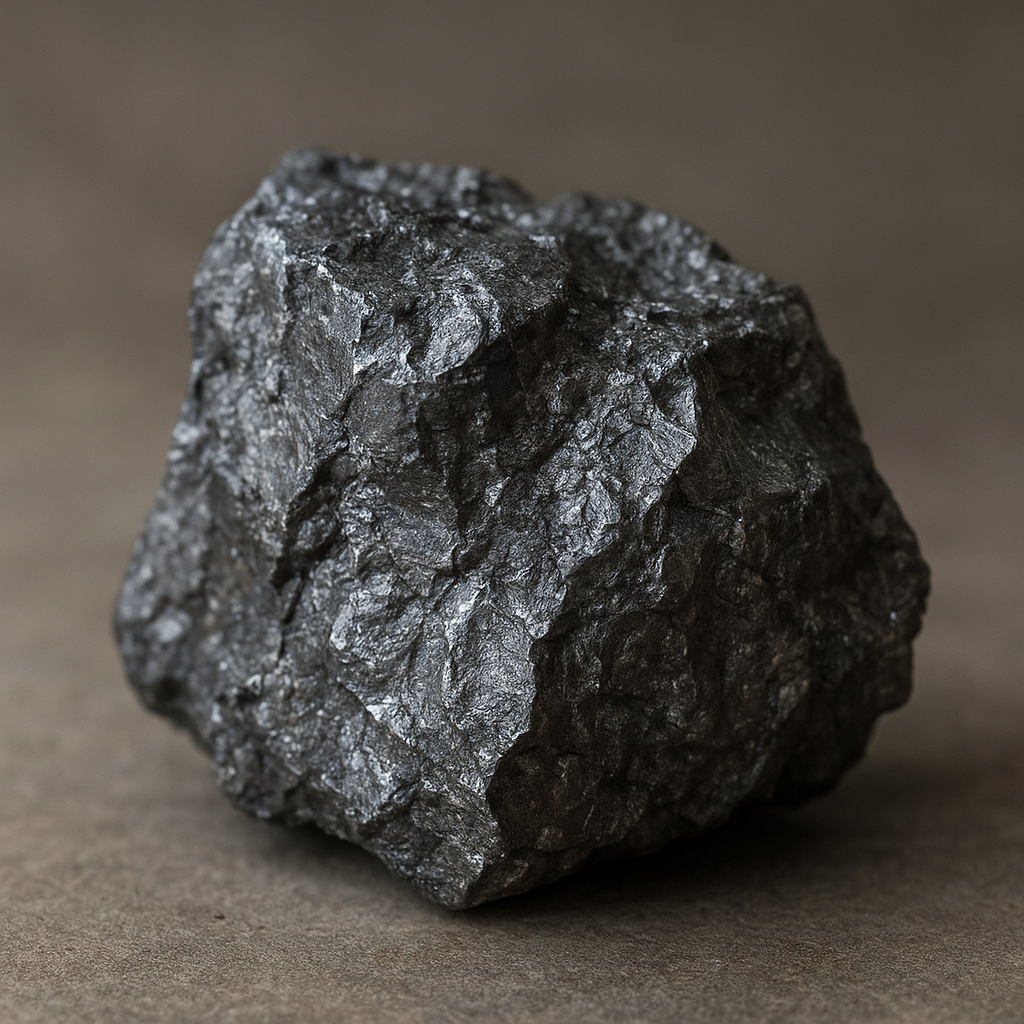
Einsteinium is one of the more exotic entries in the periodic table: a synthetic, highly radioactive member of the late actinide series that exists only in trace amounts and in the laboratories that can produce and handle it. Its story links the dawn of the thermonuclear age, advanced nuclear reactors, and cutting-edge research in heavy-element chemistry and nuclear physics. This article explores where einsteinium is found (and how it is made), what it is used for today, and several related topics that highlight why this element continues to interest scientists despite its scarcity.
Discovery and historical context
The element later named einsteinium was first identified in debris from early thermonuclear tests. Careful radiochemical analysis of material recovered after a hydrogen-bomb test revealed previously unknown activities, which were eventually attributed to a new transuranium element. The element was given the name einsteinium in honor of Albert Einstein, reflecting both the era that produced it and the theoretical underpinnings of nuclear science.
The discovery is notable for several reasons. It was one of the first elements to be discovered through fallout analysis of nuclear explosions rather than through routine laboratory synthesis or mineral analysis. This link to thermonuclear testing shaped early secrecy around the find; some details were classified for a period before the discovery could be publicly announced. Once the information became public, scientists worldwide were able to reproduce and extend the work using intense neutron sources in reactors.
Historically, einsteinium’s identification also paved the way for subsequent discoveries in the transuranium series. Small quantities of einsteinium were used in experiments that produced yet heavier elements. These early experiments showed the practical possibility of creating and studying elements at the far end of the periodic table, albeit only in minute quantities.
Where einsteinium occurs and how it is produced
Einsteinium does not occur in appreciable amounts in nature. It is not mined from ores like uranium or thorium and does not build up naturally in the Earth’s crust to detectable concentrations. Instead, it is a man-made element produced through intensive nuclear reactions that create successive neutron captures and beta decays on heavy actinide targets. Two principal production pathways have been used historically and remain relevant:
Thermonuclear tests (historical source)
The first einsteinium was isolated from the debris of a thermonuclear explosion. The immense neutron flux and high-energy environment of an explosion produce many neutron-rich isotopes that are otherwise difficult to create. Fallout collection and radiochemical separation allowed researchers to find traces of new elements. Such production was historically important, but atmospheric nuclear testing is no longer a practical or ethical source for new elements.
Neutron irradiation in nuclear reactors
Today, most einsteinium is made in specialized nuclear reactors that can expose suitable target materials (such as plutonium or curium isotopes) to very high neutron fluences. Over time, repeated neutron capture reactions followed by beta decays can climb the mass chain and yield einsteinium isotopes. These operations require long irradiation times, careful planning to maximize desired isotopes, and elaborate radiochemical separations.
Facilities that have contributed to einsteinium production include high-flux research reactors. Production yields are extremely low, so even in large reactor campaigns only micrograms or milligram-scale amounts of einsteinium might be recovered, often mixed with many other radioactive species. Because of this, experiments have to be designed to work with vanishingly small sample sizes.
Physical, nuclear and chemical properties
Einsteinium is an element with atomic number 99, placing it among the heavy actinides. As a member of this series, it typically displays chemical behavior dominated by the +3 oxidation state in aqueous chemistry, although other oxidation states are possible under specialized conditions. The metal itself would be silvery or metallic if it could be prepared in bulk, but macroscopic samples large enough to observe visually are essentially unobtainable because of scarcity and radioactivity.
Nuclear properties vary across einsteinium isotopes. There is a family of isotopes with half-lives ranging from minutes to years, which is long enough for some isotopes to be the subject of chemical and nuclear physics experiments. The intense radioactivity and spontaneous decay of einsteinium isotopes lead to self-heating and radiation damage in samples, complicating both handling and analysis.
- Chemical behavior: typically trivalent in solution, forming compounds such as halides and oxides analogous to other late actinides.
- Reactivity: reacts with oxygen, halogens, and some nonmetals; chemistry must be carried out remotely in shielded environments.
- Electron structure: as a heavy actinide it has a complex 5f-electron shell that determines many of its chemical and magnetic characteristics.
Isotopes and nuclear characteristics
Researchers work mainly with specific isotopes of einsteinium chosen for their relative stability and production feasibility. Because different isotopes have different decay modes and half-lives, the choice of isotope affects both experimental design and potential applications. Some isotopes emit primarily alpha particles, others emit beta particles and gamma rays, and the decay energy can be substantial, contributing to self-heating.
Producing a specific isotope is a multi-step process that often begins with a plutonium or curium target in a reactor, proceeds through repeated neutron capture, and uses chemical separation to isolate the einsteinium from neighboring actinides and fission products. The small quantities obtained demand analytic methods that can work at the picogram-to-microgram scale.
Applications and scientific uses
Practical, commercial uses of einsteinium are virtually nonexistent because of the extreme scarcity and intense radioactivity of the element. Nevertheless, einsteinium has played important roles in scientific research:
- Synthesis of heavier elements: Small samples of einsteinium have been used as target material to create even heavier elements in particle accelerators. Early in its history, einsteinium served in experiments that led to the discovery of elements beyond it in the periodic table.
- Chemistry of heavy elements: Einsteinium allows scientists to probe trends in the actinide series, test theoretical predictions about electron configurations and bonding, and explore how relativistic effects influence chemical behavior.
- Nuclear physics studies: The decay properties, fission characteristics, and neutron-capture cross sections of einsteinium isotopes are of intrinsic interest to basic science and to models of nucleosynthesis.
A noteworthy historical application: einsteinium played a role in the identification of element 101 (mendelevium). Minute samples were used in bombardment experiments that produced the new element, demonstrating that even tiny amounts of a transuranic element can yield significant scientific discoveries.
Handling, safety and availability
Working with einsteinium requires extensive precautions. Its intense radioactivity means that even microgram amounts can produce hazardous dose rates, necessitating remote handling inside hot cells, gloveboxes with heavy shielding, or the use of robotic manipulators. Radiochemical techniques must manage contamination risks, radiolysis of solvents, and the heat generated by decay.
Because of these constraints, research groups that use einsteinium are typically national laboratories or large university facilities with significant radiochemical infrastructure. The supply is tightly limited: producing einsteinium consumes reactor time, involves complex separations, and yields only minute quantities. Consequently, experimental designs aim to extract maximum information from minimal material.
Interesting facts and related themes
– Einsteinium bridges several themes in 20th-century science: theoretical physics, nuclear technology, and the emergence of modern radiochemistry. The element’s name serves as a reminder of the deep connection between relativity-inspired physics and the nuclear methods that made such heavy-element research possible.
– The element illustrates the boundaries between discovery and secrecy. Early work on fallout samples intersected with classified military programs, delaying publication and public recognition for the scientists involved. That period highlights how national security concerns and pure science sometimes collided during the Cold War.
– Einsteinium’s scarcity makes each experiment a careful balancing act. Radiochemists have devised analytical and separation techniques that consume only nanograms or micrograms of material, a technical achievement in itself. These methods have broader utility in trace analysis and actinide chemistry beyond einsteinium research.
– From a pedagogical point of view, einsteinium is often cited when teaching about the limits of the periodic table, the concept of synthetic elements, and the impact of neutron flux on producing heavy nuclei. Studies of its compounds help refine models of bonding in systems where 5f electrons contribute significantly to chemical behavior.
Research frontiers and future prospects
While einsteinium is unlikely to develop mass-market applications, it remains scientifically valuable. Future directions include better characterization of its electronic structure, refined measurements of nuclear data for astrophysical models (for example, in scenarios of rapid neutron capture), and the role of extremely neutron-rich environments in creating heavy elements. Improved reactor capabilities and advances in separation chemistry could permit more detailed experiments, perhaps revealing unexpected chemistry or nuclear phenomena.
The element also serves as a reminder of the ethical and environmental dimensions of nuclear research: technologies that make heavy elements possible are the same that were used in weapons testing, and modern science must balance curiosity with responsibility. Nonetheless, the careful, controlled production of tiny amounts of einsteinium under laboratory conditions has opened windows into fundamental questions about matter at its heaviest accessible frontier.
Final remarks
Einsteinium is a striking example of a substance that exists largely as an object of study rather than of utility. Its discovery story, methods of production, and uses in high-level scientific research showcase the interplay of nuclear physics, advanced chemistry, and technical skill. Though few will ever see a sample, the knowledge gained from working with einsteinium contributes to a deeper understanding of the periodic table, nuclear reactions, and the behavior of elements at the limits of stability.