
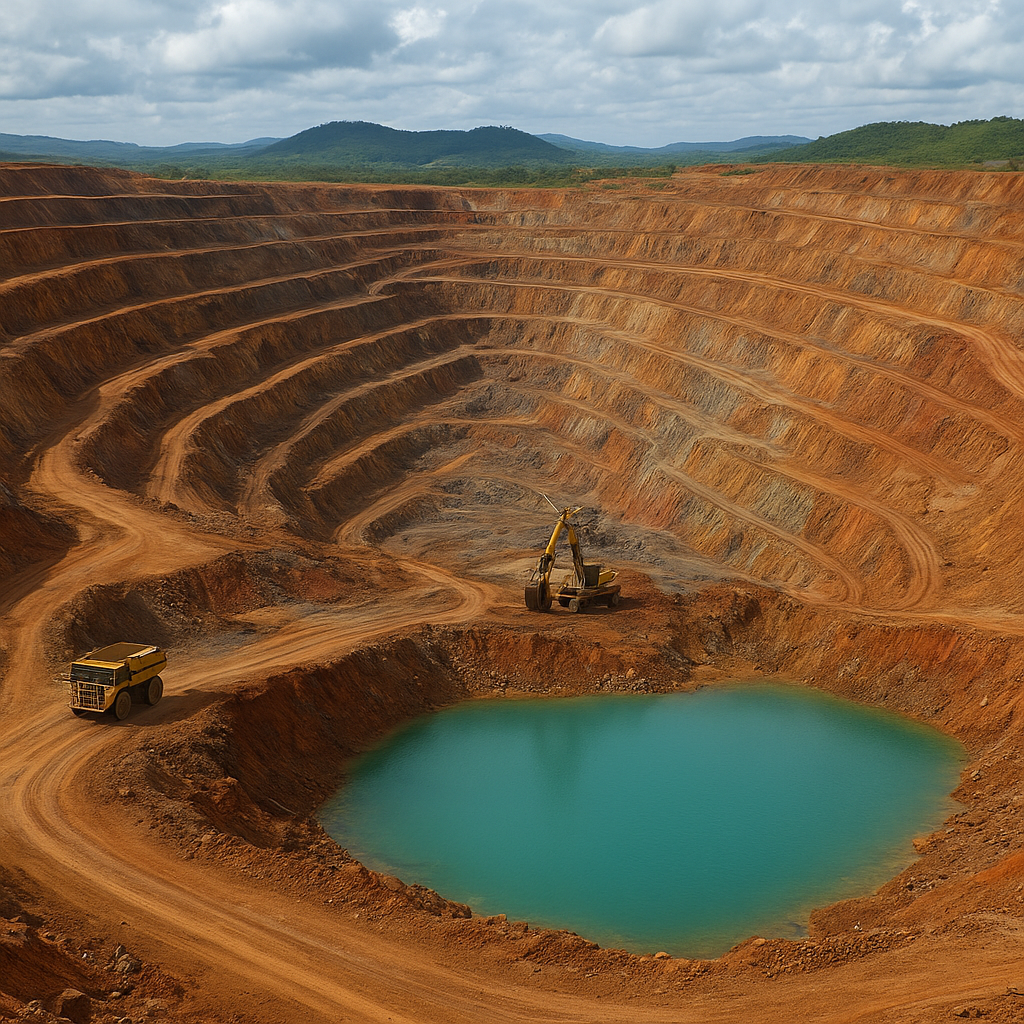
The Ruashi Mine, located in the mineral-rich region of the Democratic Republic of the Congo, is an important source of base metals that feed global industries. Known primarily for its production of copper and cobalt, Ruashi plays a role in modern technologies from electrical wiring to rechargeable batteries. This article examines where Ruashi is located, what is produced there, its economic importance, and several notable or surprising aspects of the operation and its context.
Location and geological setting
Ruashi sits in the southern part of the Democratic Republic of the Congo (DRC), within the historic copperbelt region that straddles the border between the DRC and Zambia. The mine is located near the city of Lubumbashi, which serves as the administrative and logistical hub for mining activities in the area. This area is part of the larger Katanga geological province, a belt that has supplied a substantial share of the world’s copper and cobalt for more than a century.
The geology of the region is characterized by sediment-hosted stratiform copper-cobalt mineralization. These deposits are typically found in layers within the Katanga Supergroup rocks and can be mined by both open-pit and underground methods depending on depth and economic factors. The mineralization commonly contains copper as chalcopyrite, chalcocite and other copper sulfides, with cobalt occurring in association with nickel and copper minerals, often as cobaltiferous pyrite or in mixed sulfide assemblages. The geological setting has made the area one of the richest metal provinces in Africa and ensured Ruashi’s strategic importance.
Mining, processing and production
The Ruashi operation encompasses a combination of mine workings and on-site processing facilities. Mining methods have included open-pit extraction for near-surface ore and development of underground workings where deeper ore bodies are exploited. Once ore is extracted, it is processed in a concentrator plant designed to separate valuable sulfide minerals from the host rock.
- Crushing and grinding: Ore is reduced to fine particle sizes to liberate copper and cobalt minerals from the gangue.
- Flotation concentrator: The primary metallurgical step at Ruashi is flotation, which produces copper-cobalt concentrates suitable for sale or further treatment.
- Hydrometallurgical steps: In some operations linked to Ruashi-style deposits, oxide ore or tailings may be treated by leaching and solvent extraction–electrowinning (SX–EW) for the production of cathode copper or cobalt hydroxide. Concentrates are typically shipped to smelters or refineries.
Ruashi’s output mainly takes the form of concentrates containing both copper and cobalt, which are then sold to smelters and refiners in regional and international markets. The presence of cobalt in the concentrate is economically significant because cobalt commands a higher value per tonne than copper and is critical for battery technologies. Over the years, mine expansions and optimization programs have focused on increasing throughput, improving recoveries and lowering unit costs—common drivers for enhancing the financial viability of polymetallic operations.
Economic significance
The economic footprint of Ruashi extends at several levels: local employment, regional industrial activity, national export revenues and global supply chains for critical metals. Several aspects underline the mine’s importance:
- Employment and local economy: Mining operations at Ruashi create direct jobs for technical and mine staff, and indirect jobs through contractors, transport, and service providers. The mine’s presence fuels local commerce in and around Lubumbashi.
- Export earnings: Copper and cobalt concentrates from Ruashi contribute to the DRC’s export income. The country is one of the world’s leading cobalt producers and a major copper supplier, and each operating mine adds to national receipts.
- Global supply chains: Cobalt is a critical component for lithium-ion batteries used in electric vehicles (EVs), portable electronics, and energy storage—sectors that have been growing rapidly. Ruashi, as a cobalt source, therefore plays a role in the global transition to low-carbon technologies and electrification.
- Industrial development: Proximity to Lubumbashi allows Ruashi to benefit from regional infrastructure—rail, roads, power and services—which in turn helps support downstream activities and suppliers in the province.
Because cobalt is a relatively scarce metal and often produced as a by-product of copper or nickel mining, mines such as Ruashi are strategically valuable. Their production influences market dynamics, pricing volatility and the security of supply for manufacturers dependent on cobalt. This linkage to technology supply chains increases the geopolitical and economic relevance of operations in the Congolese copperbelt.
Social and environmental considerations
Large-scale mining in the DRC carries complex social and environmental dimensions. Ruashi, like other formal industrial operations, is subject to regulatory frameworks, social agreements and community expectations. Areas of attention typically include:
- Community relations: Ensuring good relations with host communities is crucial. This can involve community development programs, local hiring initiatives and investments in health, education and infrastructure.
- Environmental management: Mining and processing produce tailings, waste rock and emissions. Operators implement environmental management systems aimed at minimizing contamination, controlling dust, managing water and rehabilitating disturbed areas.
- Safety and working conditions: Worker health and safety protocols, training and investment in safer mining practices are central to modern operations.
- Traceability and responsible sourcing: Global buyers increasingly demand assurances about the ethical sourcing of minerals, including the absence of child labor, conflict financing and unsafe artisanal practices. Formal mines like Ruashi often engage in traceability initiatives and supply-chain audits to meet international standards.
Challenges remain in balancing rapid production with long-term environmental stewardship and broad-based socio-economic benefits for the region. The complexity of governance in the DRC—multiple levels of government, evolving mining codes and fluctuating commodity prices—adds to the operational environment.
Interesting aspects and notable history
Ruashi stands out for several reasons that make it noteworthy beyond its raw production figures:
- Strategic location: Being close to Lubumbashi and regional transport links has given Ruashi operational advantages compared to more remote operations. This closeness also facilitates quicker dispatch of concentrates to smelters and export points.
- Polymetallic nature: The simultaneous production of copper and cobalt provides flexibility in revenue streams. When copper prices fall, the value of cobalt can help sustain project economics, and vice versa.
- Industrial scaling: Over time, Ruashi has undergone expansion phases to increase capacity and improve recovery. Such scaling exercises are common in mining projects as companies seek to optimize resource extraction and capitalize on high commodity prices.
- Role in energy transition: The cobalt produced from Ruashi-type operations feeds the battery supply chain. As demand for electric vehicles and grid storage grows, mines supplying cobalt gain heightened strategic relevance.
- Technological integration: Modern mining at Ruashi-style operations increasingly uses digital monitoring, improved ore-sorting and process-control technologies to raise productivity and reduce environmental impact.
Future prospects and challenges
Looking forward, the prospects for Ruashi are intertwined with global trends and local realities. Demand for copper is expected to increase as electrification, renewable energy and infrastructure development advance—copper is essential for electrical wiring, motors and grid expansion. Cobalt demand depends heavily on battery chemistries: continued preference for cobalt-bearing cathodes keeps demand strong, while shifts to low-cobalt or cobalt-free chemistries would alter market dynamics.
Key challenges include maintaining stable operations amid fluctuating commodity prices, securing responsible financing and meeting increasingly strict environmental and social governance (ESG) standards demanded by investors and customers. Infrastructure reliability—power supply, transport corridors and port access—also remains crucial for consistent output. Finally, reforms in governance and mineral-rights administration at the national level can affect investment certainty and the long-term planning horizon for projects like Ruashi.
Opportunities
- Value-added processing: Local or regional smelting and refining could capture more value within the DRC by turning concentrates into refined metals onshore, though this requires substantial capital and reliable energy.
- Responsible sourcing premium: Demonstrable commitment to ethical practices can attract customers willing to pay premiums or sign long-term offtake agreements tied to sustainability metrics.
- Innovation: Adoption of cleaner metallurgical routes and improved tailings management could reduce environmental risks and lower operating costs in the medium term.
With these dynamics in play, Ruashi exemplifies how a single mine can be a node in local economies, national export frameworks and global technology supply chains. Its continued evolution will reflect both the geology beneath the Katanga soils and the economic, social and technological choices made by operators, governments and downstream users of its products.

