
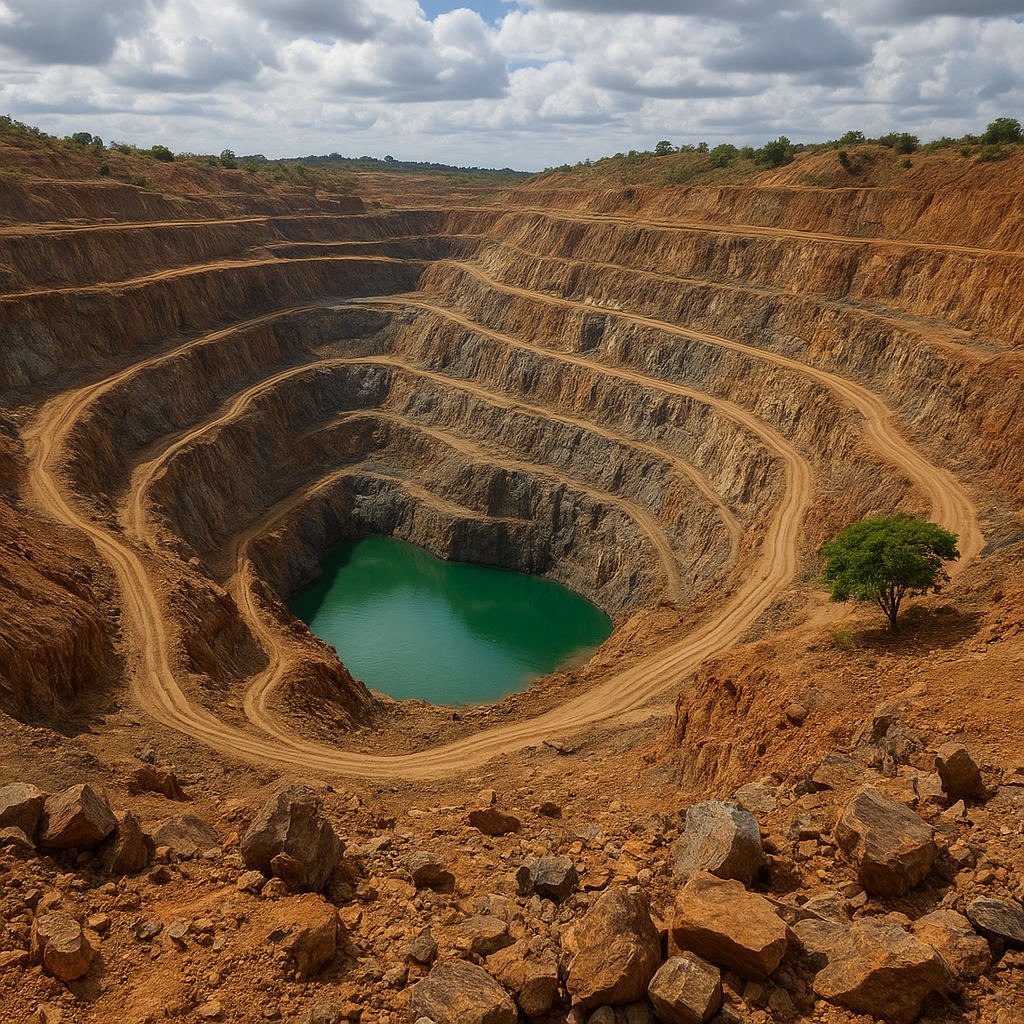
The Kagem mine is one of the most important gemstone operations in Africa and a defining site for modern emerald production. Located in the mineral-rich region of Zambia, it has reshaped local economies, global supply chains, and the perception of Zambian gems on international markets. This article explores where Kagem is located, what is produced there, its economic role, and several noteworthy aspects that make the mine stand out in the world of colored gemstones.
Location and setting
The Kagem emerald mine sits in the northwestern part of Zambia’s Copperbelt Province, near the district often referenced as Lufwanyama. The setting is a landscape of rolling hills, weathered metamorphic rocks and seasonal rivers, within a broader region known historically for copper but more recently for high-quality colored gemstones. Its relative proximity to major population centers and transport corridors in Zambia makes the mine an accessible operation for both the national and international gemstone trade.
Geographically, Kagem occupies terrain underlain by ancient Precambrian rocks that have been subjected to metamorphism and later hydrothermal activity. The local geology has provided the right combination of elements and structures, allowing gem-bearing mineralization to form. The mine sits among rural communities whose livelihoods are intertwined with both traditional agriculture and mining activity, making Kagem not only a geological landmark but also a social and economic focal point for the surrounding area.
What is mined at Kagem
The core product of the Kagem operation is emeralds—gem-quality green beryl valued for its color, clarity, and rarity. Emeralds are a variety of the mineral beryl, whose color is produced by trace amounts of chromium and, in some Zambian examples, vanadium. At Kagem, emeralds commonly occur in veins and veinsets within metamorphic host rocks, where beryllium-bearing fluids interacted with chromium-bearing country rock. The result is gem material that often displays a deep, rich green with a characteristic bluish hue that distinguishes Zambian emeralds from stones sourced elsewhere.
In addition to high-quality emeralds, the mine produces various grades of rough from gem to near-gem quality. Much of the output is sold as rough emeralds to specialist buyers and lapidaries who cut and polish the stones for the jewelry market. The operation focuses on extracting material efficiently and preserving gem quality, since even small, high-clarity stones can command substantial prices on the market.
Mining methods and production character
Kagem operates as a modern, large-scale gemstone mine rather than as a small-scale artisanal concession. Extraction systems emphasize controlled removal of ore and careful handling to protect rough gem quality. While the technical specifics evolve with operational strategy, the mine employs mechanized approaches to access gem-bearing zones and specialist processing to sort and grade the rough. Around the broader area, artisanal miners and small-scale prospectors may also work, but the main output recognized globally comes from the controlled, industrial-scale production at Kagem.
Economic significance
The economic impact of Kagem extends from local villages to international markets. As a major producer of emeralds, the mine contributes to Zambia’s foreign exchange earnings through exports of rough gemstones. The sale of rough emeralds—frequently through organized auctions and private sales—injects revenue into the national economy and supports a supply chain that includes graders, cutters, polishers, and jewelry manufacturers abroad.
On a local level, Kagem provides direct employment opportunities in mining, processing, logistics and site management. Indirectly, it supports local services, retail, and small businesses that serve mine employees and their families. The presence of a large, organized mine can also attract investment in infrastructure such as roads, power and communications, which benefit nearby communities and can stimulate broader regional development.
At the corporate level, the mine has been associated with companies specializing in colored gem mining and marketing. These companies emphasize transparent sales channels, graded auction systems, and traceability, which help place Kagem emeralds in premium market positions. A structured sales mechanism is important because it helps stabilize prices, ensures predictable revenue flows for the country, and creates an institutional framework for responsibly managing the resource.
Market channels and value chain
Rough emeralds from Kagem typically enter the market through a mix of auctions, private tenders and contractual sales. Buyers include cutting houses and gem traders who purchase lots of rough for processing and resale. The value added by cutting, polishing and setting into jewelry often accrues outside Zambia, which is a common challenge in many resource-exporting countries. Efforts to encourage downstream activity—such as local cutting and small-scale manufacturing—can boost local value capture, though such initiatives must compete with the established expertise and economies of scale concentrated in global gem hubs.
Social and environmental dimensions
Mining at Kagem brings both benefits and responsibilities. The presence of a large mining operation raises expectations for employment, community investment and improved services. Many mining companies operating modern gemstone projects invest in social programs—healthcare, education, water and sanitation, and local enterprise support—to ensure long-term community relations. These investments are often part of formal corporate social responsibility programs designed to provide tangible benefits to communities that host mining operations.
Environmental management is another central concern. Emerald mining, like other forms of mineral extraction, requires careful handling of earthworks, waste rock and sediment to prevent erosion, water contamination and habitat disturbance. The mine must manage runoff, stabilize disturbed land and plan for eventual rehabilitation of mined areas. Transparent environmental monitoring and engagement with local stakeholders are essential to reduce conflict and to ensure compliance with national regulations and international best practice.
Resettlement and local livelihoods
When mining operations expand into areas used by communities, issues such as resettlement and loss of agricultural land must be managed sensitively. Responsible operators develop resettlement action plans, compensation schemes and livelihood restoration programs. Because many households around Kagem combine farming with seasonal labor, concerted efforts to restore or replace lost means of subsistence are key to maintaining social stability and long-term community well-being.
Interesting facts and distinctive features
- Kagem is often recognized as one of the most productive emerald mines in the world, consistently contributing a significant proportion of the global supply of gem-quality emeralds.
- Zambian emeralds from the area are prized for their distinctive green with bluish undertones, a hue that collectors and jewelry designers particularly value. This color distinction stems from the geological conditions and trace element chemistry—notably the presence of chromium and sometimes vanadium—in the host rocks.
- The mine’s output is primarily sold as rough emeralds, which means much of the immediate value is realized at point of sale. However, the global gem trade transforms this rough material into cut and set gemstones that enter high-end jewelry markets worldwide.
- Professional management of auction systems and transparent grading helps position Kagem stones as trusted merchandise for international buyers, supporting higher and more stable prices than unregulated channels.
- Because emeralds are a beryllium-bearing gem, the presence of beryllium in local geology is a critical factor for formation; the interaction between beryllium-bearing fluids and chromium-rich country rocks creates conditions favorable to gem formation.
Challenges and opportunities
The path forward for a major gem-producing site like Kagem comprises several intertwined challenges and opportunities. Diversifying the local economy so communities are not wholly dependent on a single mine is important for resilience. Encouraging more value-adding activities within Zambia—such as local cutting, training programs for gemmologists, and small-scale jewelry manufacturing—could retain more of the value chain domestically.
Environmental stewardship and social license to operate are ongoing priorities. Continued investment in rehabilitation, water management, and biodiversity protection helps mitigate impacts, while genuine engagement with local populations strengthens long-term stability. Transparent reporting, independent audits, and partnerships with civil society organizations increase accountability and trust.
From a market perspective, the demand for responsibly sourced colored gemstones presents an opportunity. Consumers and retailers increasingly seek traceability and ethical provenance. Mines that can demonstrate transparent supply chains, community benefits and environmental care can access premium market segments for ethically sourced luxury goods.
Why Kagem matters beyond geology
Kagem exemplifies how a single mineral deposit can influence geography, economy and culture. It has elevated Zambia’s profile in the global gem market and given rise to a specialized industry that links rural African landscapes with high-fashion ateliers and collectors worldwide. The story of Kagem is not just about emeralds embedded in rock; it is about people, markets, and the challenge of turning a finite natural resource into sustained social and economic value.
As the global appetite for colored gemstones continues, Kagem’s future will depend on balancing extraction with stewardship, maintaining high standards of gem grading and sales, and ensuring that local communities genuinely benefit from the resources beneath their feet. Those dynamics make the mine a compelling case study of modern gemstone mining: geologically fascinating, economically consequential, and socially complex.

