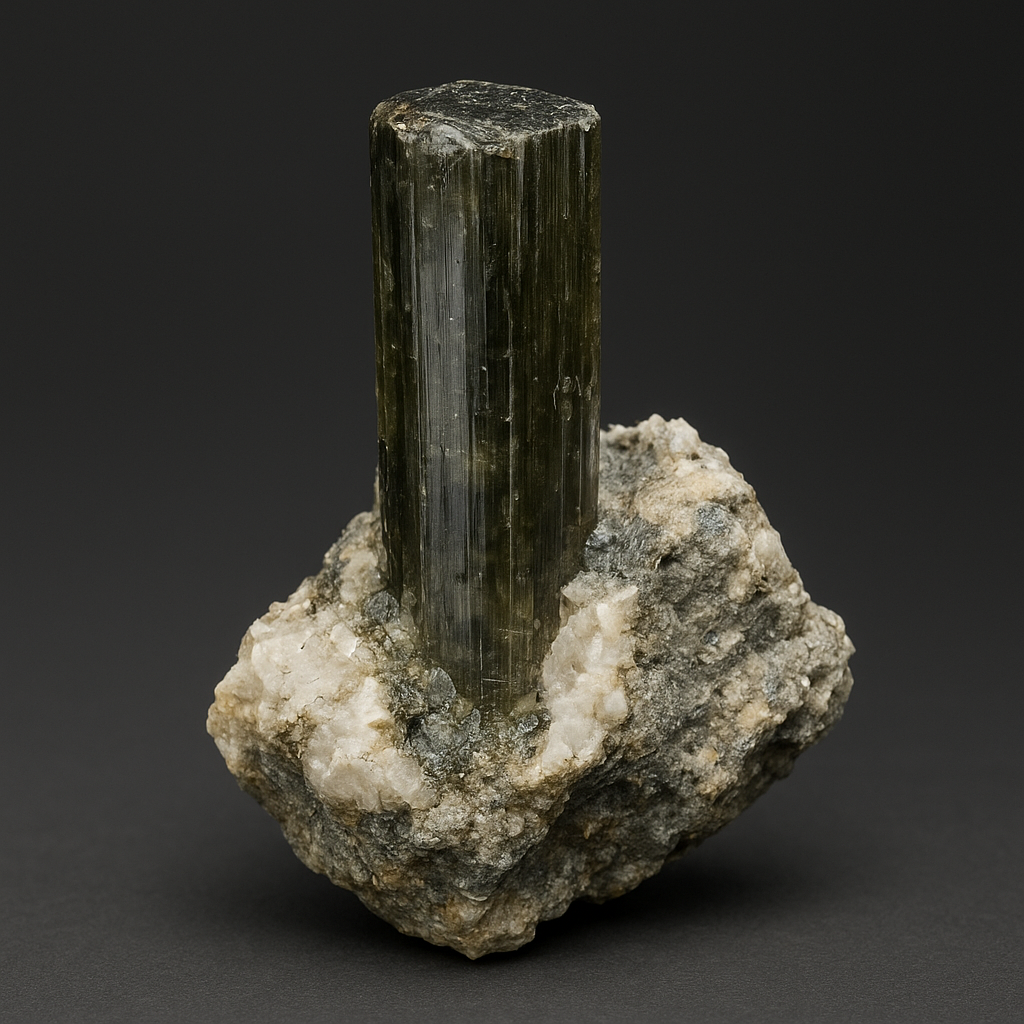
Hillebrandite is a little-known but scientifically significant mineral belonging to the family of natural calcium‑silicate‑hydrate phases. Although it is relatively rare in hand‑sample form, it occupies an outsized place in the study of metamorphic processes, skarn geology, and the geochemistry of cementitious materials. This article explores the mineral’s defining characteristics, the geological settings where it forms, its connections to industrial and scientific applications, and a number of intriguing facets that make hillebrandite a subject of ongoing interest for mineralogists and materials scientists alike.
Occurrence and geological context
Hillebrandite is most commonly encountered in environments where calcium‑rich rocks interact with silica‑bearing fluids at moderate to high temperatures. Typical geological settings include contact‑metamorphosed limestones, exoskarns and endoskarns formed by the invasion of igneous bodies into carbonate sequences, and locally in hydrothermally altered zones where silica is mobilized and reprecipitated with calcium. The mineral is therefore a diagnostic component of the broader suite of calcium‑silicate minerals that characterize silica‑rich metamorphic assemblages.
Commonly associated phases include other calcium silicates and hydrates such as wollastonite, various members of the xonotlite family, and serpentine or garnet in adjacent skarn zones. Its formation typically reflects interaction between a carbonate source of calcium and silica‑bearing fluids, often at temperatures ranging from the greenschist to the lower amphibolite facies, though lower‑temperature hydrothermal origins are also reported. Because of these formation conditions, hillebrandite is informative for reconstructing fluid flow, temperature gradients, and metasomatic histories of skarn and contact aureoles.
Typical field occurrences
- Skarns and contact zones where igneous intrusions heat and chemically alter carbonatic host rocks.
- Hydrothermal veins and replacement bodies where silica migration results in calcium silicate precipitation.
- Local replacement of organic material (rare cases of calc‑silicate‑rich permineralization), and in some silica‑altered marbles.
Although hillebrandite is not abundant as a commercial ore, it appears in small quantities worldwide in regions with active or ancient contact metamorphism. Mineral collectors and researchers most often encounter it as part of complex assemblages rather than as isolated, gemlike specimens.
Physical and chemical characteristics
At the broadest level, hillebrandite is a naturally occurring member of the calcium‑silicate‑hydrate group — a family of phases that also includes numerous synthetic and metastable materials central to the chemistry of modern cement. The mineral typically appears white to grayish, with a habit that may be fibrous, acicular, or compact and granular in different specimens. Luster ranges from silky (on fibrous aggregates) to dull, and its hardness and density are consistent with other hydrated calcium silicates.
Because hillebrandite belongs to a family of hydration‑sensitive silicates, it can be sensitive to alteration on exposure to atmospheric moisture or during heating. Analytical techniques used to characterize hillebrandite include X‑ray diffraction (XRD) for crystal structure identification, Raman and IR spectroscopy to probe bonding environments (especially the hydroxyl groups), and scanning electron microscopy (SEM) coupled with energy‑dispersive X‑ray spectroscopy (EDS) to determine morphology and approximate composition. These methods are often complemented by thermal analysis (TG/DSC) when researchers investigate dehydration and phase transformation behavior.
Why its chemistry matters
The presence of hydroxyl and other structural water components in hillebrandite ties it chemically to the family of phases often called calcium‑silicate‑hydrate (C‑S‑H) materials. These same kinds of phases are crucial in the microstructure of hardened Portland cement paste. Thus, beyond pure mineralogical curiosity, hillebrandite serves as a natural analogue for understanding the thermodynamic stability, crystallization pathways, and long‑term transformations of C‑S‑H phases in engineered materials.
Applications and scientific significance
Hillebrandite itself is not mined or used directly as an industrial commodity in the way that major rock‑forming minerals are. Its value lies primarily in scientific and educational contexts. Below are several domains where hillebrandite is relevant.
- Materials science and cement chemistry: Natural hillebrandite provides a benchmark for researchers studying synthetic C‑S‑H phases that control the mechanical and durability properties of concrete. Studying a naturally stabilized calcium‑silicate‑hydrate helps to constrain models of cement hydration, microstructure evolution, and long‑term chemical behavior under burial or environmental exposure.
- Petrology and metamorphic geology: As an indicator mineral, hillebrandite helps geologists deduce the temperature and fluid conditions during contact metamorphism and skarn formation. Its presence alongside specific mineral assemblages narrows interpretations of the paragenetic sequence in metasomatic terrains.
- Environmental geochemistry: Because calcium‑silicate phases interact with CO2 during weathering and burial, hillebrandite and related minerals are of interest in studies of natural carbonation processes and in proposed carbon‑capture approaches that seek stable mineral sequestration of carbon dioxide.
- Educational and collection value: Specimens of hillebrandite are valued by mineral collectors and university collections for demonstration and research, particularly when they occur with classic skarn assemblages or display distinct fibrous textures.
Laboratory researchers have produced synthetic analogues and studied phase relations that include hillebrandite‑like compositions to better understand hydration kinetics, crystallinity, and transformations to more stable silicate phases at elevated temperatures. These findings feed back into refinement of cement formulations, refractory design, and predictive models of how concrete behaves over decades to centuries.
Related minerals and comparative topics
Hillebrandite is part of a broader family of calcium silicates and hydrated silicate phases, which include wollastonite, xonotlite, tobermorite, and various C‑S‑H forms. Comparing hillebrandite to these minerals illuminates pathways of formation and transformation in both natural and engineered settings.
- Wollastonite: A non‑hydrated calcium silicate frequently found in skarns; it can form either instead of or in concert with hillebrandite depending on the availability of water and temperature conditions. Transformation sequences between wollastonite and hydrated phases are important when reconstructing metasomatic histories.
- Tobermorite and clinotobermorite: Hydrated calcium silicate minerals that share structural motifs with synthetic C‑S‑H and are significant in understanding the microstructural evolution of aged Portland cement.
- Xonotlite family: Higher‑temperature calcium silicate hydrates that form under specific hydrothermal conditions and may coexist with hillebrandite in multi‑phase assemblages.
Researchers often examine natural occurrences of these minerals together because the relative stability fields of hydrated versus anhydrous phases depend on temperature, pressure, fluid chemistry (pH, silica activity), and the presence of other ions (such as aluminum or magnesium) that can stabilize alternate structures.
Interesting aspects and ongoing research directions
Several facets of hillebrandite make it an appealing subject for deeper study:
- Natural analogue for cementitious phases: Because modern infrastructure includes enormous amounts of cement, understanding how natural C‑S‑H analogues like hillebrandite behave on geological timescales helps predict the very long‑term performance of concrete in situ.
- Carbonation and mineral trapping: Studies of how hillebrandite and related calcium‑silicate materials react with CO2 can inform mineral‑based CO2 sequestration strategies. Some experimental work has focused on how carbonation alters the structure and porosity of these phases, potentially stabilizing CO2 as carbonate minerals.
- Phase transformation pathways: Investigations use techniques such as in situ high‑temperature XRD and synchrotron spectroscopy to track how hillebrandite dehydrates or transforms into other calcium silicates. These paths are relevant for kiln processes, refractory performance, and metamorphic petrology.
- Nanostructure and mechanical behavior: At microscopic scales, the arrangement of silicate chains and hydroxyl groups governs stiffness, fracture behavior, and reactivity. Researchers borrow insights from natural specimens to refine atomistic and mesoscopic models of C‑S‑H structure in concrete.
Beyond laboratory science, hillebrandite also has a cultural footprint through its eponym: it was named to honor a noted chemist and mineralogist, whose work contributed to the cataloging and analysis of minerals in the late 19th and early 20th centuries. That historical connection underscores a recurring theme in mineralogy — that even relatively obscure phases can illuminate broader advances in chemistry and materials science.
Practical notes for collectors and analysts
Collectors who encounter hillebrandite should document the geological context carefully, as the mineral’s value to science lies strongly in its associations and paragenesis. For laboratory analysts, special attention must be paid to sample preparation because hydrated silicates can dehydrate or alter under heat, vacuum, or prolonged exposure. Recommended approaches include:
- Preserving fresh surfaces and storing specimens in controlled humidity to minimize alteration.
- Using non‑destructive spectroscopy (Raman, FTIR) as a first step prior to powdering for XRD.
- Interpreting XRD patterns with awareness that hillebrandite may coexist with structurally similar phases whose peaks can overlap.
Because many calcium‑silicate‑hydrate minerals have similar chemistries, combining multiple analytical techniques produces the most robust identifications and insights into formation conditions.
Connections to wider geological and engineering themes
The study of hillebrandite intersects with larger themes in earth and materials sciences: the cycling of silica and calcium in hydrothermal and metamorphic systems, the long‑term stability of manmade materials in the geologic environment, and strategies for mitigating anthropogenic CO2 via mineral carbonation. By acting as a bridge between pure mineralogy and applied materials research, hillebrandite highlights how even uncommon minerals can contribute to solutions for pressing technological and environmental challenges.