
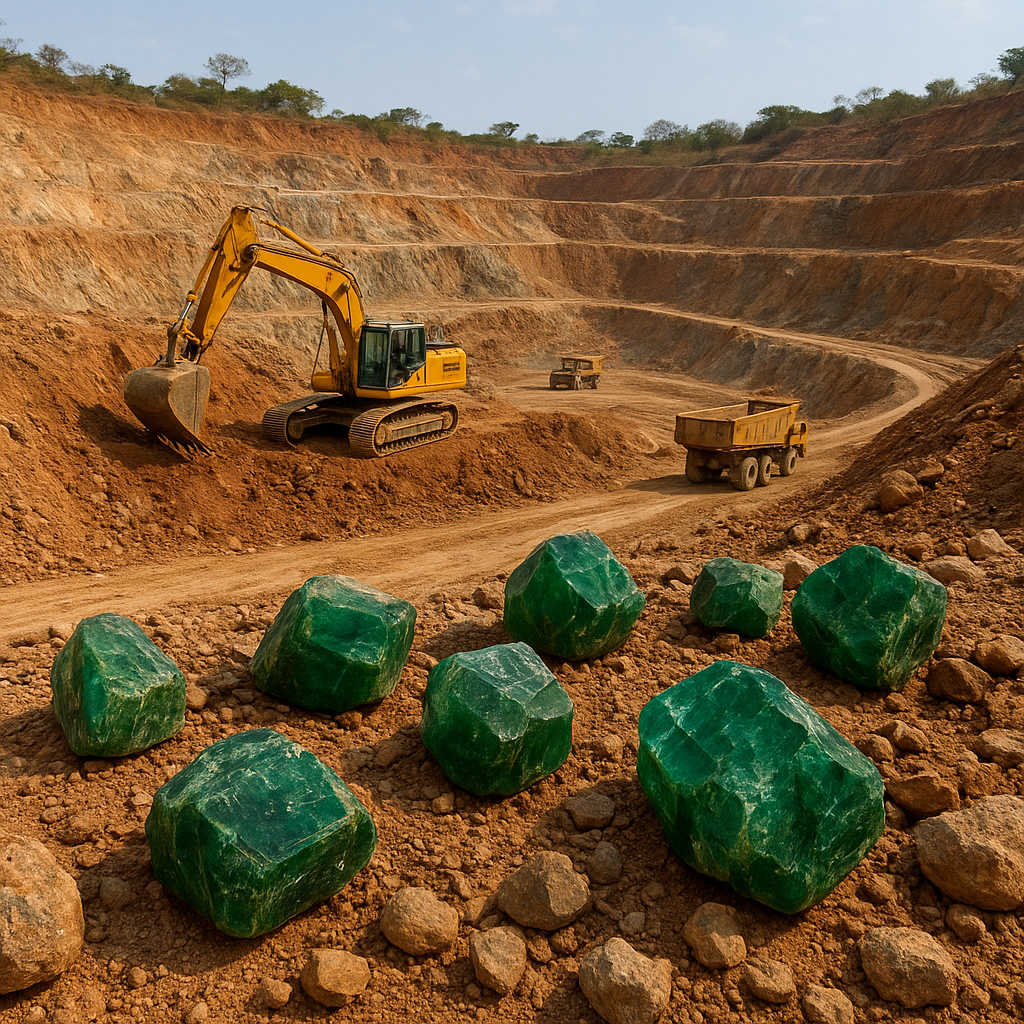
The Kagem Mine in Zambia stands as one of the most important emerald-producing operations in the world. Located in the mineral-rich heart of the country, it has shaped the regional gem market and influenced global perceptions of Zambian emeralds. This article explores where Kagem is situated, what it produces, the mine’s economic role, and a selection of intriguing aspects that make Kagem noteworthy for geologists, gem traders, and anyone interested in the intersection of natural resources and development.
Location and Setting
The Kagem emerald deposit is located in the Kafubu area of Zambia’s Copperbelt region. The site lies within a belt of metamorphic and igneous rocks known to host gem-bearing veins and boulders. This region has historical and geological significance: it is part of a broader African geological province where the right combination of host rocks, hydrothermal activity, and geological deformation produced commercially significant emerald mineralization.
Geographically, the mine is accessible from major provincial centers, though its operations are concentrated in a defined concession area that includes both active pits and processing facilities. The mine’s placement in the Copperbelt is of particular note because the region is primarily associated with copper mining; the presence of a world-class emerald deposit demonstrates the geological diversity of the area.
What Is Mined at Kagem
At its core, Kagem is an industrial-scale emerald mine. The primary product is the gem-quality emerald, a green variety of beryl whose color arises from trace amounts of chromium and/or vanadium. Kagem is best known for yielding a wide range of emerald qualities — from smaller commercial grades to exceptionally fine, deeply saturated stones that can command high prices at international auctions.
In addition to emeralds, the mine produces other beryl material and associated minerals that are often considered byproducts of the extraction process. These can include lower-grade beryl and occasionally other gem or industrial minerals present in the host rock. Processing at the site focuses on careful recovery of crystal-bearing material, sorting by quality, and preparing lots for professional grading and sale.
Mining Methods and Recovery
Kagem uses a combination of mechanized open-pit mining and carefully controlled rock-breaking techniques designed to maximize the recovery of crystals while minimizing damage. Historically, the area included artisanal workings and small-scale dig sites; with formalized operations, large-scale mechanized techniques were introduced alongside structured sorting and processing facilities. Material is processed to separate gem-bearing rocks, and further sorting yields lots of similar quality and characteristics before being graded for market.
Geology and Emerald Formation
The emeralds at Kagem are hosted in metamorphic terrains where beryllium-bearing fluids interacted with chromium- or vanadium-rich host rocks. The interplay between these fluids and suitable host rocks under specific pressure-temperature conditions allowed beryl to incorporate chromophores that give emeralds their characteristic green. The exact geological framework includes metamorphic schists and localized veins or boulder fields where emeralds occur in concentrations that make commercial extraction viable.
From a scientific perspective, Kagem provides an excellent case study of emerald genesis in metamorphic settings. Researchers and gemologists study inclusions, growth zoning, and trace-element chemistry from Kagem stones to better understand formation processes and to distinguish Zambian emeralds from those of other regions such as Colombia or Brazil.
Ownership, Marketing and Auctions
The operation at Kagem has been developed and marketed by international and local stakeholders. Over recent decades, the mine has been placed on the global map primarily through well-publicized auction systems that bring rough lots to international buyers. These auction events are a key part of the value chain: they create transparent, competitive sales that allow the mine to realize market value for its higher-quality material.
Gemfields — an internationally known gem mining and auction company — has been closely associated with the operation, having invested in formalizing production, introducing modern recovery and sorting processes, and organizing gemstone sales. The auction model used by such firms has reshaped how high-value colored gemstones, including emeralds, are marketed and sold on the global stage.
Economic Significance
The economic footprint of Kagem extends from the immediate concession to national-level revenue streams. The mine’s contributions can be grouped into direct, indirect, and fiscal impacts:
- Direct employment: The mine provides jobs for hundreds to thousands of local workers in roles ranging from extraction and processing to administrative and technical functions.
- Local procurement: Services, supplies, and local businesses benefit from contracts and purchases linked to mine operations.
- Foreign exchange: Sales of high-quality rough emeralds at international auctions generate foreign currency earnings for Zambia.
- Government revenue: Taxes, royalties, and export duties tied to gemstone exports contribute to national and provincial budgets.
- Community development: Investment in local infrastructure, healthcare, education, and social programs often accompanies large-scale mining operations, either through statutory obligations or voluntary corporate social responsibility initiatives.
These channels combine to make Kagem an important economic asset for Zambia. Unlike bulk commodities, gem-quality emeralds can bring high value per kilogram, making them potent drivers of export revenue even from relatively small volumes of mined material.
Social and Environmental Aspects
Large-scale gem mining carries both opportunities and responsibilities. On the positive side, formal mining operations can reduce the prevalence of unregulated artisanal mining, which often carries higher safety risks and environmental impacts. Formalization also tends to offer more stable wages and safer working conditions for workers.
Conversely, disturbances of land and water systems, waste rock management, and the need to rehabilitate mined areas are ongoing concerns. Responsible operators invest in environmental monitoring, progressive rehabilitation, and community engagement programs. Over time, best practices include transparent reporting of environmental performance and collaborative planning with local communities to address impacts and share benefits.
Community Relations and Benefits
Effective community engagement at Kagem has included local hiring, training programs, and partnerships to support education and infrastructure projects. The mine’s presence has spurred local entrepreneurship and service industries while also raising expectations for long-term economic development that must be managed through inclusive planning.
Interesting and Unique Facts
Beyond its economic and geological importance, Kagem has several features and stories that make it particularly interesting:
- Scale of Production — Kagem is among the world’s largest single emerald-producing mines by volume. While not every crystal is gem-quality, the overall throughput means the site yields significant quantities of high-grade rough emeralds that can appear in major global auctions.
- Color Profiles — Zambian emeralds, including those from Kagem, are often noted for their rich, slightly bluish to deep green tones, frequently attributed to vanadium and chromium content. This distinguishes them from some other regional emerald styles and appeals to a segment of the global market.
- Gemological Research — Stones from Kagem are regularly examined by gemological laboratories, contributing to a growing database that helps with origin identification and the scientific understanding of emerald formation.
- Historical Transition — The area transitioned from informal artisanal extraction to a structured industrial operation, illustrating broader trends in how gemstone resources are managed and monetized in developing countries.
- Auction Visibility — Rough emerald lots from Kagem have, at times, captured headlines when exceptional stones or large, high-quality parcels draw intense bidding interest at international auctions.
Challenges and Future Prospects
Looking forward, Kagem faces a number of challenges common to major gem mines. Resource depletion risk, the need for ongoing investment in processing and recovery technology, and the imperative to maintain strong social license to operate are all key considerations. Market volatility in gemstone prices and the evolving preferences of jewelry consumers can influence revenue streams.
However, opportunities also exist: improved geological understanding can lead to more efficient extraction, enhanced sorting and treatment technologies can increase the proportion of marketable gems, and sustained investment in sustainable practices can secure long-term community support. Moreover, the prestige and recognition of Kagem’s high-quality emeralds provide a foothold in premium market segments that value origin, traceability, and ethical sourcing.
Why Kagem Matters Beyond Gems
Beyond producing attractive gemstones, Kagem exemplifies how a single mineral resource can shape economic pathways, scientific inquiry, and community dynamics. The mine connects local geology to global markets, transforming deep-time geological processes into modern economic value. Its story touches on important themes in resource governance: responsible extraction, benefit-sharing with host communities, environmental stewardship, and transparent marketing of high-value natural products.
For collectors, jewelers, and scientists alike, Kagem’s emeralds are not just beautiful objects; they are also tangible records of geological history and contemporary resource management. The mine will remain a subject of interest as long as people seek high-quality emeralds and as Zambia continues to navigate the challenges and opportunities that come with valuable natural resources.
Note: This article focuses on widely known aspects of the Kagem operation—geology, production, economic role and notable features—while emphasizing the mine’s broader implications for markets and communities.

