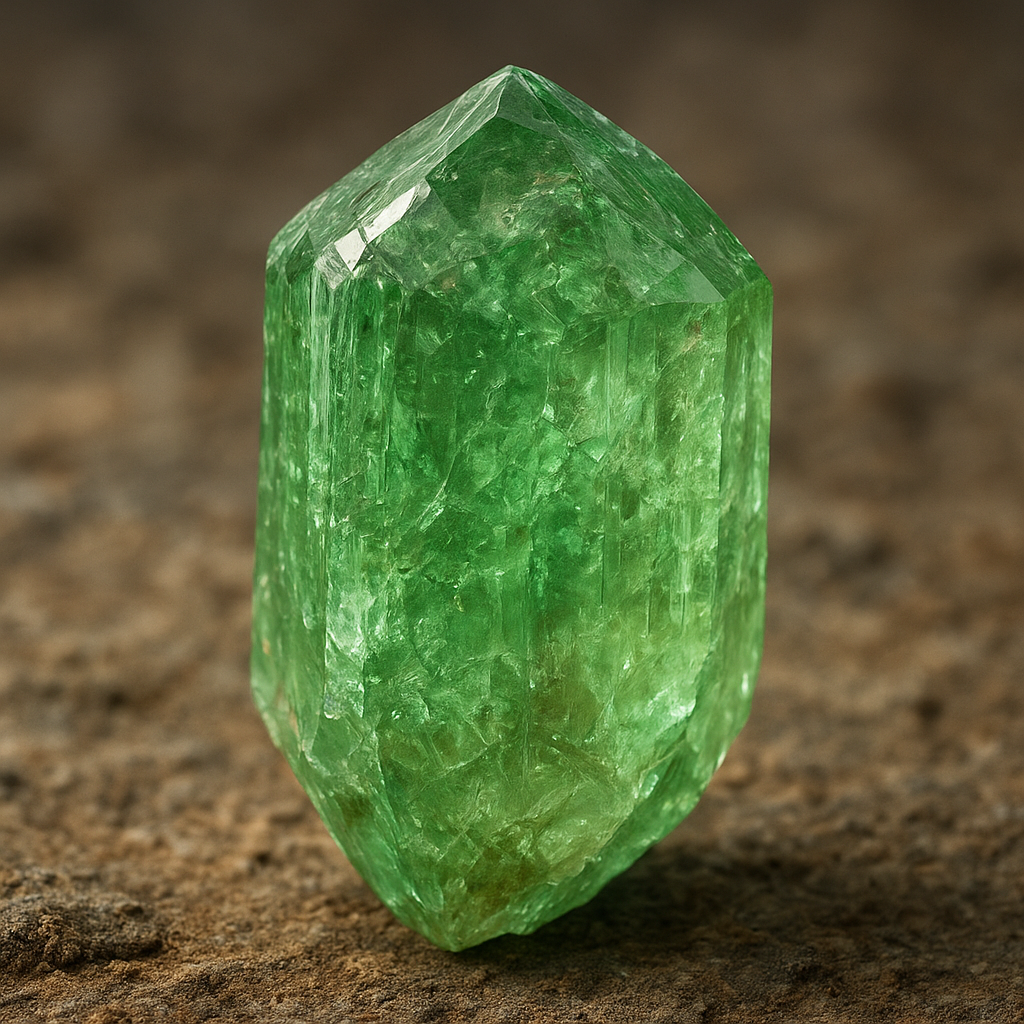
Hiddenite is a striking green variety of the mineral spodumene prized for its vibrant color, crystal clarity, and geological story. Although often overshadowed in popular awareness by emerald and tourmaline, hiddenite occupies an important place in both the world of gemology and the study of pegmatitic mineral deposits. This article explores the origin, physical and optical properties, geographic occurrences, practical uses, and cultural significance of hiddenite, offering insights useful to collectors, jewelers, geologists, and anyone curious about this unusual green gem.
Origins and discovery
The name hiddenite commemorates the mineral collector and geologist after whom it was first recognized. The first notable specimens emerged from North Carolina in the United States, where gem-bearing pegmatites yielded crystals that captured the attention of late-19th-century mineralogists. The community that grew near those discoveries even adopted the mineral’s name, linking place and specimen in a unique local identity.
Hiddenite is a green variety of spodumene, an aluminum lithium silicate that can appear in several colors depending on trace elements and structural defects. The distinctive green color of hiddenite is most commonly attributed to trace amounts of chromium — the same element that gives emerald its color — and occasionally to vanadium or irradiation-induced color centers. The circumstances that allow chromium to enter the crystal lattice of spodumene are relatively rare, which helps explain why gem-quality hiddenite is uncommon compared with other gem species.
Geological characteristics and mineralogy
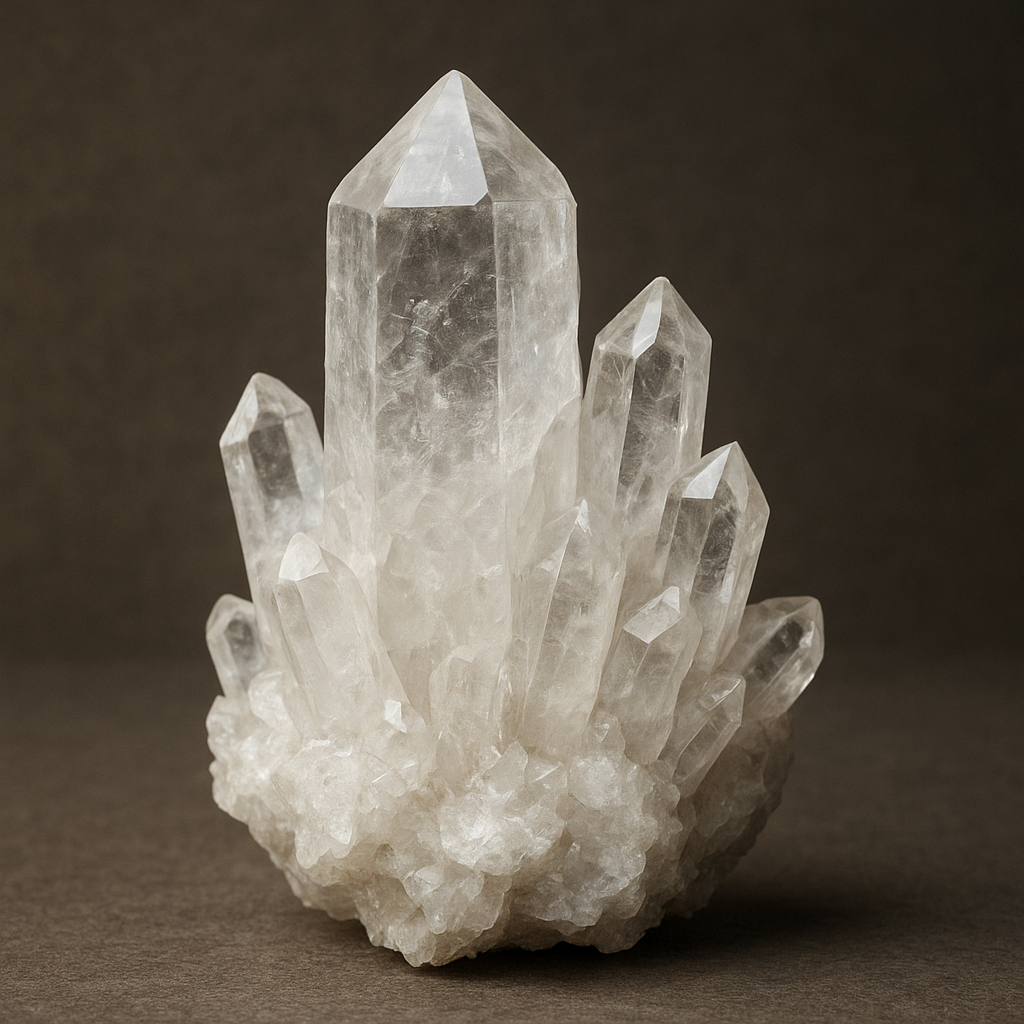
As a member of the pyroxene group, spodumene crystallizes in the monoclinic system and forms prismatic crystals that can be long and well terminated in fine specimens. Hiddenite shares the general properties of spodumene, including a Mohs hardness of roughly 6.5–7, specific gravity in the neighborhood of 3.1–3.2, and pronounced two-directional cleavage that requires skillful cutting to avoid breakage.
Optical behavior and color
Hiddenite displays strong optical phenomena that are of interest to gemologists. Most notably, it often exhibits intense pleochroism, showing different colors or intensities of green when viewed along different crystallographic axes. This can range from a deep, yellowish-green to a paler, more bluish shade depending on orientation. Refractive indices and birefringence values for spodumene are relatively high compared to many common gemstones, which helps distinguish hiddenite from look-alikes.
Because the green of hiddenite is typically caused by trace transition metals, its hue and saturation are sensitive to the crystal’s chemistry and to post-formation processes such as exposure to radiation or heat. Some specimens can fade or shift color when subjected to strong light or thermal treatment, so gemological testing and careful provenance assessment are important for valuable stones.
Crystal habit and inclusions
High-quality hiddenite commonly forms as transparent to translucent prismatic crystals with good clarity. Inclusions are variable and can include thin fluid or mineral-filled tubes, growth zoning, and fine mineral inclusions typical of pegmatitic environments. These internal features can act as fingerprint-like identifiers for origin and growth conditions, and they influence both the stone’s beauty and its market value.
Where hiddenite occurs
Hiddenite is primarily associated with granitic pegmatites — coarse-grained igneous bodies that form during the late stages of continental magmatism and are known for concentrating rare elements. Pegmatites are the classic environment for spodumene, beryl, tourmaline, and a suite of accessory minerals. While the species spodumene itself is relatively widespread, gem-quality hiddenite is much less common.
The classic locality for hiddenite is in North Carolina, particularly the region around Alexander County and the community named after the mineral. Gem-bearing pegmatites in this area produced the earliest and most historically significant hiddenite specimens. Beyond North Carolina, green spodumene has been reported from a variety of pegmatitic districts around the world, including deposits in Afghanistan, Pakistan, Brazil, and Madagascar. In many of these areas, the green spodumene occurs alongside other gem minerals, and the same pegmatitic processes that concentrate lithium can also concentrate chromium or vanadium that produce green coloration.
- Alexander County, North Carolina — the type and most historically important locality.
- Afghan and Pakistani pegmatites — occasional gem-quality green spodumene.
- Brazil and Madagascar — broader pegmatitic fields that have produced green spodumene among other gems.
Mining, treatment, and gemological care
Mining of hiddenite historically has been on a small scale and often overlapped with general pegmatite mining for other gems and rare minerals. Because high-quality hiddenite gems are rare and often relatively small, most extraction has been done by small teams or hobby miners rather than large industrial operations. In some localities, recreational mining and fee-based gem searches attract collectors and tourists seeking hiddenite and other pegmatitic gems.
From a treatment perspective, hiddenite can be sensitive to both irradiation and heat. Some green spodumene colors are natural and stable, while others result from irradiation or can be altered by heat. Heat treatment is commonly used across the gem trade to modify color and clarity in many species, but with hiddenite the outcome is not always predictable; overexposure to heat can lead to color loss or alteration. Because of the delicate balance of factors that create the green hue, gemological laboratories often test hiddenite to confirm whether color is natural or induced.
Cutting and setting hiddenite require particular attention. The mineral’s perfect cleavage in two directions means that cutters must orient the gem carefully to avoid splitting along cleavage planes. The pronounced pleochroism also affects the choice of orientation and cut to maximize the preferred color. For jewelry wear, hiddenite should be set in protective mountings and treated like other fragile gems — avoiding harsh impacts, extreme heat, and prolonged exposure to strong sunlight.
Applications and broader relevance
Hiddenite’s most obvious application is as a gemstone. Well-cut, transparent crystals with rich green color command interest among collectors and can find use in selective jewelry pieces. Because they are rarer than many mainstream green gems, high-quality hiddenite stones can be especially prized by collectors seeking unusual or historically significant gems.
Beyond the gem market, it is important to note that spodumene as a mineral group plays a major role in modern technology: certain massive, non-gem-bearing forms of spodumene are a primary source of lithium, which is essential for rechargeable batteries and other industrial applications. While gem-quality hiddenite is not exploited for lithium, the geological settings that produce spodumene crystals are of economic interest where lithium demand drives large-scale mining of spodumene-bearing pegmatites.
Market, identification, and imitations
The marketplace for hiddenite can be complex because of its rarity and because several other materials can mimic its green appearance. Common imitations include green glass, dyed quartz, peridot, tourmaline, and certain types of emerald simulants. Responsible dealers and gemological labs recommend testing by refractive index, specific gravity, pleochroism observations, and microscopic inclusion analysis to confirm identity.
Collectors should also be alert to treatments and enhancements. Certificates from reputable gemological laboratories can distinguish natural hiddenite from irradiated or otherwise treated material. Provenance — especially specimens from historically significant localities like the original North Carolina occurrences — can add both scientific interest and market value.
Cultural significance and collecting
Hiddenite has a quiet but persistent allure. Its name ties it to a specific place and history; specimens from the type locality carry a narrative that enhances their appeal. Gem and mineral museums often display notable examples, and local communities have built visitor attractions around historic pegmatite mines, combining geology, heritage, and tourism.
In metaphysical and crystal-healing circles, hiddenite is sometimes promoted as a stone of emotional or heart-centered energy owing to its green color, though such uses are cultural rather than scientific. Collectors tend to appreciate hiddenite most for its rarity, the challenge it poses to cutters and gemologists, and its role as a window into the complex processes of pegmatite formation.
Interesting scientific and historical notes
Several aspects of hiddenite make it especially interesting from a scientific standpoint. The precise conditions that allow chromium to substitute into the spodumene structure are not commonplace, offering researchers a natural laboratory to study trace-element partitioning in late-stage magmatic fluids. Growth zoning and inclusion patterns in hiddenite crystals preserve a record of the fluctuating chemistry and temperature conditions within pegmatite pockets.
Historically, the original North Carolina finds contributed to the early development of American gemology and inspired local mining enterprises and collectors. The linkage between a mineral name and a community is a reminder of how geology can shape local identity and economic activity.
Whether appreciated as a collectible gem, a subject for scientific study, or a curiosity with a rich local history, hiddenite occupies a distinctive niche among gemstones. Its vivid green color, geological rarity, and connections to both small-scale mineral collecting and the broader story of spodumene make it a gem that rewards discovery and study.