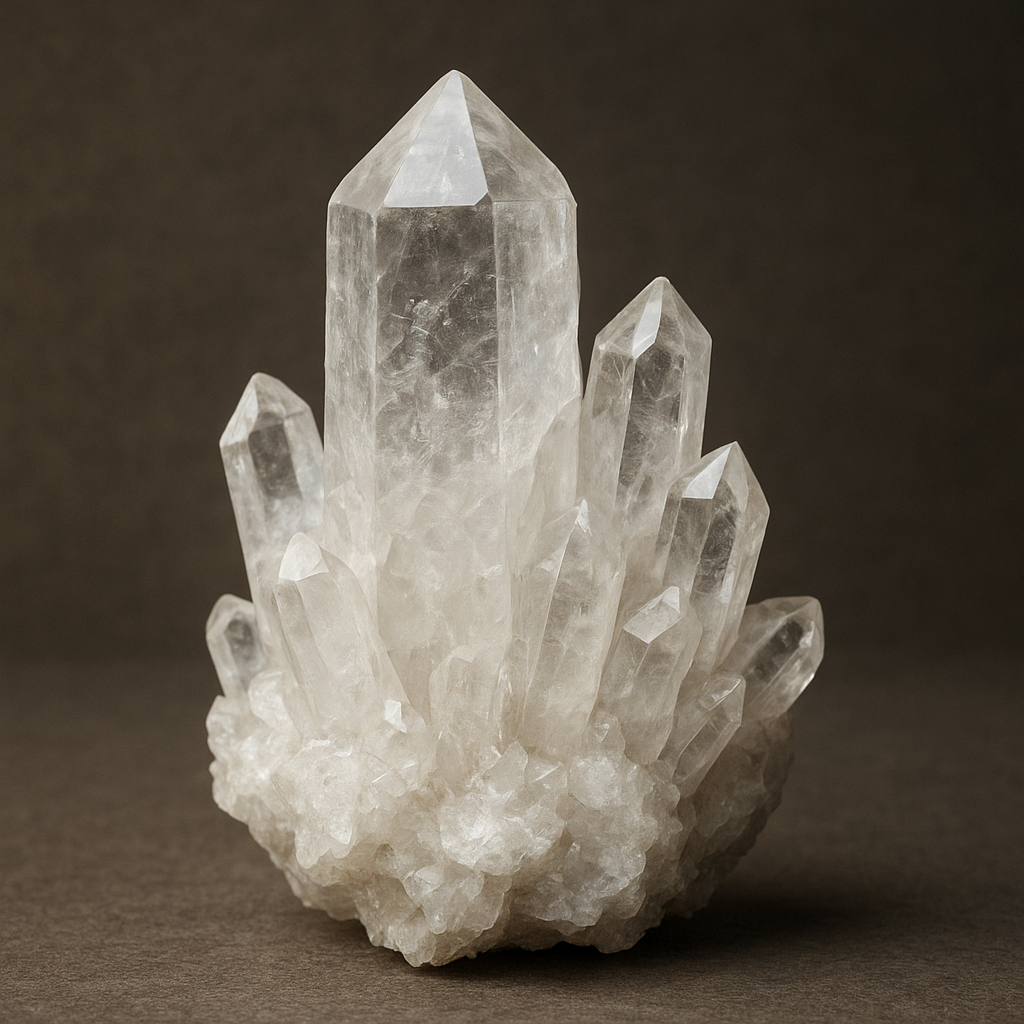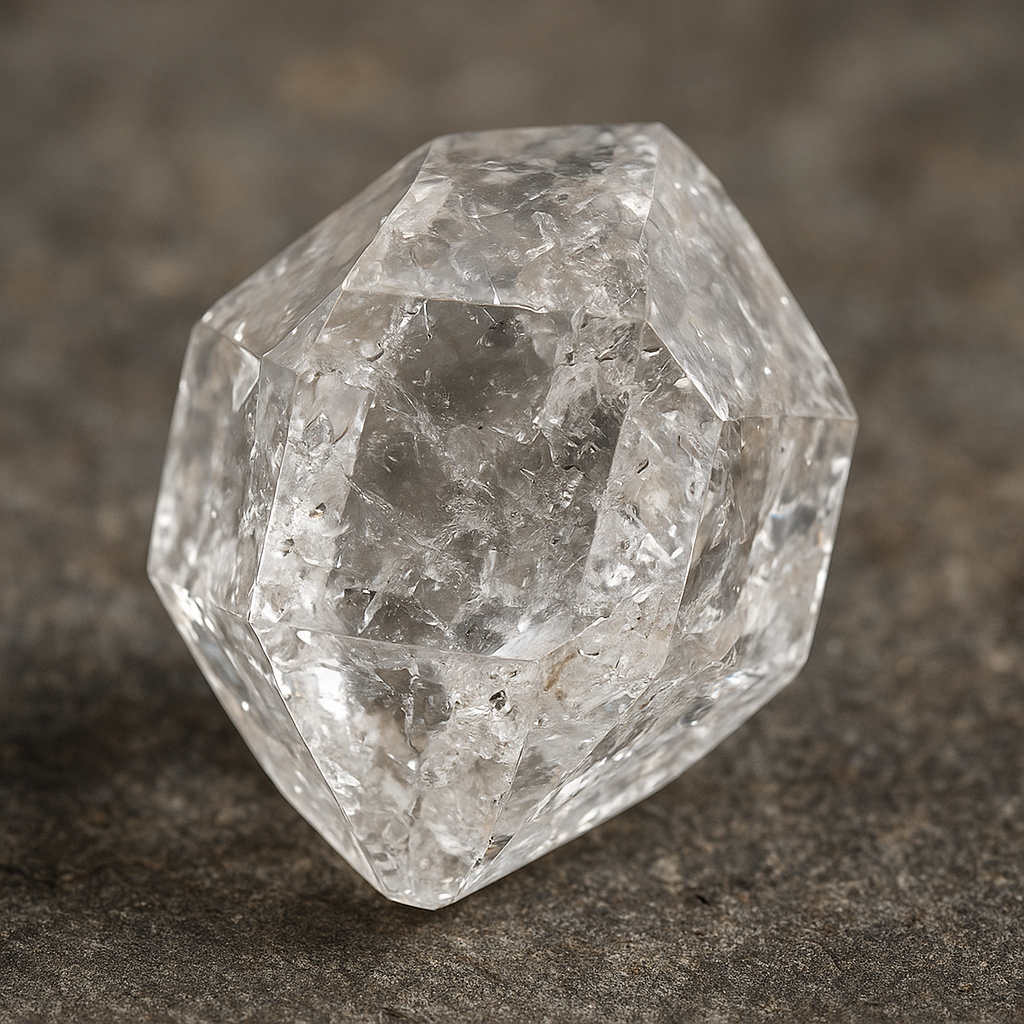
The term Herkimer Diamond evokes images of brilliantly clear, naturally faceted gems that sparkle as though cut by a jeweler’s hand. Despite the name, these are not diamonds but exceptional specimens of quartz that form with perfectly terminated points and remarkable clarity. Their story is one of unique geological conditions, local mining traditions, enthusiastic collectors, and a surprising cultural life that spans jewelry, science, and metaphysical communities. This article explores where Herkimer Diamonds form, how they are mined and used, how to identify and care for them, and a few intriguing facts that highlight their broader significance.
Geology and Formation: How Herkimer Diamonds Grow
Herkimer Diamonds are a distinctive variety of quartz (silicon dioxide, SiO2). What sets them apart is not chemical composition but morphology and environmental history. They are typically double-terminated crystals—pointed at both ends—because they grew freely in open cavities (vugs) within host rock. Their formation required a very particular set of circumstances found in the geological past of parts of New York State and, in similar form, in a few other worldwide localities.
Host Rock and Geological Age
Most classic Herkimer Diamonds formed within cavities in Cambrian-age dolomite (a carbonate rock sometimes called dolostone). These rocks are roughly 500 million years old. During diagenesis and later hydrothermal activity, silica-rich fluids migrated through the dolomite, slowly precipitating quartz within isolated pockets. Because the crystals had room to grow without attachment to a substrate, they developed the ideal, symmetrical faces and terminations collectors prize.
Growth Environment and Inclusions
The fluids that produced Herkimer crystals often contained dissolved gases, hydrocarbons, and trace elements. When these components became trapped during crystal growth, they created characteristic inclusions—tiny bubbles of liquid and vapor, solid carbonaceous fragments (anthraxolite), and even mineral phantoms that reveal pauses in growth. The presence of fluid inclusions and freely floating bubbles is one reason some specimens are so coveted: they offer a snapshot of ancient fluids and environments, valuable to both collectors and scientists.
Why So Clear?
Clarity results from slow, steady crystallization in protected cavities with a stable supply of silica and few impurities. The conditions favoring exceptional transparency are relatively rare, which is why Herkimer-style crystals are not ubiquitous worldwide. The crystals’ aesthetic appeal lies in their combination of geometric perfection, transparency, and natural polish-like luster on their faces.
Where Herkimer Diamonds Occur and Notable Localities
The canonical source of Herkimer Diamonds is Herkimer County and surrounding parts of New York State, including sites around Little Falls and the Mohawk River valley. Mining for these crystals has been both commercial and recreational for well over a century. The name “Herkimer” itself is derived from the county where they were first widely discovered and marketed.
Primary Locality: New York State
In Herkimer County, quartz crystals are found in fractures and vugs of the dolostone. Public dig sites and private mines—some operating as tourist attractions—allow visitors to hammer in finds or sift through tailings. The open-pocket growth that produced doubly terminated, water-clear crystals is characteristic of this region’s Cambrian geology.
Other Occurrences Worldwide
Herkimer-type, doubly terminated quartz crystals are also found elsewhere, though they may have slightly different characteristics. Similar crystals have been reported in places such as Afghanistan, China, Mexico, and Norway. In many markets, collectors and jewelers will describe any exceptionally clear, doubly terminated quartz as “Herkimer-style,” but true Herkimers are from the New York localities.
Collectors and Museums
Museum collections and serious private assemblages often include large or unusually clear Herkimers, particularly those with interesting inclusions. Scientists prize certain specimens for study of fluid inclusions and low-temperature hydrothermal systems, while museums value especially gemmy crystals for public display owing to their dramatic sparkle and perfection.
Mining, Prospecting, and Ethical Considerations
Collecting Herkimer Diamonds ranges from casual rock-hounding to organized, commercial mining. Many sites in New York welcome visitors who pay a fee to dig in surface tailings, while others allow controlled extraction with hand tools. A small number of operations employ more extensive methods to expose fresh pockets.
Common Methods
- Hand digging and chiseling into exposed dolostone.
- Breaking open loose boulders and bedding planes where pocketed vugs are visible.
- Sifting through spoil piles or tailings at visitor dig sites, which is safe and often productive.
Heavier industrial approaches like blasting are rare for gem-quality Herkimers because the risk of damaging crystals is high. Responsible mining prioritizes careful removal to preserve specimen quality.
Permits, Access, and Ethics
Many collecting areas are on private land or have regulated access. Collectors should always obtain permission, pay any required fees, and follow site rules. Ethical collecting includes leaving natural areas in good condition, avoiding unnecessary damage to the terrain, and respecting local regulations on export and trade. For valuable finds, documenting provenance (where and how a specimen was collected) increases scientific and market value.
Uses: Jewelry, Industry, and Metaphysical Practices
Despite being quartz, Herkimer Diamonds have a wide range of applications that reflect their visual appeal and cultural significance.
Jewelry and Lapidary
Many Herkimer crystals are used in jewelry as natural-termination pendants, earrings, and rings. Their unique geometry often allows them to be set without much cutting or polishing, preserving natural faces. Some are faceted or cabochon-cut, but the double-terminated specimens are especially prized when set as raw stones. Lapidary artists sometimes use Herkimers as focal pieces because the crystal’s natural facets catch and reflect light beautifully.
Industrial Considerations
Quartz is important industrially for its piezoelectric properties and use in electronics, optics, and timekeeping. However, Herkimer Diamonds are generally too rare and aesthetically valuable to be used for mass industrial applications. Industrial quartz tends to come from large, less-specialized deposits where clarity and size can be achieved at scale.
Metaphysical and New Age Communities
Within metaphysical circles, Herkimer Diamonds are often described as powerful amplifiers of energy, helpful for meditation, lucid dreaming, and psychic work. They are favored for their perceived ability to enhance clarity of thought and intention. It is important to note these are cultural beliefs and spiritual practices rather than scientifically validated properties. Still, the role of Herkimers in contemporary spiritual practice has contributed significantly to their popularity and market demand.
Identification, Care, and Avoiding Fakes
Learning to identify true Herkimer Diamonds helps collectors and buyers avoid misidentified stones and imitations. Because the market for attractive quartz is strong, some sellers label other clear, doubly terminated crystals as Herkimers even when they come from different localities.
Key Identification Features
- Crystal habit: Genuine Herkimers commonly show sharp, well-formed terminations and a characteristic set of faces corresponding to quartz’s hexagonal system.
- Transparency: Many are exceptionally clear; however, inclusions such as bubbles and hydrocarbons are common and can be diagnostic.
- Host rock or matrix: Authentic provenance from Herkimer County increases confidence; other quartz from different geological settings will often exhibit different weathering and matrix relationships.
- Physical properties: Hardness around 7 on the Mohs scale, specific gravity near that of quartz, and typical quartz refractive properties.
Common Imitations and Synthetics
Glass and synthetic quartz can mimic the appearance of Herkimers. Glass typically has lower hardness and different fracture patterns than quartz. Synthetic quartz may have growth features visible under magnification that differ from natural Herkimer growth. For high-value specimens, laboratory verification (e.g., gemological testing) can confirm authenticity.
Cleaning and Care
Herkimer Diamonds are relatively durable because quartz has significant hardness, but care is still required—especially for specimens with delicate terminations, inclusions, or coatings. Recommended practices include:
- Gentle washing with warm water, mild soap, and a soft brush.
- Avoiding harsh acids or prolonged exposure to extreme heat, which could damage inclusions or cause fractures.
- Caution with ultrasonic cleaners: they may dislodge internal inclusions or cause breakage in specimens with hairline fractures.
- Storing individually wrapped or cushioned to prevent chips and scratches from contact with other gems or metal.
Value, Market, and Collecting Tips
Value in Herkimer Diamonds depends on size, clarity, perfection of terminations, presence and quality of inclusions, and provenance. A small, common crystal might be inexpensive, while a large, impeccably clear, and well-terminated specimen can command significantly higher prices.
What Collectors Look For
- Large size with perfect, sharp points.
- Exceptional clarity with appealing internal features like bubbles and phantoms.
- Rare inclusions such as fully enclosed hydrocarbon droplets or unusual mineral inclusions.
- Provenance documentation linking a specimen to a respected mine or dig site.
Collectors may categorize specimens by grade: gemmy, windowed, sharply terminated, and so on. Dealers often label rare specimens as museum-quality if they meet strict aesthetic and structural standards.
Scientific and Cultural Significance
Beyond aesthetics and commerce, Herkimer Diamonds have scientific value. Studies of fluid inclusions can reveal chemical conditions and temperatures during formation, giving geologists insight into paleo-hydrothermal systems and the diagenetic history of carbonate basins. Because they encapsulate tiny bits of ancient fluids and gases, Herkimers serve as natural time capsules.
Cultural Impact and Folklore
Since their discovery, Herkimer Diamonds have inspired folklore and been incorporated into jewelry and decorative arts. In local economies, they have been a modest but consistent attraction, drawing tourists to dig sites and shops. In the broader cultural imagination, the idea of a diamond “hidden” in ordinary rock is compelling—part of the appeal of rock collecting worldwide.
Interesting Facts
- Herkimer Diamonds get their name from the county where they were first widely marketed, not because they are carbon diamonds.
- Some crystals show perfectly preserved bubble inclusions that move when the crystal is warmed—tiny time capsules from the Cambrian.
- The natural double terminations make many pieces ideal for use without cutting, preserving a raw, organic aesthetic prized in contemporary jewelry.
Practical Tips for Aspiring Collectors
If you plan to look for Herkimer Diamonds or buy them, a few practical tips will improve your experience and the likelihood of obtaining responsibly sourced, attractive pieces.
- Visit established dig sites where you can pay a fee and search safely; these sites often offer guidance and basic tools.
- Research sellers and ask about provenance; reputable dealers will be transparent about the origin of specimens.
- Learn basic identification techniques (hardness testing, magnification to inspect inclusions and growth patterns) before making expensive purchases.
- Handle specimens carefully and invest in simple storage solutions to protect delicate points.
Herkimer Diamonds occupy a unique niche at the intersection of geology, artistry, and culture. Their striking natural forms invite both scientific curiosity and personal appreciation—whether they hang as pendants, sit in mineral cabinets, or serve as teaching specimens in the study of ancient hydrothermal systems. For those who value the interplay of natural perfection and historical context, the appeal of Herkimer crystals is enduring and multifaceted.