
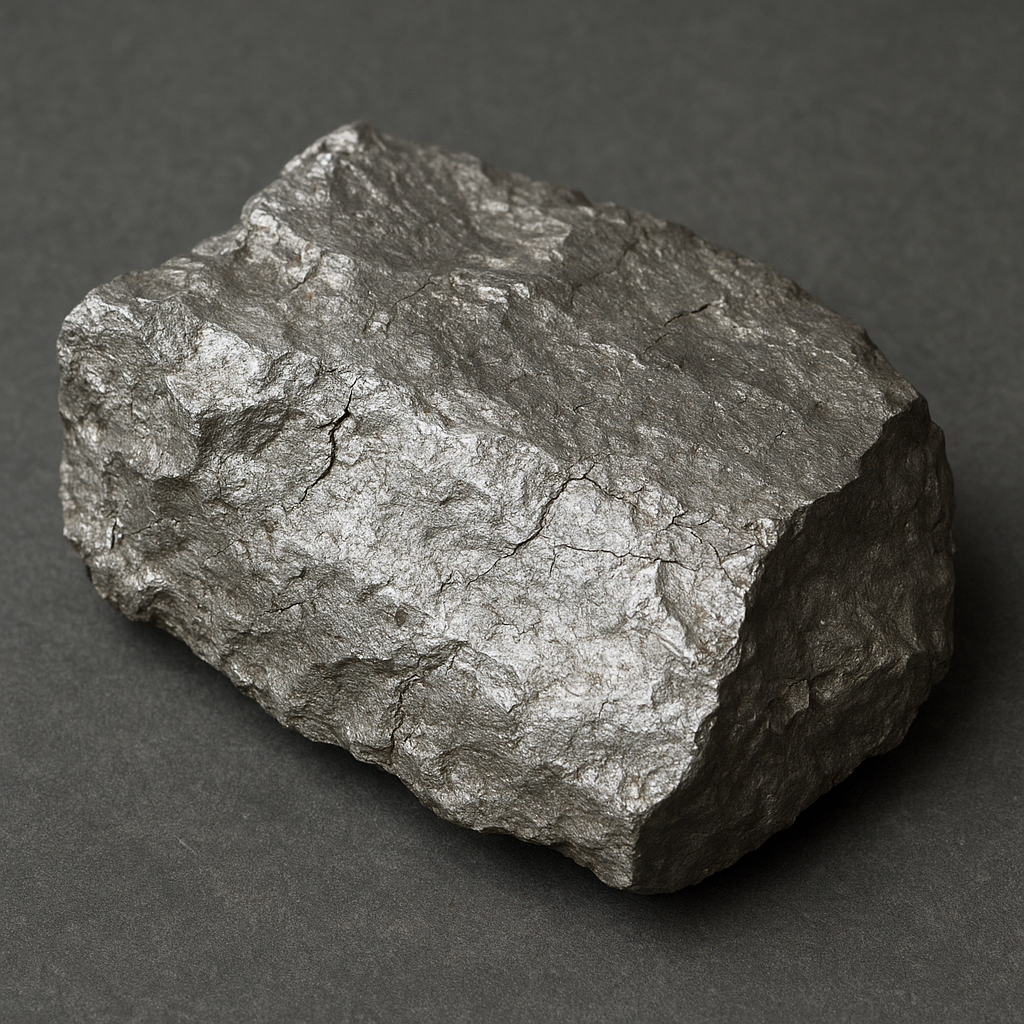
Protactinium is a subtle but scientifically important member of the periodic table. With atomic number 91 it sits in the heart of the actinide series and carries a combination of complex chemistry, intriguing nuclear behavior and a history that links early nuclear science to modern environmental and reactor research. This article explores where protactinium occurs in nature, how it behaves chemically and physically, what practical roles it plays today, and several interesting aspects that make it a subject of continuing study.
Discovery and historical background
The element now known as protactinium was identified in the early 20th century amid intense research into radioactive decay and the newly discovered heavy elements. Several investigators contributed to that discovery: early short-lived signals were reported by Kasimir Fajans and Oswald Göhring, and later Otto Hahn and Lise Meitner isolated longer-lived samples and helped clarify the element’s properties. The name protactinium (from Greek roots meaning “before actinium”) reflects its position in decay chains and its relationship to the element actinium. Over the decades the element’s chemistry and nuclear attributes were mapped out slowly because of its rarity and the experimental challenges posed by radioactivity.
Where protactinium is found
Protactinium is naturally rare and occurs only in minute quantities on Earth. It is produced in nature as part of several radioactive decay chains and is therefore associated with uranium and thorium minerals. Typical contexts include:
- Trace amounts within uranium ores, where protactinium isotopes appear as intermediate products in the decay of heavier nuclei.
- Thorium-bearing minerals, though concentrations are usually very low compared with uranium decay products.
- Environmental compartments (soils, sediments, and seawater) where protactinium isotopes may be present as fallout or as decay products transported with particulate matter.
Because its natural abundance is so low, isolation of measurable quantities requires processing large amounts of ore or residues from nuclear facilities. For this reason, only milligram-to-gram scale samples have been handled historically in specialized laboratories.
Chemical and physical properties
Protactinium is classified as an actinide and shows many characteristics common to that series, including a preference for the +5 oxidation state in most of its chemistry. It forms a variety of compounds such as oxides, halides and oxyhalides, and can exhibit coordination numbers above six in complex ions and solid phases. Notable chemical features include:
- Oxidation state: +5 is the most stable and common state; other oxidation states are less stable and harder to isolate.
- Compounds: binary compounds like PaO2 (an oxide with interesting lattice properties), PaCl5 and PaF5 (halides) and complex species in strongly coordinating environments.
- Electronic structure: the element lies at a point where 5f electrons begin to play a prominent role, making protactinium a valuable probe for studies of 5f orbital behavior and bonding trends across the actinides.
Physically, metallic protactinium is silvery and dense, but macroscopic metal samples are exceptionally scarce. The element is radioactive, and this radioactivity dominates its handling and experimental profile; many chemical experiments must be carried out remotely or in heavily shielded setups.
Isotopes and nuclear properties
Protactinium has multiple isotopes, but only a few are of practical or scientific importance. The most notable are:
- Protactinium-231: one of the longest-lived isotopes (half-life on the order of tens of thousands of years) and the most significant in natural settings. Its persistence makes it useful as a tracer in geological and oceanographic studies.
- Protactinium-233: produced in the neutron irradiation of thorium in reactor contexts. Pa-233 decays to uranium-233, and because of this role it is central to the physics of thorium-based fuel cycles.
Isotopic behavior affects protactinium’s role in nature and technology. Its decay modes and half-lives determine how it moves through environmental systems and how it might be managed in reactors. The isotope chemistry is also relevant to age-dating techniques based on uranium and thorium series disequilibria.
Applications and uses
Although there are no large-scale industrial applications for protactinium, it has niche but scientifically valuable roles:
- Geochronology and paleoceanography: The long-lived isotope isotope Pa-231 is used in marine sediment studies. Measuring the ratio of Pa-231 to other uranium-series isotopes helps reconstruct sediment accumulation rates, ocean circulation patterns and particle transport processes over thousands of years.
- Nuclear research: Pa-233 occupies a special place in Thorium fuel cycle concepts. In reactors where thorium-232 is irradiated, Th-232 captures a neutron and becomes Th-233, which decays to Pa-233 and then to U-233. The intermediate Pa-233 has a half-life that can influence neutron economy; understanding and sometimes isolating protactinium in this context affects breeding of U-233 and overall reactor performance.
- Basic actinide chemistry and physics: Because protactinium lies near the start of the actinide series, its compounds are studied to probe the emergence of 5f-electron behavior and covalency in heavy-element bonds. These studies have broader implications for materials science and heavy-element theory.
- Analytical tracer: Small amounts of protactinium isotopes can serve as tracers in specialized radiochemical experiments and environmental monitoring.
Despite these uses, protactinium’s scarcity and radioactivity mean it is largely confined to research laboratories and specialized analytical contexts rather than commercial applications.
Extraction, production, and measurement
Obtaining protactinium in measurable amounts typically involves one of two routes: separation from natural decay chains in large samples of uranium-bearing ore or production in reactor irradiations. Chemical separation techniques exploit differences in oxidation states and complexation behavior, using ion exchange, solvent extraction and selective precipitation to concentrate and isolate protactinium from large matrices. Because the quantities involved are small and the isotopes are radioactive, high-efficiency radiochemical methods and careful radiological controls are required.
Measurement of protactinium commonly uses radiometric techniques: alpha spectrometry for alpha-emitting isotopes, mass spectrometry (including accelerator mass spectrometry for trace detection), and gamma spectrometry when appropriate gamma lines are present. In environmental studies, chemical separation followed by measurement provides the sensitivity needed to quantify Pa isotopes in seawater, sediments and soils.
Environmental behavior and health considerations
In the environment, protactinium’s mobility is controlled by its chemical speciation and particle-reactivity. Pa-231 is particle-reactive and tends to attach to suspended particles, which affects its transport and deposition in marine and lacustrine sediments. This particle affinity underpins its use as a proxy in oceanographic studies, where differential removal of protactinium and thorium isotopes can reveal mixing and scavenging processes.
From a safety perspective, protactinium is hazardous because of its radioactivity. Laboratory handling requires strict controls: remote handling, gloveboxes, fume hoods, shielding, and regulatory authorization. Internal exposure pathways (inhalation or ingestion) are the primary radiological concerns, and classical chemical toxicity is also possible. Work with protactinium is restricted to licensed facilities and trained personnel.
Contemporary research and intriguing aspects
Protactinium continues to attract research interest for several reasons:
- Fundamental actinide science: Chemists and physicists study protactinium compounds to learn how 5f electrons contribute to bonding and to compare trends across the actinide series. Such studies inform models used in nuclear chemistry and materials design.
- Nuclear fuel-cycle research: In thorium-based reactor concepts, the role of Pa-233 as an intermediate is a technical challenge and an opportunity. Strategies that control the residence time and neutron exposure of Pa-233 can affect the yield of U-233 and reactor performance; these dynamics are an active area of simulation and experimental study.
- Environmental tracing: New analytical techniques—sensitive mass spectrometry and improved chemical separation protocols—allow researchers to use protactinium isotopes at lower concentrations and with higher precision, expanding its application in paleoceanography and sedimentary geochronology.
- Materials and crystallography: Rare but well-characterized crystalline protactinium compounds can shed light on bonding and structural motifs relevant to other heavy elements.
Practical limitations and governance
Two practical limitations constrain protactinium’s broader use: scarcity and radioactivity. The naturally low concentrations mean that obtaining useful amounts is expensive and labor-intensive. The associated radiological hazards impose strict regulatory oversight and handling requirements, further limiting routine applications. International safeguards, national radiation protection laws and nuclear materials controls govern work with actinides, including protactinium, and institutions that handle the element must comply with licensing and reporting requirements.
Interesting facts and lesser-known points
Some lesser-known or surprising points about protactinium include:
- It is a valuable probe in fundamental science: because protactinium lies early in the actinide series, it helps researchers test theories about when and how 5f orbitals begin to affect bonding.
- The element’s name captures a historical logic: protactinium was named because of its position relative to actinium in decay sequences and our evolving understanding of transuranic element relationships.
- Only a few grams of the element have been accumulated and characterized worldwide; most laboratories will never see a sample due to the scarcity and radiological restrictions.
- Protactinium’s role in the Thorium fuel cycle connects it to renewed interest in alternative nuclear fuels: though it is not the centerpiece, its behavior influences breeding dynamics and reactor design considerations.
Concluding remarks on significance (no summary)
Protactinium occupies a distinctive niche in science. Its complex interplay of nuclear and chemical properties makes it a subject of interest for actinide chemistry, geochronology and nuclear science despite practical constraints. Researchers continue to use protactinium isotopes as tracers, to probe fundamental bonding physics, and to understand how intermediate isotopes behave under reactor conditions—work that informs broader questions about the structure and behavior of heavy elements in natural and engineered systems. The element remains a reminder that even rare and difficult-to-handle materials can yield outsized insights into the workings of nature and technology.