
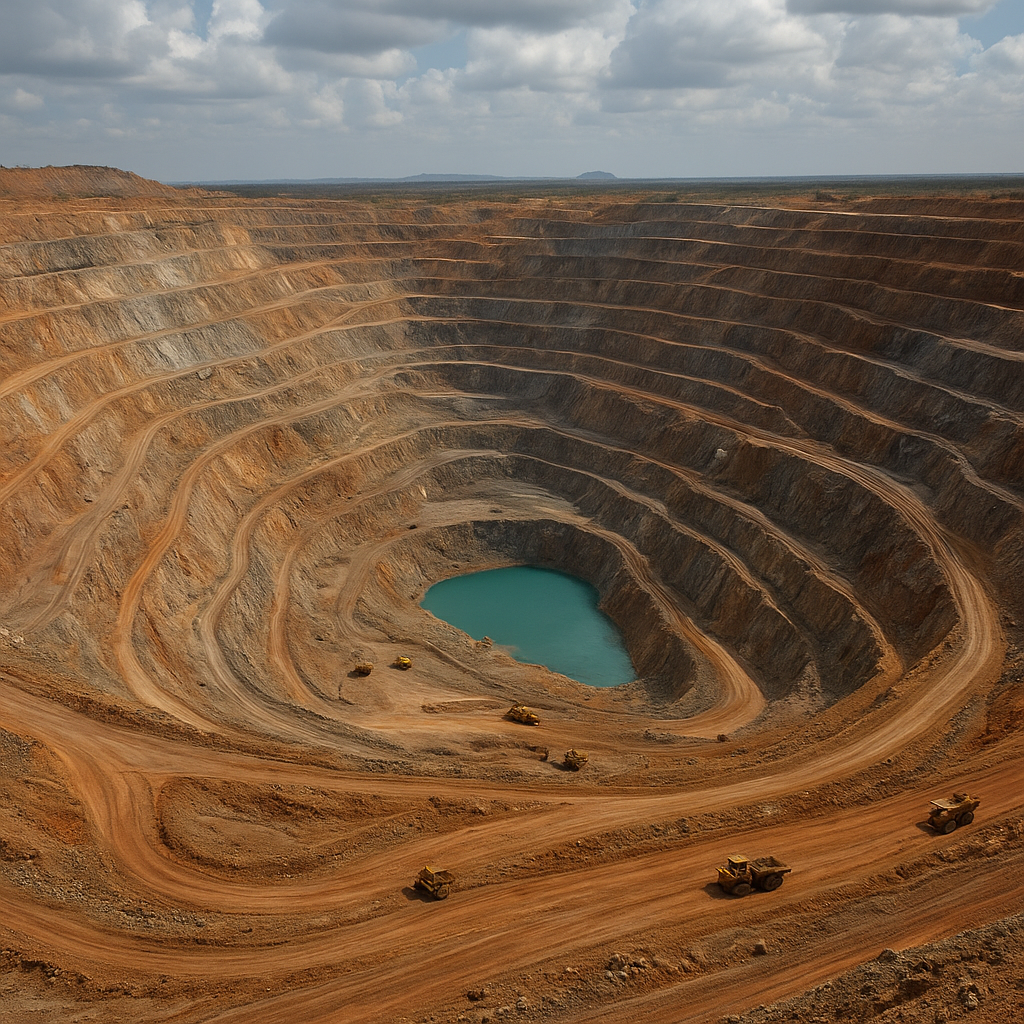
The Kansanshi mine is one of the most prominent copper-producing operations in Africa, located in the mineral-rich northwest of a landlocked country in southern Africa. Beyond the extraction of copper, Kansanshi has become a focal point for regional employment, industrial processing, and debates about sustainable mining practice. This article provides a detailed look at where the mine sits, what it produces, how it fits into the local and national economy, and several lesser-known or intriguing aspects of its history and operations.
Location, Setting and Geology
The Kansanshi mine is situated near the town of Solwezi in the North-Western Province of Zambia. The mine occupies a landscape characterized by gently rolling terrain, interlaced rivers and a combination of savanna and miombo woodlands. This region forms part of the Central African Copperbelt, a world-class metallogenic province that spans parts of Zambia and the Democratic Republic of Congo.
The ore body at Kansanshi belongs to sediment-hosted stratiform copper deposits typical of the Copperbelt, but it also contains notable quantities of gold associated with copper mineralization. The geological setting allows for large-scale open-pit operations: copper-bearing sulphide minerals occur in extensive layers and lenses that can be economically mined by surface methods. The interplay of copper, sulphides and local host rocks has created a complex but predictable ore architecture that supports both high throughput mining and long mine life projections.
Exploration, definition drilling and geological modelling at Kansanshi are continuous activities. These programs refine pit design, define ore/waste boundaries and inform metallurgical processing strategies. The regional geology also means that Kansanshi sits within a corridor of other active and prospective mines, creating both synergies and cumulative environmental and infrastructure challenges for the province.
Mining Operations and What Is Extracted
Kansanshi is primarily a copper mining operation, with gold recovered as a by-product from the concentrator stream. The site operates large open pits where blasting, hauling and loading form the bulk of extraction work. Ore is transported to on-site processing facilities where crushing, grinding and flotation concentrate the copper minerals into a saleable concentrate.
The mine integrates geological modelling with modern mining equipment and conveyor systems to maintain consistent throughput. Processing circuits are designed to produce copper sulphide concentrate that meets smelter specifications. In addition to ore processing, Kansanshi maintains substantial infrastructure for waste management, water treatment and tailings containment—critical systems for any large sulphide-hosted mine.
Processing at Kansanshi historically included on-site facilities that increase the value of material before export, and the operation has also been associated with local smelting and refining initiatives at various times. The presence of a smelter and related metallurgical plants in the region supports a fuller value chain in-country, although concentrate is sometimes exported for further refining depending on market and logistical considerations.
Key products and outputs
- Copper in the form of copper concentrate (primary product).
- Gold as a by-product recovered from concentrator streams and circuit tails.
- Other minor metals and elements recovered depending on ore chemistry and processing choices.
Economic Significance and Industrial Role
Kansanshi is a major industrial asset for Zambia. It contributes substantially to the national balance of trade through mineral exports and is a key source of export earnings. The copper produced at Kansanshi supplies both international metal markets and downstream industries, linking the mine to global supply chains for electrical wiring, electronics, construction and transport sectors.
At a regional level, the mine supports local businesses and service providers—transport, fuel supply, spare parts, catering, construction and maintenance are all underpinned by the continuous requirements of a large mining operation. Kansanshi’s presence has accelerated investments in regional road upgrades, power connections and logistics hubs that benefit other sectors beyond mining.
Employment is another major channel of impact. The mine provides direct and indirect jobs to thousands of people from the surrounding districts and further afield. Workforce development programs, vocational training and supplier development initiatives are typical elements of the mine’s engagement with local communities, although continued attention to equitable hiring and skills transfer remains important for long-term benefits.
Fiscal contributions in the form of taxes, royalties and other payments to the national and local governments are significant. These revenues fund public services and infrastructure, but they also raise public expectations for transparent, efficient use and for reinvestment that benefits local communities. The economic ripple effects include new businesses that serve mine employees and the creation of small-scale commercial opportunities around the town of Solwezi.
Social, Community and Infrastructure Impacts
Beyond direct employment, Kansanshi’s social impact includes investments in healthcare, education and local infrastructure. Company-led or supported community programs often focus on improving clinics, funding scholarships, building roads and supporting agricultural projects. Such initiatives aim to improve living standards in mining-affected communities and to diversify local livelihoods beyond a single-extraction economy.
However, the presence of a large mine can also strain local services and change social dynamics. Rapid population growth around towns like Solwezi can increase demand for housing, schooling and municipal services, sometimes outpacing the ability of local governments to respond. Responsible community engagement thus remains an ongoing requirement for the mine operator and government stakeholders alike.
Infrastructure and regional connectivity
- Upgrades to roads and transport corridors to move concentrate and supplies.
- Investment in power infrastructure and occasional use of captive power arrangements to ensure stable production.
- Support for water supply and sanitation projects to serve growing populations.
Environmental Management and Sustainability Efforts
Large open-pit sulphide mines present environmental challenges that must be actively managed. At Kansanshi these include tailings stability, water management (including prevention of acid mine drainage), dust suppression, rehabilitation of disturbed land and biodiversity conservation. Continuous monitoring, adaptive management plans and engagement with regulators and communities form the backbone of the mine’s environmental strategy.
Typical measures employed include multi-stage tailings management, water treatment plants to control effluent quality, progressive rehabilitation of wasted areas, and strict procedures for hazardous material handling. Incremental improvements in energy efficiency, fleet management and the adoption of cleaner technologies can reduce the mine’s carbon and environmental footprint.
The operator also participates in regional planning to address cumulative impacts from multiple mines, including shared approaches to water resources, waste rock disposal and landscape rehabilitation. International norms and investor expectations increasingly push operations to demonstrate clear sustainability targets, transparent reporting and measurable improvements over time.
Interesting Features, History and Noteworthy Facts
Kansanshi has a mix of operational, historical and technical features that make it notable:
- Scale: Kansanshi is one of the largest copper mines in Africa and a flagship operation in Zambia’s mining sector, notable for the size of its open pits and the throughput of its processing plant.
- Integrated processing: The site’s capability to produce a saleable concentrate adds value before export and supports local employment in processing as well as mining.
- Regional hub: Proximity to Solwezi has turned the town into a service and logistics centre for northwest Zambia, with hotels, supply companies and engineering workshops growing around mining activity.
- Technological adaptation: The mine uses modern open-pit mining equipment, fleet optimization and digital tools for geology and scheduling, reflecting the trend toward data-driven mining operations.
- Community programs: Numerous local initiatives focus on education, health and small-business support, creating mixed outcomes and lessons for social investment in mining districts.
Historical context is also compelling. Kansanshi’s development tracks the broader evolution of Zambia’s mining industry—from colonial-era prospecting through nationalization and the later re-entry of private capital. The mine’s modern expansion into increased throughput and processing emphasizes how investment, technology and market demand interact to renew legacy mining districts.
Challenges and Future Outlook
Like many large mines, Kansanshi faces a set of structural and cyclical challenges. Commodity price volatility affects margins and investment decisions. Maintaining social license requires ongoing and genuine community engagement as well as demonstrable environmental stewardship. Infrastructure bottlenecks, such as power supply and transport constraints, can restrict the pace of expansion or reduce operating efficiency.
Future scenarios for Kansanshi may include sequencing of additional pits, deeper mining requiring different methods, increased on-site processing and potential moves into further value-added stages of the copper chain. Global trends in electrification and renewable energy are likely to boost long-term demand for copper, creating incentives for sustained investment. At the same time, pressure to decarbonize mining operations and to manage water and land resources responsibly will shape operational choices.
Strategic cooperation among the mine operator, local and national governments, communities and international investors will be key to balancing economic benefits with social and environmental responsibilities. Innovations in mine rehabilitation, circular economy approaches for tailings reuse, and partnerships on renewable energy could improve the sustainability profile of Kansanshi while maintaining its role as a major contributor to Zambia’s mining landscape.
Concluding Observations
When thinking about the role of Kansanshi in Zambia, it helps to consider the mine as both a physical operation and a node in wider economic and social systems. It produces essential raw material for modern economies, supports thousands of livelihoods, and catalyses infrastructure investment. At the same time, its long-term legacy will depend on how well environmental impacts are managed, how benefits are shared with local communities, and how the operation adapts to global shifts in commodity markets and sustainability expectations.

