
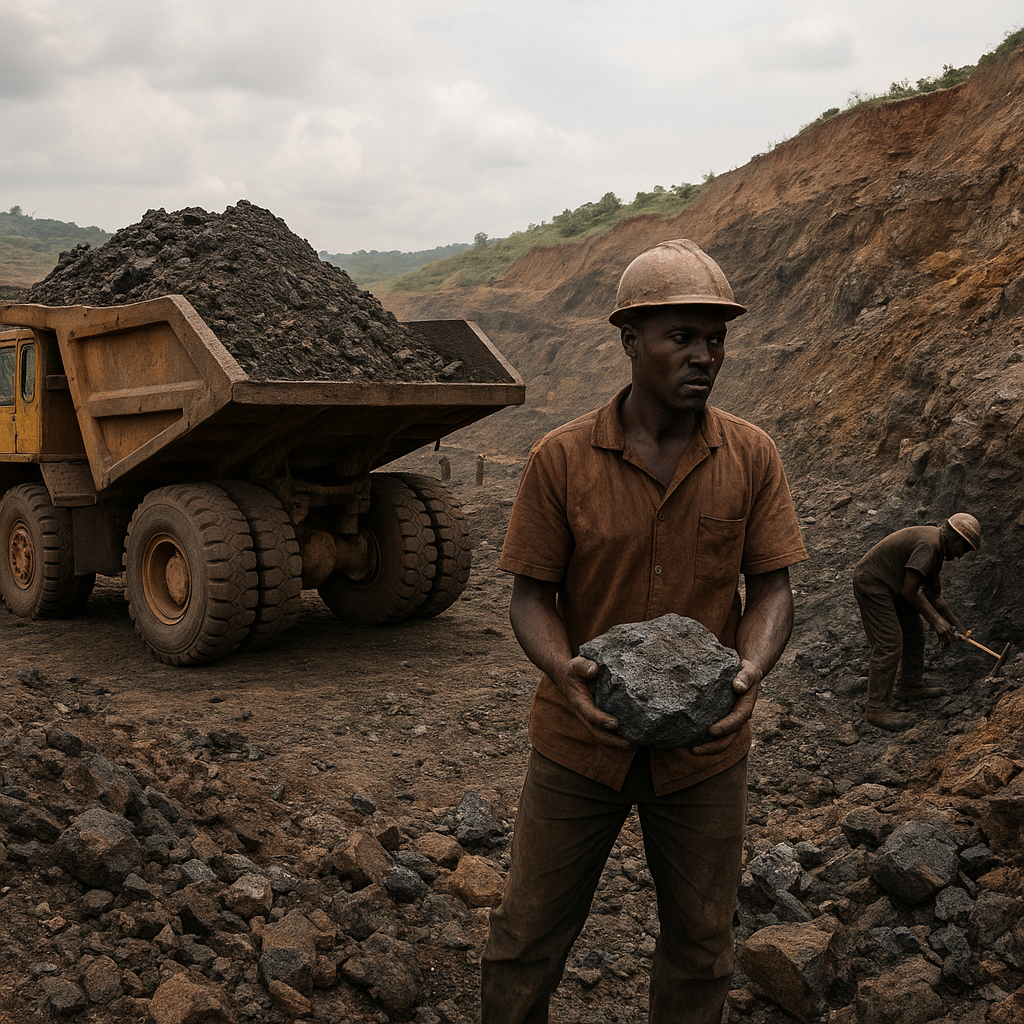
The Kasese area in western Uganda has become increasingly known for its mineral potential, with particular attention on deposits that contain cobalt alongside copper and other metals. This article explores where the Kasese cobalt activity is located, what is extracted and how, the broader economic implications for local and national stakeholders, and a selection of notable and sometimes surprising facts about the site and its region. The discussion draws on the region’s geological history, historical mining operations, and contemporary interest from investors, policy makers and communities seeking to balance development with environmental and social responsibilities.
Location and geological setting
Kasese District lies in the far west of Uganda, bordering the Democratic Republic of Congo to the west. The mining areas that attract attention are clustered around the foothills of the Rwenzori Mountains and the Mubuku-Kilembe valley system. Historically, copper and associated metals were discovered in these belts during the first half of the 20th century; the same geological environment hosts occurrences of cobalt as either a primary sulfide component or as a byproduct of copper mineralization.
The regional geology comprises Proterozoic and older sedimentary and metavolcanic sequences intruded by younger igneous bodies. Mineralization is typically associated with stratabound or structurally controlled sulfide lenses and breccia zones that host copper sulphides such as chalcopyrite, with cobalt occurring in accessory sulfides or in trace form within the ore system. This geological setting explains why cobalt is often recovered in conjunction with copper processing rather than as an entirely separate deposit type.
What is mined and how it is processed
Mining activity in the Kasese area historically centered on copper extraction, with cobalt recovered as a byproduct. The main commodities of interest are:
- Copper — forming the bulk of the ore value in many zones and historically driving the establishment of the mines and associated infrastructure.
- Cobalt — present in smaller quantities but strategically important because of its demand in modern technologies.
- Smaller quantities of precious metals, gold trace elements and other industrial minerals that occasionally accompany the primary ores.
Mining methods in the region have varied over time. Early operations relied on both underground workings and open-cut mining depending on the depth and geometry of the orebody. Ore extracted from the mines typically required concentration through comminution and flotation to produce a copper concentrate; cobalt-bearing minerals are often captured within these concentrates and then separated during downstream refining steps. In most cases, full refining of cobalt to metal or chemical precursors for batteries happens offsite in specialized smelters and refineries, because local processing capacity for advanced refining is limited.
Small-scale and artisanal activity
Beyond formal commercial operations, there are often small-scale and artisanal miners active in mineral districts like Kasese. These miners can contribute to local livelihoods but also present regulatory and environmental challenges. Artisanal work tends to focus on easily accessible ore, alluvial concentrations, or processing of tailings and can be an important micro-economy, especially where formal employment opportunities are limited.
Economic significance for Kasese, Uganda and beyond
The presence of cobalt-bearing ore in Kasese carries several layers of economic importance:
- Local employment: mining operations directly create jobs in extraction, processing, and logistics, and indirectly support services such as housing, transport, hospitality, and retail.
- Regional infrastructure: investment in mines often spurs improvements in roads, power supply, and communications that benefit wider communities.
- Government revenues: taxes, royalties and licensing fees from mining can provide significant fiscal flows for district and national budgets when operations are large and well-regulated.
- Export earnings: raw concentrates and refined metals contribute foreign exchange receipts that help balance trade and attract investment.
- Strategic commodity supply: cobalt is a critical input for rechargeable batteries, aerospace alloys and catalysts. As global demand for electric vehicles and renewable energy storage grows, access to cobalt-bearing ores in politically stable jurisdictions becomes strategically valuable to manufacturers and countries outside Africa as well.
Importantly, the magnitude of economic impact depends on several variables: scale of production, the ability to add value locally (for example, building refining capacity), transparency and fairness of contracting, and the broader policy environment that governs revenue sharing, environmental safeguards and community benefits. Kasese’s potential is therefore as much about governance and planning as it is about geology.
Environmental, social and governance considerations
Mining always poses environmental and social risks; in Kasese these include potential impacts on water quality, land use, biodiversity and community well-being. Some of the principal concerns and mitigation approaches are:
- Water contamination — sulfide-bearing tailings can produce acidic drainage that mobilizes heavy metals. Robust tailings management, water treatment plants and continuous monitoring are essential to protect rivers and groundwater.
- Land disturbance — surface works, waste dumps and access roads alter landscapes and can affect agriculture. Rehabilitation plans, progressive reclamation and compensation mechanisms help reduce long-term harm.
- Community rights and livelihoods — mining projects can disrupt local economies, traditional land use and cultural sites. Meaningful consultation, fair compensation, job training and local procurement provisions are practices that improve social outcomes.
- Regulatory transparency — clear licensing procedures, public disclosure of contracts and revenue streams, and independent environmental monitoring reduce corruption risks and improve confidence among citizens and investors.
There is also growing interest in incorporating sustainability criteria into mining planning. Consumers and downstream buyers of cobalt increasingly demand responsibly sourced material — authenticated supply chains, conflict-free assurances and reduced environmental footprints. This trend offers both a challenge and an opportunity for Kasese stakeholders to position their output for premium markets if they can meet rigorous standards.
Challenges and development opportunities
The path from discovered ore to sustained economic development is rarely straightforward. Some of the key challenges facing cobalt activity in Kasese include:
- Infrastructure gaps: Reliable power, all-weather roads and rail connections are necessary to move ore and concentrate economically. Gaps raise operating costs and limit the scale of feasible projects.
- Financing and technical capacity: modern mining and refining require substantial capital and specialized expertise. Attracting long-term investment often depends on stable policy frameworks and credible geological data.
- Market volatility: cobalt prices can fluctuate sharply with changes in battery chemistry, recycling rates and global demand. Project viability is sensitive to these price dynamics.
- Governance and land tenure: clear land rights and predictable licensing reduce disputes and delays. Transparent benefit-sharing arrangements are essential to avoid community conflict.
Conversely, there are notable opportunities:
- Local beneficiation: developing regional processing or refining facilities could capture more value by exporting higher-value products rather than raw concentrates.
- Job creation and skills development: mining projects afford opportunities for vocational training and development of a skilled workforce that can support longer-term industrialization goals.
- Green economy linkage: supplying responsibly sourced cobalt to battery makers aligns with global decarbonization efforts and could open premium markets for Kasese-origin material.
- Tourism integration: the proximity to the Rwenzori range and other natural attractions offers scope to integrate mining investment with conservation and tourism-driven economic diversification.
Interesting historical and regional facts
Kasese’s mining story blends colonial-era exploration, mid-century industrial development and contemporary interest tied to modern technologies:
- Mining in the region dates back several decades, with infrastructure such as access roads and processing facilities that were established to support copper production in the mid-20th century.
- The area’s location near the Rwenzori Mountains gives it a dramatic natural backdrop; the Rwenzori are famed for their glaciers and unique alpine ecosystems, which contrast sharply with mining landscapes in the valleys below.
- Cobalt’s role in modern technology transforms what might once have been seen as a secondary byproduct into a resource of strategic importance for battery manufacturers and high-temperature alloys used in aerospace and industrial applications.
- There have been episodes of mine closure and subsequent revival interest, reflecting the broader cyclical nature of base metals markets and the importance of political stability and investor confidence for sustained production.
Global context
While the Democratic Republic of Congo dominates the world supply of cobalt, deposits in Uganda such as those in the Kasese region show how additional sources can diversify supply chains. International buyers, automotive manufacturers and battery makers are increasingly attentive to the provenance of critical minerals; stable, well-governed operations in countries like Uganda can therefore command attention as partners in secure, ethical sourcing strategies.
Practical considerations for stakeholders
For communities, government officials and potential investors considering involvement with Kasese cobalt activities, several practical steps are important:
- Conduct thorough and transparent geological and environmental baseline studies to inform responsible planning and investment decisions.
- Prioritize inclusive consultation processes that meaningfully involve affected communities and respect local land rights.
- Design fiscal and legal frameworks that balance investor predictability with fair public benefit, using international best practices for mineral governance.
- Invest in training, supply-chain linkages and local entrepreneurship so that more of the mining value chain benefits the local economy.
- Adopt rigorous environmental management plans and third-party monitoring to minimize risks to water, soil and biodiversity.
Kasese’s mineral potential, particularly for cobalt, underscores the wider evolution of Uganda’s role in global mineral markets: a combination of historical mining heritage, contemporary strategic demand for battery metals, and the imperative to develop resources in ways that are economically beneficial, environmentally responsible and socially inclusive. The ultimate outcome will depend on technical choices, policy decisions and the capacity of communities, companies and government to work together toward shared objectives such as improved employment, fair exports and resilient regional infrastructure.

