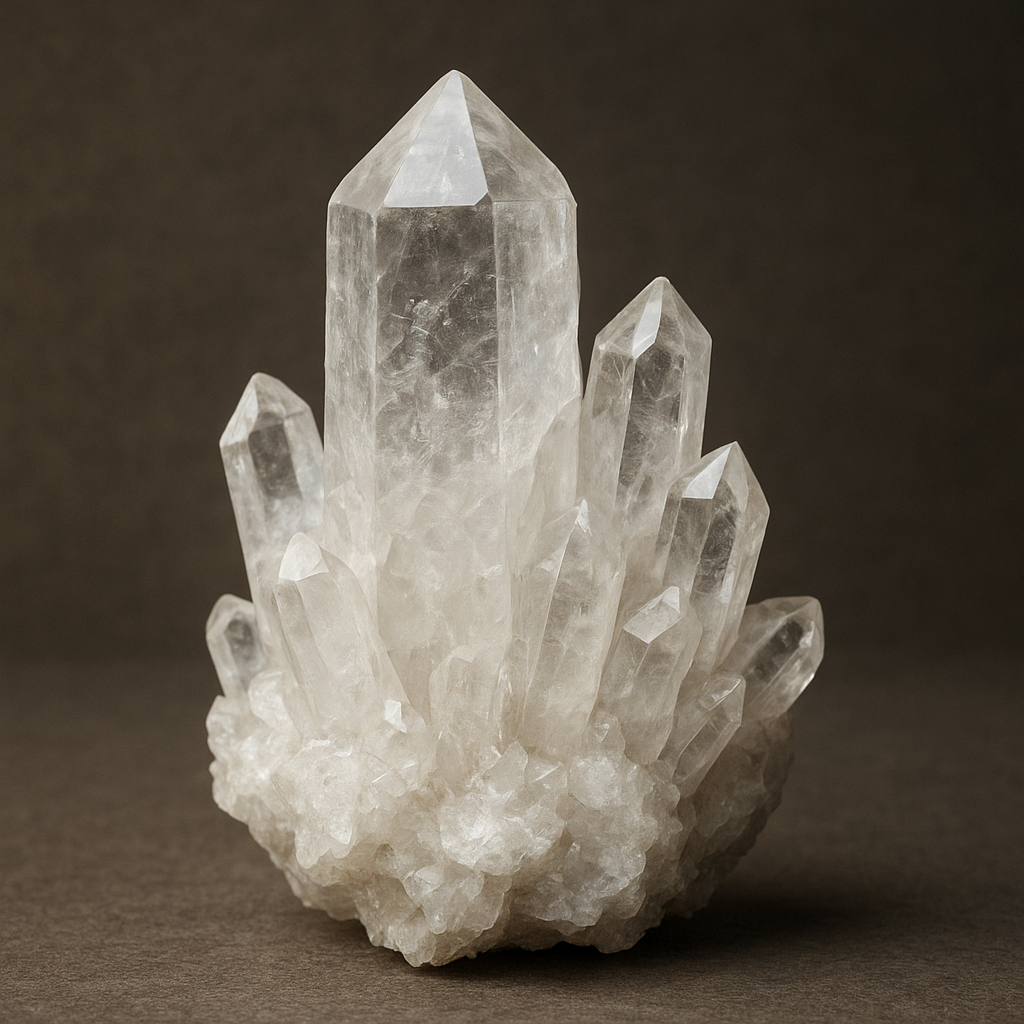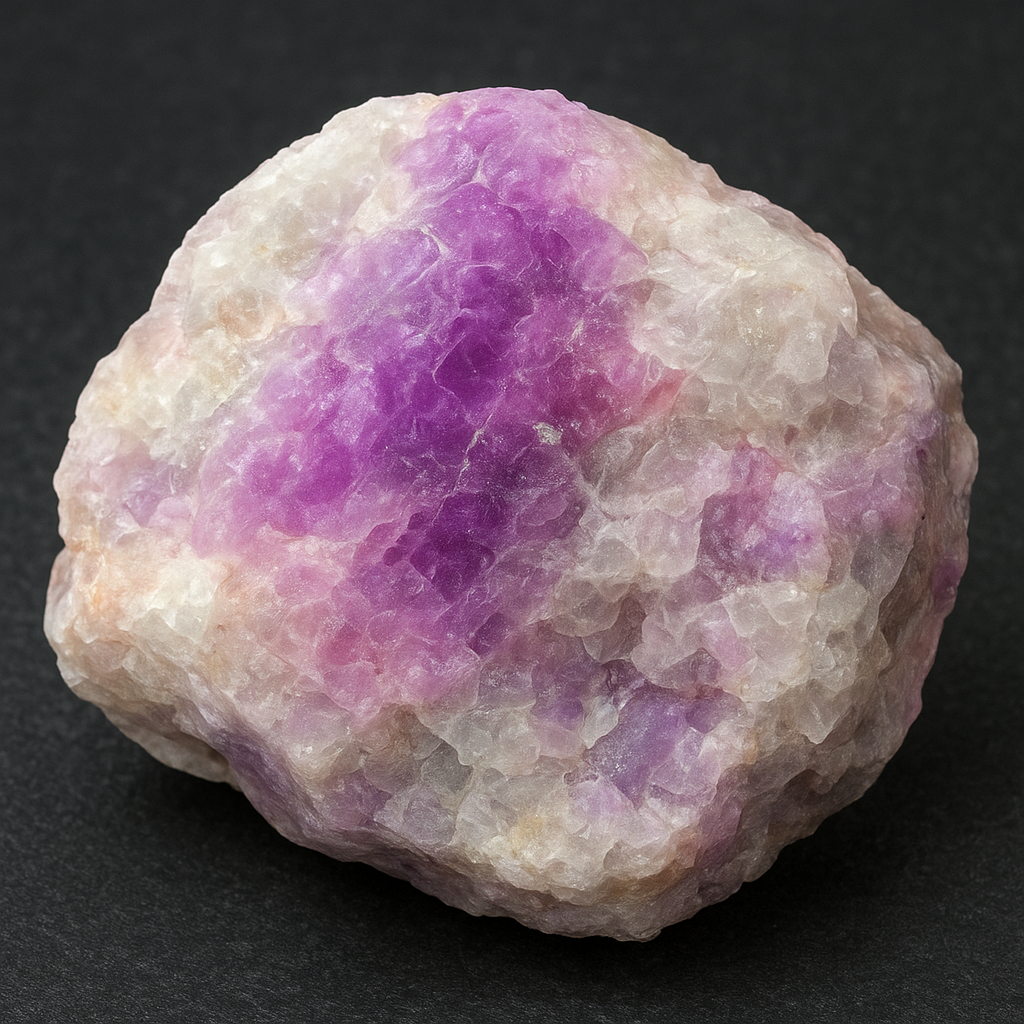
Hackmanite is a captivating and unusual mineral that has fascinated mineralogists, gem enthusiasts, and materials scientists for more than a century. Best known for its striking ability to change color when exposed to ultraviolet light and then slowly return to its original hue, hackmanite occupies a niche at the intersection of geology, gemology, and applied photochemistry. In this article you will find an overview of its geology and occurrences, a description of the physical and optical properties that make it so distinctive, and a survey of both traditional and novel applications. Along the way I highlight research directions and some lesser-known anecdotes that illustrate why this mineral continues to draw attention.
Geology and Natural Occurrence
Hackmanite is a variety of the mineral group known as sodalite, a sodium-rich tectosilicate that commonly contains chloride or sulfate anions. Its idealized chemical formula can be written as Na8(Al6Si6O24)Cl2 with substitutions and minor impurities often present. What distinguishes hackmanite from ordinary sodalite is not a fundamentally different chemistry but the presence of specific defect centers and sulfur-related anions that give rise to tenebrescence — the reversible darkening or color change under shortwave ultraviolet (UV) or X-ray exposure.
Typical geological environments
- Alkaline igneous complexes: Hackmanite is commonly associated with nepheline syenites, phonolites, and related silica-undersaturated rocks where sodalite-group minerals crystallize.
- Hydrothermal alteration zones: In some settings, late-stage hydrothermal fluids can introduce the sulfur species and electron-trapping defects needed for tenebrescence.
- Metasomatic and contact zones: Interaction between alkali-rich magmas and surrounding rocks sometimes creates pockets where hackmanite forms alongside other unusual minerals.
Notable localities
- Ilímaussaq Complex, Greenland — The type area where hackmanite was first described; classic specimens displaying strong tenebrescence come from here.
- Mont Saint-Hilaire, Canada — Known for a wide suite of sodalite-group minerals, occasionally producing hackmanite specimens.
- Koksha Valley, Afghanistan — Produces attractive gem-quality hackmanite, often marketed for its dramatic UV-induced color changes.
- Kola Peninsula, Russia — Another historical source with collectible specimens.
- Myanmar (Burma) and certain localities in Pakistan — produce sodalite/hackmanite material of variable quality.
The occurrence of hackmanite is relatively rare compared with other rock-forming minerals. When gem-quality material appears on the market it often sparks renewed interest from both collectors and designers of optical devices.
Physical and Optical Properties
The most striking behavior of hackmanite is its response to radiation: it darkens or shifts color when exposed to shortwave UV or X-rays and then reverses that change either slowly in ambient light or more quickly when exposed to visible light or heat. This phenomenon is called tenebrescence (also known as reversible photochromism). The process involves creation and annihilation of color centers — localized electronic states associated with sulfur species (for example, S3– radical anions) trapped in the crystal lattice.
- Color in daylight: Ranges from colorless, pale gray, pink, violet to yellow or greenish, depending on composition and trace impurities.
- Color after UV exposure: Material may turn vivid purple, deep pink, or intensely blue-violet; some pieces become nearly black under strong irradiation.
- Fluorescence: Many hackmanite specimens exhibit visible fluorescence under long-wave or short-wave UV; common responses are blue, bluish-white, or orange-red depending on activators.
- Hardness: Approximately 5.5–6 on the Mohs scale, similar to other sodalite-group minerals.
- Specific gravity: Around 2.2–2.3, relatively light for a gemstone.
- Cleavage and fracture: Hackmanite has poor cleavage and uneven fracture; it is brittle and can chip if struck.
At the atomic level, the optical phenomena are the result of charge transfer and the stabilization of anionic sulfur species in the aluminosilicate framework. Under shortwave UV, electrons are promoted and trapped by defects, producing colored radical anions that absorb visible light. Visible light or heat can release the trapped electrons, restoring the original state. The reversibility and kinetics of these processes depend strongly on the local chemistry, defect concentrations, and thermal history of the crystal.
Practical Applications and Uses
Although hackmanite is not a mainstream industrial mineral, its unusual optical properties suggest a range of niche applications that exploit its sensitivity to radiation and light. Historically it has been used primarily as a collector’s gemstone and curiosity piece; in the last few decades researchers and technologists have explored more practical uses.
Gemstone and ornamental use
- Collectors prize hackmanite for its ability to change color — a single stone can display two or more appearances depending on illumination.
- Cut stones are fashioned into cabochons and faceted gems, though the relative softness and cleavage require careful cutting and protective settings.
- Because of its novelty value, hackmanite is used in jewelry that intentionally showcases its photochromic behavior — rings, pendants, and display pieces.
Scientific and technological applications
- UV dosimetry and indicators: Hackmanite’s color change is proportional to exposure, making it a candidate for low-cost, passive UV dosimeters. It can indicate cumulative UV dose visually without electronics.
- Security and anti-counterfeiting: The reversible photochromic signature is difficult to reproduce with standard inks or dyes; hackmanite particles or synthesized analogues can be considered for security marking.
- Optical sensors and smart materials: Researchers have investigated hackmanite-like materials as prototypes for sensors that react to specific wavelengths, dose rates, or radiation types.
- Educational tools: Its dramatic tenebrescence and fluorescence make hackmanite a valuable teaching mineral for demonstrating concepts in solid-state chemistry, defects, and photophysics.
Identification, Handling, and Care
Detecting genuine hackmanite is a matter of observing its photoreactive behavior alongside standard gemological tests. The combination of visible color change after exposure to shortwave UV, characteristic fluorescence, and association with sodalite-group minerals helps confirm identification. Because artificial treatments and synthetics are occasionally encountered, buyers and collectors should be cautious and seek reputable vendors or lab certification for high-value pieces.
- Testing: Expose the specimen to a shortwave UV lamp for a few seconds and observe the color change. The effect should be reversible when the specimen is later exposed to visible light. Many sellers demonstrate this in-person.
- Cleaning: Clean with lukewarm water and mild soap; avoid steam or ultrasonic cleaners because thermal and mechanical shock can damage the stone or alter its tenebrescent behavior.
- Setting in jewelry: Because hackmanite is relatively soft, protect it in bezel settings or use it in pieces that are less susceptible to knocks (e.g., pendants and earrings rather than rings).
- Storage: To preserve tenebrescence, store pieces away from prolonged strong light and away from sources of heat. If a specimen has become “over-bleached,” a short UV exposure will usually restore the darkened state.
Laboratory Synthesis, Treatments, and Related Materials
Synthetic sodalite and related frameworks have been produced for research and applications. When sulfur species and specific defect conditions are introduced during synthesis or post-growth treatment, materials with hackmanite-like photochromic behavior can be obtained. Controlled synthesis allows scientists to study the formation and stability of color centers and to optimize properties for dosimetry or sensor use.
Methods and challenges
- Hydrothermal and high-temperature solid-state methods can yield sodalite frameworks; incorporation of sulfur in anionic forms (S2–, polysulfides) and controlled creation of vacancies are essential to induce tenebrescence.
- Maintaining the stability of radical centers without rapid recombination is a research challenge; thermal management and lattice engineering help stabilize desired states.
- Scaling up production for commercial dosimeters or security materials requires reproducible control over color intensity, decay kinetics, and environmental robustness.
In some cases, artificially irradiating natural or synthetic sodalite can produce photochromic behavior, but such treatments may be unstable or fade over time. Therefore, careful characterization is necessary before practical deployment.
Scientific Significance and Research Frontiers
Hackmanite occupies an intriguing spot in materials science because its visible color change stems from well-defined solid-state chemistry processes: charge transfer, defect formation, and radical stabilization. Studying these mechanisms helps scientists understand and design new materials with tailored optical responses.
- Radical chemistry: The formation of S3– and related radical anions is central to tenebrescence. Advanced spectroscopic techniques (EPR, UV-vis, Raman) are used to probe these centers and their dynamics.
- Time-resolved photophysics: Researchers measure how quickly color centers form and decay, correlating kinetics with structural features and compositional variables.
- Applications development: Translating the laboratory behavior of hackmanite into robust devices — from passive UV badges to responsive architectural materials — is an active area of interdisciplinary work spanning mineralogy, materials science, and engineering.
One promising direction is the integration of hackmanite-like compounds into polymer matrices or coatings that could be applied as smart windows, UV exposure indicators for outdoor workers, or tamper-evident seals. The advantage is a passive, colorimetric readout that requires no power source.
Cultural and Historical Notes
The name hackmanite honors Johan Hackman, a Finnish merchant linked to the early history of the Ilímaussaq complex discoveries. Historically, collectors prized specimens from Greenland for their striking darkening, and the novelty of a stone that could change its appearance helped fuel curiosity in both scientific and gem-collecting circles.
In popular culture and jewelry, hackmanite’s variable color has occasionally been used to symbolize change and transformation. Its mood-ring-like behavior makes it an attractive gift and conversation piece. Unlike synthetic photochromic materials used in eyewear, hackmanite’s color change is typically slower and depends on the cumulative dose of UV rather than only instantaneous illumination.
Practical Tips for Collectors and Enthusiasts
- When acquiring hackmanite, request a shortwave UV demonstration to confirm authentic tenebrescence and observe fluorescence under both long and short-wave lamps.
- Ask for provenance information — specimens from well-documented localities such as Greenland or Afghanistan often command higher prices and are easier to verify.
- Consider the intended use: for jewelry, choose well-protected settings; for display, consider rotating exposure between light and dark to showcase the reversible effects.
- Watch for imitations: some glass or artificially treated stones can mimic color change, so third-party gem lab reports are helpful for high-value purchases.
Interesting Facts and Lesser-known Observations
- Not all hackmanite behaves identically: pieces from different localities can vary dramatically in how quickly they darken, how intensely they color, and how long they remain in the altered state.
- Some specimens require only a brief flash of shortwave UV to achieve maximum darkening, while others need prolonged exposure; the bleaching back to the original color may take minutes to days depending on conditions.
- Hackmanite’s tenebrescence is a form of photoluminescence-related behavior but should be distinguished from immediate luminescence: tenebrescence is a persistent color change rather than instant emission of light.
- Because of its sensitivity to UV, hackmanite can act as a simple, reusable visual UV monitor for outdoor activities, though it should not replace professional measurement tools when accurate dosimetry is required.
- Careful heating can accelerate the bleaching process, but excessive heat may irreversibly alter the defect structure and reduce the material’s ability to tenebresce in future cycles.
In short, hackmanite is more than a pretty curiosity. It is a natural window into the physics of color centers and an example of how subtle changes at the atomic scale can produce striking macroscopic effects. Whether appreciated for its gemological novelty, its geological rarity, or its technological potential, hackmanite remains a mineral that invites both admiration and serious study.