
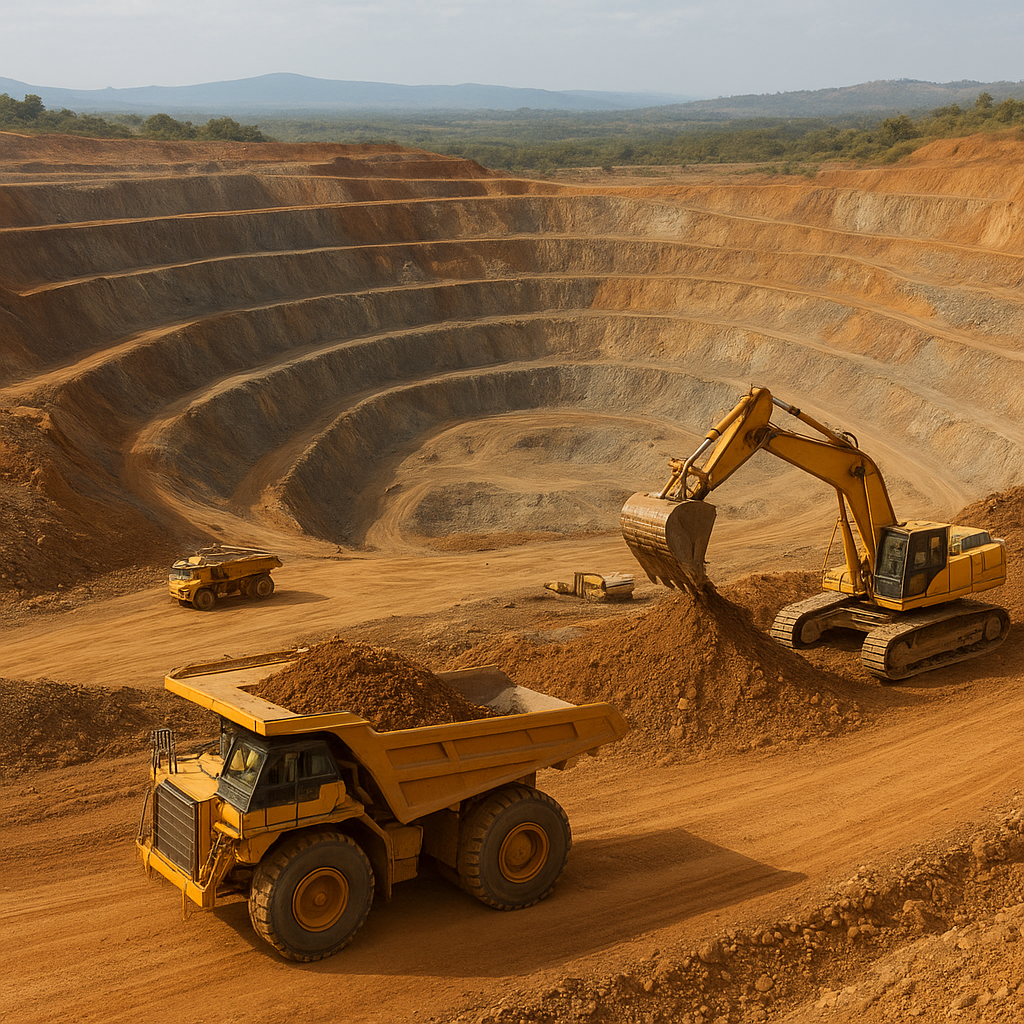
The Geita Gold Mine, situated in the heart of northwestern Tanzania, stands as one of East Africa’s most prominent gold-producing operations. This article examines where the mine is located, what is extracted there, the mine’s broader economic significance, and a selection of particularly interesting facts and developments that give Geita its distinctive place in Tanzania’s mining landscape. Throughout the text, key terms and concepts are emphasized to highlight their importance.
Location and geological setting
The Geita mine lies near the town of Geita in the Tanzania Lake Victoria goldfields, a prolific mineral province that hosts multiple gold deposits. The mine is positioned in the Geita Region, roughly to the southwest of Lake Victoria, and it benefits from direct road links to regional centers. The broader area falls within the ancient greenstone belts that formed during the Archean and early Proterozoic eras—rocks that are globally known for hosting significant gold deposits.
Geological characteristics
Geita is hosted in metamorphosed volcanic and sedimentary rocks with quartz-carbonate vein systems and associated alteration halos. Gold is typically found in sulphide-bearing veins and disseminations associated with deformation zones. These geological conditions make the site suitable for both open-pit mining of near-surface ore and targeted underground development where higher-grade shoots occur at depth. Ongoing exploration programs around the mine aim to extend known mineralized zones and to test new targets identified by modern geophysical and geochemical techniques.
Strategic location
- The mine’s proximity to Lake Victoria places it within a corridor that has historically supported intense mineral exploration and mining activity.
- Transport links connect Geita to Tanzanian ports and regional trade routes, which is important for export logistics and supply chains.
- Access to a local labor pool and existing infrastructure, including power and water, supports continuous operations and growth potential.
Mining operations and what is extracted
Geita is primarily a gold-producing complex that operates a combination of large-scale extraction techniques and processing facilities designed to treat both oxide and sulphide ores. The mine’s production chain typically includes open-pit extraction, ore crushing and grinding, and chemical recovery circuits such as carbon-in-leach (CIL) or equivalent gold recovery technologies. The end product is doré and refined gold sold into international markets.
Mining methods and processing
- Primary mining method: large open pits exploiting disseminated and vein-hosted gold mineralization.
- Secondary/advanced methods: selective underground mining or pre-concentration in higher-grade zones where economic.
- Processing: conventional milling followed by leaching and adsorption to recover gold to the desired purity level for sale.
Over time, the operation has evolved to include improved metallurgical circuits and expanded milling capacity to maintain competitiveness and ensure recovery rates remain high. Geita’s technical teams combine conventional geotechnical disciplines with modern process engineering to optimize both resource extraction and metallurgical performance.
Economic significance
The economic footprint of Geita extends from local communities to the national economy, making it one of Tanzania’s most important mineral assets. Gold mining is a major source of foreign exchange, and large-scale mines like Geita are central contributors to national export earnings. At the regional level, the mine is a significant source of employment and business opportunities for suppliers and service providers.
Direct economic impacts
- Jobs: The mine provides direct employment across a range of skilled, semi-skilled, and unskilled roles, offering stable incomes for thousands of households in the region.
- Exports: Gold produced at Geita contributes to Tanzania’s export portfolio and foreign currency revenue, supporting macroeconomic stability.
- Royalties and taxes: License fees, corporate taxes, and mineral royalties paid by the operator help fund public services and infrastructure development.
Indirect and induced economic effects
Beyond wages and direct spending, Geita catalyzes broader economic activity. Local businesses supply goods and services ranging from fuel and catering to heavy equipment maintenance and construction. Infrastructure improvements—better roads, power upgrades, and communications—often accompany major mining projects and have spillover benefits for agriculture, commerce, and healthcare. These multiplier effects make the mine an engine of regional development.
Social and community dimensions
A modern mining operation must balance extraction with meaningful community engagement. Geita’s operators typically invest in local programs aimed at health, education, and livelihood diversification. Community development agreements and local procurement policies form part of the social license to operate, ensuring that benefits reach host communities over the long term.
Community programs and corporate responsibility
- Education initiatives: scholarships, school rehabilitations, and vocational training to equip youth with employable skills.
- Health projects: clinic support, malaria control, water and sanitation projects.
- Livelihoods: agricultural extension, small business development, and support for artisanal miners to legitimate and improve their operations.
While the mine generates economic benefits, there are also social challenges commonly associated with large-scale resource extraction—such as population influx, changes in land use, and the need for coherent resettlement or compensation frameworks. Addressing these challenges requires transparent engagement between the mining company, local authorities, civil society, and affected households.
Environmental management and sustainability
Environmental stewardship is a critical component of modern mining practice. The Geita operation must manage land disturbance, water use, tailings storage, and biodiversity impacts while progressing rehabilitation of mined areas. Environmental management systems and monitoring programs are typically in place to ensure compliance with regulatory frameworks and international best practices.
Key environmental measures
- Tailings management: engineered storage facilities, routine inspections, and emergency preparedness plans.
- Water management: treatment systems, recycling initiatives, and protections for local watercourses to minimize contamination risk.
- Rehabilitation: progressive closure planning, recontouring, and revegetation to restore ecological function where feasible.
Sustainability is increasingly emphasized not only in environmental terms but also in governance and transparency. Efforts to improve traceability, responsible sourcing, and local content contribute to making mineral production more sustainable and socially acceptable.
Interesting facts and future prospects
The Geita mine carries several intriguing aspects that illustrate both its local significance and its role within the global gold sector. Below are selected notable points and forward-looking observations.
Notable points
- Heritage: The Lake Victoria goldfields have a long history of artisanal activity, and modern large-scale mining operations like Geita link this traditional legacy with contemporary industrial methods.
- Scale: Geita is widely regarded as one of Tanzania’s largest gold-producing complexes, with a multi-pit layout and continuous exploration to underpin future production.
- Integration: The operation integrates mining, processing, and exploration activities on a regional scale, attracting skilled personnel and technology transfers.
- Exploration potential: The surrounding tenements continue to be actively explored; many mines in the region have seen life extension through successful drilling campaigns that convert resources into reserves.
- Technology: Adoption of improved ore-sorting, processing efficiency enhancements, and digital mine planning tools is an important trend that can lengthen mine life and reduce unit operating costs.
Future prospects
Looking ahead, the mine’s future depends on several interrelated factors: ongoing exploration success, operational efficiency, metal price dynamics, and the regulatory and social environment. Continued discovery of nearby deposits and optimization of existing ore bodies can extend production for many years. Investment in sustainability and community partnerships will remain crucial to securing long-term social acceptance and operational continuity.
Final observations
Geita Gold Mine is more than a production facility: it is a focal point where geology, technology, and socioeconomic dynamics intersect. The mine anchors local economies, supports national export earnings, and exemplifies the opportunities and responsibilities of large-scale mining in Africa. As exploration continues and operational practices evolve, Geita will likely remain a central element of Tanzania’s mining narrative—shaping livelihoods, contributing to public revenues, and advancing technological and environmental practices in the region.

