Graphite is a remarkable form of solid carbon whose combination of physical, chemical and mechanical features has made it indispensable across centuries of industry and science. From its humble appearance in a pencil tip to its central role in modern energy technologies, graphite’s layered structure and unique behaviour continue to inspire applications and research. This article explores where graphite is found, how it is produced and processed, what makes it special, and the fascinating directions in which graphite-related science is moving.
Structure, bonding and intrinsic properties
At the heart of graphite’s behaviour lies its atomic architecture. Graphite is an allotrope of carbon in which atoms are arranged in two-dimensional hexagonal networks. Each carbon atom is bonded to three neighbours in a plane, forming strong covalent bonds; these planes stack loosely on top of one another and are held together by much weaker van der Waals forces. This layered arrangement gives graphite a pronounced directional character—properties are very different along the planes versus perpendicular to them, a feature known as anisotropy.
Key physical traits
- Layers: Planes of sp2-bonded carbon create sheets that can slide easily, accounting for the familiar lubricant behaviour and the ability to leave marks on paper.
- Conductivity: Electrons are delocalised within the sheets, making graphite a good electrical conductor in-plane while much less conductive out-of-plane. This separation of electronic behaviour is exploited in electrodes and current collectors.
- Thermal stability: Graphite tolerates very high temperatures in inert or reducing atmospheres, leading to use in crucibles and furnace linings.
- Chemical inertness: It resists many chemical attacks at room temperature, although oxidising conditions can degrade it at elevated temperatures.
- Mechanical characteristics: Graphite is soft and brittle in bulk but can be engineered into robust composites or dense isostatic graphite for demanding structural tasks.
Variants and synthetic forms
Natural graphite occurs in several morphologies—flake, vein (or lump), and amorphous—each with different quality and uses. Industrial needs have also driven production of high-purity graphene-rich products, highly oriented pyrolytic graphite (HOPG), and synthetic graphite made by heat treating carbon precursors at very high temperatures. Additionally, processing yields exfoliation-derived materials such as expanded graphite, graphite oxide, and few-layer graphene, broadening the functional palette.
Occurrence and extraction
Graphite forms under a range of geological conditions, generally through metamorphism of carbon-rich sediments or direct crystallisation from carbon-bearing fluids. Large, economically important deposits are found in metamorphic terrains and, in some cases, in igneous contexts. Historically notable sources include Sri Lanka (Ceylon), which produces high-quality vein graphite, China, Brazil, Canada and Madagascar.
Mining and processing
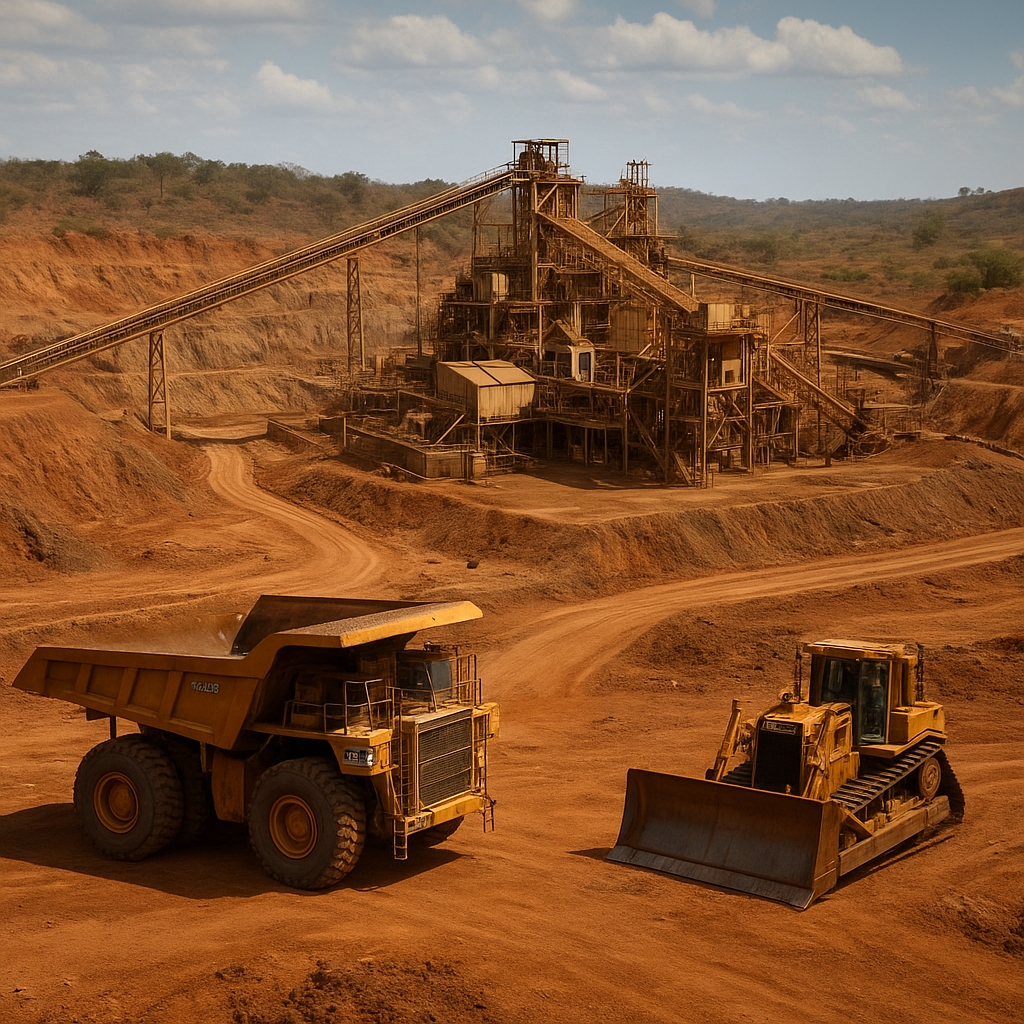
- Mining: Graphite is extracted by open pit or underground methods depending on deposit geometry and depth. Vein graphite can sometimes be recovered in large, crystalline lumps; flake graphite is often recovered by mechanical beneficiation.
- Concentration: Froth flotation and gravity separation are common for upgrading flake graphite by removing gangue minerals.
- Purification: Battery and electronic applications demand very high purity. Purification may involve chemical leaching, thermal treatment, or combined methods to remove residual ash and metallic impurities.
- Synthetic production: Industries produce synthetic graphite by high-temperature heat treatment (graphitisation) of carbonaceous precursors such as petroleum coke and coal tar pitch, enabling control over properties like density and electrical resistivity.
Environmental and social aspects
Mining activity raises typical concerns: land disturbance, water use, and community impacts. Fine graphite dust can pose health risks if inhaled over long periods, so occupational controls are important. On the other hand, graphite is also a target for recycling—scrap from electrodes, brakes and lithium-ion batteries can be recovered and processed, contributing to supply resilience.
Major applications and technological roles
Graphite’s unique combination of thermal, electrical and mechanical properties has led to a wide array of applications. Below are major sectors where graphite is central.
Energy storage and electrochemistry
- Battery anodes: Natural and synthetic graphite are the dominant anode materials in lithium-ion batteries because lithium intercalates between graphene planes with favourable reversibility and energy density. Optimising particle size, surface coatings and impurities is a major research and industrial focus.
- Electrodes: Graphite electrodes are standard in electric arc furnaces for steelmaking and smelting due to their conductivity and high-temperature performance.
- Fuel cells and capacitors: Activated forms of graphite and graphitic carbons are used in electrodes, gas diffusion layers and current collectors across electrochemical devices.
High-temperature engineering and refractories
Because of its stability at elevated temperatures under inert atmospheres, graphite is used for crucibles, furnace linings, and moulds in foundries and metallurgical processes. Combining graphite with ceramics creates composite materials that exploit graphite’s thermal conductivity and lubricity while gaining oxidation resistance.
Lubricants, coatings and composites
Graphite’s ability to form thin, slippery films makes it a valuable dry lubricant in seals, bearings and high-temperature mechanisms. Graphite powders and greases reduce friction where wet lubricants would fail. Graphite flakes or fibres embedded in polymers and metals produce composites with enhanced strength, thermal management and electrical conductivity—useful in aerospace, automotive and industrial components.
Scientific research and advanced materials
- Intercalation chemistry: Graphite can host atoms and molecules between its layers, forming intercalation compounds with unusual electronic properties. This behaviour underpins technologies like rechargeable batteries and is a rich field of materials chemistry.
- Graphene extraction: The mechanical exfoliation that yielded graphene in the early 2000s relied on peeling layers from graphite. Since then, graphite has been the raw feedstock for diverse graphene production methods, including chemical exfoliation and thermal expansion.
- Nuclear applications: Certain forms of purified graphite serve as neutron moderators and reflectors in nuclear reactors because of their low neutron absorption and structural stability under radiation.
Innovations and interesting science
Graphite is not just an industrial commodity; it is a platform for scientific breakthroughs and creative technologies.
From pencil marks to nanotechnology
The familiar pencil owes its lineage to graphite. Early users discovered that some graphite deposits left a dark streak similar to lead—hence the misnomer „plumbago.” But modern research that isolated single graphene sheets from graphite has transformed the material into a gateway to nanoscience. Single-layer graphene exhibits extraordinary carrier mobility, mechanical strength and optical transparency, and graphite remains the most accessible macroscopic source of these layers.
Graphite intercalation and superconductivity
Intercalation compounds—where guest species are inserted between graphene layers—alter electronic structure and can induce superconductivity in certain graphite-based systems. While these superconducting phases are typically fragile and appear under specific compositions and conditions, they reveal the capacity of stacked carbon layers to host exotic quantum states when chemically tuned.
Thermal management and electronics
As device power densities climb, managing heat becomes critical. Graphite’s in-plane thermal conductivity is extremely high relative to many common materials, making it useful as a heat spreader in electronics. Engineered graphite sheets and foils are now standard options for thermal interface materials in laptops, LEDs and power electronics.
Sustainability and circular economy
Demand for graphite is rising with the electrification of transport, and concerns about supply chain concentration have driven interest in domestic production and recycling. Research into low-impact synthesis methods, greener purification techniques, and efficient recovery from spent batteries aims to reduce environmental footprint while meeting demand for high-purity material.
Health, safety and handling
Graphite is generally considered low-toxicity, but precautions are necessary in occupational settings. Inhalation of fine particles can cause respiratory irritation and chronic exposure to dust may lead to lung issues. Handling high-temperature graphite requires protection against oxidising environments, which can degrade material and produce particulate by-products. Where chemical treatments are used for purification, safe chemical handling and waste treatment are essential.
Best practices
- Use local exhaust ventilation and dust control in processing facilities.
- Apply appropriate personal protective equipment (PPE) such as respirators and protective clothing when required.
- Store and transport large graphite masses safely to prevent mechanical damage and dust generation.
- Provide training on safe chemical purification procedures and ensure regulatory compliance for emissions.
Future directions and challenges
Graphite’s role in modern technology is evolving quickly. Batteries alone are driving intense demand for high-quality graphite, prompting innovations in resource development and material engineering. At the same time, the interplay between graphite and its two-dimensional offspring, graphene, continues to blur boundaries: techniques for exfoliating graphite produce a spectrum of materials from few-layer graphene to functionalised graphite derivatives.
Key challenges
- Supply and sustainability: Securing stable, environmentally responsible sources of both natural and synthetic graphite is a strategic priority for many industries.
- Purity and performance tuning: For high-end electronic and battery applications, controlling impurities and microstructure is essential—demanding precise processing routes.
- Oxidation resistance: Improving graphite’s tolerance to oxidising environments at high temperatures expands its applicability in aero and energy sectors.
- Scalable graphene integration: Bridging the gap between laboratory-scale graphene demonstrations and mass-market products remains a technical and economic challenge.
Exciting possibilities
- Composite electrification: Hybrid materials combining graphite with polymers, ceramics and metals will create components with tailored multifunctionality—structural, thermal and electrical.
- Advanced battery chemistries: Beyond lithium-ion, emerging systems may exploit graphite’s intercalation chemistry in new ways, or use graphite derivatives as hosts for novel ions.
- Quantum and electronic devices: Stacked and twisted graphite/graphene architectures (so-called moiré systems) have revealed correlated electronic phases that could inspire future quantum technologies.
Across ancient uses and cutting-edge research, graphite remains a material of enormous versatility. Its deceptively simple layered form gives rise to a richness of behaviours—electronic, thermal and mechanical—that continue to be harnessed in traditional industries and in the frontiers of materials science. Understanding the geological origins, processing pathways, and engineering possibilities of graphite is therefore vital for industries from metallurgy to energy storage to electronics, and for the scientists who keep pushing the limits of carbon-based materials.