
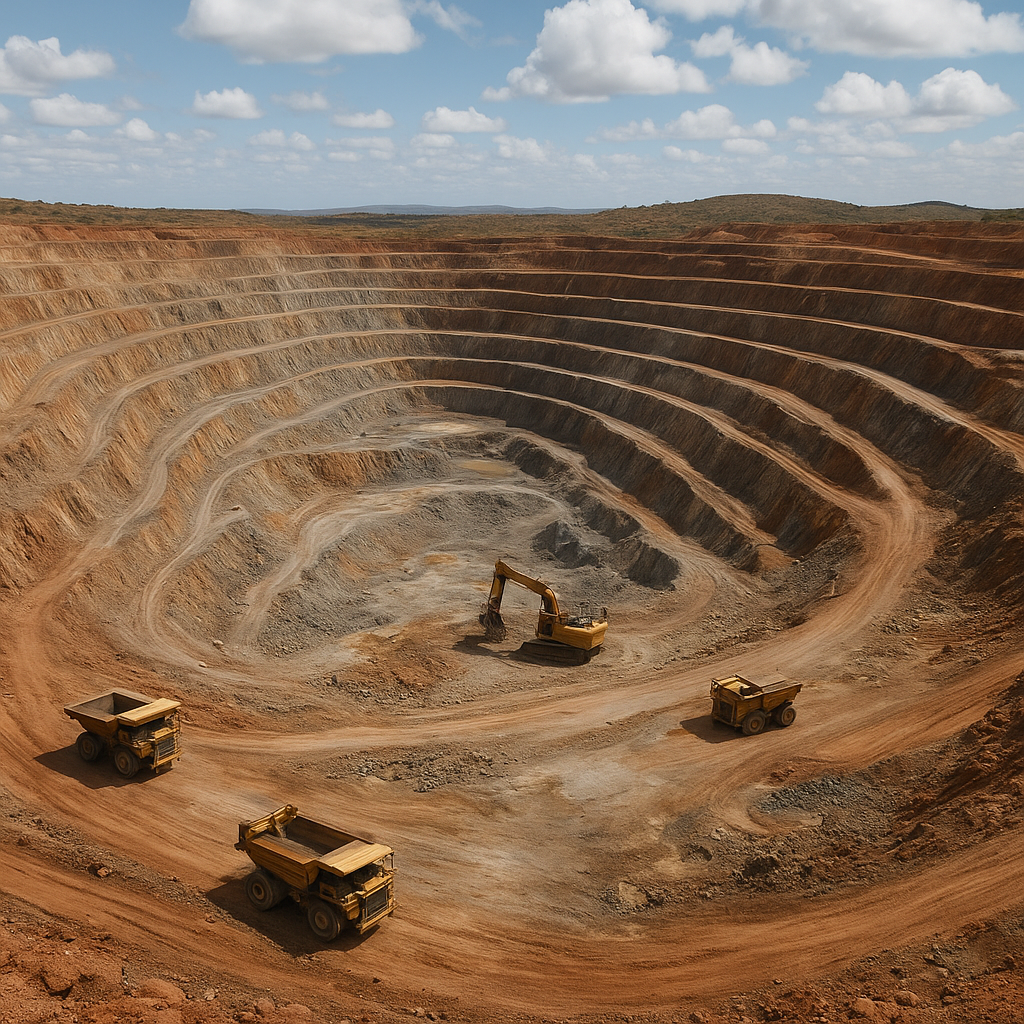
The Mona Gema Mine sits among the diamond-bearing landscapes of southern Africa and has come to represent a distinct chapter in Angola’s mineral story. This article examines where the mine is located, the types of material extracted there, the operation’s broader economic footprint, and several noteworthy aspects that make Mona Gema an interesting case study in modern African mining. Throughout the text, key terms and names that are central to the mine’s identity and impact are highlighted to draw attention to their importance.
Location and Geological Setting
The Mona Gema Mine is located in a region historically associated with diamond discoveries in Angola. The Angolan diamond belt runs through the northeastern and central provinces, with concentrations of deposits in provinces such as Lunda Norte and Lunda Sul. Geologically, the area is part of an ancient cratonic block where kimberlite pipes and secondary alluvial deposits are both present. These two deposit types dictate very different mining approaches, and Mona Gema has been involved with operations that interact with both primary and secondary sources.
Primary diamond sources in Angola are typically associated with kimberlite and lamproite pipes—vertical volcanic conduits that transported diamonds from the mantle to the surface hundreds of millions of years ago. When kimberlite pipes are exposed and economically viable, they are exploited by large-scale open-pit or underground methods depending on depth and orebody geometry.
Secondary deposits, often referred to as alluvial deposits, result when diamonds are released from their primary host rocks and transported by water or gravity into riverbeds, terraces, and coastal plains. These alluvial concentrates can be mined with dredging, suction methods, or small-scale artisanal techniques. Mona Gema’s operations have included strategies to locate and recover diamonds both from weathered primary horizons and from reworked alluvial sediments.
What Is Extracted: Diamonds and Associated Minerals
The core commodity of the Mona Gema Mine is, unsurprisingly, diamonds. Angola’s diamonds are known for a spectrum of qualities—ranging from industrial-grade stones used in cutting and drilling applications to higher-quality gem diamonds that enter international jewelry markets. Mona Gema has produced a mix of these quality classes, with occasional finds of larger gem-quality stones that attract particular attention from buyers and media alike.
Beyond gem-quality gems, the mine’s operations must manage a range of associated materials. Kimberlitic ore contains a matrix of country rock and indicator minerals—such as garnet, ilmenite, and clinopyroxene—that guide exploration teams toward economically viable concentrations. Processing the ore also yields by-products like heavy minerals and sulfides which, while not as valuable as diamonds, influence processing choices and tailings management.
At the plant level, diamond recovery uses a combination of crushing, dense media separation, x-ray sorting, and grease table concentration, depending on the feed type. Alluvial operations often depend more on gravity separation and careful screening before final recovery to protect fragile, high-value stones.
Mining Methods and Operational Structure
Operations at Mona Gema reflect a hybrid approach shaped by the deposit type and the socio-economic environment. For kimberlite-hosted ore, open-pit methods are often preferred where the overburden and ore geometry allow. These activities involve large-scale earthmoving, blasting, and hauling, supported by a processing plant capable of treating millions of tonnes per year. In contrast, alluvial zones require more selective extraction techniques which can be adapted for low-capital, high-turnover activity.
Workforce composition at the site typically includes a technical core comprising geologists, mining engineers, metallurgists, and environmental specialists, alongside a larger labor force focused on earthworks, plant operation, and logistical support. The mine has developed systems to recruit and train local labor, balancing mechanized processes with hands-on roles that can be filled by community members.
Ownership and management models in Angolan diamond mining tend to combine state participation with foreign investment and technical partners. State mining institutions play a role in licensing and diamond sales, and many private operators enter into joint ventures or production-sharing agreements to access capital, technology, and markets. Mona Gema’s operating model reflects this broader pattern, with emphasis on compliance with national regulations and integration into Angola’s diamond marketing channels.
Economic Significance: Local and National Impacts
The economic footprint of the Mona Gema Mine extends beyond the immediate value of recovered diamonds. At the local level, employment and procurement generate demand for services, housing, transportation, and small business growth. For many towns and settlements near the mine, Mona Gema has been a major employer and a catalyst for modest infrastructure improvement.
Nationally, diamond production remains a critical contributor to export earnings and government revenue for Angola. Sales of rough diamonds feed into state coffers through licensing fees, royalties, and state equity stakes, and these funds support public budgets and development programs. Sales channels in Angola are structured to ensure traceability and compliance with international standards, with state-affiliated buyers and authorized dealers managing the flow of rough stones to world markets.
One measurable economic impact of a mine like Mona Gema is its role in generating foreign exchange. Diamonds sold on international markets convert into hard currency that the national treasury can use to import goods, invest in infrastructure, and service debt. Additionally, local content policies mean some procurement is done from local suppliers, stimulating downstream economic activity such as transport logistics, catering, and equipment maintenance.
Employment is another significant economic benefit. Mines generally provide a range of jobs—from skilled technical positions to unskilled labor—that can raise household incomes in rural areas. Mona Gema’s employment practices have included training programs designed to upgrade the skills of the local workforce, with an eye toward longer-term employability beyond the life of the mine.
Social and Community Dimensions
Large mining operations affect nearby communities in multiple ways. Mona Gema has been involved with community development programs that target education, healthcare, and small enterprise support. These interventions aim to create sustainable benefits where the mine’s presence is transient relative to generational community needs.
At the same time, mines can create social challenges: displacement, changing livelihoods, and increased demand for public services can strain local capacities. Effective community engagement has therefore been a priority for management, with regular consultations, grievance mechanisms, and benefit-sharing arrangements designed to minimize conflict and distribute advantages more fairly.
Environmental Considerations and Rehabilitation
Diamond mining carries environmental risks, particularly where alluvial mining disturbs river systems or where open-pit operations create large landforms. Managing these impacts requires robust environmental planning and the implementation of rehabilitation measures. Typical practices include progressive reclamation of disturbed land, water management systems to prevent siltation and contamination, and the restoration of topsoil for eventual revegetation.
Mona Gema’s environmental program focuses on reducing the footprint through controlled tailings storage, dust suppression, and monitoring of biodiversity indicators. Mines must also comply with national environmental regulations and international best practices. As part of post-mining planning, operators develop closure plans that specify how pits will be stabilized, how waste material will be handled, and how communities will be supported after production decreases.
Market Pathways and Value Chain
Diamonds from Mona Gema enter a tightly regulated value chain. Rough stones are categorized, sorted, and then sold through authorized channels where valuation is performed by trained experts. In Angola, state institutions have historically played a central role in aggregating and marketing diamonds to ensure legal compliance and to maximize returns.
Once exported, diamonds can follow multiple paths: some go to global cutting and polishing centers, others enter industrial supply chains, and gem-quality stones are eventually sold through the retail jewelry market. The value addition along the chain—from rough to polished—represents an opportunity for countries like Angola to retain more economic benefit locally, a policy aim frequently discussed by policymakers and industry stakeholders.
Interesting and Noteworthy Aspects
- Mona Gema Mine has occasionally yielded unusually large stones that capture attention beyond industry circles, illustrating how a single find can have outsized economic and symbolic impact.
- The mine’s location within Angola places it in a country that transformed from years of conflict to a prioritized investment zone for extractive industries; development of the sector has been central to national reconstruction strategies.
- Angola’s participation in international certification schemes—such as the Kimberley Process—means diamonds from operations like Mona Gema are subject to traceability protocols aimed at preventing the trade in conflict diamonds.
- The coexistence of large-scale industrial mining with artisanal and small-scale mining nearby creates a complex social and regulatory environment. Managing this interface is a recurring challenge and a field of innovation for companies and regulators alike.
- Technological adaptation has been a feature of modern Angolan diamond operations: sophisticated recovery equipment, geo-survey methods, and digital inventory systems increase efficiency and transparency in the supply chain.
Challenges and Future Prospects
Like many resource projects, Mona Gema faces a set of constraints that condition its future. Commodity price volatility affects revenue forecasts; regulatory changes can alter the fiscal landscape; and environmental and social license issues require continuous attention. Strategic outlooks for mines in Angola typically combine efforts to improve operational efficiency, invest in community relations, and explore value-added opportunities such as local polishing and cutting initiatives.
Looking ahead, the mine’s prospects will also depend on exploration success in the surrounding region. New discoveries, whether of additional kimberlite pipes or rich alluvial zones, could extend the mine life and attract further investment. Conversely, depletion of near-surface resources would push the operation toward deeper, more capital-intensive mining phases or encourage transitions to alternative local economic activities supported by revenue from the mine.
Concluding Remarks on Significance
Mona Gema Mine is emblematic of how natural resource projects can shape regional economies and national export profiles. Its extraction of diamonds connects local geology to global markets, generating production revenues and creating employment while posing environmental and social management imperatives. The interplay between state actors, private investors, and local communities underscores the broader dynamics of Angola’s resource governance. For observers of the diamond industry and for communities living near the mine, Mona Gema is both an economic engine and a case study in the complexities of responsible mineral development.

