
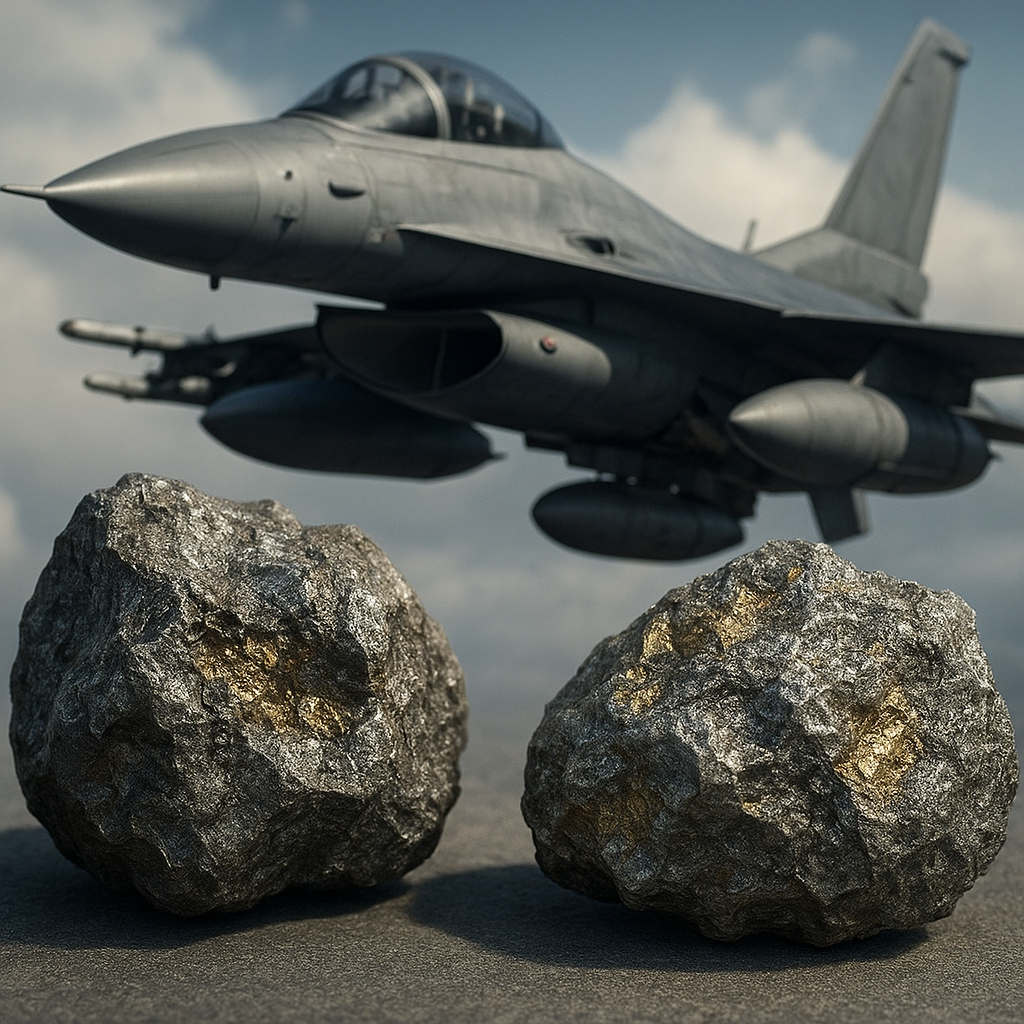
The increasing sophistication of modern aerospace and defense platforms depends as much on materials science as on aerodynamics or software. Advanced aircraft, missile systems, satellites and hypersonic vehicles rely on a handful of rare metals and specialty elements that provide exceptional combinations of strength, temperature resistance, electrical behavior and magnetic performance. This article examines which elements are most critical, how they are used in aerospace defense technologies, and the strategic, environmental and technical challenges associated with their supply and application.
Fundamental properties and key elements
Material selection in aerospace defense is guided by a set of demanding requirements: extreme operating temperatures, high strength-to-weight ratios, resistance to corrosion and fatigue, predictable failure modes, and specialized electrical or magnetic properties. Several less-common elements contribute disproportionately to those properties. A concise list of particularly important metals and their functional roles follows.
- Rhenium — used in turbine engine superalloys to enhance creep resistance and allow higher operating temperatures.
- Titanium — lightweight, high-strength, and corrosion-resistant; prevalent in airframes, fasteners and defense-grade structural components.
- Tungsten — extremely high melting point and density; used in penetrators, counterweights, high-temperature components and radiation shielding.
- Niobium — contributes to high-temperature strength and oxidation resistance in aerospace alloys and rocket engine components.
- Hafnium — valued for high-temperature alloys and control rod applications in specialized systems; also improves oxidation resistance in coatings.
- Rare-earth elements (e.g., neodymium, dysprosium) — central to high-performance permanent magnets used in actuators, motors and guidance systems.
- Platinum-group metals (platinum, palladium, iridium) — used in sensors, catalytic converters for certain chemical threats, and high-temperature electrical contacts.
- Specialty elements (scandium, tantalum, molybdenum) — used in aluminum-scandium alloys, capacitors, and high-strength refractory alloys respectively.
Materials classes and how rare elements improve them
Several material classes dominate aerospace defense applications: metal alloys (including superalloys), ceramics and ceramic matrix composites (CMCs), polymers and polymer matrix composites (PMCs), and functional materials (magnets, sensors, electronic compounds). Rare metals and critical elements are incorporated in minute but decisive quantities:
- Superalloys for turbine blades incorporate rhenium, tantalum and cobalt to retain strength at extreme temperatures and to resist creep.
- CMCs use hafnium or zirconium-bearing phases and rare-earth dopants to stabilize thermal barrier coatings.
- Permanent magnet assemblies rely on neodymium-iron-boron chemistry with dysprosium added where high coercivity at elevated temperatures is required.
- Specialty electronic packages and microwave components use gallium, indium and platinum-group metals for conductivity and stability in harsh environments.
Applications in aerospace defense platforms
Rare metals contribute directly to performance improvements that define modern defense capabilities. Below are prominent application areas and examples of how materials enable specific functions.
Air-breathing propulsion and gas turbines
Jet and turbofan engines run at extreme internal temperatures to maximize efficiency and thrust. The hottest sections — turbine blades and vanes — demand materials that maintain strength while resisting oxidation and creep. Small additions of rhenium, tantalum and niobium to nickel- and cobalt-based alloys allow engines to operate hotter, improving fuel efficiency, range and thrust-to-weight ratios for combat aircraft.
Hypersonics and thermal protection
Hypersonic vehicles and reentry systems face severe aerodynamic heating. Materials like tungsten and specialized hafnium- or zirconium-containing ceramics are used in leading edges and thermal protection systems. High-temperature coatings, often doped with rare elements, extend component life and reduce maintenance intervals.
Structural components and weight reduction
Aircraft and missile airframes use a mix of composites and metallic alloys. Titanium’s combination of light weight and high strength makes it ubiquitous in structural members, landing gear and fasteners where corrosion resistance is critical. Scandium additions to aluminum alloys permit thinner gauges and improved fatigue life, enabling additional weight savings.
Guidance, control and electronic systems
Advanced guidance and sensing packages require magnets, high-purity electronic materials and stable contact metals. High-energy permanent magnets containing neodymium and dysprosium deliver compact, powerful actuators for gimbals and rudders. Platinum-group metals and indium are found in high-reliability contacts and semiconductor packaging used in avionics and satellite subsystems.
Supply chain, strategic risk and sustainability
The concentration of mining, processing and refining capacity for many rare metals creates strategic vulnerabilities for defense industries. A handful of countries supply disproportionate shares of certain elements, prompting national-security concerns and policy responses.
Geopolitical concentration and criticality
China currently dominates the processing and rare-earth separation industries, while the Democratic Republic of Congo supplies a large portion of global cobalt. Production of tungsten, niobium and platinum-group metals is similarly uneven. These concentrations create risks: export restrictions, trade disputes, or instability in producing regions can interrupt defense supply chains. Governments respond with stockpiles, diversification of suppliers, and support for domestic processing capability development.
Environmental, ethical and regulatory pressures
Mining and refining rare metals can have significant environmental impacts, including habitat disruption, water contamination and greenhouse gas emissions. Social concerns include labor conditions and the potential for conflict-financing in certain mineral-rich regions. Defense contractors and governments increasingly require responsible sourcing, third-party auditing, and investment in recycling and alternative materials to mitigate these issues.
Recycling, substitution and material innovation
Recycling and reuse are becoming central strategies to reduce reliance on primary raw materials. Recovering neodymium from end-of-life motors, reclaiming rhenium from scrap superalloy components, and urban mining of electronics are nascent but growing fields. Concurrently, research into substitution — for example, reducing dysprosium content in magnets by grain-boundary engineering — aims to preserve performance while lowering strategic exposure.
Emerging research directions and manufacturing trends
Advances in processing and design are unlocking new ways to use rare metals more efficiently and to achieve capabilities previously seen as unrealizable.
Additive manufacturing and alloy design
Metal additive manufacturing (3D printing) enables component geometries that reduce part count and allow functionally graded materials. This capability reduces waste of scarce elements and permits localized placement of costly alloying additions only where needed. New computational alloy-design tools and machine learning accelerate the discovery of compositions that balance performance with availability.
High-entropy alloys and coatings
High-entropy alloys (HEAs) and advanced coatings use combinations of several elements, including rare metals, to achieve exceptional mechanical and thermal properties. HEAs show promise for next-generation turbine components and structural elements that must withstand extreme environments while minimizing single-element dependencies.
Functional materials and sensor technology
Quantum and photonic sensors sometimes rely on rare-earth-doped crystals or specialty metals to achieve high sensitivity and environmental robustness. Continued miniaturization and improved materials science enhance performance of inertial measurement units, magnetometers and secure communication components.
Policy and industrial responses
Because material availability directly affects defense readiness, policymakers are funding research into domestic mining, processing and recycling; incentivizing supply-chain resilience; and setting standards for sustainable sourcing. Collaborative public-private initiatives focus on critical material stockpiling, diversification of suppliers and qualification pathways for novel materials in certified aerospace systems.
Overall, the integration of rare metals into aerospace defense technologies reflects a balance between unmatched material performance and the practical realities of supply, cost and sustainability. Continued progress will require co-development across metallurgy, manufacturing, policy and environmental stewardship to ensure reliable access to the elements that underpin modern defense capabilities.
