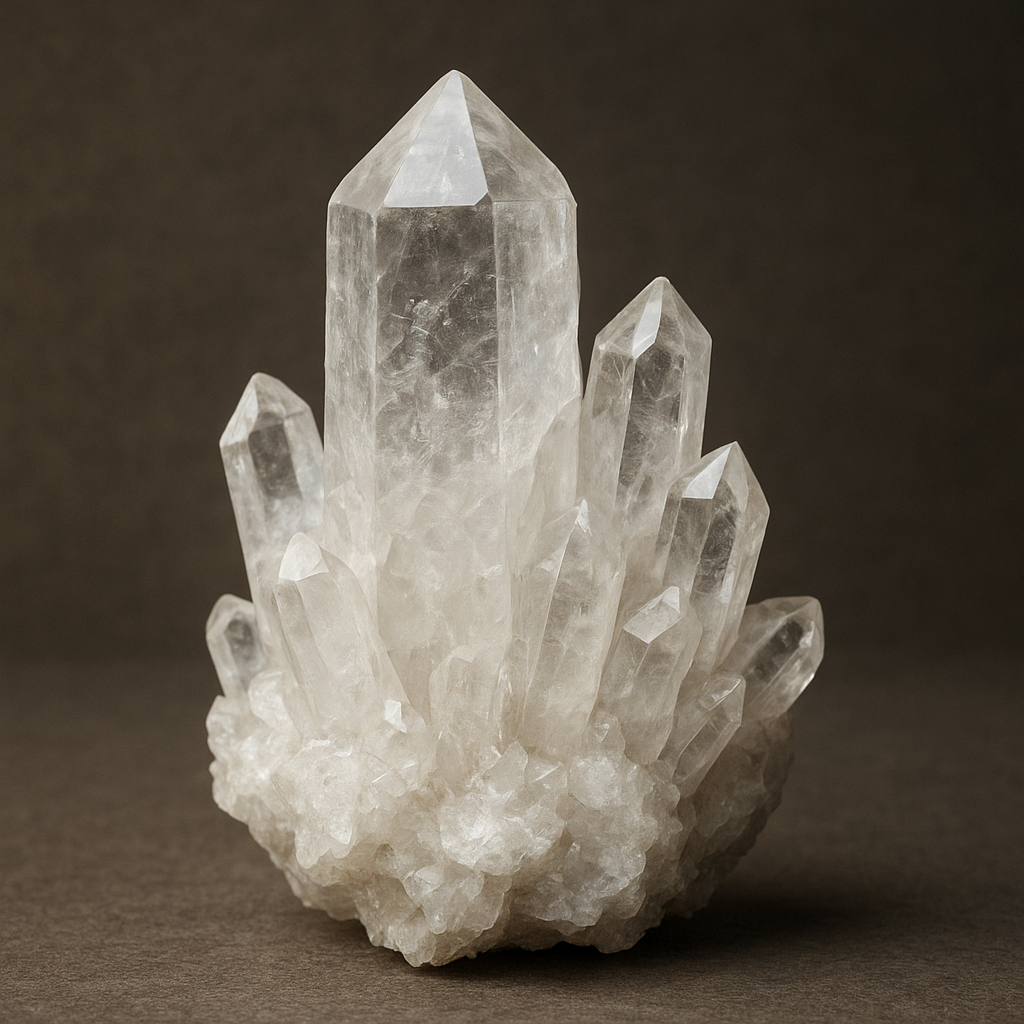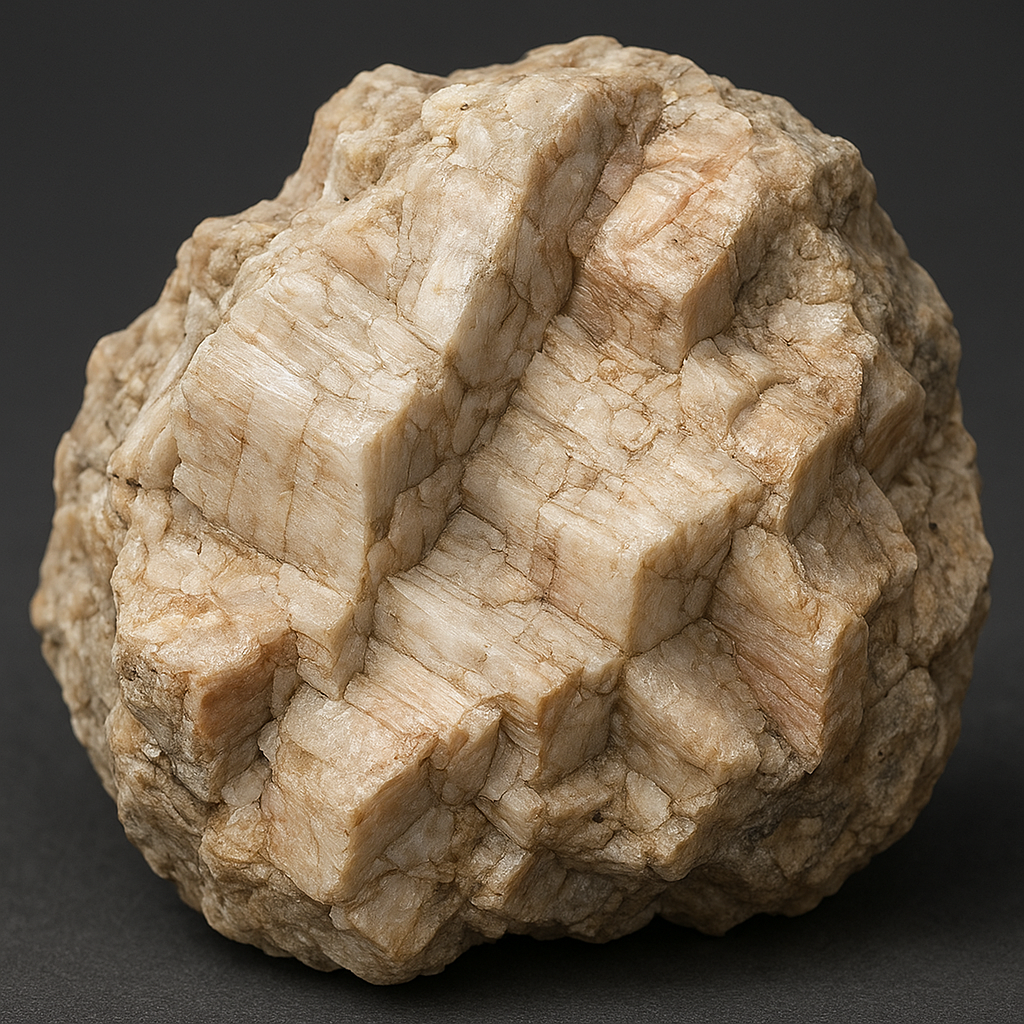
Feldspar is one of the most important and abundant groups of rock-forming minerals on Earth, influencing landscapes, industry, and scientific research. This article explores where feldspar occurs, how it is identified and processed, its many applications—from traditional ceramics to modern materials science—and several interesting facets of its geology and cultural relevance. Along the way, selected technical, economic, and environmental aspects will be highlighted to give a well-rounded picture of why this seemingly ordinary mineral group is so valuable.
Geology and Occurrence
Feldspar groups dominate the composition of the continental crust and appear in a broad range of rock types. As tectonic environments vary, so do the feldspar minerals that crystallize and persist. The three end-member chemical formulas—orthoclase (KAlSi3O8), albite (NaAlSi3O8), and anorthite (CaAl2Si2O8)—define the principal solid-solution series that create the diversity seen in nature. The two major subgroups are the alkali feldspars (K-Na rich) and the plagioclase feldspars (Na-Ca series).
Feldspar forms in igneous, metamorphic, and sedimentary settings. In igneous rocks, large euhedral crystals of alkali feldspar and plagioclase are common in granites, syenites, and gabbros. In volcanic rocks, fine-grained feldspars occur as phenocrysts or in the groundmass of andesites and basalts. Metamorphic rocks such as gneisses and schists often contain feldspar that has recrystallized under pressure and temperature changes. Sedimentary deposits include feldspathic sandstones (arkoses), where feldspar grains are preserved when erosion and burial are rapid enough to prevent extensive chemical weathering.
Global distribution is broad: many major feldspar-producing regions include parts of Europe, North America, China, Turkey, and India. Plagioclase-rich anorthosite bodies are notably widespread and are also found on the lunar highlands, where ancient anorthosite crust is a defining feature. The mineral’s prevalence is tied to the stability of aluminosilicate frameworks across a wide range of temperatures and pressures.
Mineralogy, Structure, and Identification
Feldspars are framework silicate minerals in which silicon and aluminum tetrahedra are linked by shared oxygen atoms, forming three-dimensional networks. The substitution of Al for Si in these networks requires charge balance, which is achieved by the presence of alkali or alkaline-earth cations (K+, Na+, Ca2+). This substitution leads to the various compositions and properties across the feldspar series.
Key identifying features include two directions of perfect cleavage intersecting at nearly right angles, Mohs hardness around 6–6.5, and specific gravity generally between 2.56 and 2.76 depending on composition. Optical properties in thin section—such as twinning patterns (Carlsbad, albite, and perthitic textures)—are diagnostic for feldspar types in petrographic analysis. Perthite, the intergrowth of K-rich and Na-rich feldspars, forms when alkali feldspar unmixes during cooling, producing a distinctive texture often visible with a hand lens.
Plagioclase is commonly classified by the percentage of anorthite component (An): albite (An0–10), oligoclase (An10–30), andesine (An30–50), labradorite (An50–70), and bytownite to anorthite (An70–100). This compositional classification helps petrologists infer crystallization temperatures and tectonic settings. For example, high-An plagioclase tends to crystallize from mafic magmas, while low-An plagioclase is common in felsic compositions.
Industrial Applications and Processing
Feldspar’s role in industry is extensive, largely rooted in its function as a fluxing agent and source of alumina. The most prominent application is in the ceramics and glass industries. In ceramics, feldspar lowers the melting temperature of the mixture, improving vitrification and strength while influencing color and translucency—critical for the manufacture of porcelain and fine china. In the glass industry, feldspar acts as a source of alkalis (K2O and Na2O) and alumina (Al2O3), helping to control viscosity and improve chemical durability.
Other applications include use as fillers in paints, plastics, and rubber, where crushed and milled feldspar contributes to hardness, chemical inertness, and dimensional stability. It is also found in the production of tiles, sanitary ware, and frits. The word ceramics in many manufacturing contexts can often be replaced by feldspar-rich formulations in glazes and bodies.
Processing of feldspar for industrial use typically involves mining, crushing, grinding, and various beneficiation steps to remove impurities such as mica, quartz, and iron-bearing minerals. Magnetic separation, flotation, and chemical processing may be used to upgrade concentrates. For glass and ceramic industries, chemical purity and particle size distribution are critical, so further milling and classification processes are applied to meet specification requirements.
Specialized Uses and Technological Relevance
Beyond traditional uses, feldspars have roles in modern technologies. Their alumina content makes them relevant as precursors in ceramics engineered for electronics, such as dielectric substrates and insulators. Feldspar-derived glass-ceramics sometimes exhibit tailored thermal and mechanical properties suitable for cooktops and other specialty applications.
In concrete technology, feldspar can be present as aggregate or fine filler; however, it can also participate in deleterious chemical reactions such as the alkali-silica reaction (ASR) when reactive silica phases are available. Understanding the reactivity of feldspathic materials is therefore important in infrastructure durability studies.
Feldspar minerals are also central to geochronological techniques. Potassium-bearing feldspars (especially orthoclase and microcline) have been used in K-Ar and Ar-Ar dating to determine the age of igneous and metamorphic events. These methods rely on the decay of 40K to 40Ar and can date thermal histories and cooling rates when combined with diffusion modeling. Feldspar diffusion profiles and exsolution textures are additionally used to reconstruct cooling rates and magmatic histories.
Environmental and Economic Considerations
As a major industrial mineral, feldspar mining has environmental footprints that include land disturbance, dust generation, and water use for processing. Responsible mining practices and rehabilitation of quarry sites are essential for sustainable development. Beneficiation often generates tailings that must be managed to minimize leaching of fine particulates and associated contaminants. Advances in processing aim to improve yield and reduce waste, including closed-circuit water systems and dry beneficiation techniques in arid regions.
Economically, feldspar is a low-value, high-volume commodity. Market dynamics depend on global glass and ceramics demand, construction activity, and the quality of available deposits. High-purity feldspar suitable for advanced glass and ceramic applications commands premium prices, motivating investment in beneficiation technology and exploration for superior deposits.
Feldspar in Earth and Planetary Science
Feldspar’s abundance makes it a critical recorder of geological processes. Its composition and zoning patterns reflect magmatic differentiation, fractional crystallization, and magma mixing. Plagioclase zoning, for example, can preserve information about changing melt composition and eruption dynamics in volcanic systems.
On the Moon, anorthosite plains dominated by plagioclase feldspar formed early in lunar history as buoyant plagioclase floated to the surface of the lunar magma ocean. This discovery provided crucial evidence for models of planetary differentiation. On Earth, large anorthosite bodies can also inform about crustal processes and mantle-crust interactions.
Feldspar also interacts with surface processes: chemical weathering converts feldspar to clay minerals (kaolinite, illite, smectite), influencing soil fertility and landscape evolution. The rate of feldspar weathering is a key control on long-term CO2 sequestration via silicate weathering, linking mineralogy to global carbon cycles on geologic timescales.
Archaeology, Provenance Studies, and Cultural Uses
Feldspar-bearing rocks and minerals have shaped human material culture, from stone tools to pottery. In archaeological science, mineralogical analysis of ceramic fabrics often focuses on inclusions such as feldspar to determine raw material sources and manufacturing techniques. The presence of specific feldspar types can help provenance ceramic shards and reconstruct ancient trade routes.
Historically, feldspar-rich glazes and bodies have been prized for their aesthetic qualities. The translucency and whiteness achieved in porcelain owe much to feldspar’s fluxing action and its contribution to the glassy matrix in fired bodies. Certain feldspathic feldspars were even selected for decorative stone uses where luster and texture were desired.
Interesting Facts and Lesser-Known Aspects
- Feldspar constitutes roughly 60% of the Earth’s crust by volume, making it the largest group of minerals by abundance.
- Perthitic textures—exsolution lamellae of sodium feldspar within potassium feldspar—often produce attractive patterns that can be used as gemstone material or decorative stone.
- The name “feldspar” comes from the German Feldspat: feld (field) + spat (a rock that breaks with a smooth face), reflecting common occurrences in feld (fields) or outcrops.
- Some feldspars show iridescence or “labradorescence” (e.g., labradorite), an optical phenomenon that has inspired use in jewelry and ornamentation.
- Feldspar breakdown is a primary source of soil-forming clays and contributes essential nutrients such as potassium, influencing agriculture in certain landscapes.
Research and Future Directions
Contemporary research on feldspar spans improvements in mineral processing, nanoscale characterization of diffusion and defect structures, and applications in sustainable materials. For example, researchers are investigating how feldspar-rich industrial byproducts can be repurposed as supplementary cementitious materials or fillers in polymer composites to reduce waste and carbon footprints.
In petrology and volcanology, high-resolution analytical techniques—like electron backscatter diffraction (EBSD) and atom probe tomography—are revealing feldspar microstructures at unprecedented scales, refining our understanding of magmatic kinetics and crystal growth. In planetary science, ongoing sample-return missions and remote sensing continue to use feldspar signatures to interpret crustal composition and planetary evolution.
Practical Notes for Non-Specialists
For hobbyists, rock collectors, and small-scale artisans, recognizing and using feldspar is straightforward. In geology fieldwork, look for blocky crystals with two cleavages at about 90 degrees, and test hardness against glass or a steel knife. In ceramics, commercially available feldspar powders are graded for specific glaze and body recipes; substituting local feldspathic rock requires testing because impurities can change firing behavior and color. Always handle dust from crushing or grinding with appropriate respiratory protection.
Key terms and their importance
- feldspar — the primary subject and the most abundant mineral group in the continental crust.
- orthoclase — a potassium-rich feldspar, important in dating and ceramic applications.
- albite — a sodium-rich feldspar, forming part of the plagioclase series.
- anorthite — the calcium-rich plagioclase end-member, important in mafic rocks and lunar geology.
- ceramics — one of the largest industrial users of feldspar.
- glassmaking — feldspar provides fluxing agents and alumina for glass bodies.
- industrial — denotes the broad applications and economic significance of feldspar.
- geochronology — feldspar’s role in dating geological events via potassium-argon methods.
- silicate — the structural class that feldspar belongs to, explaining its properties and reactions.
- microcline — a K-feldspar polymorph often associated with slow cooling and characteristic twinning.