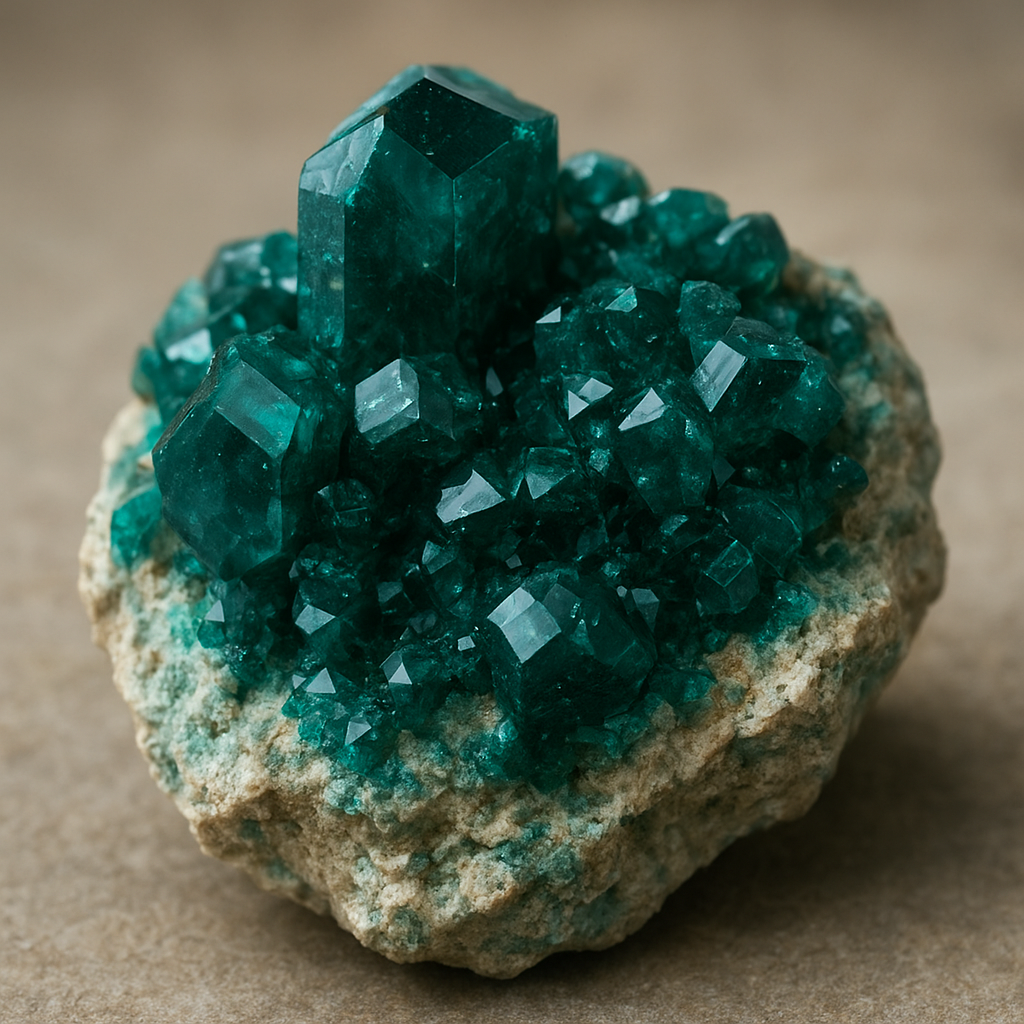
Dioptase is an unforgettable mineral, immediately recognized by its intense, jewel-like color and delicate crystal habits. For collectors, geologists and lapidary artists alike, this copper-bearing mineral embodies a blend of scientific interest and aesthetic value. The following article explores dioptase from multiple angles: its nature and properties, the geological settings that produce it, its uses and cultural resonance, and a selection of fascinating facts that highlight why dioptase continues to attract attention from around the world.
What is Dioptase?
Dioptase is a secondary copper mineral known for its bright, emerald-like green color and often brilliant luster. Unlike many opaque copper minerals, dioptase can be translucent to transparent in thin crystals, producing a saturated hue that makes it highly desirable to collectors. It forms distinct, well-terminated crystal habits, commonly appearing as short prismatic crystals grouped in drusy coatings or as isolated individual crystals on matrix. Classified broadly as a copper silicate, dioptase typically grows in the oxidized zones of copper deposits where groundwater and weathering processes alter primary sulfides into colorful secondary minerals.
Physical and optical characteristics
- Color: vivid emerald to bluish-green, depending on thickness and lighting.
- Luster: vitreous to subadamantine on crystal faces.
- Transparency: ranges from transparent in thin edges to translucent.
- Habit: well-formed prismatic crystals, often terminated, or crusts and aggregates.
- Associations: frequently found with calcite, quartz, malachite, chrysocolla and other secondary copper minerals.
Geology and Where Dioptase Occurs
Dioptase is a product of the oxidation and weathering of copper sulfide deposits. When meteoric water interacts with primary copper ores, it mobilizes copper ions which subsequently react with silica-rich solutions in the oxidized zone. Under suitable conditions — such as appropriate pH, availability of silica and restricted space for crystal growth — dioptase can form attractive, well-crystallized specimens. Although the mineral is not abundant globally, it occurs in several notable localities where geological history has created ideal environments for secondary copper mineralization.
Major localities and what makes them special
- Tsumeb, Namibia — Arguably the most famous and historically important locality. Tsumeb’s complex polymetallic ores and intricate oxidation zones produced spectacular dioptase specimens, often accompanied by brilliant calcite and other rare minerals.
- Kazakhstan (Altyn-Tyube and other mines) — Known for producing gemmy, deeply colored crystals with excellent termination; specimens from some Kazakh localities are highly sought after by collectors.
- Democratic Republic of the Congo (Katanga region) — Numerous copper deposits in this region have yielded fine dioptase crusts and clusters, often on quartz or other copper minerals.
- Arizona and other parts of the southwestern USA — Smaller occurrences of dioptase are known, sometimes producing attractive microcrystals for collectors.
- Other occurrences — Dioptase has also been reported from Chile, Russia, and Morocco, among other places, but typically in more limited or lesser-known quantities.
Geological processes that create dioptase
The formation of dioptase is intimately tied to supergene processes — the chemical alteration of primary ores near the Earth’s surface. Oxidation of copper sulfides produces acidic, copper-rich waters; when silica and other elements are present and conditions stabilize, copper can coordinate with silicate groups to precipitate dioptase. Because these reactions require a delicate balance, the mineral is often found in discrete pockets or along fractures where fluids concentrated and crystallization could progress undisturbed. This restricted formation environment helps explain why large, gemmy crystals are relatively rare and prized.
Uses and Applications
Practical uses of dioptase are limited compared with more abundant and durable minerals, yet its striking appearance gives it a range of specialized applications. The mineral’s fragility and sensitivity to heat and acids restrict its use in jewelry, but other communities find dioptase valuable in different ways.
Collector and museum specimens
Dioptase is primarily a collector’s mineral. Museum-quality pieces command high prices because they combine intense color, transparency and well-formed crystals. Collectors prize provenance and locality; specimens from classic localities such as Tsumeb and Kazakhstan often carry premium value. In institutional collections, dioptase serves not only as an aesthetic display but also as an educational specimen illustrating supergene mineralization and copper geochemistry.
Lapidary and decorative uses
Despite its fragility, dioptase is occasionally cut into small cabochons or carved into delicate decorative objects. The word lapidary describes the craft of cutting and polishing stones for such purposes. Because dioptase is relatively soft and brittle, lapidary work is challenging: pieces are typically small, and the cutting requires extraordinary care and skill. Finished stones, when well-cut, display remarkable color, but they are often better appreciated in protected settings such as pendants or brooches where they are less likely to be struck.
Metaphysical and cultural uses
In metaphysical and crystal-healing circles, dioptase is associated with emotional healing and heart-centered energies. While such uses are not scientifically substantiated, they contribute to the stone’s popularity among certain communities. Practitioners value dioptase for its purported ability to foster compassion, release emotional blockages and encourage personal transformation. These beliefs drive some of the demand for smaller, handheld dioptase pieces used in meditation or display.
Collecting, Care, and the Market
The market for dioptase is shaped by rarity, crystal quality, locality and aesthetics. Collectors typically seek specimens that maximize color saturation, transparency and crystal form. Because the mineral is not abundant, top-quality pieces are limited and often circulate among serious collectors and museums.
Handling and care
- Avoid exposing dioptase to acids, strong household cleaners or prolonged sunlight, which can affect surface lusters.
- Because dioptase can be brittle, avoid ultrasonic cleaners and aggressive mechanical cleaning; instead, use a soft brush and gentle rinsing with distilled water.
- When storing, keep dioptase specimens cushioned and protected from mechanical shock; display cases with stable, moderate humidity are ideal to prevent dehydration or stress.
- Always wash hands after handling, and avoid inhaling dust from any mineral preparation processes — copper minerals can be hazardous in powdered form.
Valuation factors
Several variables determine dioptase’s market value: color intensity and uniformity, crystal size and perfection, degree of transparency, matrix aesthetics, and provenance. A small, gemmy crystal from a celebrated locality can be worth far more than a larger, but dull or damaged, example. Also important are associations with other minerals — a fine dioptase crystal perched on a contrasting specimen matrix like bright white calcite can dramatically increase visual impact and value.
Cultural, Historical and Scientific Interest
Dioptase has intrigued people for centuries, but its recognition as a collector’s favorite expanded notably in the late 19th and early 20th centuries as mining and mineral collecting grew in popularity. The spectacular finds from Tsumeb and subsequent notable occurrences helped to embed dioptase in the lexicon of classic mineral specimens. Beyond aesthetic appeal, the mineral carries scientific importance for understanding copper mobility, supergene enrichment and mineral paragenesis in weathering environments.
Color origins and spectroscopy
The intense green color of dioptase is a direct consequence of copper’s electronic transitions — specifically those associated with the copper(II) ion in a silicate environment. Spectroscopic studies reveal characteristic absorption bands that explain the mineral’s striking hue and have helped scientists understand the influences of crystal field and local bonding on color. Such analyses are a bridge between aesthetic appreciation and rigorous scientific investigation.
Research and environmental significance
Dioptase and similar secondary copper minerals are not only beautiful; they also inform geoscientists about the pathways of metal mobility in the near-surface environment. Studying where and how dioptase forms can reveal past fluid flow regimes, the chemistry of oxidizing environments and the conditions under which copper becomes immobilized or concentrated. These insights are useful in exploration geology, mine remediation, and in reconstructing the geological history of mineralized districts.
Interesting Facts and Lesser-Known Details
There are many small but fascinating aspects of dioptase that collectors, rockhounds and curious readers enjoy:
- Dioptase’s name derives from Greek roots meaning “to see through,” a nod to its transparency in ideal crystals.
- Because true gem dioptase is fragile, many of the finest pieces are preserved in collections rather than incorporated into daily-wear jewelry.
- The interplay between dioptase and associated minerals like chalcedony or calcite often creates striking contrasts — the deep green against creamy white or glassy quartz is especially prized.
- High-quality dioptase crystals are sometimes mistaken for emerald at a casual glance, but gemmologists can readily differentiate them by hardness, refractive properties and crystal habit.
- Dioptase specimens continue to surface from old workings and new digs; however, truly large, flawless crystals remain extremely rare.
Conservation and ethical considerations
As with all mineral collecting, there is an ethical dimension to acquiring dioptase. Responsible collectors and dealers prioritize material that has been legally and ethically sourced, with attention to the environmental impact of mining practices and the socioeconomic conditions of producing regions. For famous sites like Tsumeb and several mines in Kazakhstan or the Democratic Republic of the Congo, provenance documentation can add both ethical reassurance and monetary value.
Advice for New Collectors and Enthusiasts
If you are entering the world of mineral collecting and are captivated by dioptase, here are practical recommendations to get started:
- Study reputable reference books, mineralogical guides and museum catalogs to learn identification features and common associations.
- Attend mineral shows and visit museum collections to see dioptase in person — photographs rarely capture the depth of color and internal glow present in top specimens.
- Buy from trusted dealers and request provenance details for higher-value pieces; avoid impulsive purchases of expensive material without authentication.
- Start with smaller, affordable specimens while you learn to assess color, crystal quality and matrix relationships. Over time, you can refine your preferences and invest in standout pieces.
- Respect safety and conservation: always wash hands after handling minerals, and support ethical sourcing and environmentally responsible collecting practices.
Dioptase remains one of the mineral world’s most seductive specimens: a combination of striking color, delicate crystallography and evocative geology. Whether appreciated on a collector’s shelf, studied in a laboratory, or used as a small lapidary gem, dioptase continues to fascinate and inspire. Its story — of copper-rich fluids, patient crystallization, and human admiration — highlights how geology and aesthetics intersect, giving us objects that are scientifically meaningful and visually unforgettable.