
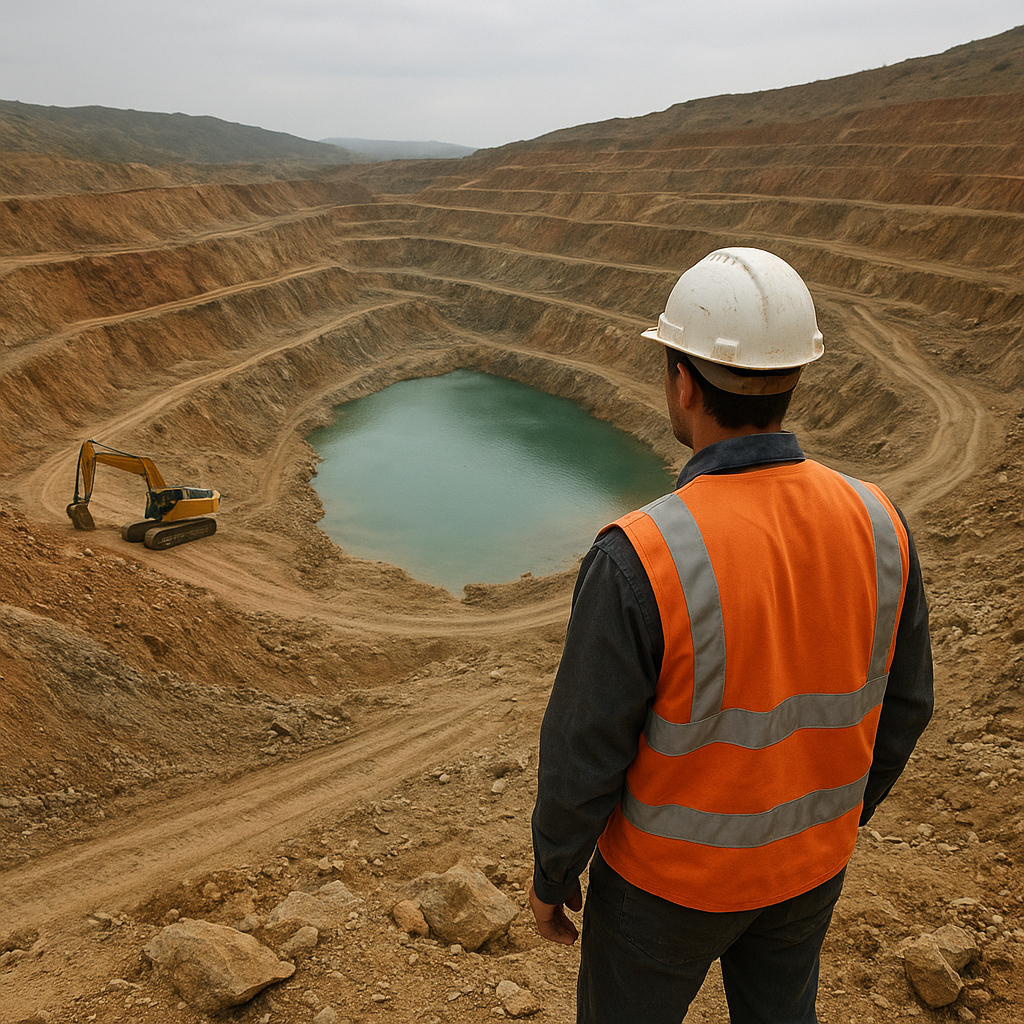
The growing competition for freshwater resources has direct and profound consequences for the global minerals sector. As regions face intensified droughts, shifting precipitation patterns, and increasing demand from agriculture and cities, the ability of extractive industries to secure reliable water supplies is undermined. This article examines how water scarcity reshapes the economic, technical and social contours of mineral extraction, exploring operational disruptions, technological responses, stakeholder conflicts and regulatory pressures that together force the industry to innovate and adapt.
Operational impacts on extraction and processing
Water is central to almost every stage of modern mining — from ore beneficiation and slurry transport to dust suppression and onsite living facilities. When freshwater availability declines, the immediate consequence is reduced capacity to maintain standard operations. Mines that rely on open-pit dewatering, wet concentrators, heap leaching or flotation circuits face lower throughput as water use is curtailed or reallocated.
Key operational challenges include:
- Reduced processing rates due to insufficient process water and the need to operate at conservative limits to avoid system failure.
- Increased risk of equipment wear and blockages when using alternative or lower-quality sources (e.g., saline or recycled water).
- Higher costs associated with transporting water from distant sources or investing in desalination and treatment.
- Greater complexity in tailings management when water available for tailings thickening is limited, increasing the volume of tailings solids requiring storage.
Water shortages also heighten safety, environmental and regulatory risk. For example, insufficient water for dust suppression elevates airborne particulates, impacting worker health and nearby communities. Lower water tables affect geotechnical stability around pits and waste dumps, while attempts to source groundwater can lead to subsidence or cross-contamination of aquifers.
Technological and engineering responses
In response to scarcity, the industry is accelerating implementation of technologies and redesigning processes to reduce freshwater dependence and improve efficiency. These interventions range from incremental adjustments to transformative investments.
Water recycling and closed-loop systems
Many operations are adopting internal recycling, capturing process water and returning it to circuits. Increasing the reuse rate of water can significantly cut demand for new supply, though it requires enhanced treatment to remove fine particles, acids, salts and process chemicals. Closed-loop designs, where possible, minimize discharge and promote circularity.
Alternative water sources and treatment
Desalination, wastewater reuse, and stormwater capture are becoming more common, especially for coastal or arid projects. Desalination plants are capital-intensive and energy-hungry, introducing trade-offs between water security and carbon footprint. Advanced membrane technologies, reverse osmosis and hybrid treatment plants offer pathways to treat marginal sources, but they also require skilled maintenance and long-term operational expenditure.
Dry processing and tailings innovation
To address both water scarcity and the environmental liabilities of wet tailings, firms are investing in dry stacking, paste tailings and filtered tailings technologies. These methods significantly reduce water locked in tailings dams, lower the footprint of storage facilities and reduce the risk of catastrophic dam failures. However, they demand additional dewatering equipment, higher power use, and careful materials handling planning.
Digital monitoring and optimization
IoT sensors, remote monitoring and predictive analytics improve water stewardship by detecting leaks, optimizing dosing and matching water supply to real-time demand. Predictive modeling of hydrological inputs and process simulations help managers design adaptive schedules that maintain production while conserving water.
Social, economic and regulatory dimensions
Water is a shared resource. Mines seldom operate in isolation from agricultural users, municipal needs and ecological systems. As scarcity intensifies, conflicts and scrutiny rise, compelling companies to navigate complex social and political terrain.
Community impacts and social license
Perceptions that mining appropriates scarce water can erode a company’s communities relations and social license to operate. Local populations depend on groundwater for drinking, irrigation and livelihoods. When extraction reduces water availability or degrades quality, protests, legal challenges and reputational damage can follow. Proactive stakeholder engagement, transparent water accounting and benefit-sharing mechanisms are crucial to maintaining trust.
Economic trade-offs
Water scarcity alters the economic calculus of projects. Increased capital expenditure on water infrastructure, higher operating costs for treatment and energy, and potential downtime translate into lower margins and extended payback periods. Some deposits that were previously viable may become uneconomical, reshaping investment flows toward deposits with lower water risk or toward regions with better governance and infrastructure.
Regulatory and permitting pressures
Governments and regulators are tightening water use permits, imposing stricter effluent standards and requiring comprehensive water management plans as part of environmental approvals. Compliance demands detailed hydrological studies, contingency arrangements for drought scenarios and community consultation. Non-compliance can halt projects, impose fines or trigger remediation obligations. As a result, mining firms must integrate robust water risk management into project planning and corporate governance.
Environmental consequences and resource interdependencies
Water scarcity compounds environmental risks. Reduced streamflows and receding wetlands affect biodiversity and ecosystem services, while increased reliance on groundwater extraction can lower aquifer levels and change recharge dynamics. Mines must consider these interdependencies to avoid long-term damage to surrounding ecosystems and to comply with conservation obligations.
The choice of water strategy also influences climate impacts. For example, large-scale desalination plants can secure water but often rely on fossil-fuel-driven energy unless coupled with renewables, thereby increasing scope 2 emissions. Conversely, energy-intensive dry processing can also raise emissions profiles unless powered by low-carbon sources. This creates a complex nexus between energy use, water policy and emission reduction commitments.
Corporate governance, finance, and risk management
Investors and insurers increasingly treat water scarcity as a material risk. Lenders demand comprehensive environmental and social due diligence that includes water stress mapping and contingency financing. Insurance premiums rise for operations in high-risk basins, and divestment pressures have pushed some funds away from water-intensive projects.
Effective governance responses include:
- Embedding water risk in enterprise risk management and board oversight.
- Adopting public water disclosure standards to demonstrate stewardship.
- Linking executive remuneration to measurable water performance indicators.
Firms that proactively manage water risks can gain competitive advantages by reducing operational interruptions, lowering costs over time, and maintaining better community and regulatory relationships.
Strategies for resilience and long-term adaptation
Building long-term resilience to water scarcity requires integrated approaches that combine engineering, governance and community engagement. Several strategic measures stand out:
- Conduct basin-level water risk assessments and participate in watershed planning with other users and authorities to ensure sustainable allocation.
- Invest in water-efficient process redesigns and stepwise improvements that balance capital constraints with long-term savings.
- Pursue water offset programs that restore or enhance natural water systems as compensation for residual impacts, when appropriate and developed with stakeholders.
- Foster partnerships with local utilities to share infrastructure and reduce duplication of supply systems.
- Align water strategies with climate adaptation plans to anticipate changes in rainfall, temperature and extreme events.
Innovation ecosystems—linking universities, technology providers and lenders—can accelerate diffusion of new water-saving technologies and financing models tailored for the extractive sector. Public–private collaboration can also support regional solutions such as shared desalination or water recycling facilities that serve multiple industries and communities.
Policy implications and global patterns
At a policy level, addressing water scarcity in the mineral sector involves harmonizing environmental protection with economic development. Governments can promote sustainable resource use by reforming water rights, incentivizing low-water technologies, and strengthening enforcement of water quality and allocation rules. International supply chains also influence outcomes: buyers increasingly demand responsible sourcing, creating market incentives for mines to demonstrate water stewardship.
Geographically, the effects of scarcity vary. Arid and semi-arid regions, such as parts of Australia, Chile, West Africa and Central Asia, face acute pressures. Coastal projects gravitate toward desalination, while inland operations may confront limits to groundwater extraction. The spatial distribution of water risk influences where new projects are developed and how existing sites are managed.
The interplay between resource scarcity and industrial activity will continue to evolve. As industries adapt, new norms, technologies and governance models will shape the future of mineral extraction in a world where water is ever more valuable.
