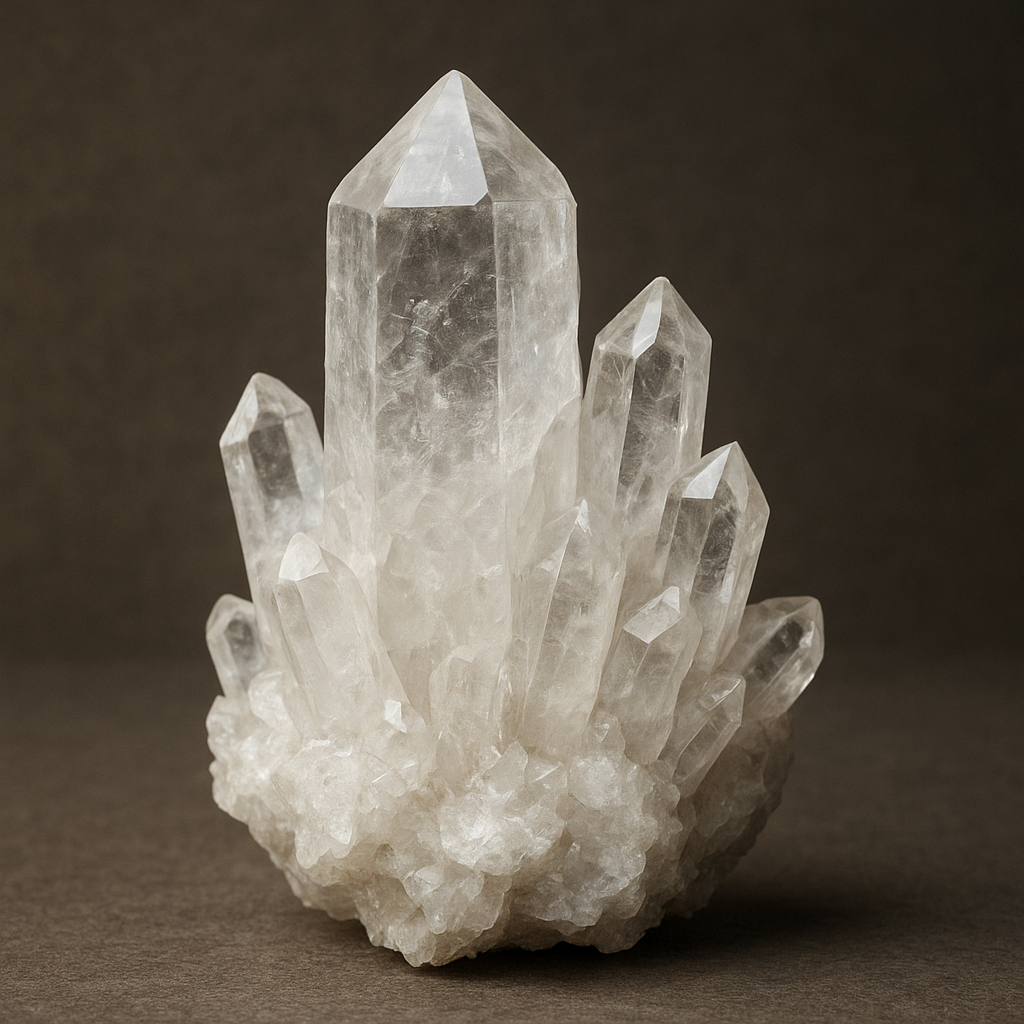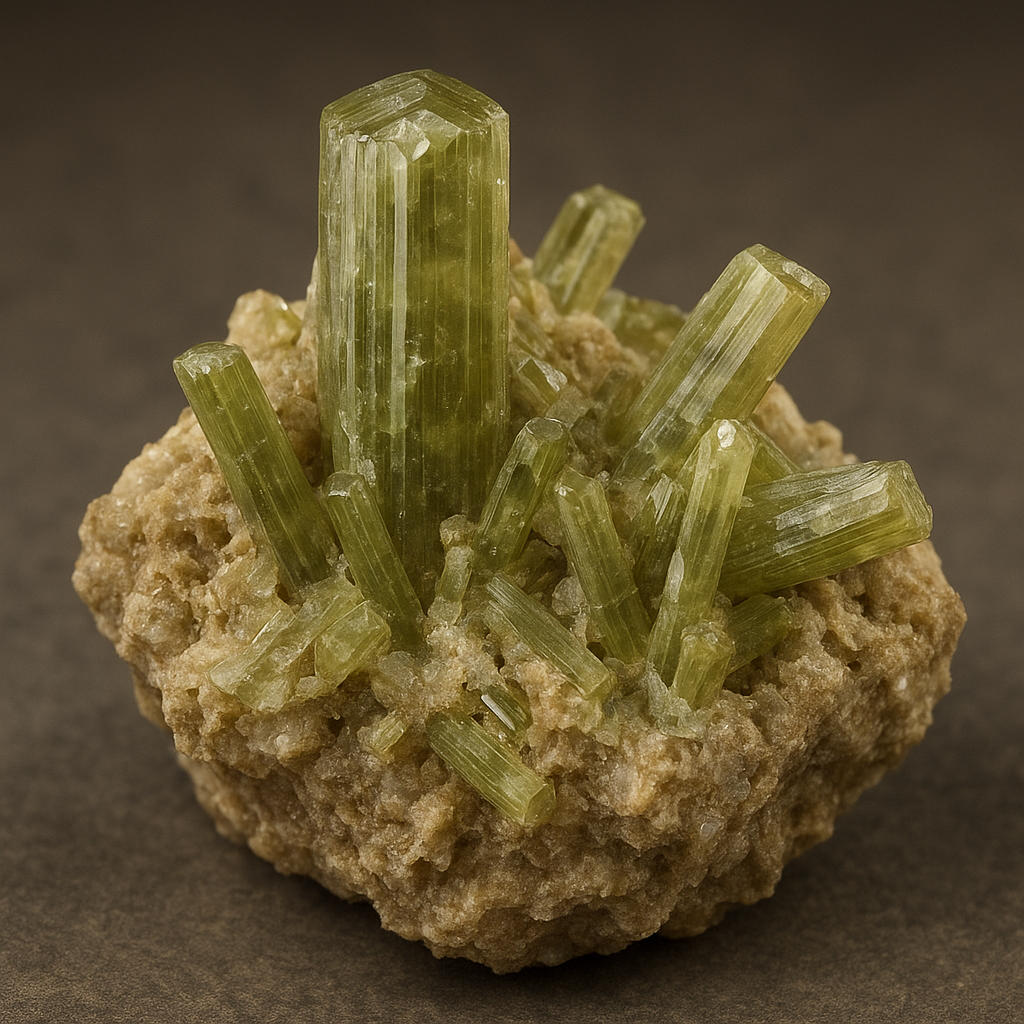
Clinozoisite is a fascinating and often overlooked member of the epidote group of minerals. Although it rarely headlines gem collections in the way beryl or garnet do, it plays a central role in understanding many metamorphic and hydrothermal processes. This article will explore the mineral’s chemistry and structure, its characteristic environments of occurrence, practical and scientific applications, and a few intriguing facts that illuminate why clinozoisite matters to geologists, mineral collectors and lapidaries alike.
Mineral identity, chemistry and crystal structure
Clinozoisite is a sorosilicate in the epidote group, typically represented by the formula Ca2Al3Si3O12(OH). It is the calcium- and aluminium-dominant end member of a solid-solution series that includes epidote (where iron substitutes for some aluminium) and is closely related to the orthorhombic mineral zoisite. Clinozoisite itself is monoclinic, developing prismatic crystals and commonly showing twinning and complex internal growth patterns that reflect its formation history.
The mineral’s structure incorporates both single SiO4 tetrahedra and linked Si2O7 groups (a signature of the epidote group), producing a framework that accommodates a range of cations. Small amounts of Fe, Mn, Ti or trace rare-earth elements may enter the crystal lattice, modifying color and physical properties. Typical physical characteristics include a Mohs hardness around 6–7, a specific gravity in the ~3.25–3.40 range, vitreous to pearly luster on cleavage surfaces, and distinct anisotropic optical behaviour under the microscope.
Distinctive physical and optical features
- Color: often colorless, white, gray, pale green, yellowish, pinkish to brown depending on trace elements and alteration.
- Habit: prismatic, elongated crystals; aggregates and granular masses are common.
- Cleavage and fracture: shows good cleavage and uneven to conchoidal fracture where cleavage is not expressed.
- Optical: biaxial with moderate to strong birefringence; displays pleochroism in some coloured specimens.
Where clinozoisite occurs: geological settings and notable localities
Clinozoisite forms in a variety of geologic environments, often where calcium-rich rocks interact with fluids and experience metamorphism or hydrothermal activity. Its presence is a diagnostic indicator of certain pressure-temperature and chemical conditions.
Metamorphic environments
One of the most important environments for clinozoisite formation is low- to medium-grade regional metamorphism of calcareous sediments and impure limestones. During metamorphism, reactions between silica, aluminium-bearing phases and calcic components can produce clinozoisite alongside minerals such as calcite, tremolite, garnet, and biotite. Because it forms at particular P–T windows, clinozoisite can serve as an index mineral to help reconstruct metamorphic histories.
Contact metamorphism and skarn formation
In contact metamorphic aureoles and skarns—calc-silicate assemblages formed at the margin of igneous intrusions—clinozoisite is extremely common. Skarn environments provide abundant calcium and silica, together with heat and fluid flux, conditions ideal for clinozoisite growth. It often appears in association with garnet, wollastonite, vesuvianite and magnetite in these settings.
Hydrothermal systems and alteration zones
Hydrothermal alteration of feldspars and mafic minerals can produce clinozoisite in veins and replacement zones. In such systems it may occur with epidote, calcite, chlorite, and quartz. Clinozoisite’s formation in hydrothermal veins can testify to the chemistry of the fluids (calcium-, aluminium- and silica-rich, with variable oxygen fugacity).
Notable localities
- The Alpine metamorphic belts of Europe (notably the Austrian and Swiss Alps) have long been classic sources of epidote-group minerals, including clinozoisite.
- Skarn-bearing districts worldwide—especially around contact zones in Italy, the United States (western states), and the Ural Mountains—produce notable specimens.
- Pakistan and parts of East Africa can yield attractive green or pale clinozoisite crystals suitable for cutting or collecting.
- Many orogenic belts and metamorphosed carbonate terrains globally host occurrences; collectors will often find clinozoisite as accessory to larger assemblages.
Uses and practical importance
Clinozoisite is not a major industrial mineral, but it has several practical and scientific applications that make it valuable beyond mere aesthetics.
Role in metamorphic petrology
Petrologists use clinozoisite as an index mineral and as a recorder of metamorphic conditions. Its stability range helps constrain the pressure-temperature path of metamorphosed carbonate rocks. Chemical zoning and trace-element content within clinozoisite crystals can be analyzed to deduce fluid compositions, redox conditions and the timing of metamorphic events. In some studies, clinozoisite is used together with other phases to calculate reaction equilibria and constrain metamorphic gradients.
Gem and collector uses
Although clear, facetable clinozoisite is uncommon, transparent and attractively coloured specimens occasionally appear in the lapidary market. When cut, such material can show pleasant light green to pale green hues, sometimes resembling pale peridot or light epidote. Clinozoisite specimens are also appreciated by mineral collectors for their crystal form, twinning and associations with classic skarn and Alpine assemblages.
Research and trace-element studies
Because clinozoisite can incorporate a range of trace elements, it is used in geochemical studies of element mobility during metamorphism and hydrothermal alteration. Its ability to host rare-earth elements in trace amounts makes it relevant for studies of REE partitioning, while its sensitivity to chemical environment means it can record subtle changes in fluid composition and pH.
Interesting aspects and scientific insights
Several features make clinozoisite particularly interesting to earth scientists and collectors alike:
1. Polymorphism and transformation
Clinozoisite and zoisite are polymorphs—minerals sharing the same chemical formula but differing in crystal symmetry. Zoisite is orthorhombic, while clinozoisite is monoclinic. The stability of one form over the other depends on formation conditions such as temperature, pressure and deformation. In some rocks, both forms can be present, reflecting complex histories of formation and later deformation.
2. Record of fluid-rock interaction
Clinozoisite commonly forms where fluids interact with calcium-rich protoliths. Because it incorporates hydroxyl groups and readily records trace elements, careful analysis of clinozoisite crystals provides windows into fluid composition, the presence and activity of aqueous components, and the timing and direction of fluid flow in metamorphic terrains.
3. Indicator of metamorphic reactions
Specific mineral reactions produce clinozoisite—for example, breakdown or recrystallization of feldspar or the reaction between calcite and aluminous phases under appropriate P–T conditions. Mapping the distribution of clinozoisite in a rock can therefore reveal where these reactions took place, which is crucial in building P–T-t (pressure–temperature–time) histories for metamorphic terranes.
4. Textural and twinning complexities
Many clinozoisite crystals exhibit remarkable twinning and oscillatory zoning, which preserve growth histories and fluctuations in chemistry during crystal growth. These textures attract collectors and provide micro-scale records for researchers using techniques like cathodoluminescence, electron microprobe mapping and LA-ICP-MS.
5. Relationship with epidote and iron content
Substitution of iron for aluminium converts clinozoisite progressively toward epidote. This substitution changes color (towards deeper green) and other properties, so clinozoisite–epidote compositions provide clues about the oxidation state and iron availability of the environment. In oxidized systems, epidote is more likely to appear; in iron-poor environments, clinozoisite predominates.
Identification tips and collecting notes
For the mineral enthusiast or field geologist, distinguishing clinozoisite from related minerals is rewarding. Here are practical pointers:
- Look for prismatic crystals and aggregates associated with calc-silicate assemblages in contact or regional metamorphosed carbonate rocks.
- Test hardness: clinozoisite is fairly hard (around 6–7 on Mohs), harder than calcite and softer than many garnets.
- Examine color and luster: pale greens, whites, greys and pinks occur, but vivid green usually indicates higher iron content and a move toward epidote composition.
- In thin section, clinozoisite is biaxial and commonly shows characteristic interference colors and twinning; it usually occurs with typical skarn minerals such as garnet and wollastonite.
- Collectors should handle specimens of clinozoisite from classic skarn and Alpine localities with care, as crystal terminations and twinned faces are part of the specimen’s value.
Care for clinozoisite specimens
Avoid aggressive cleaning methods that could damage delicate crystal faces. Use gentle mechanical cleaning with soft brushes and mild detergents for matrix material. Because the mineral can contain cleavage and internal planes, sudden temperature changes or rough mechanical treatment can cause fractures.
Contemporary research directions and unanswered questions
Scientists continue to investigate clinozoisite in multiple contexts. Some active areas include:
- Using trace-element zoning in clinozoisite to reconstruct fluid evolution in metamorphic terranes.
- Studying phase transformations between clinozoisite, zoisite and epidote to better understand the role of deformation and kinetics in mineral stability.
- Exploring the capacity of epidote-group minerals to host rare-earth elements and the implications for element mobility during metamorphism and hydrothermal events.
- Applying high-pressure, high-temperature experiments to refine the P–T stability fields of clinozoisite and allied minerals.
These studies have broader consequences: better constraints on the role of metamorphic fluids in crustal processes, refined thermodynamic models used by petrologists, and improved interpretation of mineral assemblages in ore-forming systems.
Final remarks on value and fascination
Clinozoisite may not be the flashiest mineral in the case, but its scientific importance, aesthetic variations and the stories it tells about rocks and fluids make it a rewarding subject of study and collection. From the alpine clefts where beautifully twinned crystals are found, to the skarn deposits that host complex mineral parageneses, clinozoisite stands as a subtle yet powerful indicator of geological processes. Whether you are a field geologist piecing together metamorphic histories, a collector seeking unusual epidote-group specimens, or a lapidary testing the limits of uncommon gemstones, clinozoisite offers a rich vein of inquiry and appreciation.