
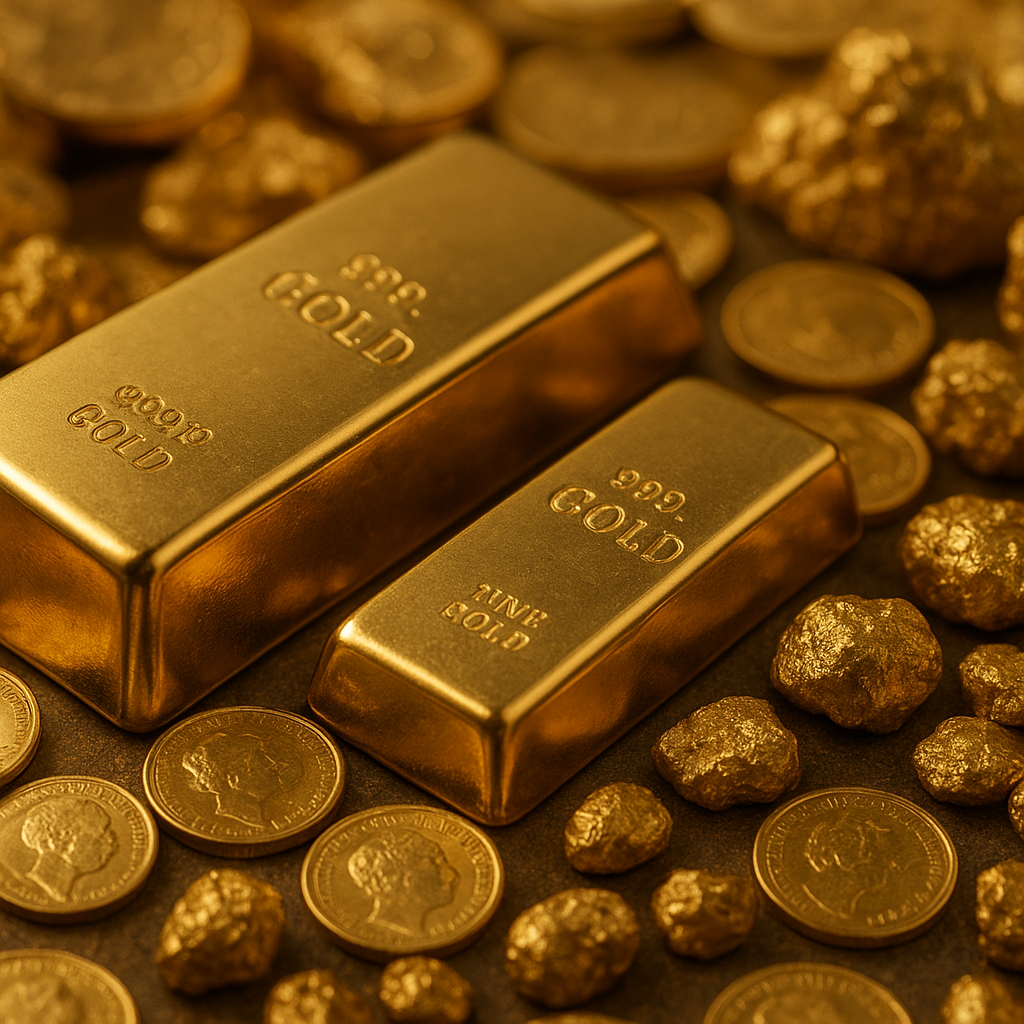
The metal commonly known as gold has fascinated humans for millennia with its warm luster, rarity and versatility. Its physical and chemical properties give it a unique combination of beauty, stability and utility, and its presence has shaped cultures, economies and technologies across the globe. This article surveys where gold is found in nature, how it is extracted and refined, the breadth of its applications from ancient ornament to cutting-edge science, and several compelling facts and trends that keep gold relevant today.
Occurrence and Geological Settings
Gold occurs in a variety of geological environments. It is most often found in its native metallic form, mixed with quartz, sulfide minerals, or as fine particles in sediments and gravels. Gold distribution is not uniform; large concentrations form under specific conditions involving hydrothermal fluids, tectonic activity and chemical reactions that concentrate the metal into veins, disseminated ores, or placer deposits.
Common geological environments
- Vein and lode deposits: Gold is frequently concentrated in quartz veins formed when hot, metal-bearing solutions migrate through fractures and precipitate as they cool. These settings are typical of orogenic gold deposits associated with mountain-building processes.
- Placer deposits: Over time, weathering and erosion free gold particles from primary rocks. Because of gold’s high density, these particles accumulate in riverbeds, stream gravels and along coastal areas, producing placer deposits that have historically been easy to exploit.
- Epithermal systems: Lower-temperature hydrothermal systems near volcanic regions can host significant gold and silver mineralization, often associated with hot springs and geothermal activity.
- Refractory and sulfide-hosted ores: In many deposits, gold is locked within sulfide minerals (pyrite, arsenopyrite), requiring specialized processing to liberate the metal.
Major modern producers include countries such as China, Australia, Russia, the United States, and several nations in Africa and South America. Historically dominant regions—like South Africa’s Witwatersrand basin—have shaped the modern mining industry and contributed enormous quantities of gold to the global economy.
Properties and Physical Characteristics
Gold is a chemical element with a distinctive set of physical properties. Its atomic number is 79, which places it among the heavy transition metals. The metal stands out for its combination of visual, mechanical and chemical characteristics.
- element: Gold is chemically classified as a noble metal; it resists oxidation and corrosion, which is why ancient gold artifacts can survive in remarkably good condition.
- Color and luster: Pure gold has a warm, yellow color and a high metallic luster. Alloys and surface treatments can alter the hue, producing white gold, rose gold and other shades used in jewelry.
- malleability and ductility: Gold is among the most malleable and ductile metals known. A single gram can be beaten out into a sheet many square meters in area (gold leaf).
- Physical durability: It does not tarnish in air, water or most acids, though it dissolves in aqua regia (a mixture of nitric and hydrochloric acids) and is attacked by cyanide solutions.
- conductivity: Gold is an excellent conductor of electricity and does not corrode, which makes it valuable in high-reliability electrical contacts and connectors.
- Isotopes and stability: The most common isotope, 197Au, is stable. There are many radioisotopes of gold studied for various scientific applications.
Gold’s jewelry value is typically described in karats (24-karat being pure gold) and in percentages for industrial specifications. Alloying with other metals changes hardness, color and melting point to suit different applications.
Mining, Extraction and Processing
Gold extraction ranges from small-scale artisanal operations to enormous open-pit and underground mines. Mining techniques are chosen based on deposit type, ore grade and environmental constraints.
Primary mining methods
- Open-pit mining: Used for shallow, disseminated deposits. Large quantities of material are moved with heavy equipment when ore grades warrant the expense.
- Underground mining: Employed for deep vein systems where selective extraction is necessary. Methods include cut-and-fill, block caving and longwall techniques in appropriate geological settings.
- Placer mining: Historically important—methods range from panning and sluicing to dredging and more modern mechanical separation.
mining carries significant environmental and social impacts. Tailings, water use, habitat disturbance, and chemical contamination (notably from mercury and cyanide) are serious concerns. Regulations and improved techniques—such as closed-loop cyanide systems, tailings reprocessing, and bio-oxidation of refractory ores—aim to mitigate harm. Artisanal and small-scale gold mining (ASGM) remains a major source of mercury pollution in some regions and an ongoing focus for international remediation efforts.
Ore processing and refining
Once ore is concentrated, metallurgical processes recover gold. Common steps include comminution, gravity separation, flotation, and cyanidation. The most widely used chemical extraction is cyanide leaching, where gold dissolves into solution and is later precipitated or adsorbed onto activated carbon. For high-purity gold, refining methods include the Miller process (chlorine gas to remove impurities) and the Wohlwill process (electrolytic refining), which can produce 99.99% pure gold.
- reserves and resources reporting: Companies and governments report mineral reserves and resources under standardized codes (e.g., JORC, NI 43-101). These figures guide investment and policy but can change with price fluctuations and exploration success.
- Recycling: A substantial portion of the world’s gold supply comes from recycled jewelry and electronics. Recycling reduces the need for new mining and conserves embodied energy.
Applications and Industrial Uses
Beyond its aesthetic value, gold has a wide range of industrial and technological applications because of its chemical inertness, conductivity and ability to form thin films.
Traditional uses
- jewelry: The largest single use historically and culturally, jewelry exploits gold’s luster, malleability and resistance to tarnish.
- Coinage and bullion: Gold coins and bars have been used as money and as stores of value for millennia. Even after the end of the gold standard, gold remains an important reserve asset.
- Decorative arts and architecture: Gold leaf is used to gild objects, paintings, religious icons and building elements.
Modern industrial uses
- Electronics: Thin films and plated contacts use gold where reliability and low contact resistance are essential, such as in connectors, switches, and printed circuit boards.
- Medicine and dentistry: Gold alloys are used in dental restorations. In medicine, gold compounds and nanoparticles enable diagnostic imaging, targeted drug delivery, and photothermal therapies.
- Aerospace: Corrosion resistance and conductivity at relatively high temperatures make gold useful for satellite components and specialized connectors.
- Catalysis and chemical processes: Gold catalysts can be highly active for oxidation reactions and selective chemistries at low temperatures, a surprising use for a metal once thought catalytically inert.
Even small amounts of gold can be critical: a microgram-level plating may ensure the longevity and reliability of a high-value electronic component.
Cultural, Historical and Economic Significance
Gold’s role in human history is vast. It has been a symbol of power, a store of wealth and a cause of major migrations and conflicts. The metal’s scarcity and portability made it ideal for coinage and hoarding long before modern finance.
Historical milestones
- Ancient civilizations: Gold was used for ornaments, religious artifacts and as a marker of divine favor in ancient Egypt, Mesopotamia, the Indus Valley and pre-Columbian Americas.
- Gold rushes: Events like the California Gold Rush (1848–1855), the Australian rushes of the 1850s and the Klondike (1896–1899) reshaped migration, settlement and economic development in those regions.
- The gold standard: For much of the 19th and early 20th centuries, many countries pegged currency values to gold, influencing monetary policy until the abandonment of the standard in the 20th century.
In modern economics, gold still plays a role in finance: central banks hold gold as part of reserves, investors use it as a hedge against inflation and currency weakness, and commodities markets trade gold futures and options. Price drivers include industrial demand, jewelry demand, central bank activity, mine supply, and macroeconomic factors such as interest rates, real yields and exchange rates.
Interesting Scientific and Technological Aspects
Gold is not just a relic of ancient wealth; it sits at the intersection of art, industry and science. Several contemporary fields exploit gold in surprising ways.
Nanoscience and plasmonics
At the nanoscale, gold exhibits unique optical properties known as localized surface plasmon resonances (LSPR). Gold nanoparticles absorb and scatter light strongly at wavelengths determined by their size, shape and environment. This phenomenon underpins applications in biosensing, imaging, cancer therapy (photothermal ablation), and even color printing at the nanoscale.
Biomedical applications
- Diagnostics: Gold nanoparticles serve as contrast agents and labels in assays (for example, lateral flow tests) because they produce intense color changes.
- Therapeutics: Functionalized gold particles can deliver drugs to specific tissues or convert light into heat to selectively destroy tumors.
- Biocompatibility: Gold’s relative chemical inertness and ease of surface functionalization make it attractive in implantable devices and medical research.
Environmental and alternative technologies
Research aims to reduce the environmental footprint of gold production. New methods include bioleaching (using microbes to liberate gold), thiosulfate leaching as an alternative to cyanide for certain ores, and improved recovery of gold from electronic waste. These techniques may help reconcile demand for gold with sustainability goals.
Governance, Ethics and the Future
As demand for gold persists, governance issues—supply chain transparency, human rights, environmental impacts and conflict financing—are central. Stakeholders include governments, mining corporations, local communities, NGOs and consumers. Certification schemes and traceability efforts (including digital ledgers and blockchain initiatives) seek to verify the provenance of gold and ensure ethical sourcing.
- Regulation and standards: International initiatives target reduction of mercury use, better tailings management and rehabilitation of mining-affected landscapes.
- Artisanal mining: Formalizing and supporting small-scale miners can reduce environmental harm and improve livelihoods by providing safer technologies and market access.
- Space prospects: The idea of asteroid mining for precious metals captures the imagination and may become technically feasible in the long term, though economics and practicality remain uncertain.
Facts and Figures Worth Noting
A few quantitative and curious facts help place gold in perspective:
- Total above-ground gold: Estimates suggest that all gold ever mined would fit into a cube roughly 20–25 meters on a side. That concentration of wealth is remarkable compared with other commodities.
- Seawater gold: Gold is dissolved in seawater at parts-per-trillion levels, amounting to enormous total mass globally, but current extraction technologies make recovery uneconomic.
- Central bank holdings: Many nations maintain substantial gold reserves as a component of monetary stability and crisis insurance.
- Recycling rates: In some years, recycled gold contributes a significant percentage of annual supply, underscoring the metal’s high recyclability.
Practical Notes for Collectors and Investors
When considering gold as an investment or collectible, several practical dimensions matter:
- Purity and weight: Bullion products are specified by weight (grams, troy ounces) and purity (e.g., .9999 fine). Coins often carry numismatic premiums.
- Storage and insurance: Physical gold requires secure storage and insurance; many investors choose allocated or unallocated custody accounts at reputable institutions.
- Market instruments: Exposure to gold can be achieved through physical bullion, coins, ETFs, futures contracts, mining stocks, and mutual funds focusing on precious metals.
- Volatility and correlation: Gold’s price behavior can differ from equities and bonds; it often serves as a hedge during financial turbulence but can be volatile.
Final Thoughts: Why Gold Still Matters
Gold unites aesthetics, chemistry and economics in a way few materials do. Its enduring appeal stems from both tangible properties—lustrous, malleable, conductive—and symbolic ones—scarcity, stability, prestige. Technological advances continue to find new uses for minute amounts of gold, from reliable electronics to life-saving medical therapies. At the same time, governance and environmental challenges require innovation in mining and recycling practices, and a conscientious approach to supply chains.
Selected terms emphasized above illustrate the breadth of gold’s roles and the diversity of topics connected to this single metal: from geological formation and industrial extraction, through centuries of cultural significance, to future-facing applications in nanotechnology and sustainable recovery.